





There is a particular kind of darkness I have only found beneath one building in Japan, and I have been chasing strange corners of this country for seven years now. It is the darkness beneath the main hall of Zenkoji Temple in Nagano, in a corridor so narrow and so black that within three steps I could no longer tell whether my eyes were open or shut. My guidebook had warned me about this. It had not prepared me for how disorienting it is to lose your sense of up, forward, and self, all at once.
I had come to Nagano ostensibly to write about Zenkoji’s famous noodle stalls for a translation client. I left having spent the afternoon thinking about a Buddha statue that, according to temple tradition, no living person has been allowed to see in over three hundred years – and a tunnel built, it seems, specifically to put visitors in the dark long enough to think about exactly that.
A Buddha That Arrived by Accident
Zenkoji’s own history, the Zenkoji Engi, is itself a kind of legend, repeated by guides and pilgrims for generations rather than verified by independent record, so I treat it here as the temple’s own story rather than settled fact. According to that account, a gilt-bronze image of the Amida Buddha triad – said to be the first Buddhist statue brought to Japan – arrived from the Korean kingdom of Baekje in the sixth century, meant to introduce Buddhism to the Japanese court. What followed, the story goes, was a political dispute: factions opposed to the new religion are said to have thrown the statue into a canal near present-day Osaka, where it lay for decades.
A nobleman from Shinano province, Honda Yoshimitsu, is said to have recovered it and enshrined it at his home in 642 CE. The temple’s name, Zenkoji, comes from a Chinese-style reading of his own name – this entire mountain town is named, quite literally, after one man’s decision to pick up something nobody else wanted.
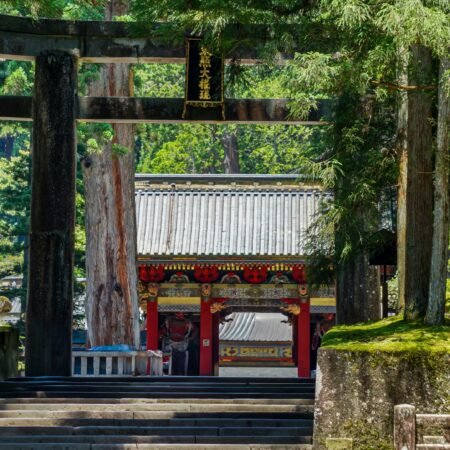
Today Zenkoji belongs to no single Buddhist sect, a status almost unique among Japanese temples. It is jointly administered by Tendai and Jodo-shu priests, and for fourteen centuries pilgrims of every denomination – and none – have climbed Nakamise-dori and passed beneath its enormous Niomon and Sanmon gates. The current Sanmon gate dates to 1750; according to local guides, five doves are hidden in the brushstrokes of the “Zenkoji” characters on its wooden plaque – a small puzzle that has nothing to do with ghosts and everything to do with how much care went into this place.
The Buddha Nobody Is Allowed to See
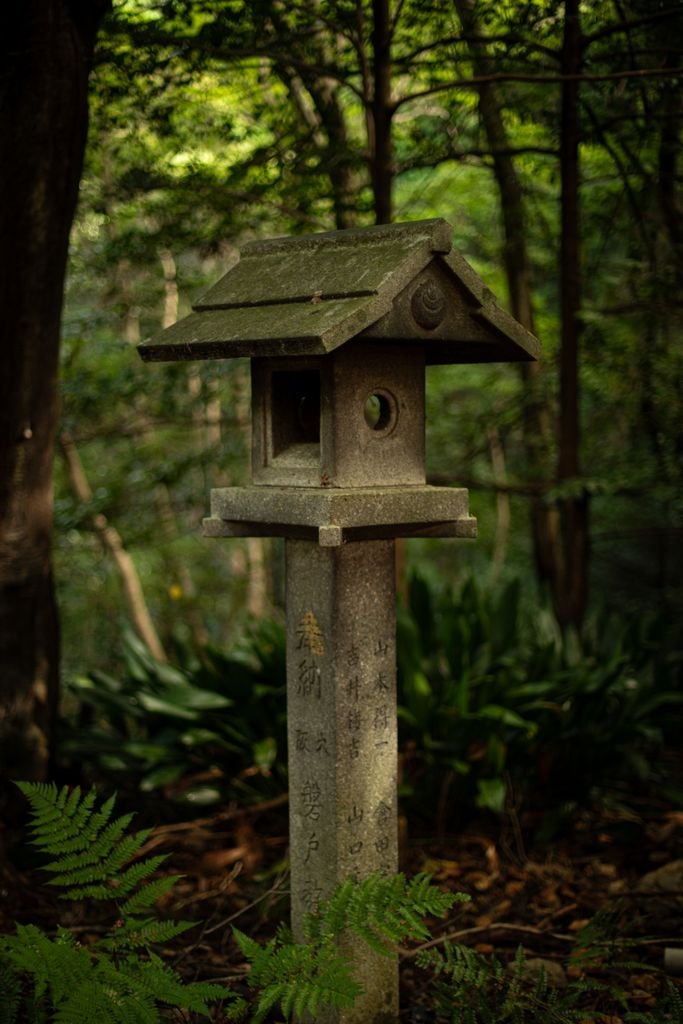
The statue Honda Yoshimitsu is said to have rescued still sits, by tradition, behind the main altar of Zenkoji’s Hondo – and here is where the story stops being quaint history and starts feeling genuinely eerie to me. That original image is classified as a hibutsu, a “hidden Buddha,” and the temple’s position is that it has not been shown to anyone – not the public, not visiting dignitaries, and, according to temple tradition, not even the temple’s own head priests – for centuries, said to be wrapped in layers of cloth inside a sealed inner shrine.
The last person generally acknowledged to have laid eyes on it was a priest dispatched by the Edo shogunate in 1720, sent to confirm the statue actually existed after rumors spread that the box was empty. As far as the temple’s own account goes, no one has officially looked since.
What visitors can see instead is the Maedachi Honzon, a faithful copy that stands in for the hidden original. Even this replica is unveiled only during the Gokaicho ceremony, held roughly once every seven years, with the next scheduled for 2027. I visited in an ordinary, non-Gokaicho year, so the closest I came to the Buddha everyone travels here for was total darkness and a cold metal bar under my fingertips.
Into the Okaidan
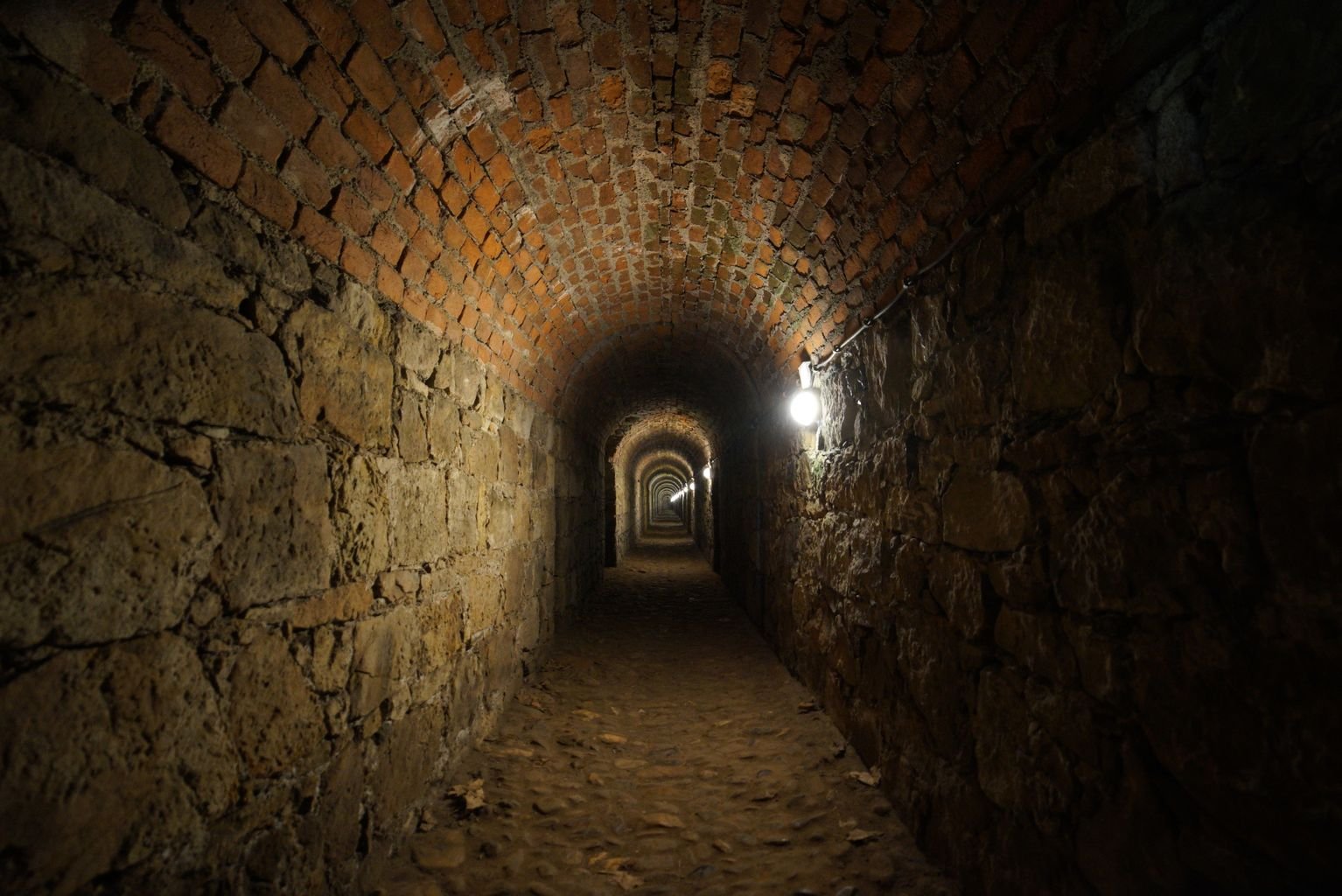
That bar is the point of the Okaidan, the pitch-black passage that runs beneath the inner sanctuary, directly under where the hidden Buddha is said to rest. You pay a small fee, descend a short staircase, and are swallowed by a corridor roughly forty-five meters long with no light whatsoever – temple staff keep it that way deliberately. The custom is to keep your right hand against the wall and walk forward slowly until your fingers find a separate metal fixture set into the stone: the “key to paradise,” gokuraku no kagi, positioned beneath where the real Amida triad is enshrined above.
The belief, passed down rather than officially doctrinated, is that touching this key while passing beneath the hidden Buddha forms a karmic connection to Amida and a promise of rebirth in the Pure Land. I do not know whether that is true in any metaphysical sense, and the temple itself frames it as a matter of faith, not a guarantee. What I can report, as someone who has stood in plenty of allegedly haunted places for this column, is that the Okaidan isn’t designed to frighten you with a story. It is designed to put you in total sensory isolation, groping for something you cannot see, directly beneath an object that, by the temple’s own account, no one currently alive has seen either. That symmetry unsettled me more than any jump-scare legend ever has.
A Mountain Hall That Keeps Rebuilding Itself
None of this has been static. Zenkoji’s main hall has burned down and been rebuilt repeatedly across its history, a pattern locals attribute partly to the density of wooden buildings and lantern-lit stalls that have always surrounded it. The current Hondo, completed in 1707 and designated a National Treasure, is one of the largest wooden structures in Japan – roughly 24 meters wide, 54 meters deep, and 26 meters tall. It is hard not to think of the building less as a single object than as a very old habit the town has of rebuilding this exact shape, in this exact spot, every time it loses it.
Just outside the hall sits Binzuru-sama, a wooden statue of one of the Buddha’s disciples, said to have healing powers – pilgrims rub the part of the statue corresponding to whatever ails them, and centuries of hands have worn his wooden face and shoulders to a dark, smooth shine. It is one of the few places at Zenkoji where the mystery on offer is warm rather than cold.
Visiting With Care
Zenkoji is a fully open, actively used temple complex at the heart of Nagano city, not a ruin or a restricted site. Everything described here – the gates, the Hondo, Binzuru-sama, and the Okaidan itself – sits on its normal, legal visiting route, with posted hours and a modest entry fee for the inner hall and tunnel. If you do the Okaidan, go slowly, keep your hand on the wall rather than reaching for other visitors, and be patient with people ahead of or behind you – it is a narrow space, and claustrophobia catches some off guard. Treat the hidden Buddha tradition, and the Gokaicho ceremony, with the same quiet respect you would give any object of genuine religious devotion.
Note: images accompanying this article are illustrative stock photos and do not necessarily show the specific site discussed.

コメント