






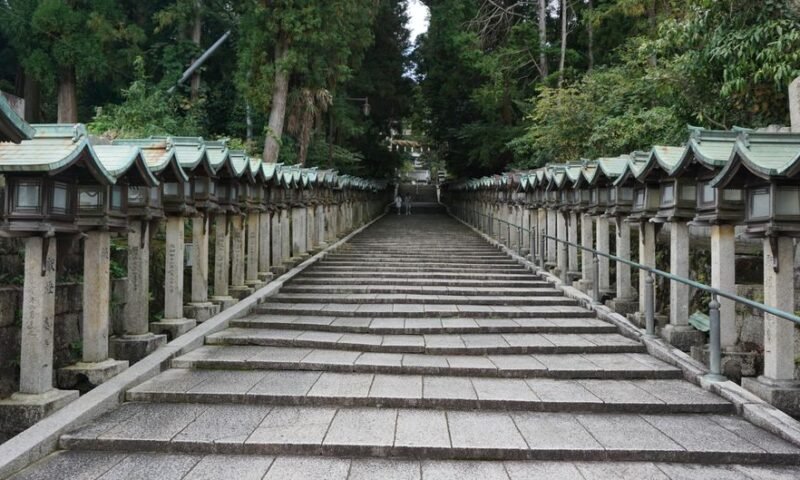
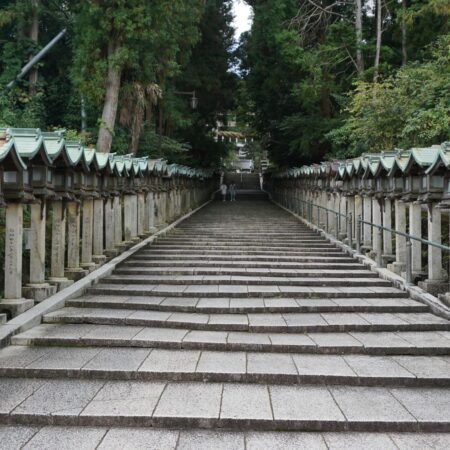
I climbed Mount Iimori on a grey, close afternoon, the kind of Tohoku sky that seems to be holding its breath. There’s a slope car now – one of the longer moving walkways of its kind in Japan – so you don’t have to take the stone steps if your knees would rather not. I took the steps anyway. It felt like the sort of hill you shouldn’t ride up.
Iimoriyama, on the edge of Aizuwakamatsu in Fukushima Prefecture, is not advertised as a haunted spot in the way some of the places I write about are. It’s a war memorial, a graveyard, and a minor tourist attraction all at once, with souvenir shops selling pickles and sake cups at the base. But type its name into Japanese search engines alongside the word shinrei – paranormal – and you’ll find no shortage of people who say the hill doesn’t feel like the gift shops suggest it should.
A Reserve Force of Teenagers
The story starts with the Boshin War of 1868–69, the conflict that ended the shogunate and put the emperor back at the formal centre of Japanese government. The Aizu domain, loyal to the old order, became one of the war’s bloodiest battlegrounds. As the imperial army closed in on the castle town, Aizu mobilised almost everyone it could, including a reserve unit of samurai boys aged around sixteen and seventeen, organised by rank and known afterward as the Byakkotai, the White Tiger Force.
They weren’t meant to see real combat. They did anyway. After a chaotic engagement at Tonoguchihara, a group of twenty Byakkotai cadets fell back toward Iimoriyama, the hill overlooking the castle town where some of their families lived.
The Smoke That Wasn’t What It Seemed
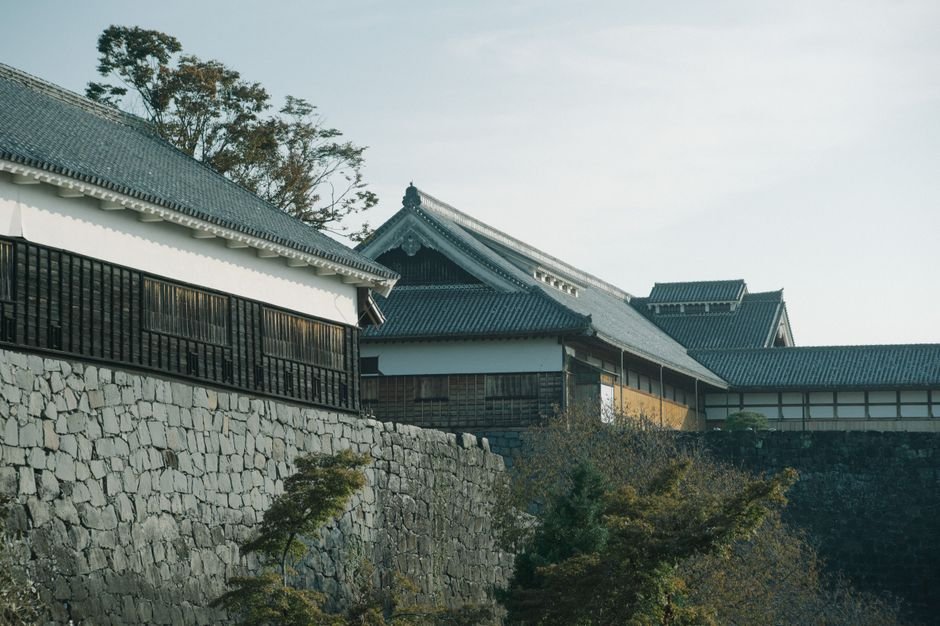
From the hill, the boys looked down and saw smoke rising over the town below Tsuruga Castle. According to the accounts that have been passed down, they concluded that the castle had fallen and that their lord, and likely their families, were already dead or doomed. The castle, in fact, held out for weeks longer – what they were watching burn was the town around it, not the keep itself. But from that distance, in the middle of a losing war, there was no way for seventeen-year-olds to know that.
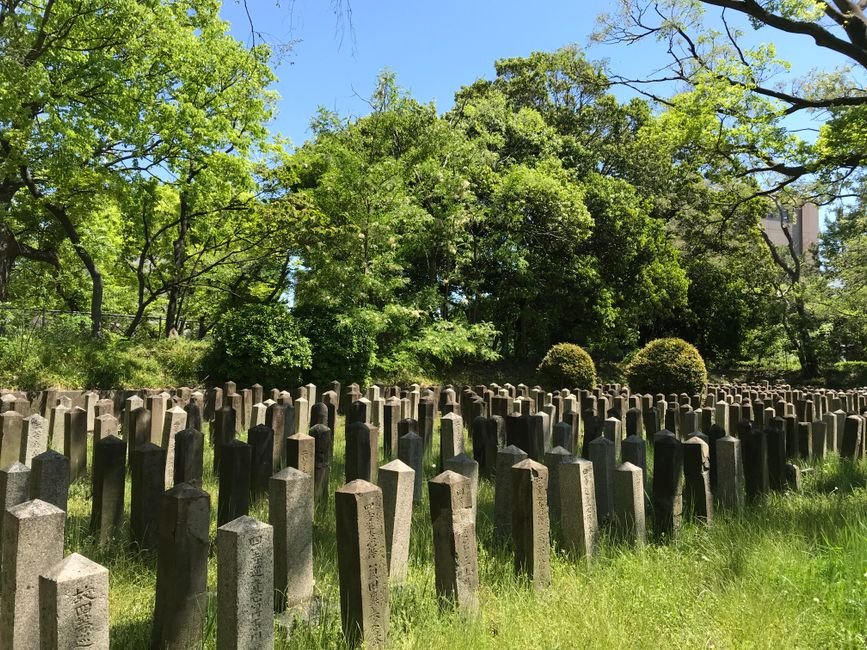
Believing the cause already lost, nineteen of the twenty chose seppuku rather than capture. One, Iinuma Sadakichi, survived his own attempt and was found and helped by a local villager. He lived into the Meiji era, serving in the army and later working at a post office, and it’s largely through accounts traced back to him that the rest of the story is known at all. The nineteen are buried in a row on the hill, and the site has been a place of mourning, and later of pilgrimage, ever since.
I want to be careful here, the way I try to be with every place like this: this is history filtered through more than a century and a half of retelling, national myth-making, and more than one war’s worth of propaganda about youthful sacrifice. The core of it – the ages of the boys, the mistaken smoke, the mass seppuku, the one survivor – is well documented. The finer emotional details, inevitably, have been smoothed and dramatised along the way, as they always are with stories people need to keep telling.
Monuments From Rome and Berlin
What I didn’t expect, walking the graves, was to find a Roman column standing among them. In 1928, Mussolini’s Italy sent a stone column, said to be taken from the ruins of Pompeii, as a tribute to the Byakkotai’s loyalty – a gesture the fascist government framed as an expression of shared values between Rome and Imperial Japan. Nazi Germany sent its own monument not long after, originally marked with a swastika; after the war, American occupation authorities had the symbol replaced with an iron cross rather than tear the monument down. It’s a strange little cluster of twentieth-century politics sitting quietly among nineteenth-century graves, and worth lingering over if you make the climb.
Further up the hill stands Sazaedo, a wooden temple building from the late eighteenth century built around a double-helix ramp – visitors climbing up and visitors coming down use separate spiralling paths that never cross. It has nothing directly to do with the Byakkotai, but it’s the kind of quietly ingenious thing this country does that always pulls my attention away from whatever I came to write about.
What People Say They’ve Heard
As for the stories that put Iimoriyama on the shinrei spot lists: they’re fairly restrained, by the genre’s standards. Visitors describe a low murmur on the wind that sounds, to some ears, like sutras being chanted. Others mention the sensation of footsteps behind them on the stone paths with no one else in sight, or a feeling of being watched near the row of graves and the stone water channel partway up. None of this is the kind of thing you could call evidence of anything – and I’d treat it the same way I treat the smoke-and-seppuku story itself: as denshō, a living local tradition about a place, not a claim of fact. For my own part, I heard wind, cicadas, and a tour guide’s microphone. Make of that what you will.
What struck me more than any ghost story was simply how young nineteen is, and how a hillside full of teenagers’ graves can sit so comfortably beside a gift shop. That tension – solemn history wrapped in tourist infrastructure – is its own kind of haunting, I think, whether or not anything is actually walking those paths after dark.
Visiting With Some Care
Iimoriyama is open to the public and easy to visit respectfully. Keep to the marked paths and steps (or the slope car, if your knees insist), and remember that the graves you’re walking past belong to real people, however long ago they died – this isn’t the place for selfies with peace signs. The hill can get busy with school trips and tour groups in peak season, so a little patience goes a long way, and quiet is generally the right register once you’re near the row of graves itself. There is, incidentally, a run-down building elsewhere on the hill’s approach that occasionally shows up in online “haunted Japan” lists; it’s private property in a state of disrepair, and not somewhere I’d suggest anyone try to get into. The graves, the Sazaedo, and the monuments are the legitimate, and genuinely interesting, reasons to come.
Note: images accompanying this article are illustrative stock photos and do not necessarily show the specific site discussed.
コメント