






I have lost count of how many times a Tokyo taxi driver has volunteered a ghost story to me unprompted, purely because I asked them to take me somewhere near a cemetery after dark. Mention Aoyama Reien — Aoyama Cemetery — to a driver who has worked the night shift for more than a few years, and more often than not you get a pause, a small laugh that is not quite a laugh, and then the story. It is usually some version of the same one: a passenger gets in, gives an address, and is gone by the time the car reaches it. Not run off. Gone, as in the seat is simply empty and the driver cannot remember stopping.
I want to be upfront about something before I go any further, because it matters more here than in most of the places I write about. Aoyama Cemetery is not an abandoned ruin or a forgotten shrine at the end of a mountain trail. It is one of the largest and most visited public cemeteries in central Tokyo, it is still receiving burials, and it is the resting place of people whose families visit regularly. Whatever you think of the taxi stories, this is first and foremost a place of mourning, sitting in the middle of one of the city’s busiest districts. I try to hold both things in mind when I visit: the folklore is genuinely interesting, and the ground underneath it is not a prop.
A Cemetery Built for a Modern Capital
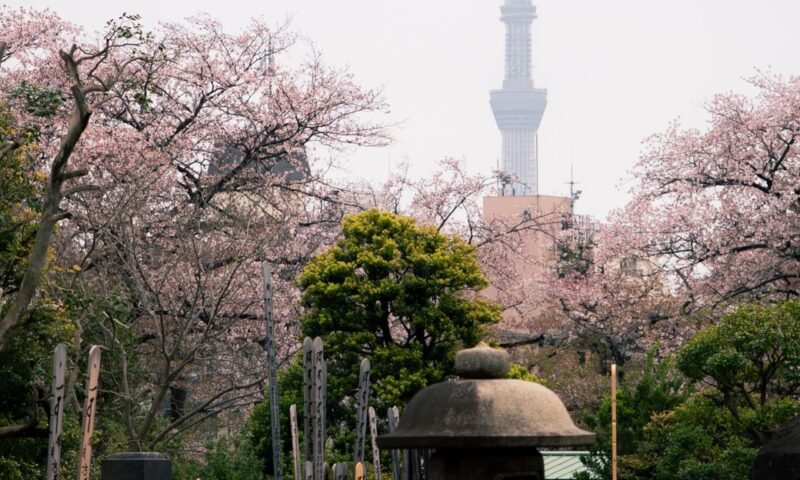
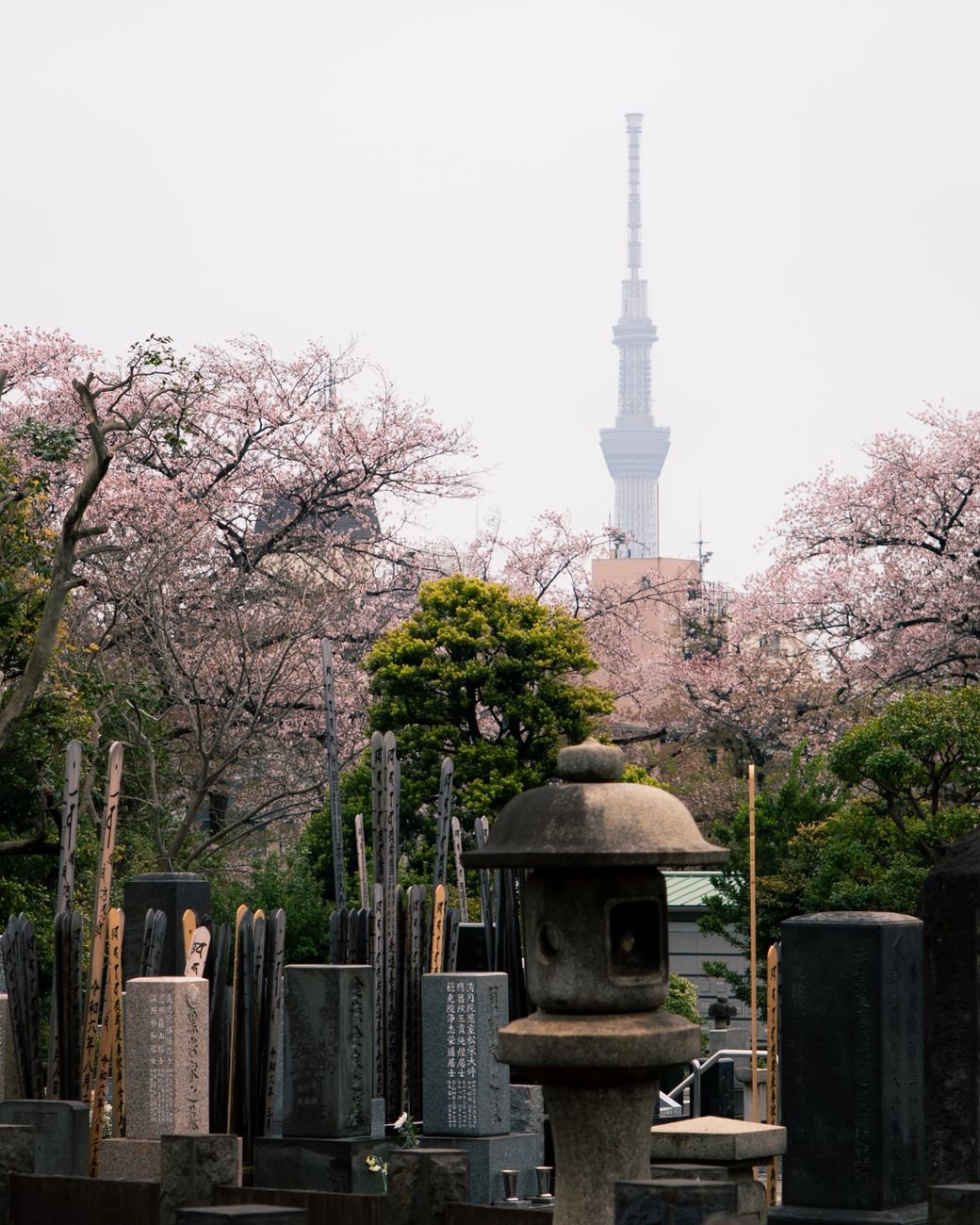
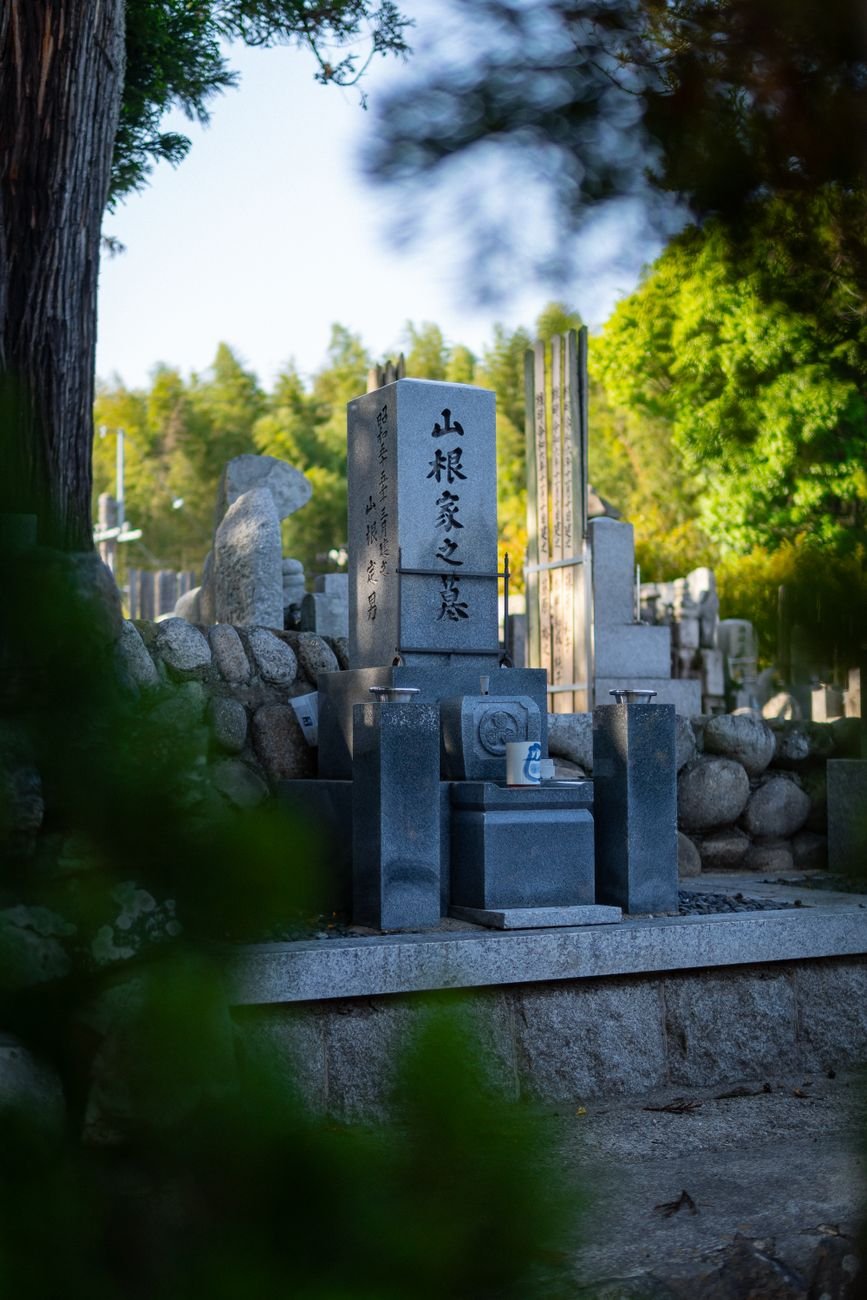
Aoyama Reien was established in 1872, during the early Meiji period, when the government was reorganizing how Tokyo handled burial as the city rapidly modernized. It was one of the first public cemeteries created under the new municipal system, built on land that had belonged to the Aoyama family estate, and it was designed, unusually for the time, without a single dominant religious affiliation — it holds Buddhist, Christian, and secular graves side by side, along with a large foreigners’ section dating back to the nineteenth century. At roughly 26 hectares, it remains one of the biggest cemeteries inside the Yamanote loop, and its gravel paths are lined with cherry trees that make it, somewhat jarringly, a popular hanami spot every spring.
It is also the final resting place of a striking number of well-known figures from modern Japanese history: political leaders, writers, and industrialists from the Meiji and Taisho eras among them. None of that history is secret or sensitive — it is printed on municipal plaques and covered in city guidebooks. What interests me is less who is buried there and more how a working civic cemetery, mowed and maintained and visited by mourners every single day, became one of the most frequently cited “haunted” locations in Tokyo taxi driver culture specifically.
The Vanishing Passenger
The core story — a fare who disappears from the back seat before the destination is reached — is not unique to Aoyama. Versions of it circulate around several cemeteries and disaster-associated sites across the city, and the broader “phantom passenger” motif has analogues in oral traditions well beyond Japan; folklorists studying urban legends have long noted similar “vanishing hitchhiker” stories turning up independently across different countries and eras. According to the version most often told about this particular stretch of road near the cemetery, the passenger tends to ask to be taken to an address inside or adjacent to the cemetery grounds, sits quietly, and simply isn’t there anymore when the driver glances back near the destination. Some tellings add a damp back seat afterward, or a fare left behind on the seat that doesn’t match any currency in circulation. I want to be clear that I have never found a verifiable, attributed first-hand account that holds up to scrutiny — what exists is a dense, consistent layer of secondhand telling, repeated by drivers who heard it from other drivers, which is itself the interesting part. A story this specific, and this geographically anchored, surviving across generations of taxi drivers who turn over every few years, says something about how a place’s reputation gets inherited independently of any one person’s actual experience.
There’s a practical theory sitting underneath the folklore, too, and I find it more compelling than the supernatural one. Late-night routes that skirt the cemetery’s long, dark perimeter walls are quiet, poorly lit by central Tokyo standards, and visually monotonous in a way that can genuinely mess with a tired driver’s sense of time, especially on overnight shifts when fares are sparse and fatigue sets in. A driver who glances in the mirror after a long, hypnotic stretch of unchanging wall and finds the back seat empty may simply have picked up a passenger who got out quietly at a stop they don’t clearly remember. It’s a far less dramatic explanation, but the kind of mundane, human cause that keeps turning up once you actually dig into these stories rather than just repeating them.

Walking the Grounds in Daylight
Visiting during the day gives you an entirely different place than the one in the taxi stories. Families tend graves with fresh flowers and incense, groundskeepers sweep the gravel paths, and in late March and early April the central avenue of cherry trees draws crowds who are there for hanami rather than for anything spectral. The foreigners’ cemetery section, tucked into one corner, is worth seeking out if you’re interested in Meiji-era Tokyo — the headstones there, many in English, French, and German, are a quiet record of the foreign diplomats, missionaries, and merchants who lived and died in the city during its first decades of opening up to the world.
What struck me most on my own visit wasn’t any sense of dread but how ordinary and civic the place felt — joggers cut through on morning routes, an elderly man read a newspaper on a bench near one of the central intersections, and nobody around me seemed remotely aware that their cemetery has a reputation among the city’s taxi fleet. That gap between the place as it actually is and the place as it’s talked about late at night in a cab is, to me, the real story here.
Visiting Respectfully
If you do go, treat it as what it is: a cemetery that people visit to grieve, not a sightseeing attraction built around ghost stories. Stick to the public paths, keep your voice down, and don’t photograph mourners, open graves, or specific family plots without a very good reason and a lot of discretion — a wide shot of the cherry-lined avenue is one thing, a close-up of someone’s family headstone is another. The grounds are open to the public during daylight hours, and there’s no reason to visit after dark looking for taxi ghosts; doing so adds nothing but disturbs a place where people come to be alone with their grief. If you’re curious about the folklore, the far better way to encounter it is the way I did — by asking a Tokyo taxi driver on a quiet night, and letting them decide how much of the story they want to tell you.
Note: images accompanying this article are illustrative stock photos and do not necessarily show the specific site discussed.

コメント