





The first thing you notice at Awashima Shrine isn’t a smell of incense or the crunch of gravel underfoot. It’s the eyes. Thousands of them, glassy and unblinking, staring out from every shelf, alcove, and stacked crate inside the shrine buildings in Kada, a fishing town on the western edge of Wakayama Prefecture. I’d come expecting a quiet countryside shrine with maybe a curious display case of old dolls. What I found was a building that felt less like a place of worship and more like the world’s most patient waiting room, where tens of thousands of dolls sit shoulder to shoulder, apparently waiting for something none of them can name.
I’ve spent the better part of seven years in Japan chasing down places like this, not to be scared for the sake of it, but because the stories that build up around a location almost always point back to something real. Awashima Shrine is one of the clearest examples I’ve found. It isn’t a ruin or an abandoned building; it’s an active, working shrine that people visit every day, and the “haunted” reputation it has picked up online sits, a little awkwardly, on top of a much older and more tender tradition.
A Shrine Born from a Storm
According to the shrine’s own account of its founding, the story begins with Empress Jingu, the legendary third-century regent, who was caught in a storm while sailing back from the Korean peninsula. Guided by a divine oracle, her ship found shelter on Tomogashima, a small cluster of islands just off the coast near Kada, where two deities were already said to be enshrined: Sukunahikona-no-Mikoto, a god associated with medicine, brewing, and craftsmanship, and Omononushi-no-Mikoto. Generations later, Emperor Nintoku, said to be Jingu’s grandson, is recorded as having moved the shrine from the island to its current mainland site in Kada, reportedly on the third day of the third month, a date that later became significant for reasons I’ll get to.
Whether every detail happened exactly as told, I can’t verify, and the shrine itself presents it as tradition rather than certified history. What is verifiable is that Awashima Shrine has stood in Kada for centuries and developed, quite naturally, into a place associated with women’s health, safe childbirth, and matters of the body often difficult to talk about elsewhere. That association is the real hinge the rest of the shrine’s reputation turns on.
Why People Send Their Dolls Here to Die
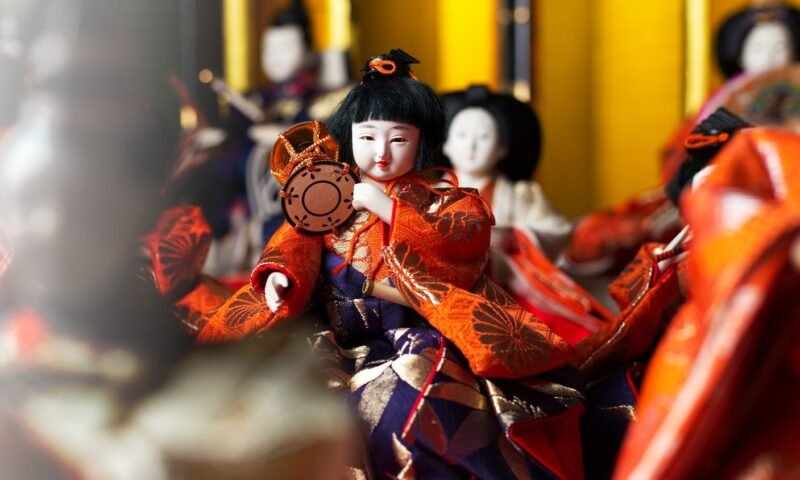
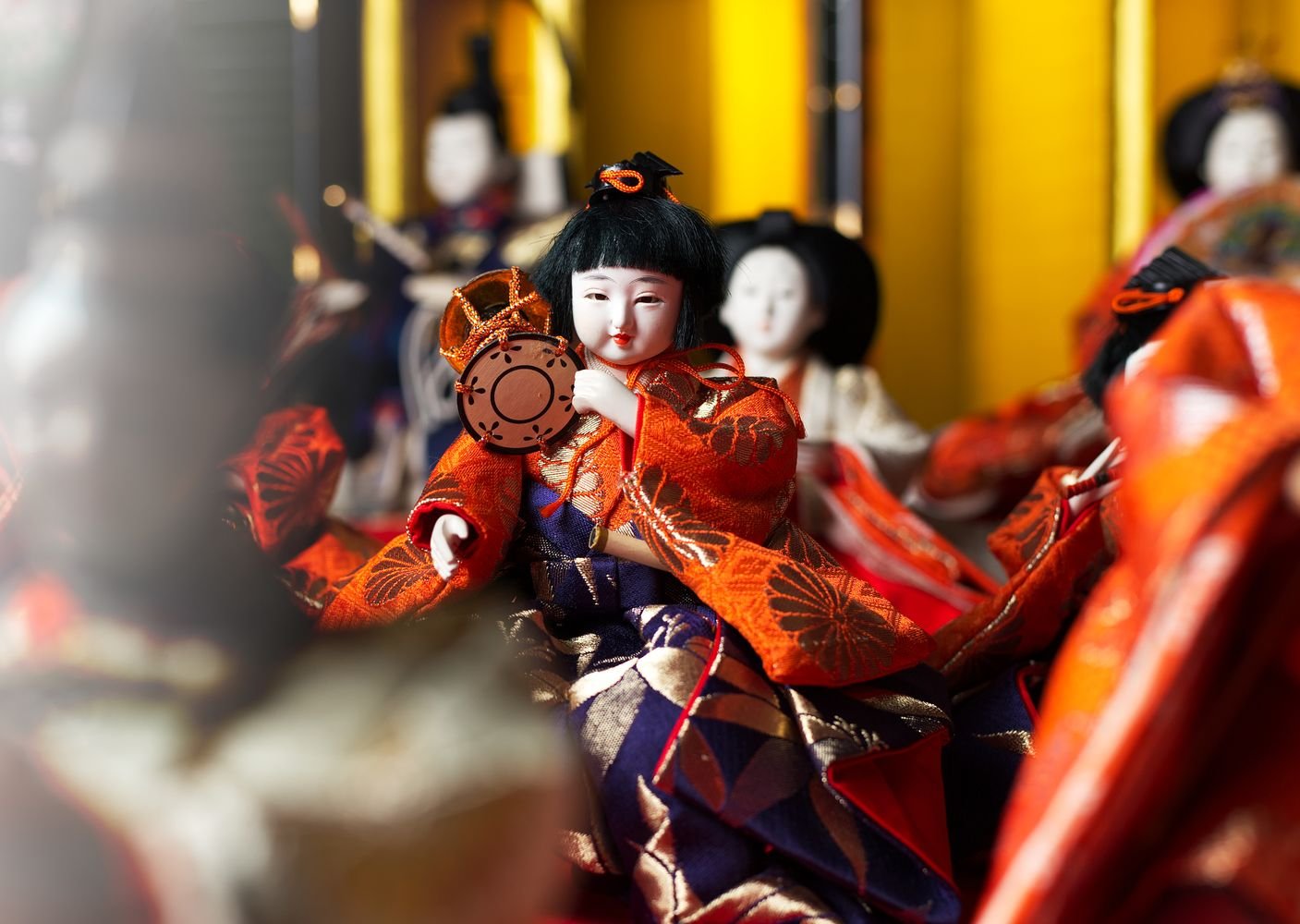
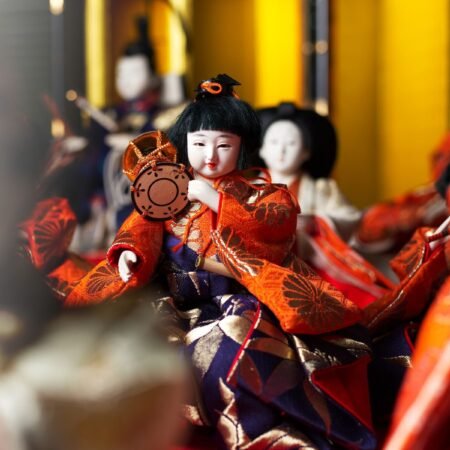
Somewhere around the late seventeenth century, records connect the shrine to the custom of hina ningyo, the elaborate dolls displayed each spring for Hinamatsuri, the Doll Festival that celebrates the health and happiness of young girls. In many Japanese households, a doll isn’t simply a toy or a decoration. There’s a long-held belief, more folk custom than formal religious doctrine, that an object closely associated with a person for long enough can absorb something of them: a trace of their spirit, their luck, or their troubles. Throwing a doll in the rubbish, by this reasoning, isn’t just wasteful. It can feel like abandoning something that was, in some small way, alive.
That belief is what fills Awashima Shrine’s halls. Families from across Japan send dolls here that they can no longer keep but don’t want to simply discard: hina dolls outgrown by daughters now grown, dolls inherited from a grandmother’s house, dolls that, according to their former owners, seemed to change over the years in ways that felt unsettling. The shrine performs kuyo, a memorial rite that exists across Japanese Buddhist and Shinto practice for all manner of objects people feel gratitude toward, and dolls are among the most common candidates. It’s less an exorcism than a formal thank-you and goodbye, the kind of closure a bin bag can’t provide.
Setting Them Adrift
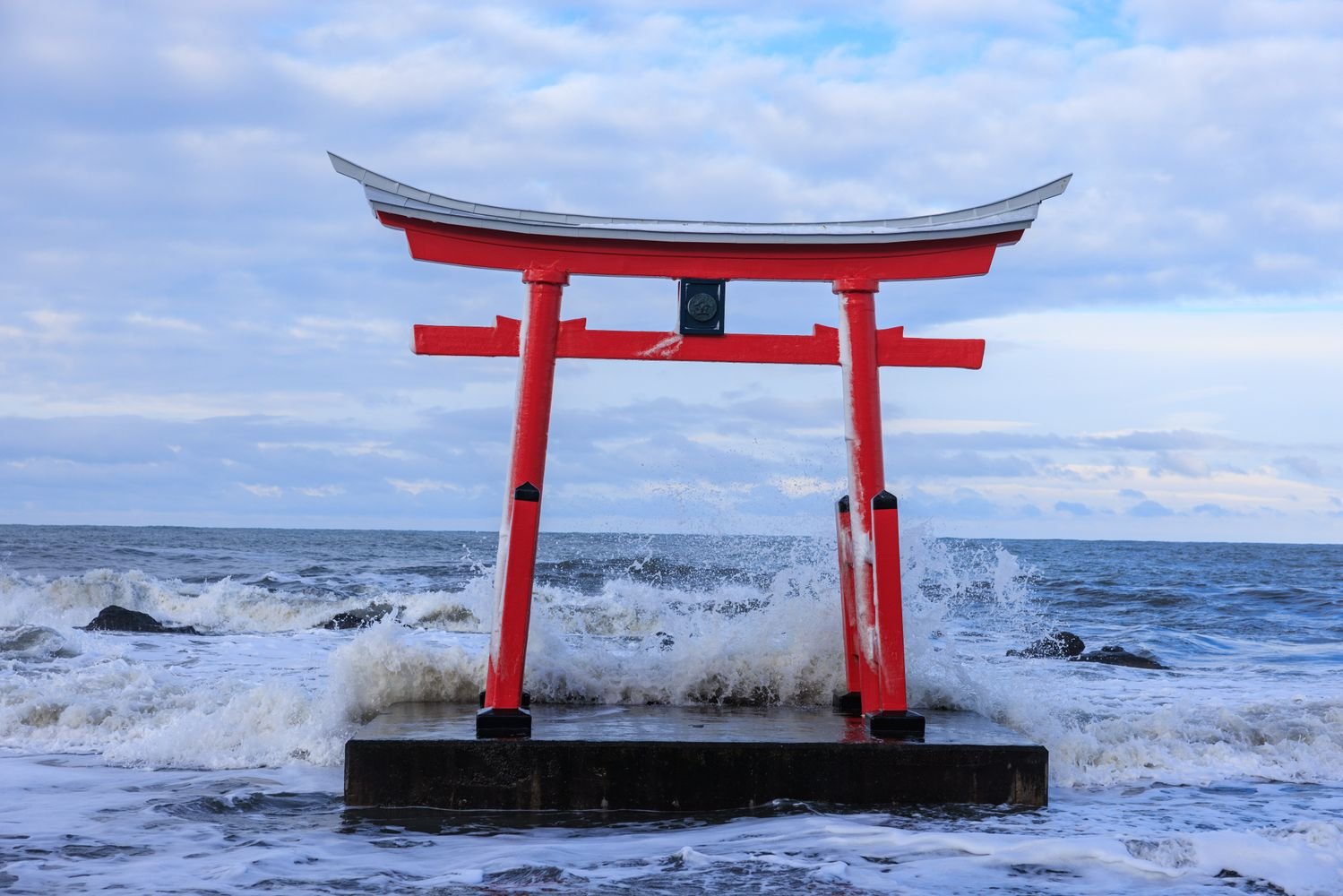
The shrine’s most photographed event is Nagashi Bina, the doll-floating ceremony held every year on March 3rd, the same date tradition assigns to the shrine’s founding. Hina dolls donated over the previous year are placed aboard a small wooden boat, priests perform purification rites on the beach at Kada, and the boat is set out into the bay, said to carry away the accumulated misfortune and illness of the dolls’ former owners as it goes. It’s a striking, almost cinematic image: a boat piled with painted faces and court robes, drifting out past the torii gates toward open water. I watched footage of it before I visited and found it more moving than eerie, closer to a funeral procession than a horror scene.
Inside the shrine itself, the atmosphere is different, and I understand why it’s become a fixture of “most haunted” lists online. Rows of dolls stacked floor to ceiling, many donated decades ago and never reclaimed, do not photograph as tranquil. Visitors report doors that feel heavier than they should, a persistent sense of being watched, or a doll here and there that looks, in certain light, as though its expression has shifted. I felt some version of that discomfort myself, though I’d stop well short of calling it supernatural. A room built to hold ten thousand small human faces is going to feel strange to the nervous system regardless of what else is going on.
What the Dolls Are Really Carrying
The more I read about Awashima Shrine, the less it seemed like a story about vengeful spirits and the more it seemed like a story about grief with nowhere else to go. A doll tied to a childhood someone isn’t ready to fully let go of, or to a relative who has since passed: these are the kinds of things that end up in Kada, and the shrine gives them somewhere to be that isn’t a landfill. The eerie reputation is real enough as an online phenomenon, but it sits on top of something older and, to my mind, more human: a culture that has built a formal, respectful process for the things we can’t quite bring ourselves to throw away.
If you do visit, treat it as the working shrine it is rather than a haunted attraction. The doll storage areas are not there for visitors to rifle through for the creepiest specimen, and photography in some of the more crowded rooms is restricted out of respect for the families who left their dolls there in good faith. Kada itself is a small, unhurried fishing town, and the shrine sits within its ordinary daily rhythm rather than apart from it, so quiet footsteps and a lowered voice go a long way. If you’re visiting during Hinamatsuri season, expect crowds and give the priests room to work; the Nagashi Bina ceremony in particular is a religious rite, not a photo opportunity, and it’s best watched from a respectful distance. As with any shrine, stick to the areas open to the public, don’t touch or move the offerings, and remember that behind every one of those thousands of small, painted faces is a family who once loved it enough to give it a proper goodbye rather than a bin bag.
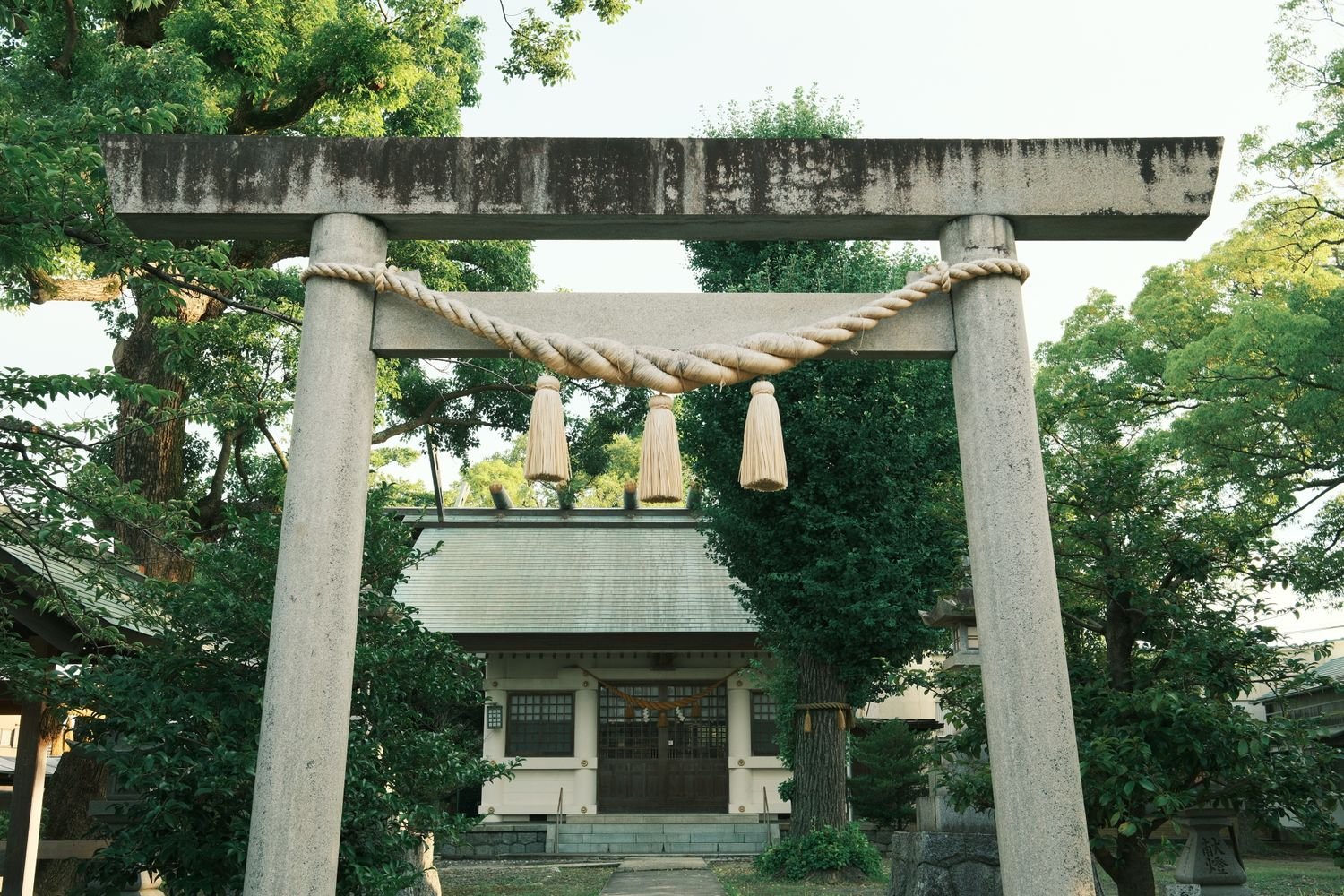
Note: images accompanying this article are illustrative stock photos and do not necessarily show the specific site discussed.

コメント