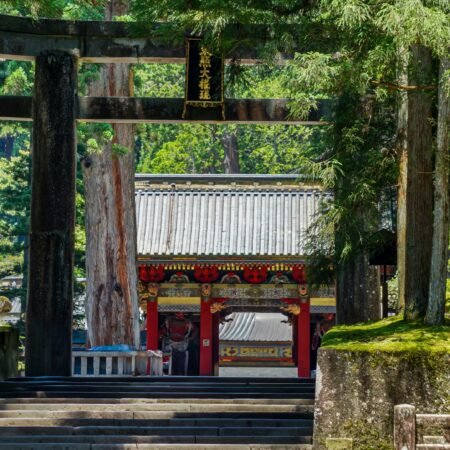






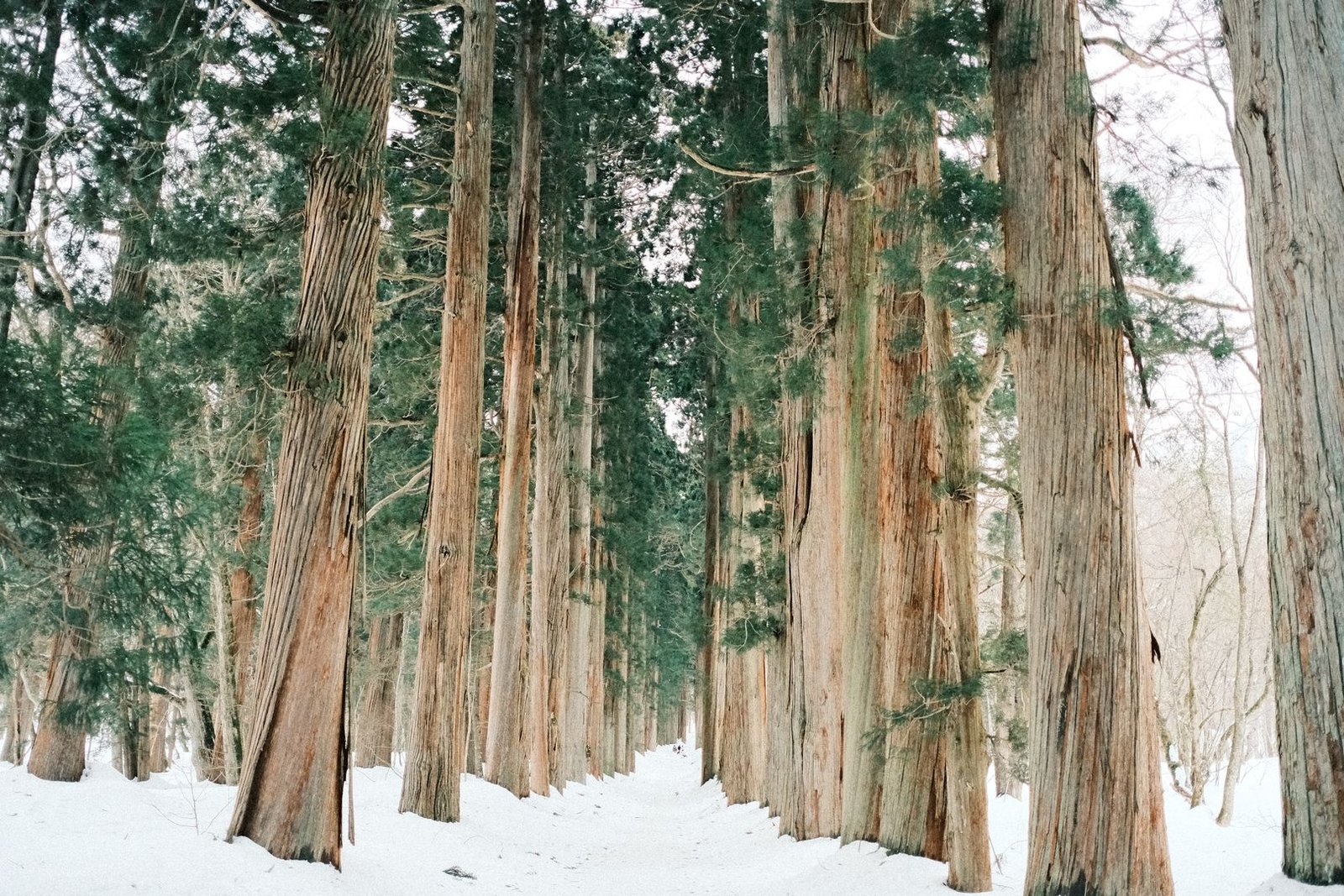
I’ll admit the stone disappointed me at first. I’d walked nearly two kilometres through the cedar forest at Kashima Jingu, past the deer enclosure, past worshippers bowing at the main hall, half-expecting something dramatic at the end of it — a cave mouth, a cracked boulder, something with presence. What I found, tucked beside the path to the inner shrine, was a stone about the size of a dinner plate, mossy at the edges, roped off with a modest shimenawa. A handful of visitors clapped twice, bowed, and moved on without a second glance.
That, I eventually learned, is rather the point. According to local tradition, what you see above ground is only the tip of something much larger — a stone that reaches so deep into the earth that no one has ever found its base. And what it is supposedly holding down, generation after generation, is the thing the Edo period blamed for every earthquake that ever rattled a teacup off a shelf.
A Shrine Older Than the Written Record
Kashima Jingu sits in Kashima City, Ibaraki Prefecture, and by its own legendary chronology it was founded in 660 BC, the first year of the mythical Emperor Jimmu’s reign. Historians are, understandably, more comfortable with the Hitachi Fudoki, an 8th-century regional record that documents a ritual hall here being rebuilt in 649 AD — itself proof the site was already considered old enough to need restoring.
The shrine is dedicated to Takemikazuchi-no-Okami, a deity associated with martial prowess, and before the Second World War it was one of only three shrines in the entire country permitted to carry the title “Jingu” rather than the more common “Jinja” — the others being Ise and Katori. Katori Jingu, just across the prefectural border in Chiba, is effectively Kashima’s sister shrine, and the two have long been linked through swordsmanship: Tsukahara Bokuden, the 16th-century master who founded the Kashima Shinto-ryu school, trained under the influence of both. Walk through the dojo near the grounds today and you’ll still find scrolls bearing Takemikazuchi’s name hanging on the walls.
None of which, on its own, explains the rock.
The Catfish Beneath Japan
The story the stone is supposedly guarding against involves Namazu, a colossal mythical catfish said to live coiled beneath the Japanese archipelago. According to the legend, every time the catfish stirs, shifts, or thrashes its tail, the ground above it shakes. Takemikazuchi’s role, the story goes, was to drive a stone peg through the catfish’s head (in some tellings, pressing down a stake near its tail) to pin it in place and keep the earth still.
What’s left today, locals say, is the top of that peg: the kaname-ishi, or “pivot stone,” concave in the middle, no more than about 30 centimetres across at the surface. Not far from it stands a small statue showing Takemikazuchi doing exactly what the legend describes — pressing the catfish’s head into the ground.
The best-known episode associated with the stone involves Tokugawa Mitsukuni, the 17th-century lord of the Mito domain (popularly remembered today as “Mito Komon”). Local tradition holds that Mitsukuni, curious or simply stubborn, ordered the stone excavated to find out how deep it really went. His men are said to have dug for seven days and seven nights without ever reaching the bottom, eventually giving up and filling the hole back in. I can’t tell you whether that happened exactly as told — no contemporary record I’ve found confirms it independently — but it’s the version every local guide I spoke to repeats, almost word for word, and it tells you something about how seriously the stone’s bottomlessness is taken here.
Interestingly, Katori Jingu has a kaname-ishi of its own, and shrine tradition in both towns holds that the two stones are connected underground, pinning opposite ends of the same catfish. I’d treat that detail the way I treat most of this — as a good story passed down with real affection, not a geological claim.
When the Catfish Shook Edo
Namazu’s cultural afterlife owes a great deal to one very real event: the Ansei Edo earthquake of 1855, a roughly magnitude 6.9 quake that struck the city directly. In its aftermath, Edo’s woodblock print workshops produced an enormous wave of what became known as namazu-e — “catfish pictures.” Some showed Takemikazuchi scolding or wrestling the catfish back into submission; people bought them as talismans, hoping the god’s protection would rub off. Others were more playful than frightened, pairing the catfish with Daikokuten, the god of wealth, because all that destruction meant steady work for Edo’s carpenters and plasterers rebuilding the city. A few prints even poked fun at the authorities, using the catfish as cover for satire that would have been risky to state outright.
It’s a reminder that this wasn’t only ever a ghost story meant to unsettle people. It was also, for a city that genuinely lived with the threat of earthquakes, a way of making an uncontrollable danger small enough to draw, laugh at, and sell on a street corner.
There’s a quieter, more sobering postscript. In March 2011, the Tohoku earthquake and tsunami caused real damage at Kashima Jingu itself — the great stone torii at the entrance was destroyed, and dozens of stone lanterns on the grounds were toppled. The shrine has since been repaired. I mention it not to make light of the legend but because it’s worth remembering, standing at that small mossy stone, that the people who tell this story have also lived through the real thing more than once.
Visiting Respectfully
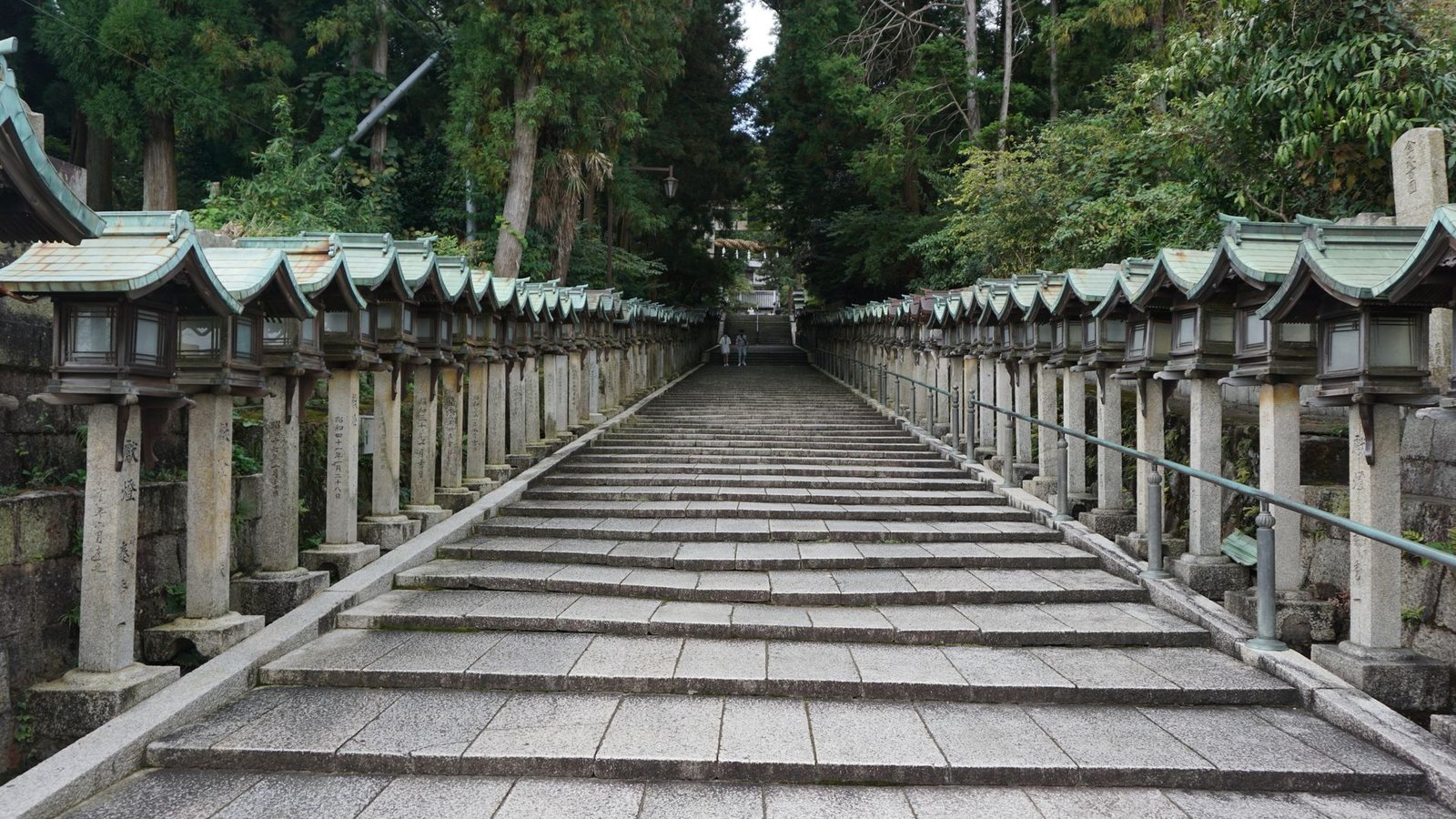
Kashima Jingu is a working shrine, free to enter and open around the clock, roughly a ten-minute walk from Kashima-Jingu Station. The kaname-ishi sits along the forested approach toward the inner shrine (Okunoin), past the deer enclosure, and is easy to miss if you’re not looking for it — which is, I suspect, exactly in keeping with its character. The nearby Mitarashi pond, fed by natural spring water, has traditionally been used for ritual purification, and is worth the extra few minutes’ walk if you have them.
If you do go: stay on the marked paths, don’t step over the rope around the stone or try to move it to test the legend for yourself (people have tried, apparently without success, for centuries), and keep your voice down near the main hall when services are underway. The deer on the grounds are considered messengers of the gods here, much as they are in Nara, so admire them rather than feed them. None of this requires any special access or permission — it’s simply a quiet, genuinely old shrine that happens to be sitting, according to the people who’ve tended it for over a thousand years, on top of something that isn’t supposed to move.
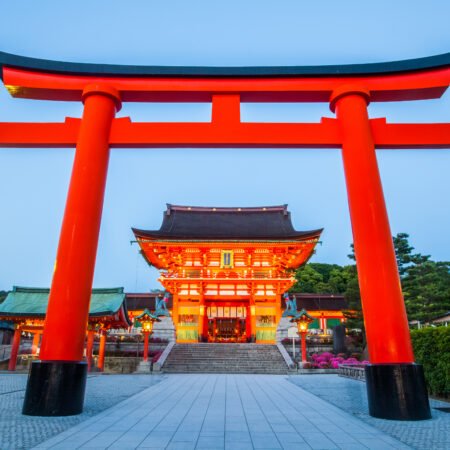
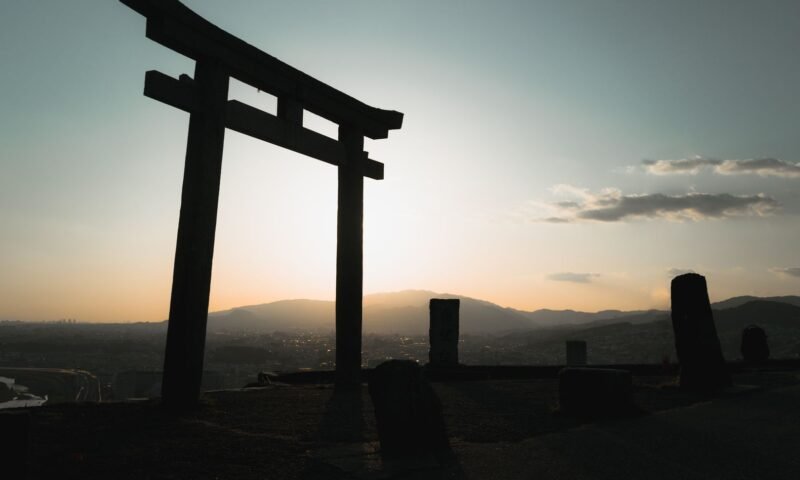
Note: images accompanying this article are illustrative stock photos and do not necessarily show the specific site discussed.

コメント