





I didn’t expect to be handed a costume five minutes after getting off the train.
“You want to dance tonight?” the woman at my guesthouse asked, holding up a bundle of red and yellow fabric covered in little brass bells. I’d come up to Aomori for one reason: to see the nebuta, the towering illuminated floats I’d been staring at in photos for years. I had not planned on becoming part of the parade myself. But that’s the strange magic of Nebuta Matsuri — one of the only festivals in Japan where a total stranger fresh off the shinkansen can end up jumping through the streets with a few thousand locals, chanting until her voice gives out.
What Exactly Is Nebuta Matsuri?
Nebuta Matsuri runs every August 2nd through 7th in Aomori City, at the northern tip of Honshu, and it’s one of the “big three” summer festivals of the Tohoku region, alongside Sendai’s Tanabata and Akita’s Kanto Matsuri. Nobody agrees on exactly where it came from. Some trace it back to Tanabata purification customs, where villagers floated lanterns down rivers to carry away the drowsiness (nemuri, in Japanese) that crept in during the exhausting mid-summer harvest push. Others tell a more dramatic story involving the Heian-era general Sakanoue no Tamuramaro, who supposedly used giant lit lanterns and flute music to lure enemy forces out of hiding. I like that nobody can prove either version — it makes the whole thing feel a little more like folklore and a little less like a tourism pamphlet.
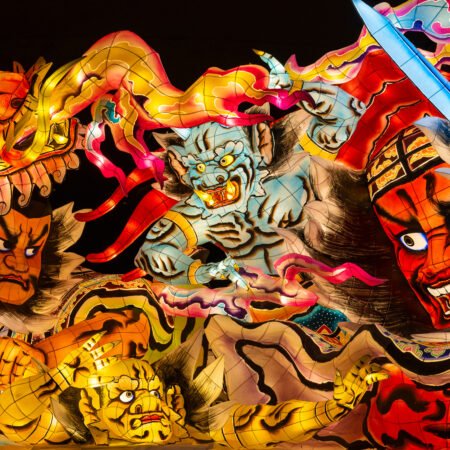
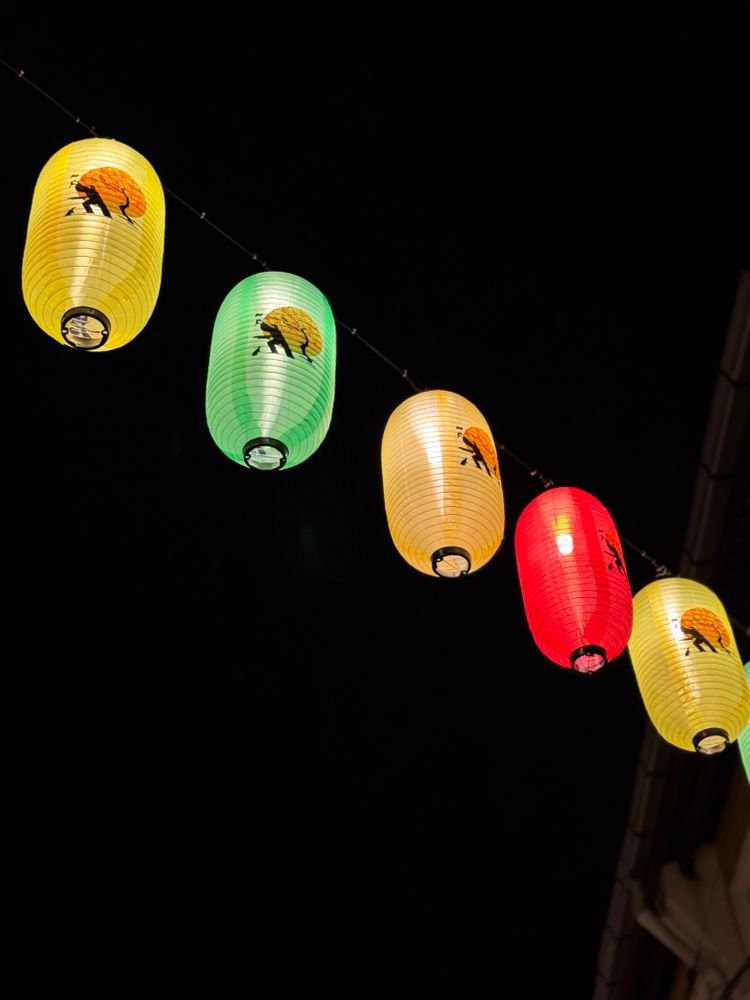
Whatever the origin, what it turned into is one of the most visually overwhelming things I’ve seen in five years here: dozens of nebuta, some nearly five meters tall and nine meters wide, rolling slowly down the main streets of downtown Aomori after dark, lit from the inside so the painted washi paper glows like stained glass.
Becoming a Haneto for a Night
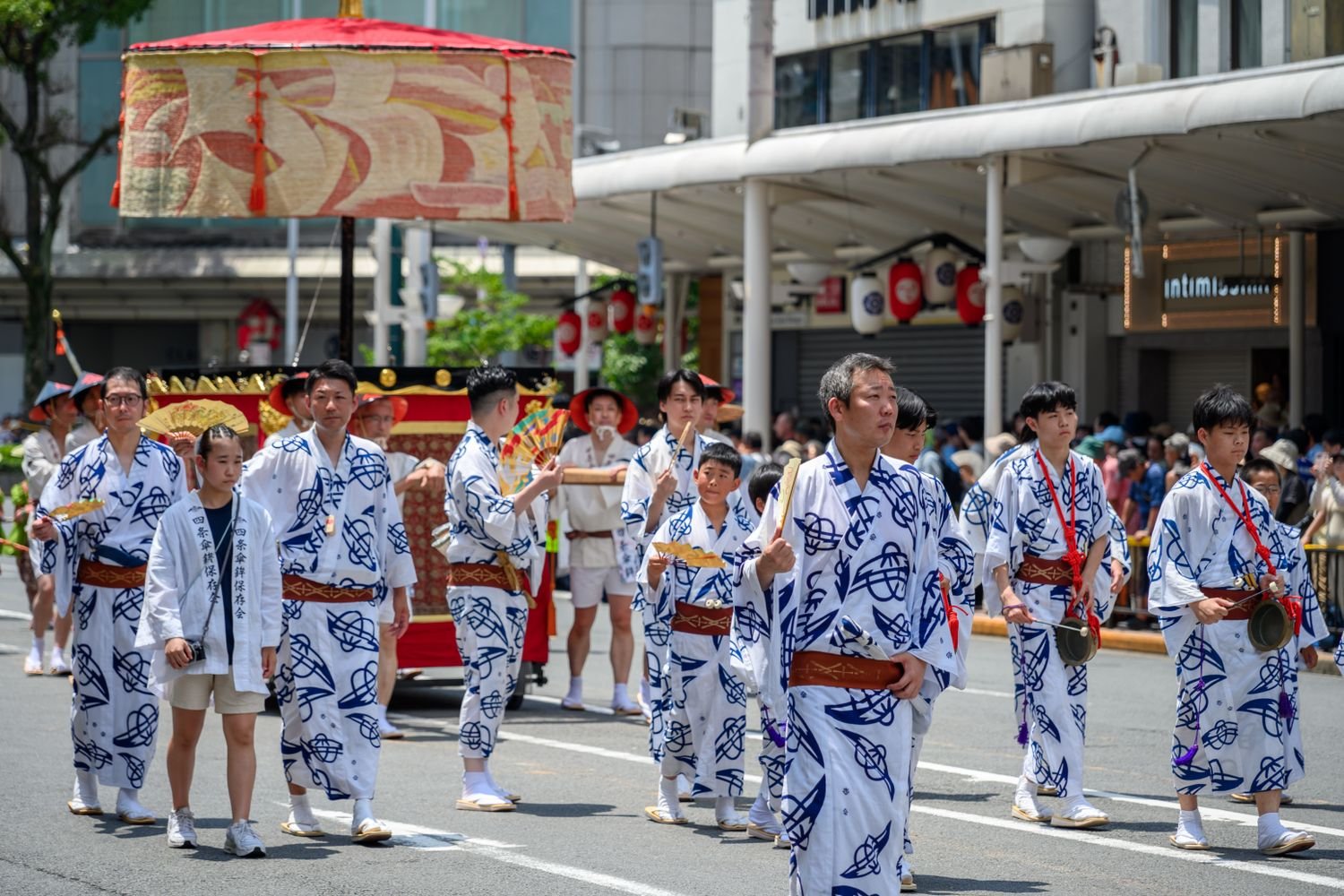
The dancers who hop and shuffle around the floats are called haneto, and the verb haneru just means “to jump.” Their costumes are genuinely gorgeous — a wide-brimmed woven hat decorated with flowers, a bright yukata-style robe, and rows of small bells sewn along the waist that jingle with every hop. A few tour companies and hotels around Aomori Station rent full haneto sets for the evening, usually for a few thousand yen, and unlike almost every other traditional festival I’ve been to in Japan, nobody checks whether you’re local, whether you’ve practiced, or whether you have any business being there. If you’re wearing the costume, you’re in.
So I put mine on in a train station bathroom, self-conscious about the bells announcing my every move, and shuffled toward the crowd gathering near the route. Someone in front of me started the chant — “Rassera, rassera!” — and the whole line took it up, over and over, hopping in place and then surging forward as a float rolled past. I won’t pretend I had any idea what I was doing for the first ten minutes. But haneto dancing doesn’t really require technique so much as stamina and a willingness to shout the same two words a few hundred times while sweating through August humidity. By the end of the night my legs ached in muscles I didn’t know existed, and I was grinning the whole walk back to my guesthouse.
The Floats That Take a Year to Build
Even if you skip the dancing entirely, the floats themselves are worth the trip north. Each one is built by a nebuta-shi, a master float artist, over the better part of a year — bent wire frames covered in hand-painted washi paper, depicting kabuki heroes, wrathful deities, and scenes from Japanese and Chinese mythology, all with the exaggerated, slightly fierce expressions that make nebuta so recognizable. The largest floats weigh around four tons and need dozens of people underneath to pull and steer them through the streets, occasionally rotating them in place so the crowd gets a full view from every angle. If you want a closer look at the artistry without fighting for street position, the Nebuta Warasse museum near Aomori Station keeps a handful of award-winning floats on permanent display year-round, along with taiko drumming demonstrations, and it makes a good rainy-day backup.
The final night, August 7th, is a little different from the rest: a selection of the best floats gets loaded onto boats and paraded across Aomori Bay instead of the streets, timed with a fireworks display that closes out the festival. It’s calmer than the nightly street parades — you’re watching from the waterfront rather than hopping in the crowd — but it’s a lovely way to end the week if your trip happens to line up with it.
Practical Notes for Visiting
Aomori City is reachable from Tokyo in about three hours on the Tohoku Shinkansen (change to the Hayabusa line), or by plane into Aomori Airport. The parade route runs through the city center every evening of the festival, with free standing viewing areas along the street and paid reserved seating if you’d rather not stand for two hours in the August heat. Book accommodation early — Aomori isn’t a huge city, and hotel rooms during festival week fill up months in advance. And save room for the food stalls lining the route; Aomori is apple country, so you’ll see apple everything, alongside fresh scallops and squid from the surrounding waters.
If you only see one summer festival in Japan, I’d have a hard time steering you away from this one. There’s something about being handed a costume by a stranger and ending up mid-crowd, chanting a word you didn’t know an hour earlier, that sums up a lot of what’s kept me here for five years.
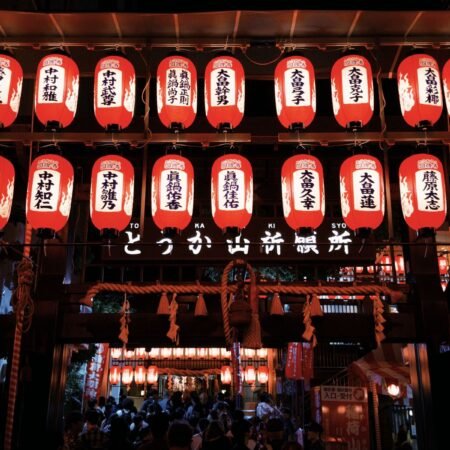
A quick note on photos: some of the images here are stock photos I’ve used to set the mood — they may not be the exact spot or moment I’m describing, just close in spirit.
コメント