







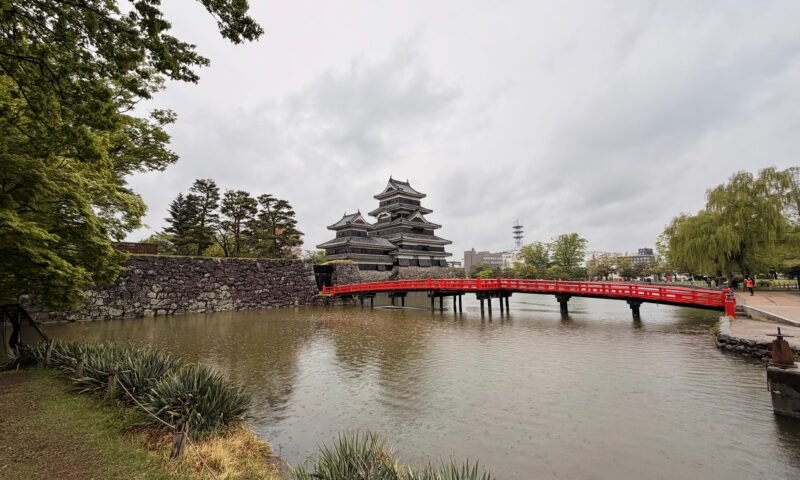
I first noticed it from the car park, of all places, with a vending-machine coffee in one hand and a half-eaten konbini rice ball in the other. Matsumoto Castle’s black-and-white tower was doing what every guidebook photo promises — floating against the Northern Alps like something out of a woodblock print — but I could have sworn the whole thing was leaning, just slightly, to one side. I put it down to the coffee. A local guide, setting up her folding sign by the moat, told me it wasn’t the caffeine. “People have been arguing about that lean for over a hundred years,” she said. “Some blame the ground. Some blame a curse.”
That was enough to send me down a research rabbit hole that’s taken up most of my weekends since moving to Japan, and it’s the reason I’m standing here again today, notebook in hand, trying to separate the engineering from the folklore.
Matsumoto Castle is not a reconstruction. Its five-story main keep, begun around 1590 under Ishikawa Kazumasa, is one of only twelve original castle towers still standing in Japan, and one of five designated National Treasures. It survived the Meiji government’s nationwide castle demolitions of the 1870s only because a group of local citizens, led by a man named Ichikawa Ryōzō, raised the money to buy it back. It is, by any measure, one of the most carefully preserved buildings in the country. Which makes the story of why it once started tipping over all the more interesting.
A Tax Protest That Ended in Execution
The story the guide was alluding to goes back to the Jōkyō Uprising of 1686, one of dozens of peasant tax revolts (hyakushō ikki) that flared up across Edo-period Japan when domains, squeezed for cash, leaned harder on the farmers who fed them. In the villages around Matsumoto, that pressure fell on a man named Tada Kasuke, a respected village headman who, according to local history, had already been removed from his post once for treating the farmers under him too fairly.

When the Matsumoto domain announced a new round of tax increases, Kasuke and other village leaders petitioned the castle’s magistrate for relief. The petition grew into a much larger protest, with thousands of farmers reportedly converging on the castle town demanding the tax hike be withdrawn. According to the local record, the domain backed down and lowered the taxes — a rare win for the farmers. It didn’t last. About a month later, Kasuke and roughly two dozen other leaders of the protest were arrested and executed, without the kind of formal trial that later generations would consider due process.
I want to be careful here, because it’s easy for an article like this to turn a real person’s death into set dressing for a ghost story. Kasuke was a real historical figure, and the uprising he led is still taught in Nagano schools as an early, unusually successful example of peasant organising against unfair taxation — successful, at least, until the reprisals came. What follows is the part that belongs more to legend than to the historical record.
The Curse, and the Tower That Started to Lean
According to the story told around Matsumoto, Kasuke cursed the Mizuno family — the lords of the domain who had ordered his execution — as he died. For a while, nothing much seemed to happen. Then, roughly two centuries later, in the final years of the Meiji era, people in the town began noticing that the castle’s tall, slender tenshu was tilting visibly to one side. The timing was close enough to the old story that locals needed no further encouragement: this, surely, was Tada Kasuke’s revenge, reaching across two hundred years to shake the lord’s castle down.
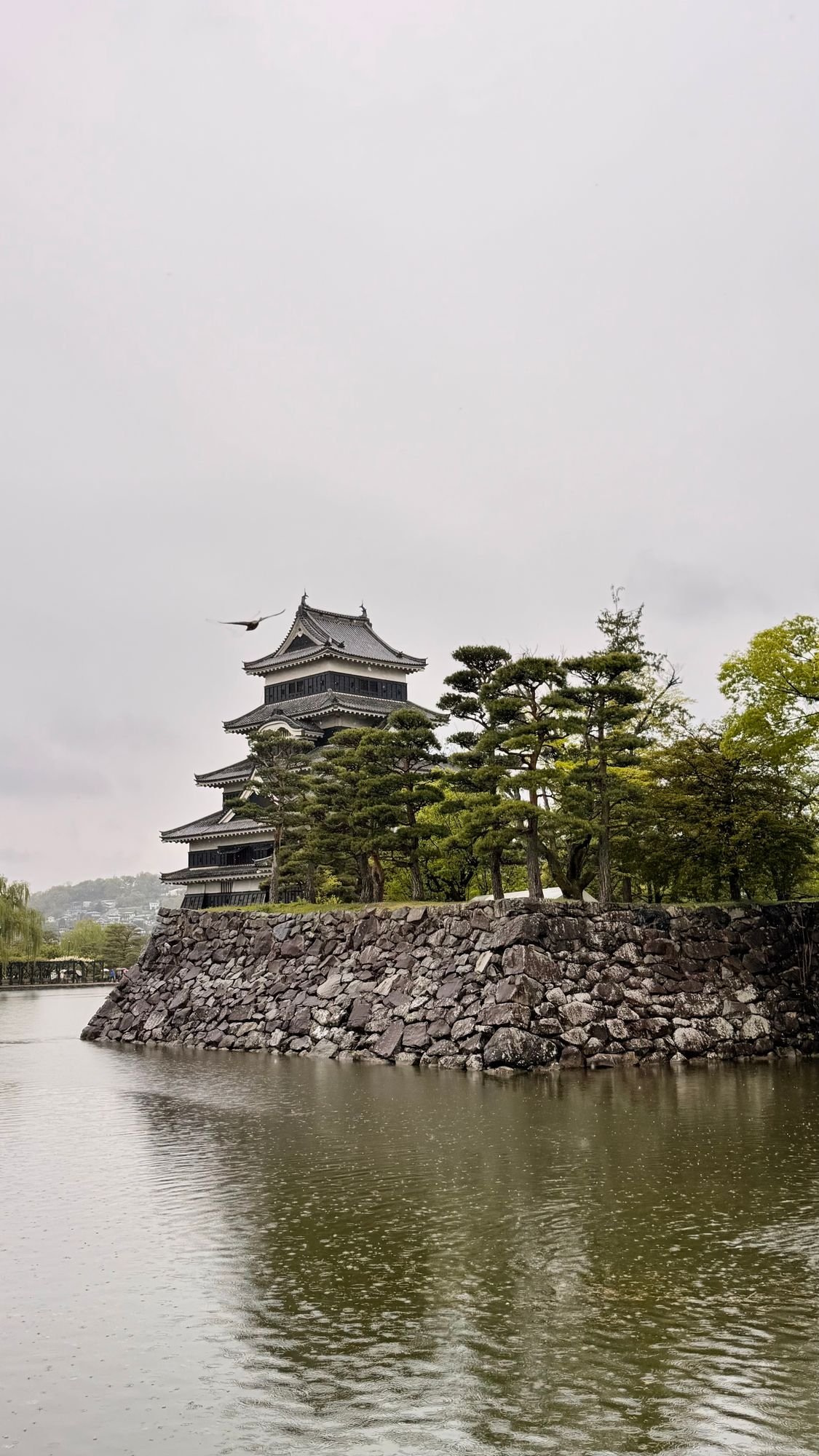
The more prosaic explanation, which historians generally favour, points to decades of neglect and an underlying structural weakness in the tower’s foundations rather than anything supernatural. Whatever the true cause, the lean was real enough to alarm a Meiji-era schoolteacher and local preservationist named Kobayashi Unari, who led the fundraising campaign that resulted in a major restoration between 1903 and 1913 — the renovation credited with saving the keep a second time. A further full dismantling and rebuild took place in the 1950s after the tower was formally designated a National Treasure, and the castle has absorbed the occasional modern earthquake since (a magnitude-5.4 tremor in 2011 cracked some interior plasterwork) without any repeat of the dramatic Meiji-era tilt.
What I find more interesting than the curse itself is what happened to Kasuke’s reputation afterwards. Rather than being remembered as a troublemaker who doomed his lord’s castle, he was eventually rehabilitated by the very Mizuno family he supposedly cursed, who commissioned a statue in his honour that now stands at a shrine dedicated to him outside the city. Today he’s remembered less as a vengeful ghost and more as a local symbol of ordinary people standing up to an unfair system — a folk hero whose “curse” has quietly become part of his legend rather than his legacy.
Visiting Matsumoto Castle Today
None of this should put anyone off visiting. Matsumoto Castle is a fully open, well-run tourist site with paid admission, English signage, and absolutely no structural concerns for visitors — the Meiji-era lean was corrected well over a century ago, and the building is inspected regularly as befits a National Treasure. The wooden stairs inside are steep and narrow by modern standards, so wear sensible shoes and take your time on the way up, especially when the keep is busy with school trips and tour groups. The moat path around the outside, where I had my coffee-fuelled double-take, is free to walk and makes for one of the best photo angles in the city, especially with Northern Alps snow on the peaks behind it.
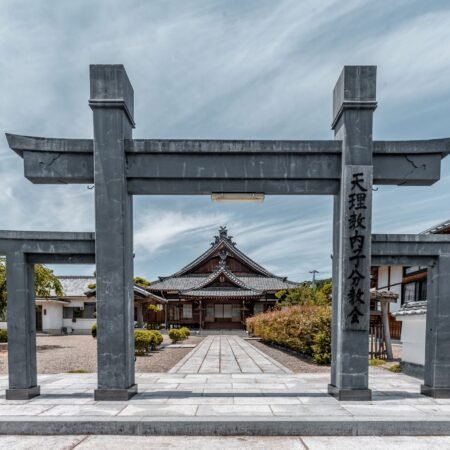
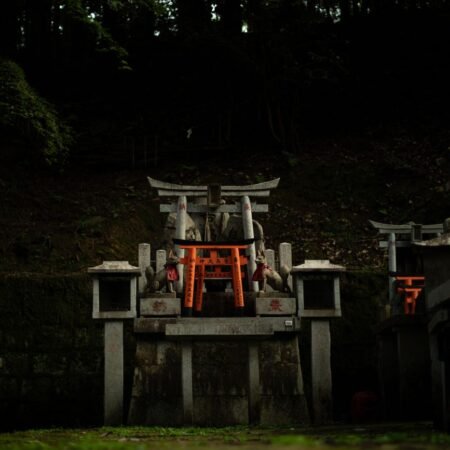
If you do visit the shrine dedicated to Tada Kasuke outside town, treat it as what it is: a memorial to a real person who died for a cause, not a photo prop for a ghost-hunting video. A quiet bow is worth more than a dramatic caption.
Note: images accompanying this article are illustrative stock photos and do not necessarily show the specific site discussed.


コメント