






I’d been to Enoshima half a dozen times before I ever noticed the bell. It’s a small bronze thing, hung near the Nakatsunomiya shrine partway up the island, and most people walk straight past it on their way to the observation tower. I only stopped because a young couple ahead of me rang it, took a selfie, and then clipped a padlock onto the railing beside it — the kind of thing you see on bridges in Paris, not on a Japanese island famous for a sea goddess. When I asked the shrine office about it later, the answer sent me down a rabbit hole that took up most of a grey November weekend: a bell for a dragon’s broken heart, on an island that, according to its own founding legend, was built specifically to deal with him.
A Story Written Down in 1047
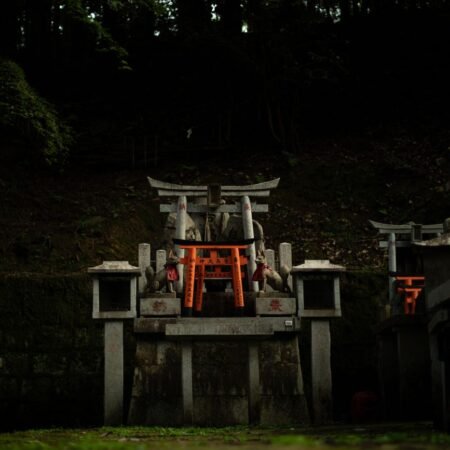
Enoshima sits just off the coast near Kamakura, close enough to the mainland that you can walk across on the Benten Bridge in about fifteen minutes. The shrine that covers most of it, Enoshima Jinja, is actually three shrines in one — Hetsunomiya, Nakatsunomiya and Okutsunomiya, stacked up the hill in that order — and the whole place is dedicated to Benzaiten, the goddess of music, eloquence and water who arrived, Japan by way of India and China, somewhere around the Nara period.
The origin story for all of this is a text called the Enoshima Engi, written in Chinese by a monk named Kōkei in 1047. It’s the kind of document that reads, on the surface, like a straightforward myth: a monster, a goddess, an island rising out of the sea. But it’s also the sort of text historians like to pick apart for what might be buried underneath it, and the leading theory is a practical one — that the five-headed dragon at the centre of the story is really a memory of a flood-prone river system, with its five “heads” standing in for tributaries that used to make life miserable for the villages around what’s now Koshigoe, on the mainland just across from the island.
The Dragon Who Ate the Valley
According to the legend as it’s usually told locally, long before Enoshima existed, a five-headed dragon called Gozuryu lived in a lake near Koshigoe and had been terrorising the area for generations — wrecking the land with storms and floods, and, in the grimmer versions passed down, taking children. Then, in the year the legend gives as 552, the sea off the coast began to churn, the ground shook for days, and an island rose out of the water where there hadn’t been one before. A goddess — Benzaiten — had descended from heaven inside it.
What happens next depends on which telling you hear, which is exactly the kind of inconsistency that tells you you’re dealing with oral tradition rather than history. In one version, Gozuryu is smitten the moment he sees her and asks her to be his wife; she refuses outright and only agrees to stop tormenting him once he swears to give up his destructive ways and protect the villagers instead. In a gentler, more romantic telling that’s become popular with modern visitors, the two eventually do marry, and it’s that version the dragon’s-lover’s bell on the hillside is named for — the Ryuren-no-Kane, literally the “Bell of the Dragon’s Love.” Either way, the stories agree on the ending: Gozuryu reformed, turned to face south toward the island, and died there, his body settling into the hills that still run between Enoshima and Kamakura. Local tradition points to a rise of land near Koshigoe — sometimes called Tatsu-no-kuchi-yama, “Dragon’s Mouth Hill” — as the place where his head came to rest, though I’ll say plainly that the exact spot, and whether any one existing shrine building is literally built on it, is something different sources describe differently, and I’m not going to pretend otherwise.
I don’t take any of this as a record of an actual dragon, obviously. But I don’t think the people who first told it did either, not quite in the way we mean “literally true.” A monster that floods your valley every few years and occasionally takes a child is a very recognisable kind of monster if you’ve ever lived somewhere with a bad river.
What’s Still There to See
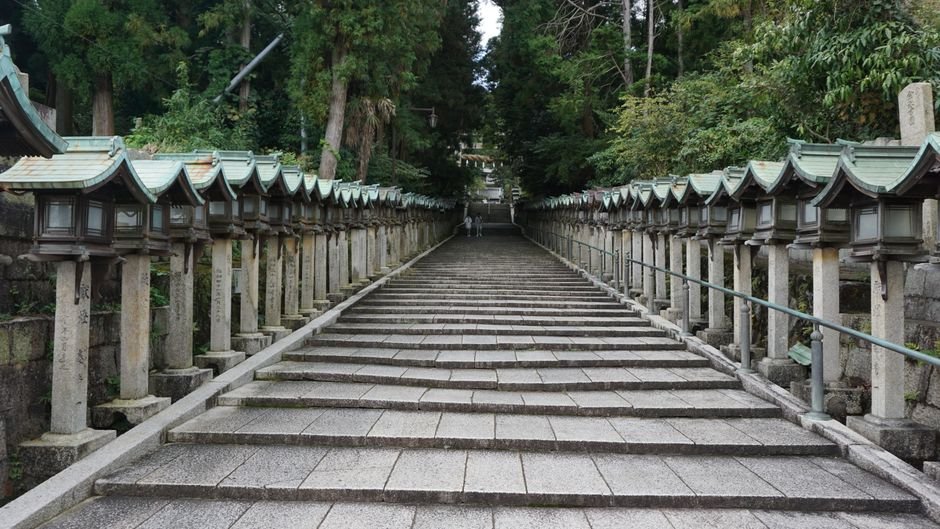
The three shrines of Enoshima Jinja are a reasonable afternoon’s walk, and Hetsunomiya, the lowest, houses the detail that first made me take the Engi seriously as living folklore rather than a dusty text: a seated, fully nude statue of Benzaiten, traditionally known as Hadaka Benten, kept in its own small hall. It’s one of only a handful of nude Buddhist or Shinto images in the country, and it’s the kind of thing that makes you understand why this island became, centuries ago, one of the most visited Benzaiten pilgrimage sites in Japan — stranger and more human than the usual run of serene, fully robed deities.
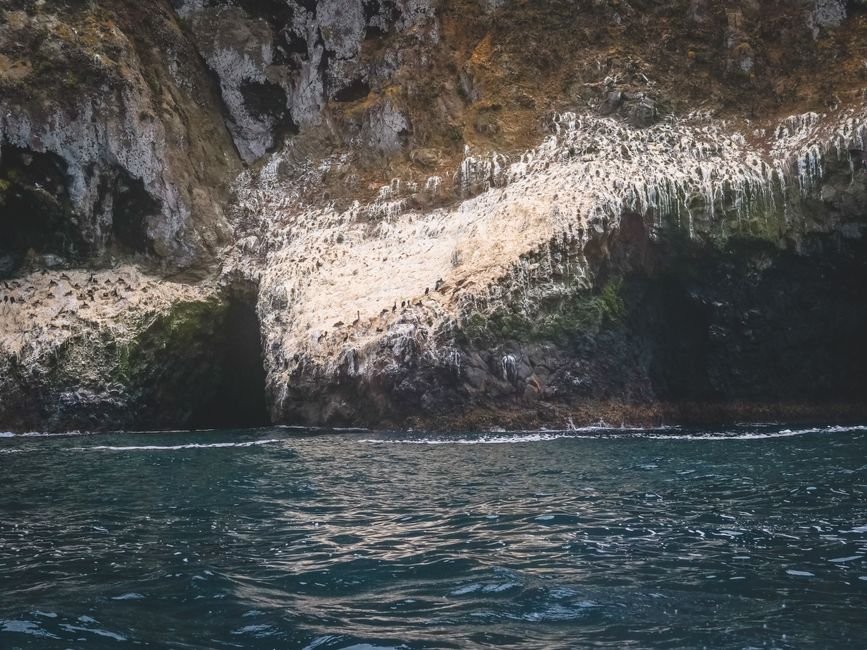
Up near the top of the island, past the botanical garden and the observation tower, a path drops down toward Iwaya, a pair of sea caves cut into the cliff at the island’s far end, where pilgrims have gone for centuries and where you’re handed a candle at the entrance because there’s no electric lighting inside. The deeper cave connects, according to the shrine’s own account, to a tunnel running under the hills toward Kamakura — not something I’d recommend testing, since it isn’t open for exploration beyond the marked public route.
Separately, Enoshima Jinja preserves one more dragon story worth knowing, from centuries after the Engi: the shrine’s own account holds that Hōjō Tokimasa, founder of the clan that would go on to rule Kamakura as regents, once came here to pray for his family’s fortunes and encountered a mysterious woman who left behind three scales as she vanished — scales that became the Hōjō clan’s mitsu-uroko crest, still visible on buildings and flags associated with Kamakura-era history today. Whether that woman was meant to be Benzaiten herself, a manifestation of her, or Gozuryu’s lingering trace, the shrine’s telling leaves open.
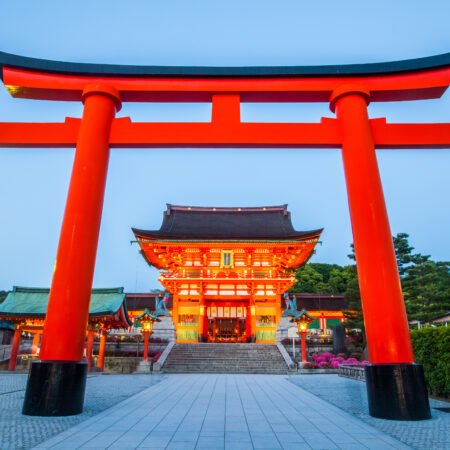
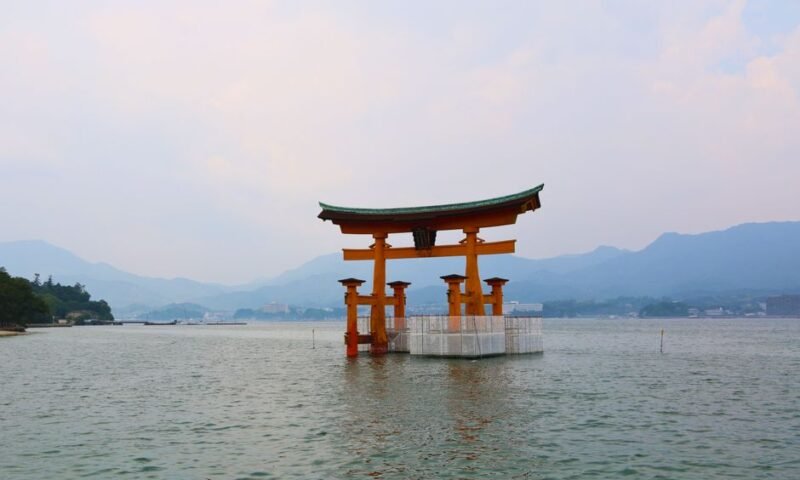
If you go, the caves and the steeper paths above them are the parts worth being careful about — the steps get slick after rain, the cave floors are uneven in near-darkness, and the far end of the island faces open water with genuinely strong currents, so it’s not a place to go wandering off marked paths for a better photo. The island gets crowded on weekends and during the summer fireworks season, so if quiet is what you’re after, go on a weekday morning, the way I did. And whatever you make of Gozuryu, it’s still somebody’s shrine, so the usual rules apply: a small bow at the torii, no leaning on the statues, and if you ring that bell on the hillside, maybe let the moment be the point rather than just the photo.
Note: images accompanying this article are illustrative stock photos and do not necessarily show the specific site discussed.

コメント