








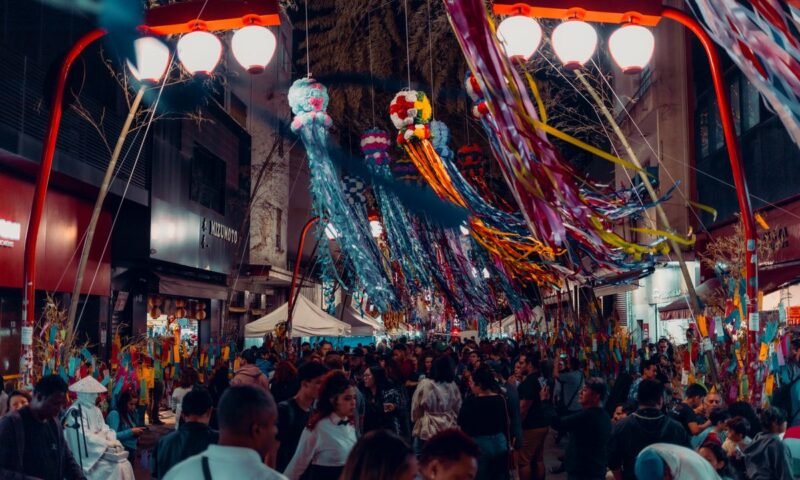
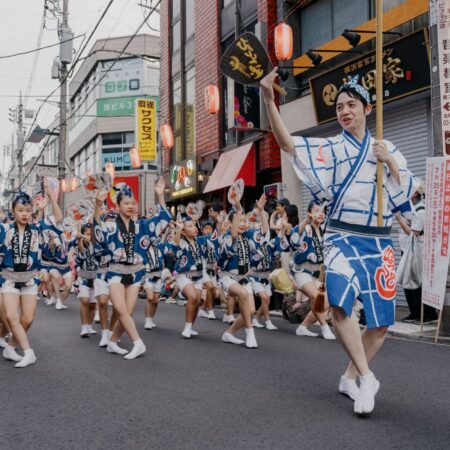
I didn’t plan on dancing. I’d walked down to Yamagata City’s main drag after dinner, camera in hand, fully intending to stand on the sidewalk like a sensible observer and just watch. Then a woman next to me — maybe in her sixties, wearing a straw hat ringed in bright red silk flowers — took one look at my empty hands, pressed a spare hanagasa hat into them, and said, “Yassho makasho! Just copy me.” Ten minutes later I was twirling a hat covered in fake safflowers down the middle of the street with ten thousand strangers, completely out of step and grinning like an idiot. That’s the Hanagasa Matsuri in a nutshell: you go to watch, and somehow you end up in the parade.
I’d lived in Japan for a few years before I finally made it up to Yamagata Prefecture for this one, and I regretted not going sooner. It’s one of the “big four” summer festivals of the Tohoku region, right up there with Sendai’s Tanabata, Akita’s Kanto, and Aomori’s Nebuta — but it felt smaller and friendlier than I expected, like a street party the whole city had been quietly rehearsing for months.
Where the Hats (and the Song) Actually Come From
The first thing I learned, standing in the crowd with a borrowed hat in my hands, is that the Hanagasa Matsuri parade itself is newer than it looks — it only started in 1963, originally as a spin-off of the Mount Zao summer festival, designed to pull tourists up into the mountains. It worked a little too well: the hat dance took on a life of its own and became the main event.
The song that everyone dances to, the Hanagasa Ondo, is older and has a much more working-class origin story. It’s said to have first been sung back in 1919 by laborers building an embankment on the shore of Lake Tokura in the nearby town of Obanazawa. As they pounded down the dirt with wooden tools, they called back and forth to keep rhythm — “yassho, makasho” — which is exactly the chant I heard shouted up and down the street two nights into my visit. I love that detail: a song born out of literally tamping down mud became the soundtrack to one of Tohoku’s biggest festivals.
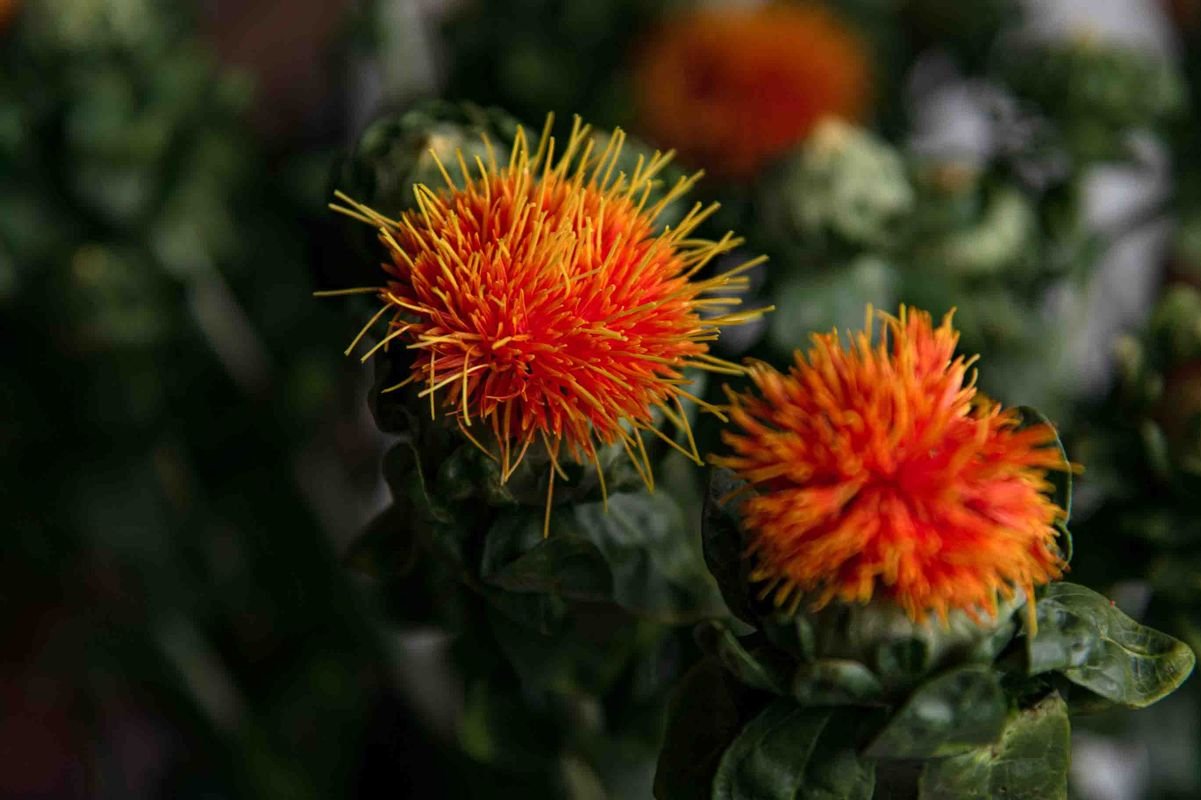
And then there’s the flower connection. Back in the early Edo period, Yamagata was Japan’s top producer of safflower, or benibana — a plant whose petals were dried and pressed into a brilliant red dye used for luxury textiles and lip rouge, and shipped all the way to Kyoto for a fortune. You can still see that history in the hats: each hanagasa is a woven straw cone decorated with clusters of artificial safflower blossoms in that same deep red-orange, nodding and bouncing with every turn of the wrist.
The Dance Itself: Two Styles, One Chant
Watching closely, I noticed the dancers weren’t all doing the same thing. Women in most groups perform a dance called Kunpu Mogamigawa, which is softer and more flowing, with the hat held low and swept in wide arcs. The men’s version, Zao Gyoko, is sharper and more grounded, with bigger steps and more forceful hat flips. Some groups — especially ones from Obanazawa, where the song originated — stick to a particular traditional twirling style passed down through their local dance association, while plenty of others clearly improvise, and I even spotted one younger troupe sneaking in a few moves that looked suspiciously like a pop idol routine. Nobody seemed to mind. Every group wears its own matching costume design, so visually the parade is less a single uniform dance and more a few hundred small performances happening one after another down the same street.
Ten Thousand Dancers on One Street
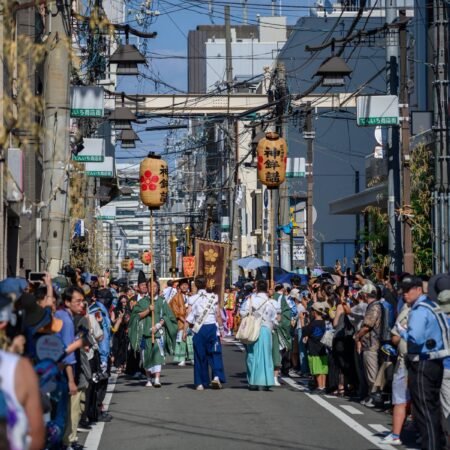
The scale of the thing is what really got me. Across the three nights of the festival, more than ten thousand dancers from around 160 different groups — company teams, neighborhood associations, school clubs, whole families — move down a roughly 1.2-kilometer route through the center of Yamagata City, from the Tokamachi area through Honcho and Nanokamachi-dori toward the old Bunshokan building. A float carrying the image of Zao Gongen, the mountain deity the whole festival is dedicated to, leads the way, and from there it’s just wave after wave of flower hats catching the streetlights for close to four hours each night.
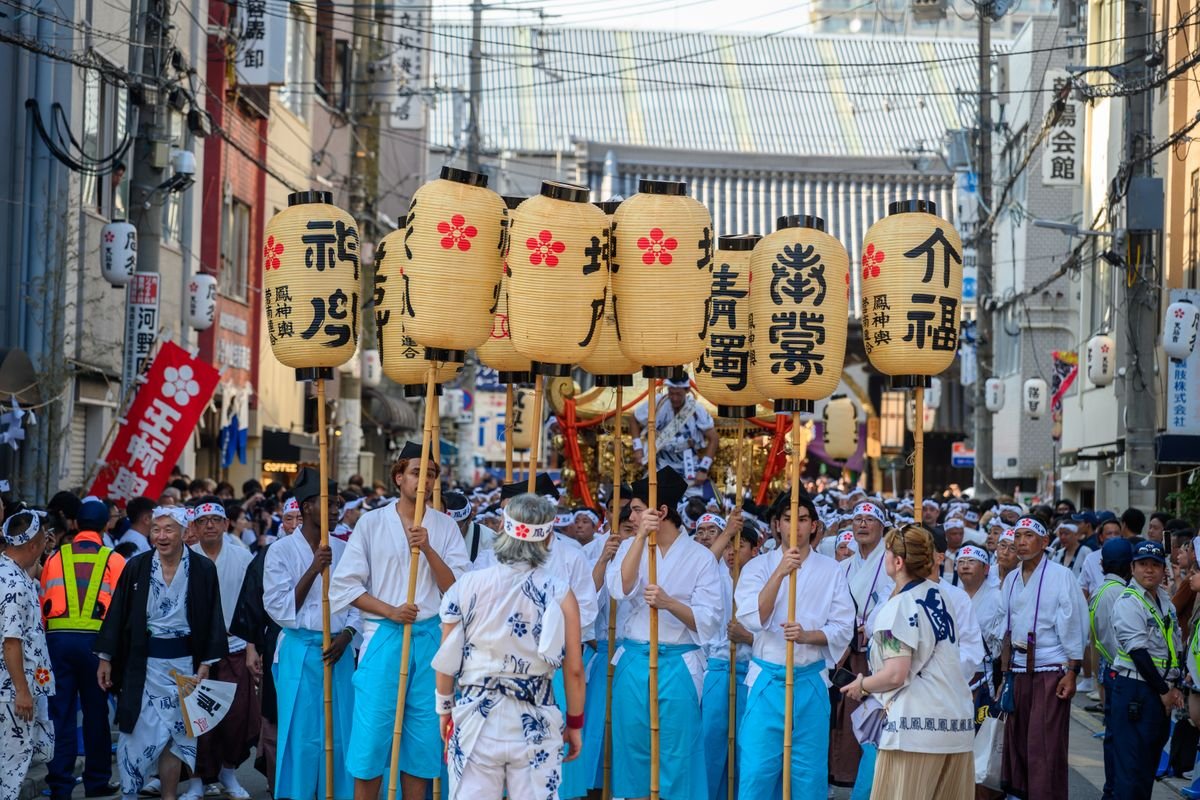
What makes it so approachable for a visitor, and the reason I ended up dancing instead of filming, is that the festival doesn’t really try to keep you on the sidelines. Near the tail end of each night’s parade there’s a section — sometimes called the tobiiri, or “jump-in” section, and a closing wa odori circle dance — where anyone holding a hanagasa hat is welcome to join. The “requirements,” as far as I could tell, were: have a hat, more or less follow along with the Hanagasa Ondo, and have a good time. I checked two of those boxes convincingly.
Getting There and Making the Most of It
The festival runs every year from August 5th to 7th, with dancing from about 6:00 p.m. to 9:45 p.m. each night, and it’s completely free to watch. From Tokyo, the easiest route is the Tsubasa Shinkansen straight into Yamagata Station — no transfers, and you’re there in a little under three hours, which makes it a very doable long weekend even if you’re based in the capital.
If you want a quieter break from the noise, the Yamagata Prefectural Museum Bunshokan, a handsome British neoclassical building from 1916 and a designated Important Cultural Property, sits right near the end of the parade route and is worth a daytime visit before the evening crowds arrive. And if, like me, you show up intending only to watch: bring comfortable shoes anyway. Someone will probably hand you a hat.
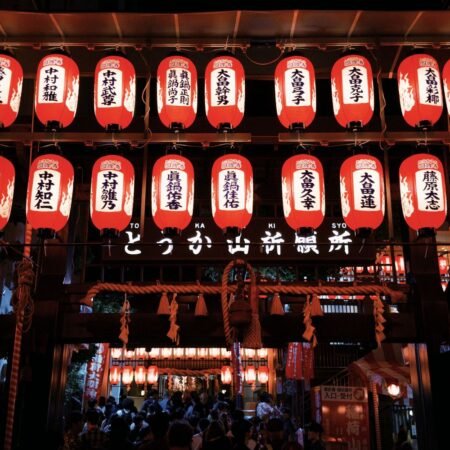
A quick note on photos: some of the images here are stock photos I’ve used to set the mood — they may not be the exact spot or moment I’m describing, just close in spirit.

コメント