






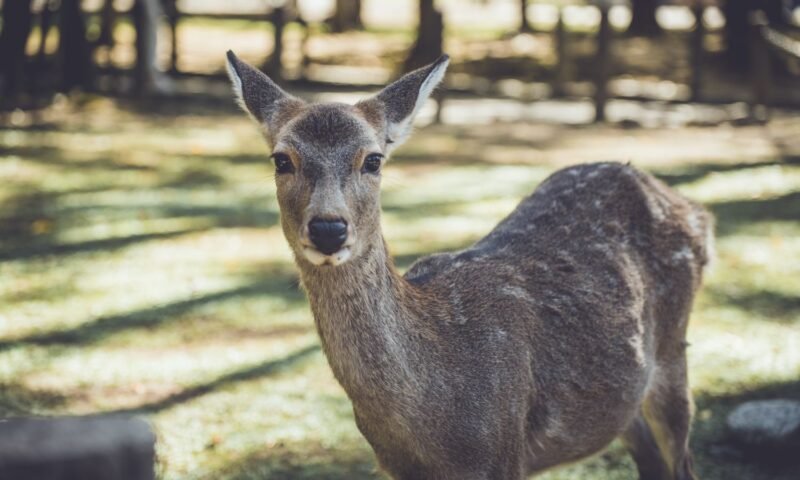
I got head-butted by a deer on my second morning in Nara, and honestly, I deserved it. I’d run out of the rice crackers — shika senbei — that vendors sell all over Nara Park, and the deer that had been so sweetly bowing to me a minute earlier decided a firm nudge to the back of my knee was a reasonable way to remind me I owed her more crackers. I sat down right there on the grass, laughing, surrounded by a dozen very unbothered deer, and thought: I have never been anywhere quite like this.
Nara was Japan’s first permanent capital, from 710 to 784, and it still carries that weight of “first” everywhere you look — the first great Buddhist temples, the first attempts at a unified court culture borrowed and adapted from Tang-dynasty China. But what actually gets you, walking around, isn’t the history lecture. It’s the deer. Over 1,000 wild sika deer roam freely through Nara Park and the streets around it, and they’ve been doing it for so long that they’ve become the city’s actual identity — official mascots, protected as “natural monuments,” bowing on cue for crackers like they’re in on the whole arrangement.
The Deer of Nara Park Are Not a Petting Zoo
The deer are wild animals, and Nara Park makes sure you remember that even while it sells you the crackers to feed them. Local legend says that when the god Takemikazuchi arrived at Kasuga Taisha riding a white deer to protect the newly built capital, the deer became sacred messengers of the gods, and killing one was a capital offense well into the Edo period. That reverence is why they’ve never been hunted out or fenced off — they just kept multiplying in the park at the center of the old capital, generation after generation, until “watch where you’re walking” became permanent local advice.
A few things I wish someone had told me before I bought my first packet of crackers: hold the cracker up and out, not down near your bag, or every deer within thirty feet will decide your tote is the enemy. Bow slightly and a lot of them will bow back before you feed them — it’s an actual learned behavior, not a myth, though it’s more reliable with the older, more crackers-savvy deer near the main paths than the younger ones near Wakakusayama. And once you’re out of crackers, walk away with empty, visible hands. Waving them off or hiding your hands behind your back just reads as “she’s hiding more.”
Todaiji and the Great Buddha That Started It All
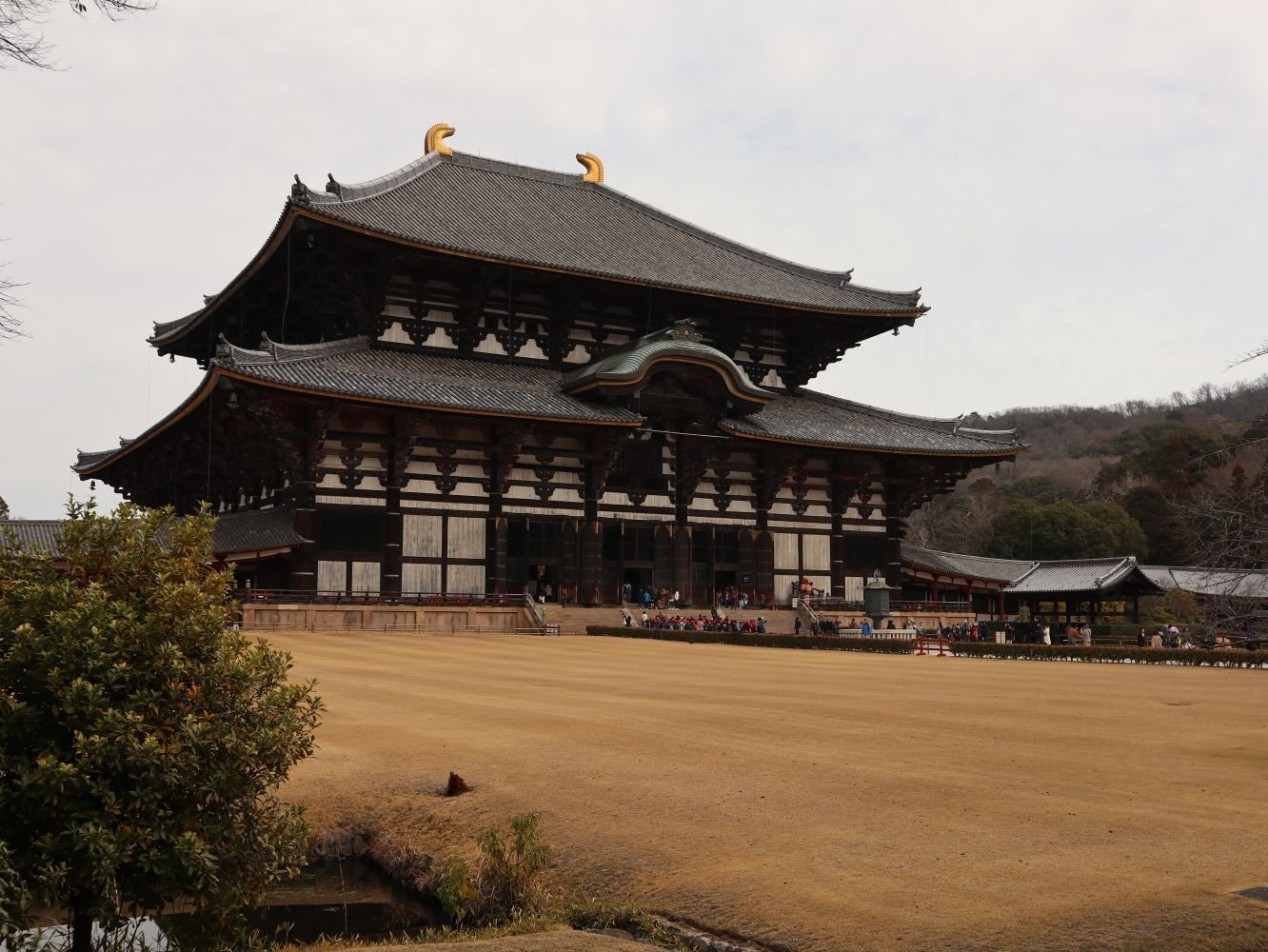
Nara Park isn’t really a park in the Western sense — it’s more like a green corridor connecting several of Japan’s oldest and most important religious sites, and Todaiji sits right in the middle of it. Emperor Shomu commissioned the temple in 743, partly as a spiritual response to a run of famines, earthquakes, and epidemics, and had it built as the head temple of all the provincial Buddhist temples he was establishing across Japan. The Daibutsuden, or Great Buddha Hall, is still the largest wooden building in the world by some measures, even though the current structure — rebuilt in 1709 after fires destroyed earlier versions — is actually about a third smaller than the original.
Inside sits the Daibutsu, a 15-meter bronze statue of Vairocana Buddha that took eight years and most of the country’s available bronze to cast in the 8th century. I stood in front of it for a long time on a weekday afternoon, and it’s one of those rare “big famous thing” that actually gets bigger and stranger the closer you stand, not smaller. There’s also a wooden pillar near the back of the hall with a hole carved through its base, said to be exactly the size of one of the Buddha’s nostrils; local tradition holds that squeezing through it guarantees enlightenment in your next life. I watched a lot of Japanese schoolkids attempt this on a field trip and precisely zero foreign tourists, myself included — I have shoulders and dignity to consider.
Kasuga Taisha and the Path of a Thousand Lanterns
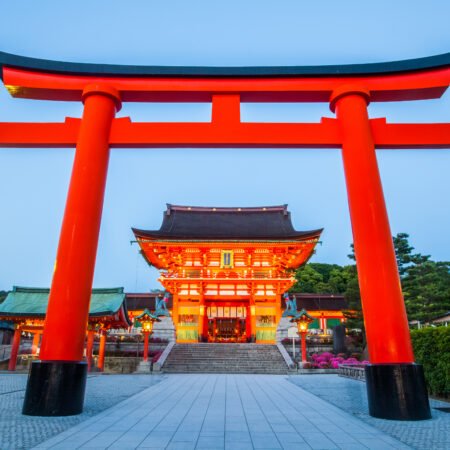
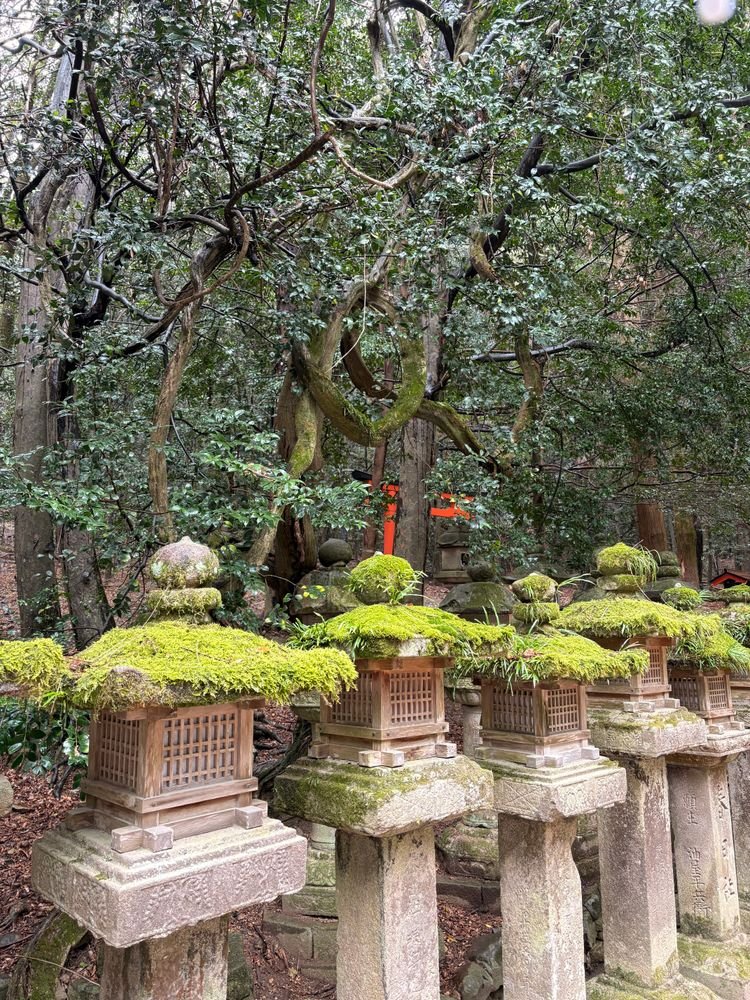
If Todaiji is Nara’s Buddhist heart, Kasuga Taisha is its Shinto one — and it’s the shrine tied directly back to that white-deer legend. Founded in 768 by the powerful Fujiwara clan, the shrine is famous for its roughly 3,000 stone and bronze lanterns, donated over the centuries by worshippers and lined up along the forest approach and hung from the shrine’s covered corridors. Most days they just sit there quietly, mossy and beautiful in the cedar-forest light, but twice a year — during the Setsubun Mantoro in February and the Obon Mantoro in mid-August — every single one is lit at dusk, and the whole approach glows like something out of a folk tale.
I visited on an ordinary afternoon, no lantern festival in sight, and it was still my favorite hour of the whole trip. The walk from the park up to the shrine cuts through Nara’s primeval forest, where the deer thin out and the light goes green and filtered, and it’s quiet in a way that Todaiji, with its crowds, just isn’t. If you only have time for one shrine walk in Nara, I’d genuinely pick the lantern path over the main hall — though the main hall’s vermillion buildings, rebuilt every 20 years in a Shinto rebuilding tradition, are worth the extra twenty minutes.
Practical Notes for Visiting Nara
Nara is an easy day trip from Kyoto (about 45 minutes on the JR Nara Line or the slightly faster Kintetsu line) or from Osaka (roughly 40 minutes), which is exactly how most visitors do it — but I’d push back on that a little. I stayed one night near Sanjo-dori, the main shopping street leading up to the park, and got the park to myself for a quiet early morning walk before the day-trippers arrived, which changed the whole experience. The deer are calmer, the light is better, and you can actually hear the deer bells that some of the older, tamer ones wear.
Shika senbei cost about 200 yen a stack from the green-uniformed vendors scattered through the park — don’t buy from anyone else, and don’t bring outside food, since it can make the deer sick. Todaiji’s Daibutsuden has an entrance fee of around 800 yen, and Kasuga Taisha’s main sanctuary is a similar amount, though the lantern-lined approach paths themselves are free to walk. Give yourself at least half a day, and wear shoes you don’t mind a deer nosing at — mine got thoroughly slobbered on by hour two, and it remains one of my favorite souvenirs from five years of living here.
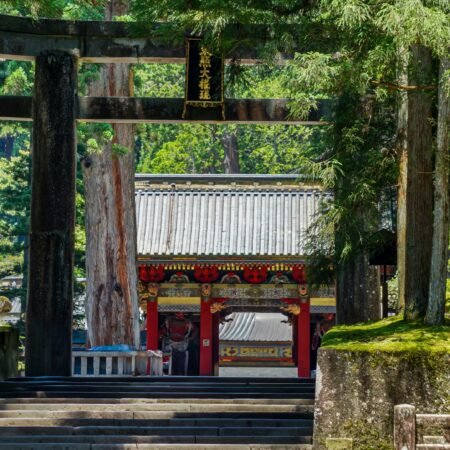
A quick note on photos: some of the images here are stock photos I’ve used to set the mood — they may not be the exact spot or moment I’m describing, just close in spirit.
コメント