





The first time I heard a Karatsu Kunchi float coming before I saw it, I honestly thought a truck had lost its brakes. There was this low, groaning rumble of wood on pavement, then a burst of whistles, then two hundred voices all shouting “ENYA! ENYA!” at once, and around the corner came a fourteen-foot lacquered lion’s head the color of dried blood, swaying on a cart the size of a small boat. I’d moved to Kyushu that spring mostly for the food, if I’m honest, and I wasn’t prepared for a festival that felt less like a parade and more like a controlled stampede of folk art.
Karatsu is a quiet castle town on the coast of Saga Prefecture, the kind of place most foreign visitors to Kyushu skip on their way to Fukuoka or Nagasaki. For three days every November, though, it turns into something else entirely. I’d read about Karatsu Kunchi in a guidebook footnote and figured it was worth a weekend. It turned out to be one of the most physical, most oddly moving festivals I’ve been to in five years of chasing these things around Japan.
What Exactly Is a “Kunchi”?
“Kunchi” is an old Kyushu dialect word tied to the harvest festivals held around the ninth day of the ninth lunar month, and you’ll find versions of it across the island — Nagasaki has its own famous Kunchi in October. Karatsu’s is dedicated to Karatsu Shrine, and the tradition of building floats for it goes back to 1819, when a local merchant is said to have donated the first one, a fierce red lion’s head, after being inspired by the gilded floats he saw in Kyoto’s Gion Matsuri. Over the following decades, different neighborhoods of the old town each built their own, and today fourteen of these enormous floats — called hikiyama — survive, some of them well over 150 years old.
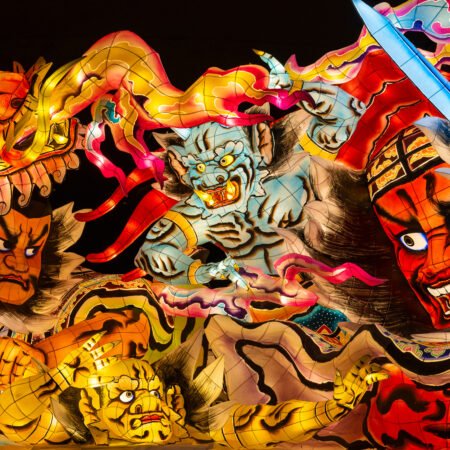
What makes them so strange and beautiful up close is how they’re made: layer after layer of Japanese washi paper and cloth built up over a wooden frame, then lacquered and finished in gold leaf, a dry-lacquer technique that gives them a shell-like, almost otherworldly sheen under lantern light. Each one weighs several tons, and each belongs to one of the old merchant districts, passed down and lovingly restored generation after generation. In 2016, Karatsu Kunchi was folded into UNESCO’s collective “Yama, Hoko, Yatai” listing, which recognizes dozens of Japan’s float festivals as a shared Intangible Cultural Heritage.
Fourteen Floats, Fourteen Personalities
Part of the fun is that the floats aren’t identical — they’re a whole cast of characters. There’s the original red lion, a second black lion, a soaring phoenix, a dragon-like sea creature called the Seiryu, Urashima Taro riding his turtle from the old folktale, even a giant golden samurai helmet modeled after one worn by Toyotomi Hideyoshi. Locals told me kids in Karatsu grow up with a clear favorite the way American kids might have a favorite baseball team, and grown men who moved away decades ago still come home every November just to walk behind “their” float.
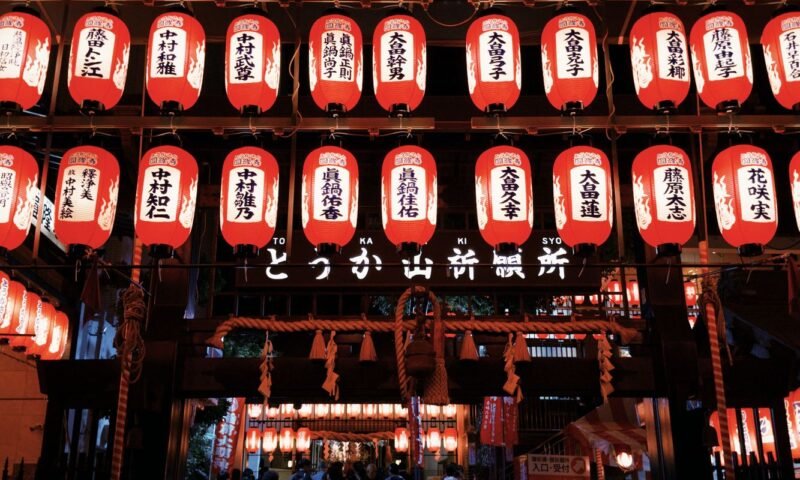
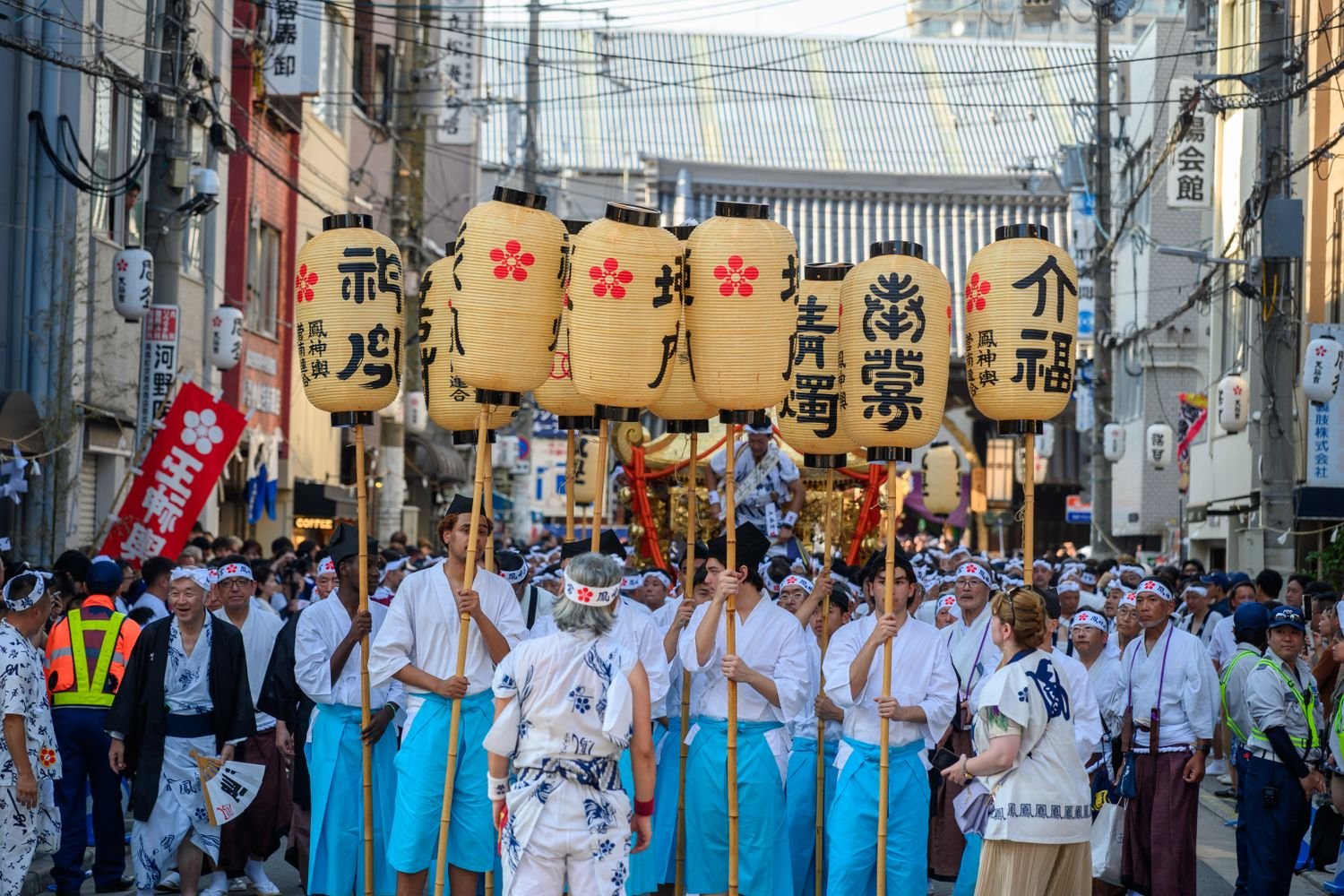
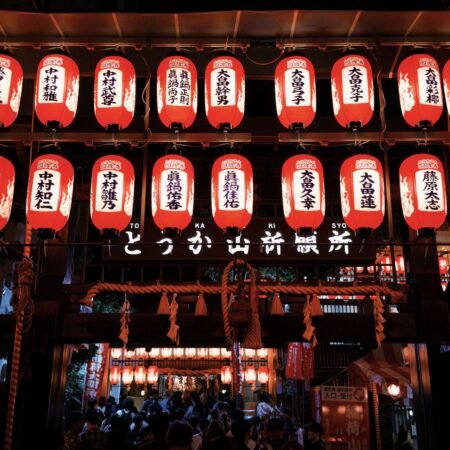
On the night of November 2nd, the Yoiyama, all fourteen floats are pulled slowly through the old town lit only by paper lanterns, which is the moment that got me — no engines, no amplified music, just wooden wheels grinding over stone and that chorus of “ENYA! ENYA! ENYA-YA!” echoing between the buildings. It’s eerie and gorgeous at the same time, and it’s the easiest of the three days to actually get close to the floats without getting swept into the crowd.
The Big Day: Hauling Giants Through the Sand
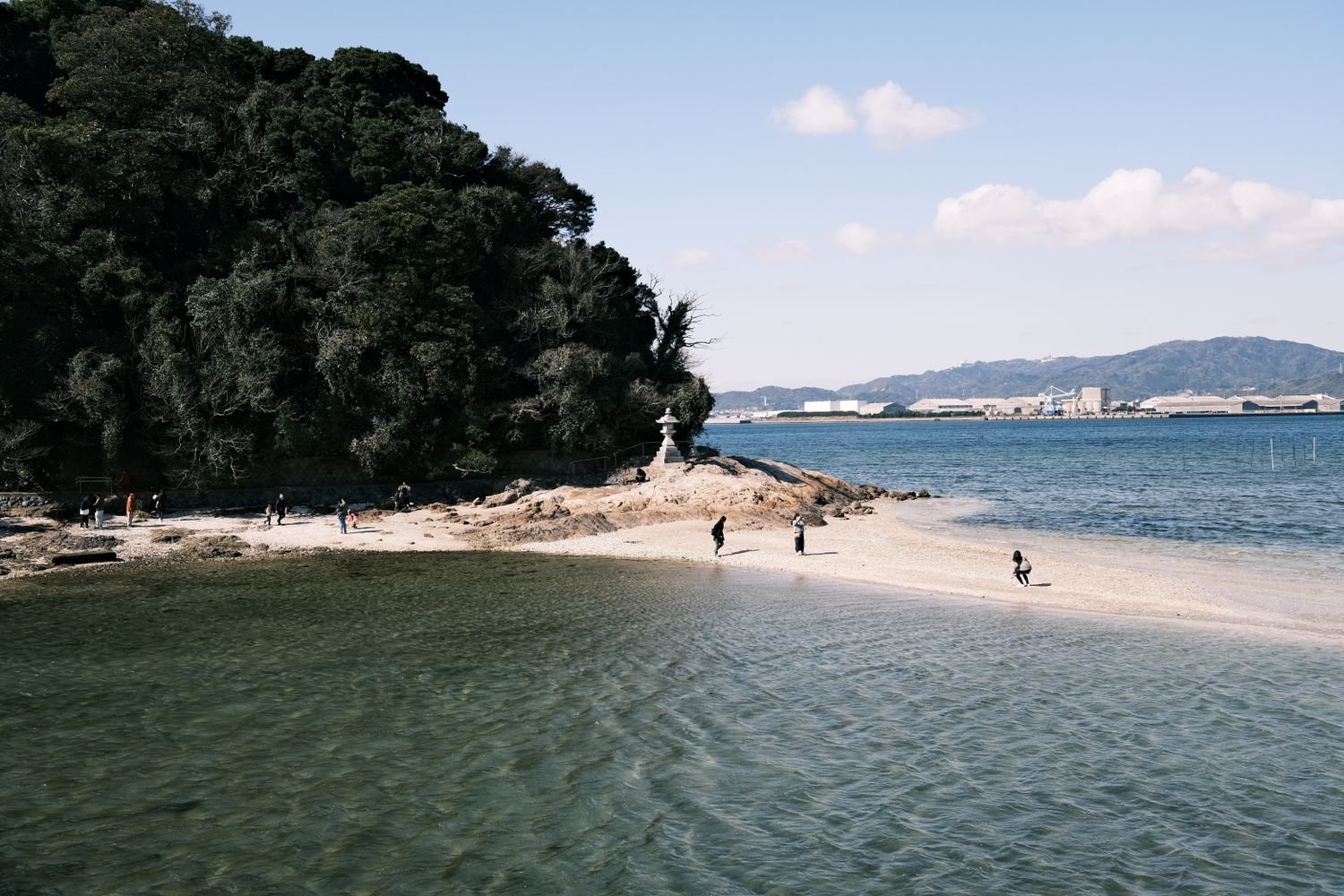
The main event is November 3rd, when the floats process from the shrine down to Nishinohama beach for the “Otabisho Shinko.” This is where Karatsu Kunchi stops being pretty and starts being genuinely athletic. The teams — dozens of men and women per float, ropes over their shoulders — have to drag several tons of lacquered wood through loose beach sand, which is exactly as brutal as it sounds. I watched one crew get a float stuck, dig in, lose their footing, and finally lurch it forward all at once to a roar from the crowd that felt like a goal being scored. People bring beach chairs and thermoses and just camp out on the sand for hours to watch it happen, float after float.
By the third day, November 4th, the pace slows down again for the return procession back to the shrine warehouse, and the whole town has the slightly wrung-out, satisfied feeling of a place that just finished hosting its biggest event of the year.
Tips for Visiting Karatsu Kunchi in November 2026
If you want to see it for yourself, the festival runs November 2 to 4, 2026, as it does every year. Karatsu is easiest to reach from Fukuoka: there’s a direct JR line (the Karatsu Line via Chikuhi Line) that takes about an hour and ten minutes from Hakata, or roughly an hour by highway bus. I’d genuinely recommend booking accommodation early — this is a small city and rooms fill up fast for Kunchi weekend, sometimes months ahead.
For the Yoiyama night parade on the 2nd, get to the old town streets by early evening and just follow the sound. For the beach hauling on the 3rd, stake out a spot on Nishinohama early if you want a clear sightline — it gets packed. Wear shoes you don’t mind getting sandy, dress warmly (early November on the coast has a real bite to it once the sun goes down), and bring cash, since most of the yatai food stalls selling grilled squid, karasumi, and Karatsu’s own sake don’t take cards. The Karatsu Kunchi Exhibition Hall, where you can see the floats up close year-round when they’re not in use, is also worth a visit if you’re in town outside festival season.
Worth the Detour
Karatsu isn’t a place that shows up on most first-time Japan itineraries, and that’s honestly part of what made this trip feel special. Standing on that cold beach at night, watching strangers throw their whole bodies into pulling a two-hundred-year-old lion through the sand because their grandfather’s grandfather did the same thing — that’s the kind of small-town, unglamorous, deeply sincere Japan I moved here hoping to find. If you’re anywhere near Kyushu in early November, I really can’t recommend it enough.
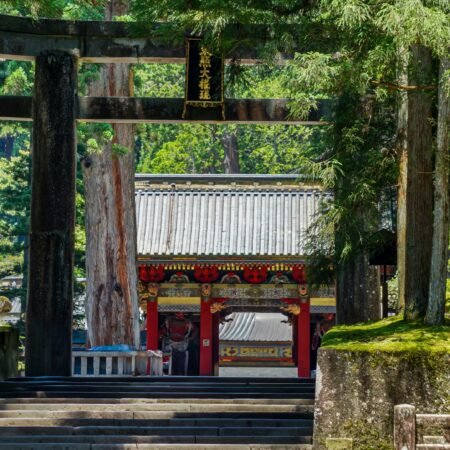
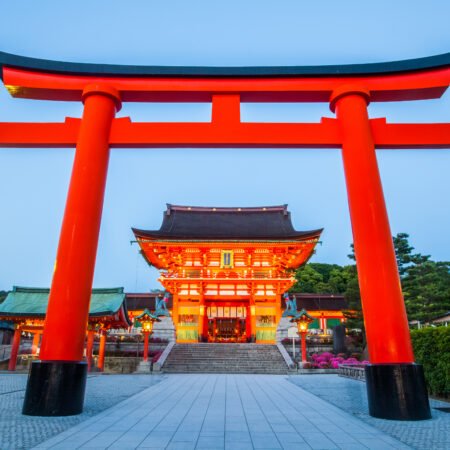
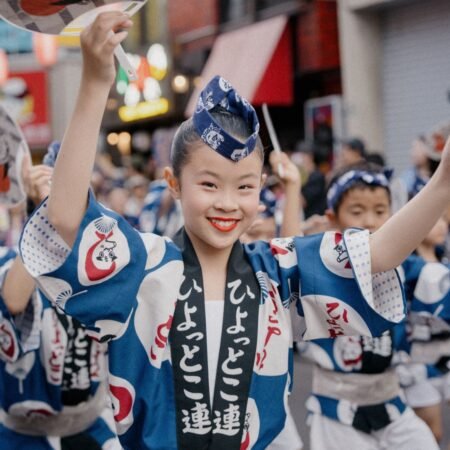
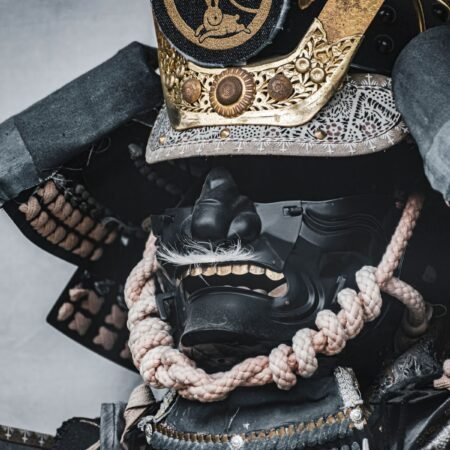
A quick note on photos: some of the images here are stock photos I’ve used to set the mood — they may not be the exact spot or moment I’m describing, just close in spirit.

コメント