





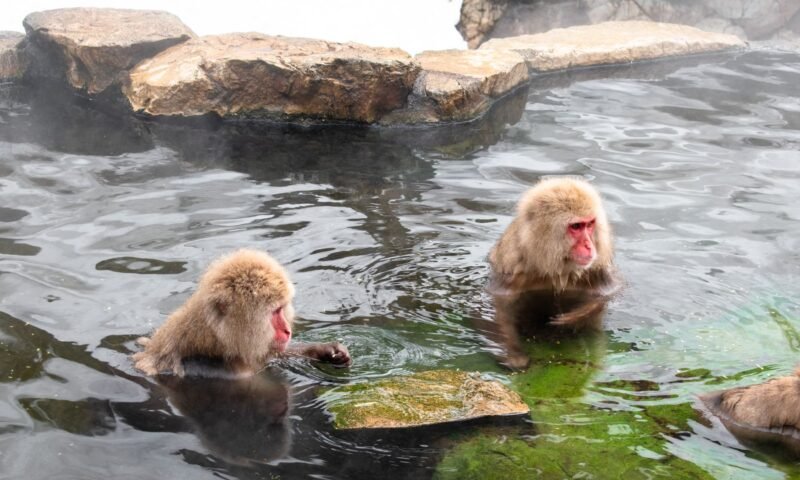
I’d been in Japan for almost three years before I finally understood what everyone meant by “snow monkeys.” I’d seen the photos — the pink-faced macaques sitting shoulder to shoulder in a steaming pool, snow piled on their heads like little white hats — and I’d always assumed it was some kind of staged tourist thing, a zoo with a hot tub. It is not. I found that out on a bitterly cold morning in Yamanouchi, Nagano, when I stood at the edge of a real hot spring pool, no fence between us, and watched a mother monkey close her eyes and sink down until only her face was above the water, looking more relaxed than I have ever looked in any onsen in my life.
This is Jigokudani — “Hell Valley” — and yes, I know I’ve written about a different Jigokudani before, the one in Noboribetsu, Hokkaido, with its sulfur vents and devil statues. Japan apparently has more than one valley that looked like hell to the people who named it. This one, in the mountains above Nagano, has no devils. It has monkeys, and it might be one of the strangest, most wonderful things I’ve seen since I moved here.
The Walk In Is Part of the Experience
There’s no road straight to the monkey pool, which I actually love. You park (or get off the bus) and then you walk — about 30 to 40 minutes along a forest trail that follows a river through a narrow valley, past steam vents hissing out of the rock and snow banked up on either side of the path. In winter it’s genuinely beautiful, the kind of quiet, cold, pine-scented walk that makes you forget you’re about to go stare at monkeys taking a bath.
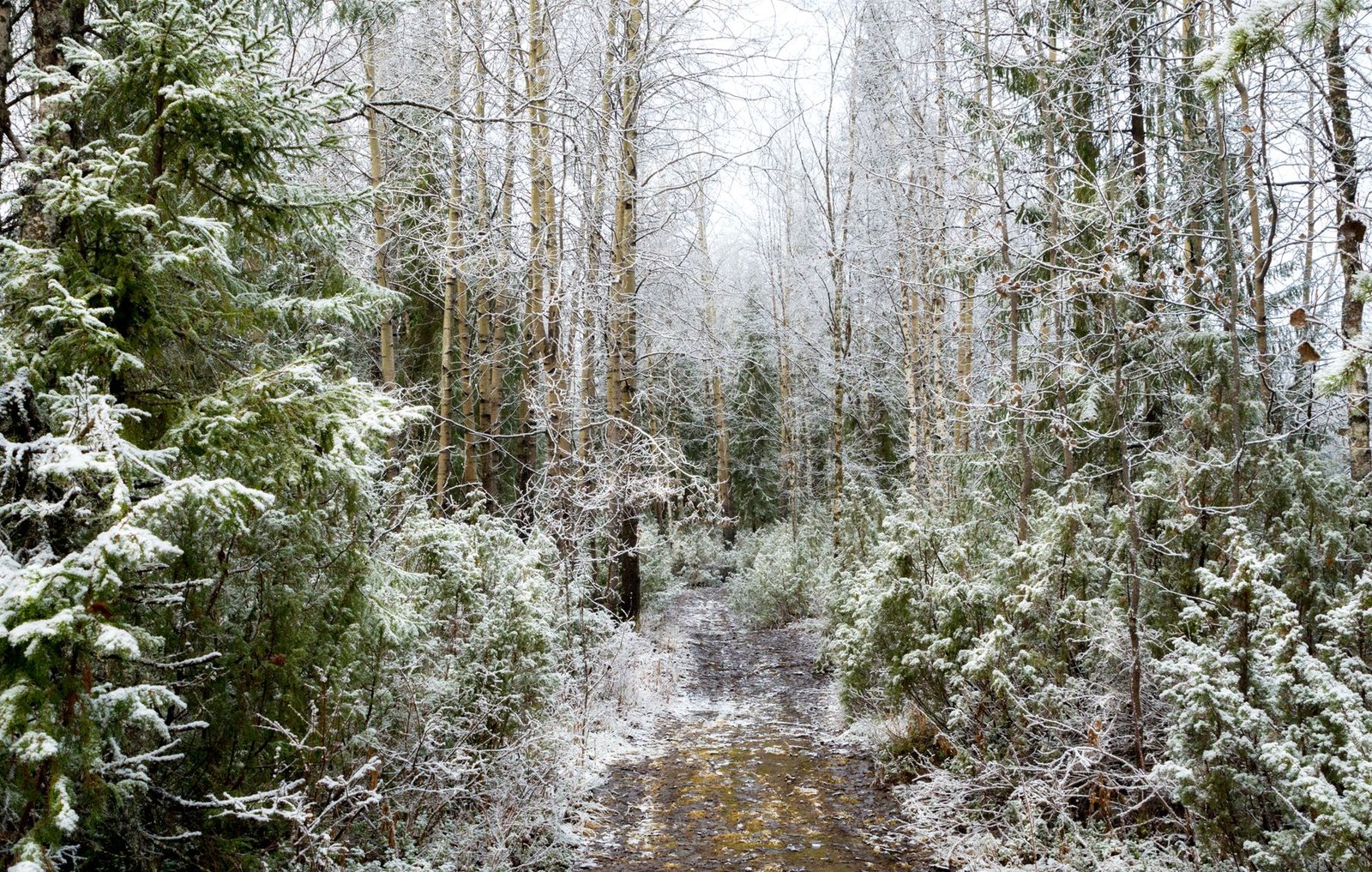
I went in January, which locals told me is the best time — more snow, colder air, and apparently monkeys that are far more motivated to get in the water. The park itself, Jigokudani Yaen-koen, has been open since 1964, and it’s an easy walk from Kanbayashi Onsen if you’re staying nearby, or a bus ride and a walk from Yudanaka Station if you’re coming up from Nagano city on the Nagano Dentetsu line. No wheelchairs or strollers make it down the trail, for what it’s worth — it’s a real hike, not a paved path, so dress for it.
Why They’re Actually In There
Here’s the part I didn’t expect: the whole thing started by accident. Sometime in the 1960s, a young macaque wandered into the open-air bath at a nearby inn, the Korakukan, and the staff didn’t chase it off. Other monkeys noticed and started climbing in too, and eventually the park built the troop its own pool, separate from the humans’, mostly for hygiene reasons I can only imagine everyone was grateful for. By 1970, a photo of the bathing monkeys had made the front page of LIFE magazine, and Jigokudani’s snow monkeys became a household image of Japan around the world, even for people who couldn’t point to Nagano on a map.
What struck me, standing there, is that they’re not bathing for fun the way we might. The park staff explained it plainly: it’s about staying warm. On a mild day you’ll see hardly any monkeys in the water at all — they’re just not that interested. But on a properly freezing morning, the pool fills up fast, and some monkeys will sit in there for what feels like hours, utterly unbothered by the humans a few meters away clicking away on their phones.
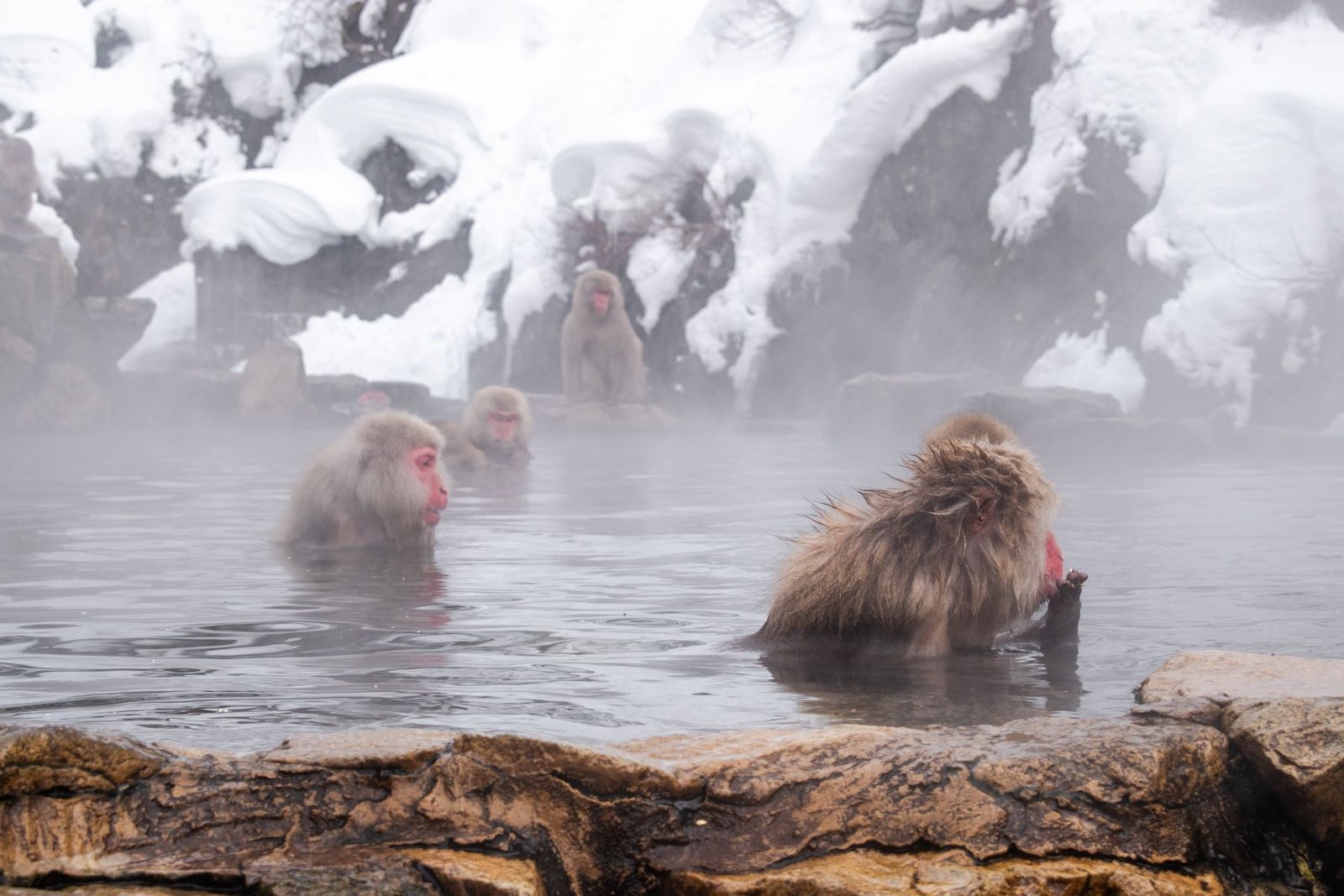
I watched one old male sit perfectly still with his eyes half-closed for a solid fifteen minutes while a younger one kept splashing around near him, clearly annoying him, clearly not caring that it was annoying him. It was like watching a tiny, furry family reunion. I’ve never related to an animal more in my life.
The Rules Are There for a Reason
These are wild monkeys, not performers, and the park is strict about it, which I appreciated. No touching them, no feeding them (there’s nothing sold on site for that reason), no staring them down — apparently a direct, prolonged stare can read as a threat to a macaque, which, fair enough, I wouldn’t love it either. Keep your distance from the babies especially, since mothers are understandably protective. No selfie sticks, no drones, and absolutely no getting into the water with them, tempting as it might look on a freezing day. The staff are visibly watching, and they will say something if you forget yourself and lean in for a closer photo.
Honestly, the rules barely feel like an imposition. Once you’re there, you mostly just want to stand quietly and watch, because the monkeys genuinely don’t perform for anyone — they groom each other, bicker, doze off mid-soak, and ignore the humans almost completely, which somehow makes it better.
Practical Notes for Your Own Trip
The park is open year-round with no fixed closed days, though hours shift with the seasons — roughly 9:00 a.m. to 4:00 p.m. in winter (November through March) and 8:30 a.m. to 5:00 p.m. the rest of the year, with the caveat that it can close early or unexpectedly, so don’t cut it too close. Admission runs a few hundred yen, with discounted rates for kids, though the park has posted that fees are being revised soon, so it’s worth checking the official site before you go. If you want the classic “monkeys in snow” postcard image, aim for a cold snap between December and February — the colder and snowier, the better your odds. Go in summer and you might see hardly any monkeys bathing at all, since they’re simply not cold enough to bother.
From Tokyo, it’s about an hour and twenty minutes to Nagano on the Hokuriku Shinkansen, then roughly 40 minutes on the Nagano Dentetsu line to Yudanaka, then a short bus ride and that forest walk. It sounds like a lot of steps, but the whole thing felt less like a commute and more like the trip was easing me into it, one mode of transport at a time, until I was standing in the snow with nothing around me but pine trees, steam, and a very contented-looking monkey.
A quick note on photos: some of the images here are stock photos I’ve used to set the mood — they may not be the exact spot or moment I’m describing, just close in spirit.
コメント