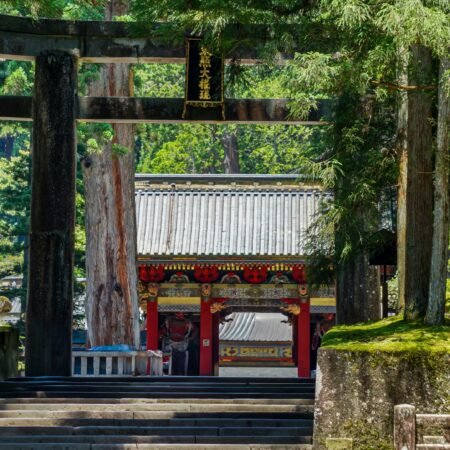





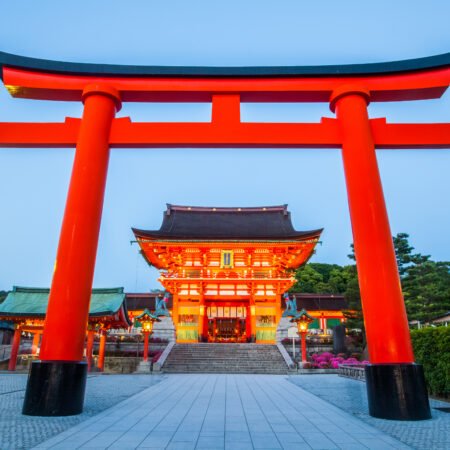
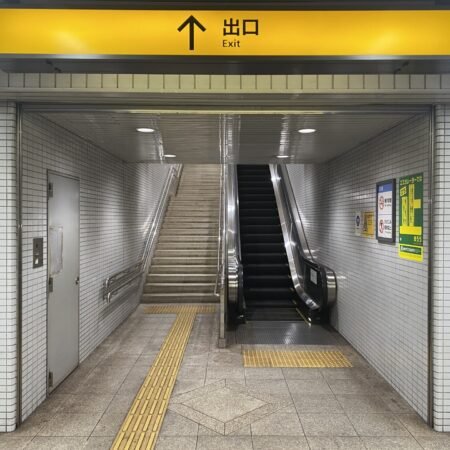

I will be honest with you: I almost didn’t make it out of bed. My friend Ayaka had been telling me for months that I needed to see Fushimi Inari before sunrise, “before the tour buses and the influencers,” as she put it, and I kept nodding along without actually setting an alarm. But one Saturday in September I finally caved, dragged myself onto the 6:14 train out of Kyoto Station, and got off two stops later at Inari Station to find myself standing directly across from the shrine’s main gate, the platform practically spilling passengers into the torii. That’s the first thing that surprised me about Fushimi Inari — you don’t approach it. It just arrives.
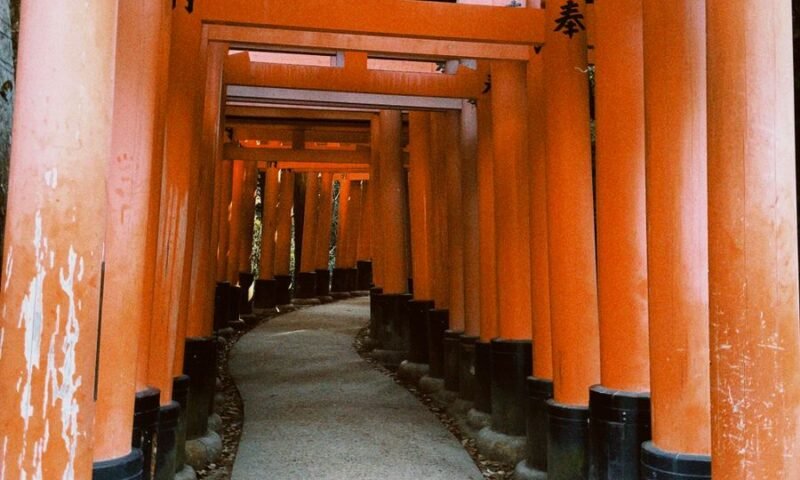
Five years into living in Japan and I’ve seen a lot of shrines, but nothing quite prepared me for walking into a tunnel of thousands of vermilion gates that just keeps going, and going, up the side of a mountain, until you sort of forget there’s a world outside of it.
What Are All These Gates, Anyway?
Fushimi Inari Taisha has been around since 711, which is the kind of number that doesn’t really compute until you’re standing in front of buildings that have clearly been rebuilt, repainted, and lovingly maintained for over 1,300 years. It’s the head shrine for Inari, the Shinto deity of rice, sake, and — this is the part that explains everything — business prosperity. That last one is why the torii tunnel exists at all. Each gate was donated by a company or an individual asking for good fortune, and if you slow down enough to actually read them, you’ll see the donor’s name and the date painted in black down the back of every single post. Some of them look brand new. Some are worn soft and grey at the base. Walking through, I kept thinking about how many decades of hope are literally stacked on top of each other here.
The famous stretch is called Senbon Torii, “thousand torii,” though the real count across the whole mountain path is closer to ten thousand. It splits into two parallel tunnels at one point so pilgrims heading up and down don’t collide, which is a very practical detail for something that otherwise feels dreamlike.
The Foxes Watching Over Everything
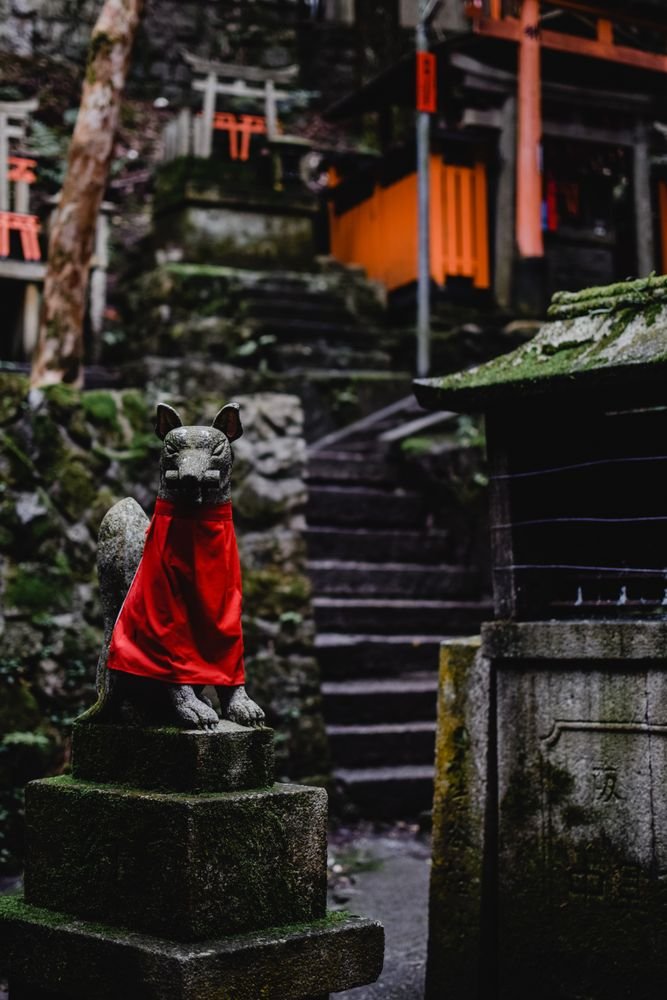
You’ll notice the foxes before you notice much else. Stone kitsune sit at nearly every turn, and instead of the little scrolls or keys you sometimes see them holding, at Fushimi Inari they usually have a sheaf of rice in their mouths — a nod to Inari’s agricultural roots. Kitsune are considered Inari’s messengers rather than the deity itself, something a shrine attendant patiently explained to me after I asked, slightly embarrassed, whether I was praying to a fox god. Small stalls near the base sell fox-shaped ema, the wooden prayer plaques people write wishes on, and by mid-morning the fence near the Okusha Okumiya shrine is covered in hundreds of little fox faces, each one drawn in a completely different personality by whoever bought it. Some are fierce, some are cartoonishly happy, one I saw had sunglasses on. I bought one, drew a fairly mediocre fox face of my own, and hung it up next to the others, which felt like joining something bigger than just a tourist stop.
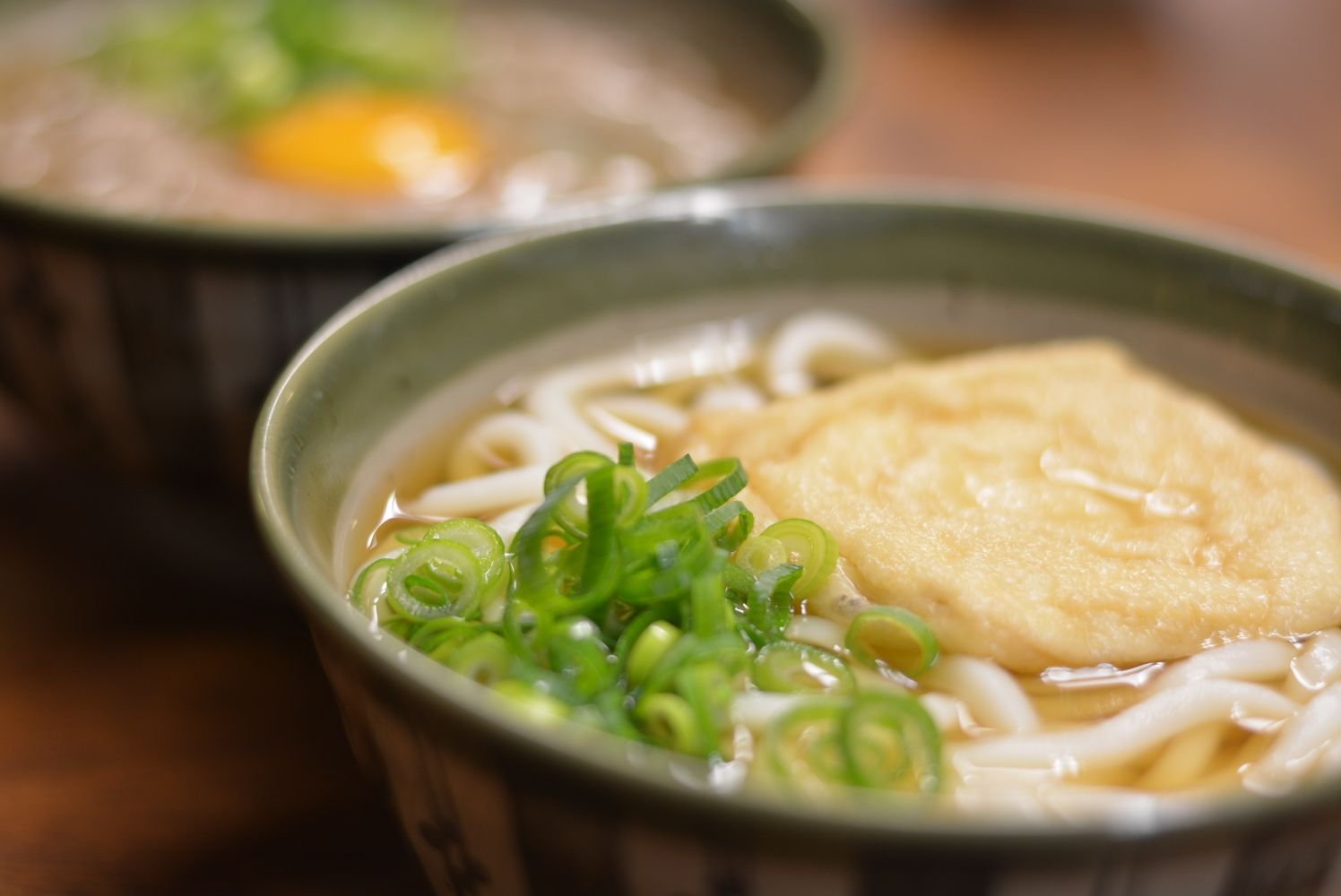
If you’re hungry, this is also prime kitsune udon territory — a simple noodle soup topped with a sweet, seasoned piece of fried tofu, said to be a fox’s favorite food. I had a bowl at one of the little shops along the path and it remains one of the best nine-dollar decisions I’ve made in this country.
How Far Should You Actually Hike?
Here’s what nobody told me clearly before I went: you don’t have to summit to have a good time, but you probably should, at least partway. Most day-trippers stop at the Yotsutsuji intersection, roughly 30 to 45 minutes up, where the gates briefly clear and you get a genuinely great view over Kyoto city. This is also where the crowds thin out dramatically, because a lot of people treat that as the finish line. If you keep climbing from there, the full loop to the summit of Mount Inari and back down the other side takes about two to three hours, past smaller sub-shrines, quiet teahouses with plastic-covered picnic tables, and stretches of trail where, for a few minutes at a time, you might not see another person. I did the full loop and regretted nothing except my choice of sandals.
Getting there is refreshingly simple: Inari Station on the JR Nara Line is a straight shot from Kyoto Station, about five minutes and no transfers, and the shrine is open 24 hours with free admission. If sunrise sounds too ambitious, aim for right when it opens or go in the early evening instead — I’ve since gone back around 5 p.m. in winter and had entire sections of the tunnel completely to myself, gates glowing under the path lights. Just know that by mid-morning on any weekend, the lower Senbon Torii section turns into a slow-moving line for photos, so climbing even fifteen minutes past that will buy you a lot more breathing room.
Bring water, wear real shoes, and budget more time than you think you’ll need. I went in expecting a quick photo stop before brunch and came out three hours later, slightly sore, smelling like fried tofu, with a fox-face prayer plaque hanging somewhere on that fence that I still think about sometimes.
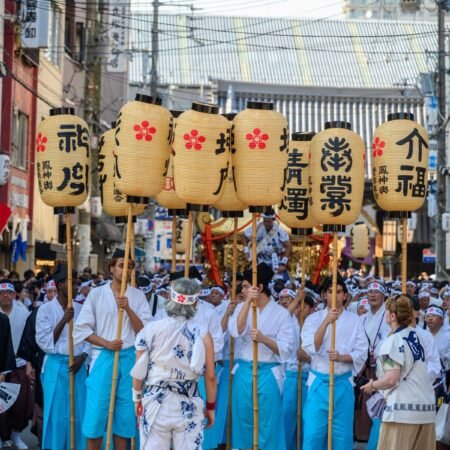
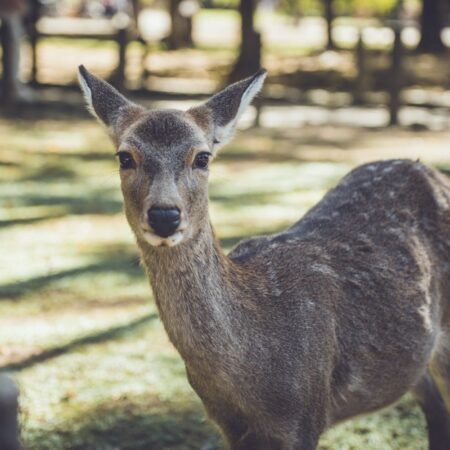
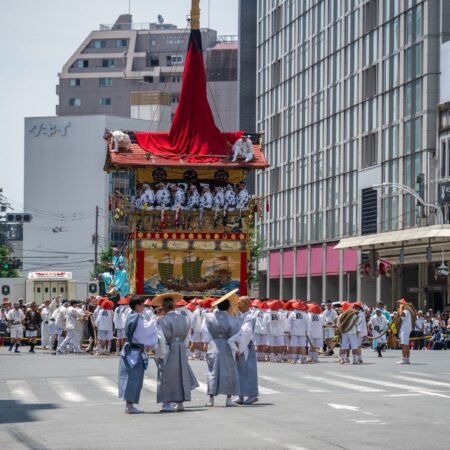
A quick note on photos: some of the images here are stock photos I’ve used to set the mood — they may not be the exact spot or moment I’m describing, just close in spirit.
コメント