





The first time I rode the Enoden out to Kamakura, I almost missed my stop because I was too busy staring out the window at a backyard that seemed to be about two feet from the train tracks. Someone’s laundry was drying right next to the rails. A cat was sunning itself on a wall. And then, a minute later, the tracks opened up and there was the ocean, flat and silver, like the train had just decided to go for a swim. I’d heard Kamakura described as “Kyoto by the sea,” and I remember thinking: okay, I get it now.
Kamakura was Japan’s political capital for about a century and a half, back when the shogunate ran the country from here instead of Kyoto, and the town still has the temples to prove it. What I didn’t expect, five years into living in Japan, was how much you can pack into a single day on foot — a giant bronze Buddha, a temple with tens of thousands of small stone statues, a bamboo grove you drink tea inside, and a shrine with a dramatic backstory involving a tree. Here’s how my day went.
Sitting With the Great Buddha at Kotoku-in
I’ll be honest, I went in expecting to be a little jaded about this one. I’d seen a hundred photos of the Great Buddha before I ever set foot near Kotoku-in temple, and figured I’d snap my own version and move on. Instead I stood in front of it for a solid ten minutes doing nothing, which is not normally how I travel.
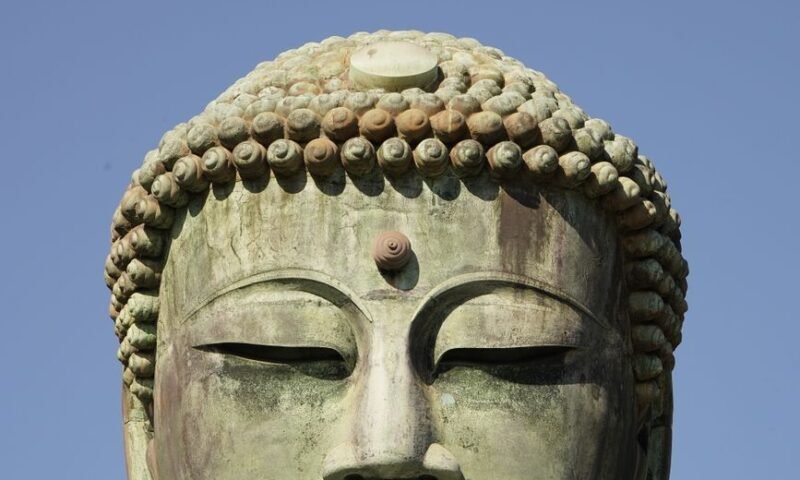
The bronze statue, representing Amida Buddha, is enormous — just over 11 meters tall — and casting on it began back in 1252. For a couple of centuries it actually sat inside a large wooden hall, the way you’d expect a statue this important to be housed. Then in 1498, a tsunami following the Meiō earthquake swept the hall away entirely. The Buddha, being made of solid cast bronze, just sat there and took it. It’s been sitting in the open air, rain or shine, ever since — which somehow makes it feel more approachable rather than less, like it’s weathered the same unpredictable Japan that I have.
For a small extra fee on top of general admission, you can actually go inside the statue. The interior is hollow and a little dim, and you can see the seams where the bronze panels were joined centuries ago. It’s not a long visit, but climbing into a 700-year-old Buddha is not a sentence I expected to say about my Tuesday.
Ten Thousand Prayers at Hase-dera
A short walk from Kotoku-in, Hase-dera is where I ended up staying the longest, and for reasons I didn’t fully anticipate. The temple’s main hall houses a wooden Kannon statue — the eleven-headed goddess of mercy — standing over nine meters tall and covered in gold leaf, carved, according to temple legend, from a single enormous camphor tree back in the 8th century. It’s one of the largest wooden Buddhist statues in the country, and it’s genuinely striking in person, lit softly inside the hall with each of its eleven small faces turned at a slightly different angle.
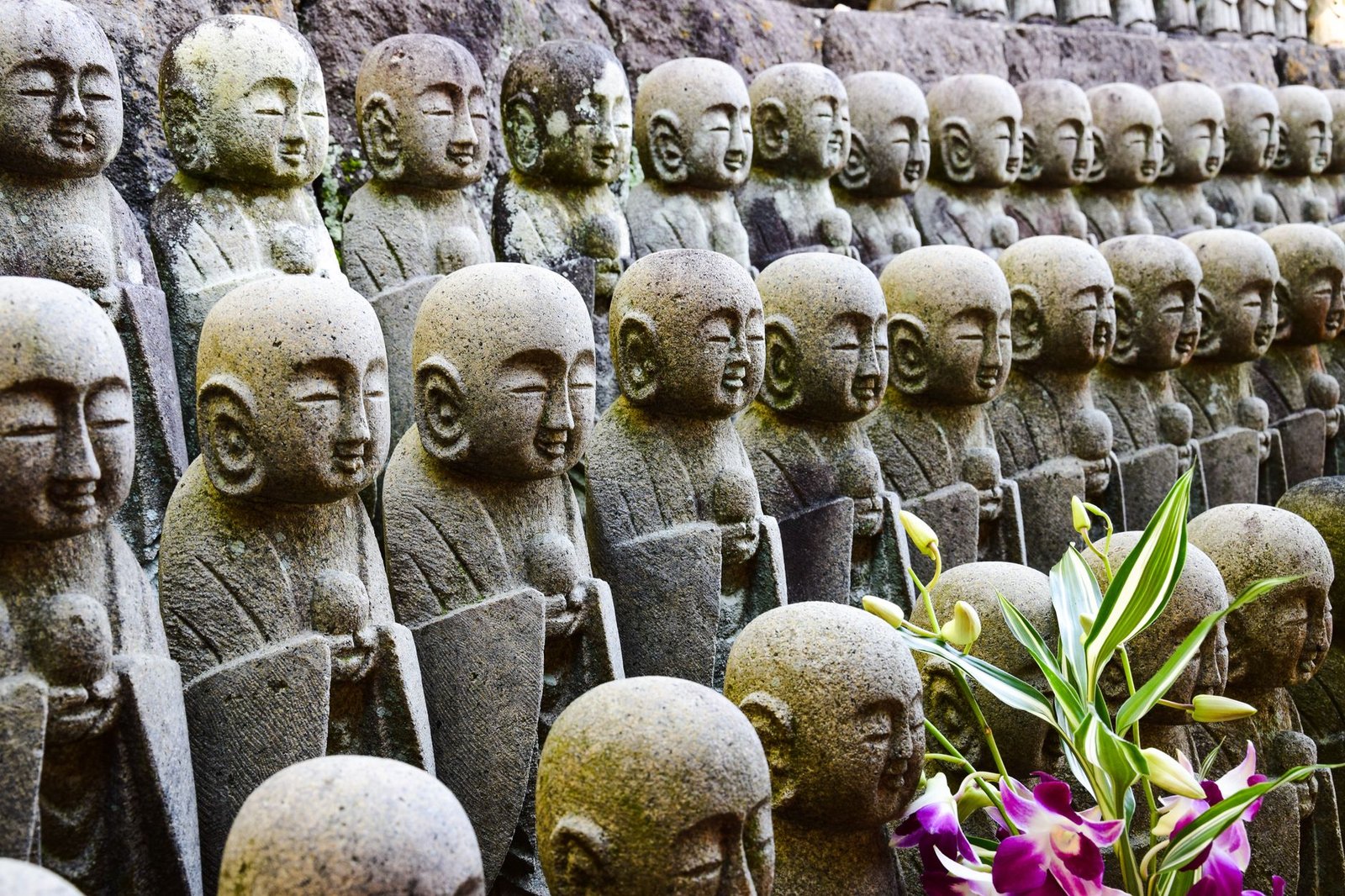
But what actually stopped me in my tracks was a different part of the grounds: a hillside covered in hundreds of small stone Jizo statues, many dressed in hand-knitted caps and bibs, some holding tiny pinwheels that spin in the sea breeze. These are placed by parents grieving children lost to miscarriage or stillbirth, and the temple has received them for decades — tens of thousands over the years, with older statues quietly rotated out to make room for new ones. Nobody warns you how that hits, surrounded by that much quiet grief turned into something gentle and cared-for. I stood there a long time too, for a very different reason than with the Buddha.
Matcha in a Bamboo Forest at Hokoku-ji
By early afternoon I needed something lighter, and Hokoku-ji delivered. This small Rinzai Zen temple, founded in 1334, sits a bit further out than the big-name sights, which means it never felt crowded. Its claim to fame is a grove of roughly 2,000 bamboo stalks along a short stone path — locals just call it “the Bamboo Temple” — and the light filtering through all that green is genuinely one of those moments where you stop talking and just look up.
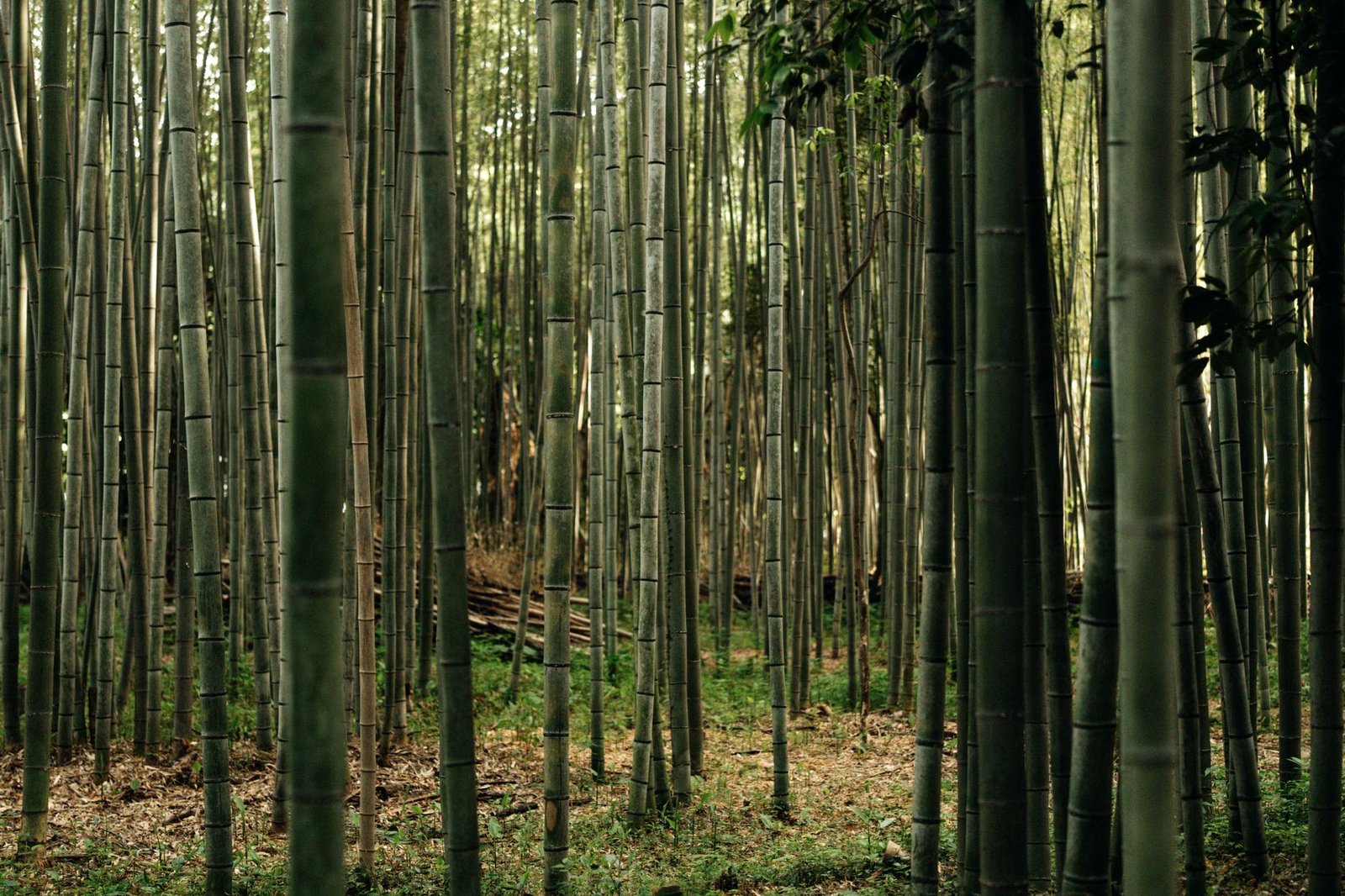
At the far end of the grove there’s a small teahouse, Kyukoan, where for a modest fee on top of entry you can sit on tatami facing the bamboo with a bowl of whisked matcha and a seasonal wagashi sweet. I am not generally a person who sits still for long stretches, but I sat there nearly half an hour, watching the bamboo sway, and didn’t check my phone once. If you only have time for one quiet-moment stop in Kamakura, this is the one I’d pick.
A Detour to Tsurugaoka Hachimangu
I ended my day at Tsurugaoka Hachimangu, the shrine most closely tied to Kamakura’s samurai history. It was originally founded in 1063 by Minamoto no Yoriyoshi near the coast, then relocated to its current, grander site in 1180 by Minamoto no Yoritomo, founder of the Kamakura shogunate himself. Walking up the long approach from the coastal torii gate, past the paired ponds — one linked to the Minamoto clan, one to their rivals the Taira — you get a real sense of a shrine built to make a political statement, not just a religious one.
The stone steps up to the main hall carry their own grim legend: this is said to be the spot where the shogun Minamoto no Sanetomo was assassinated in 1219 by his own nephew, reportedly while hiding behind a massive ginkgo tree that stood there for centuries before finally toppling in a storm. Even without knowing the history, there’s something about standing on those steps, with the dance stage at the bottom where ceremonial performances are still held, that makes the site feel heavier than a typical shrine visit.
Getting There and Practical Tips
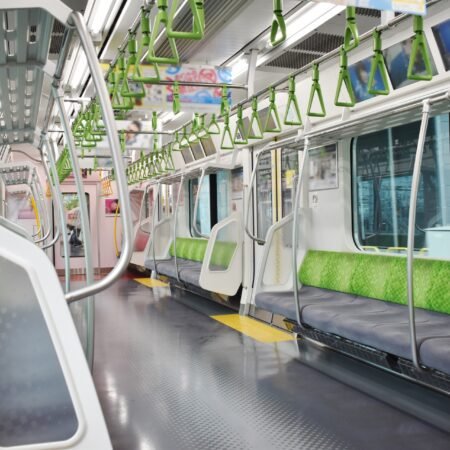
Kamakura is an easy day trip from Tokyo — about an hour by JR train to Kamakura Station — and once you’re there, the Enoshima Electric Railway (the Enoden) is honestly half the fun, a tiny, rattly local line that weaves between houses and along the coast, connecting most of the temples I mentioned. I bought a one-day Enoden pass and hopped on and off all day, which saved both my feet and my sanity. Komachi-dori, the covered shopping street near the station, is a good spot to grab food between temples — I’m partial to the grilled rice crackers and the soft serve.
Go on a weekday if you can; weekends get genuinely crowded, especially around the Great Buddha and the Komachi-dori food stalls. And wear shoes you don’t mind walking in — between the Enoden stations and the temple grounds, you’ll easily rack up more steps than you planned on.
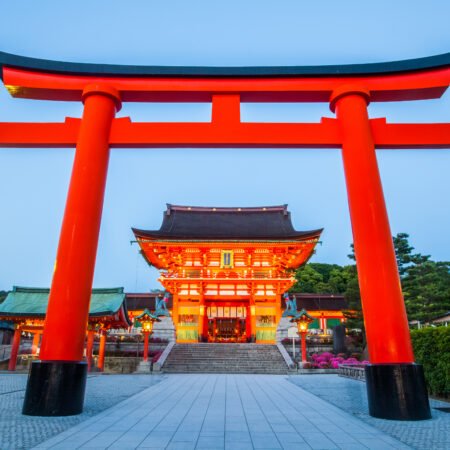
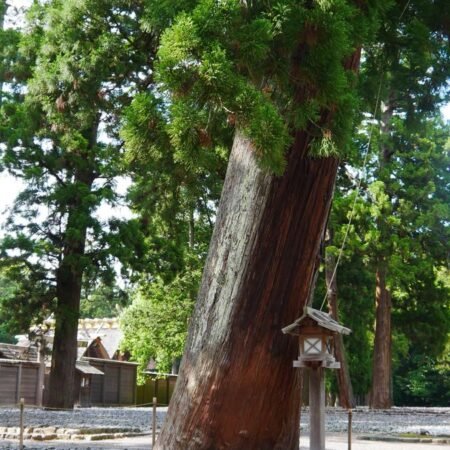
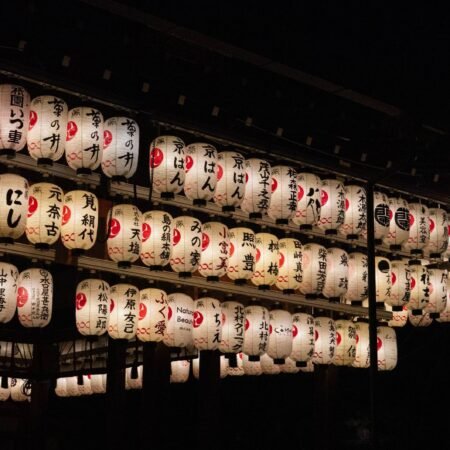
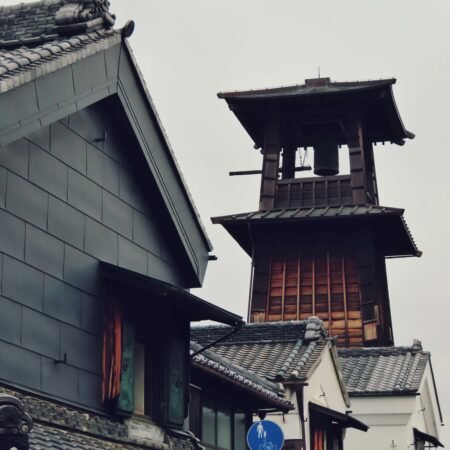
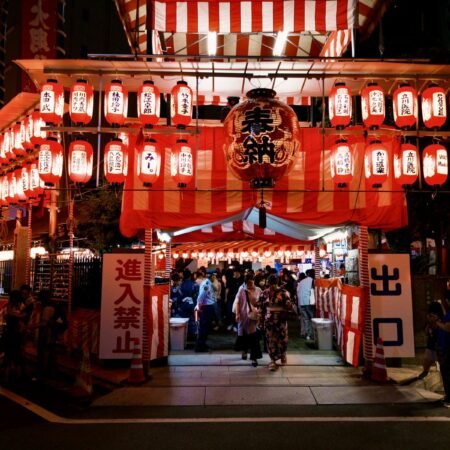
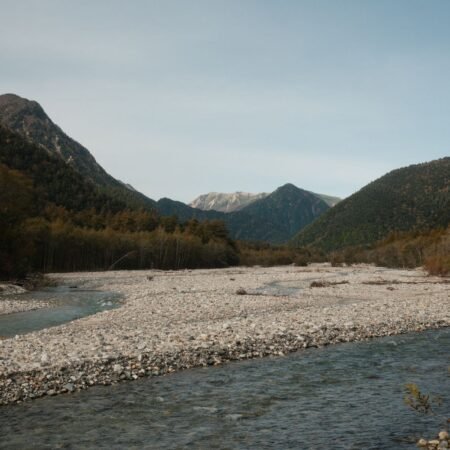
A quick note on photos: some of the images here are stock photos I’ve used to set the mood — they may not be the exact spot or moment I’m describing, just close in spirit.
コメント