






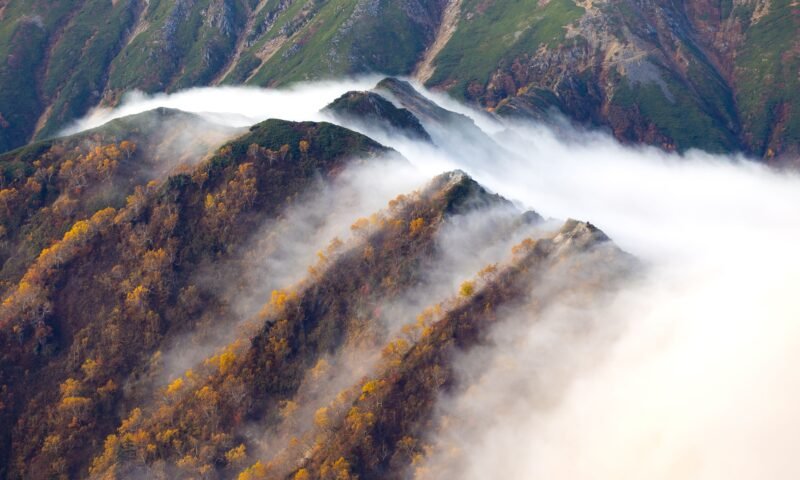
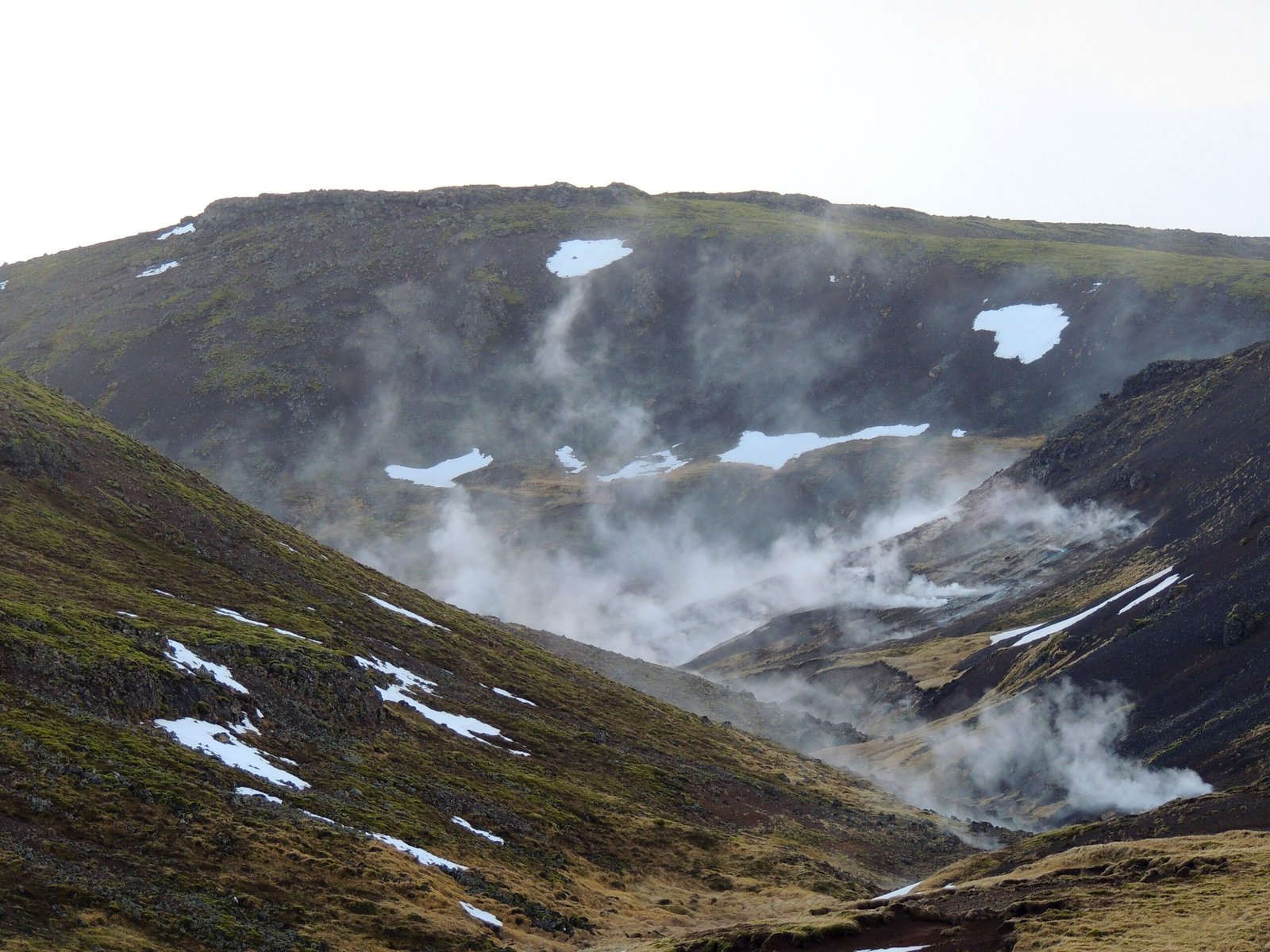
The first time I stood on the boardwalk above Jigokudani, the hell valley at Murodo on Mount Tateyama, the wind was doing something unpleasant with the sulphur smell, and a party of hikers in rain shells was filing past a sign warning about volcanic gas. Somewhere below the swirling vents, I kept thinking, was the exact spot that generations of pilgrims had painted as one of Buddhism’s eight hells. It is a strange thing to look at a scenic overlook and be told, quite plainly, that you are looking at the underworld.
Tateyama, in Toyama Prefecture, is one of Japan’s three sacred mountains alongside Fuji and Haku, but it is the only one of the three where the old cosmology is still written into the landscape itself, not just into scripture. And the story I keep coming back to isn’t really about the mountain at all. It’s about the women who were never allowed to climb it, and the extraordinary bridge built so they could reach paradise anyway.
A Mountain Shaped Like a Sermon
According to the temple tradition kept at Ashikuraji, the village at Tateyama’s foot, the mountain was opened to religious use in the early eighth century by a hunter named Saeki Arinori, who is said to have followed a white hawk and a black bear deep into the peaks, only to realise the animals were manifestations of the buddhas Fudo Myoo and Amida. I want to be clear that this is legend rather than documented history — no contemporary record of the event survives — but it set the template for everything that followed: Tateyama became a mountain you climbed as a spiritual journey, not just a physical one.
That journey was mapped out, almost literally, in a set of devotional paintings called the Tateyama Mandara, roughly fifty of which still survive in temple and museum collections. Itinerant monks used them to preach to pilgrims who had travelled from across Japan: here is the hell valley you must pass, here is the trail, here is the Pure Land waiting at the summit. Climbing the mountain and coming back down alive was, in this reading, a kind of rehearsal for death and rebirth.
The Hell That Needed No Imagination
What makes Tateyama’s hell valley different from a purely literary hell is that it didn’t need embellishing. Jigokudani, near the Murodo plateau at around 2,450 metres, is an active volcanic basin of fuming vents and sulphur-stained ground, and the old guides simply named its features after specific hells from Buddhist cosmology — the valley of screaming, the valley of burning — because the heat, the stench and the noise did the rest of the persuading. The area is currently closed to direct entry and is viewed from a safe observation path, which is honestly for the best: it is an active geothermal zone, not a historical ruin, and it doesn’t reward curiosity about getting closer.
The Mountain Women Were Not Allowed to Climb
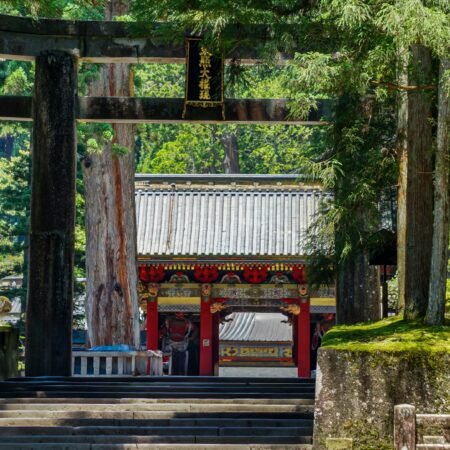
For most of the Edo period, Tateyama’s summit was closed to women under the practice known as nyonin kekkai, a restriction applied to several of Japan’s sacred peaks at the time. Ashikuraji itself grew into a substantial pilgrim town to serve the men who could make the climb — local accounts describe as many as thirty pilgrim lodges there in the village, alongside a cluster of shrines and temples at the base of the mountain — but a woman could travel all that way and still go no further than the foot of the trail.
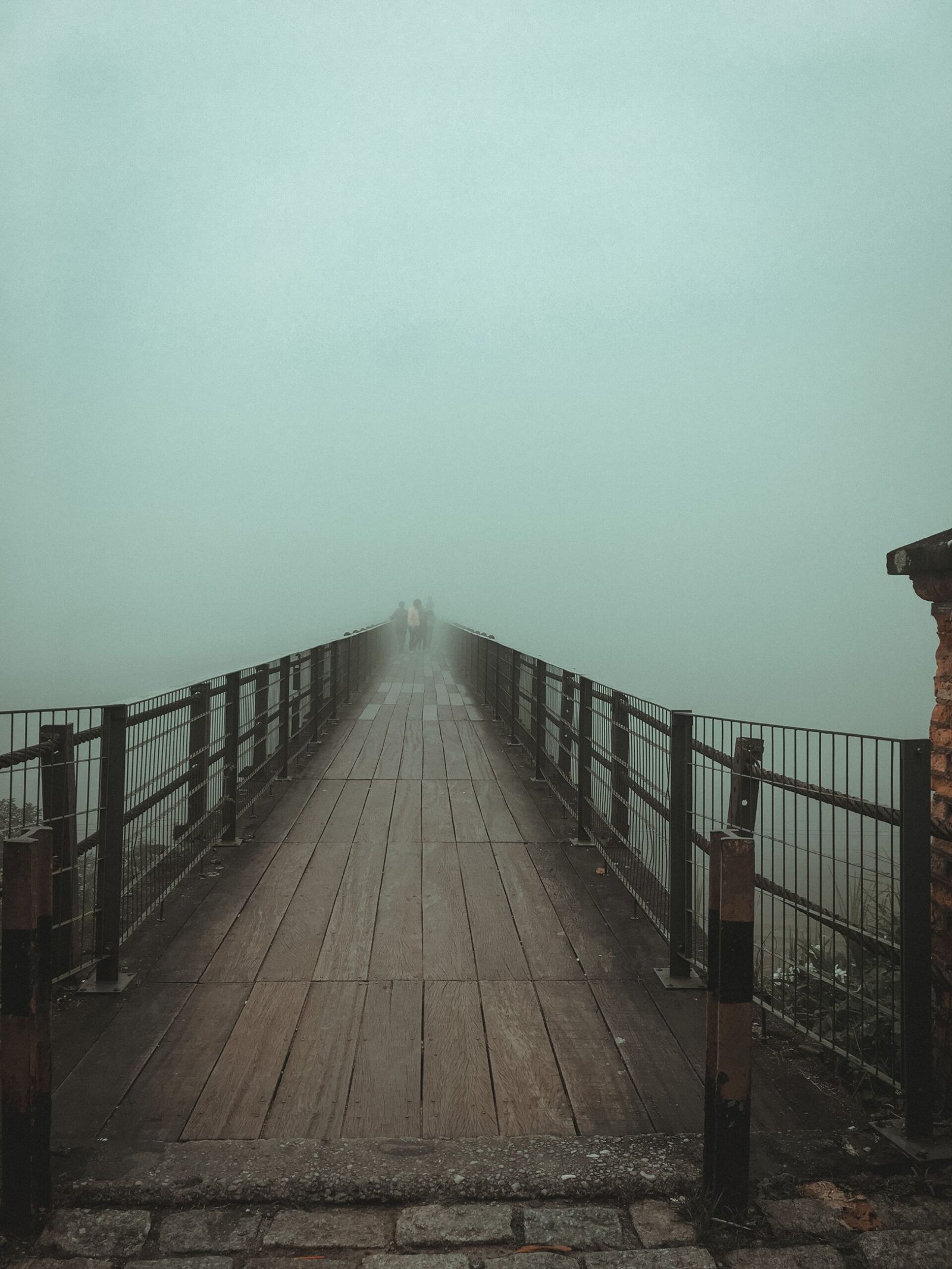
What the temples built instead, as a kind of substitute pilgrimage, was the Nunobashi Kanjo-e, the “cloth bridge consecration rite.” On the day of the autumn equinox, women dressed in white burial-like robes, and reportedly blindfolded for part of the ceremony, were led by hand across a wooden bridge laid with white cloth, connecting a hall dedicated to Enma, the judge of the dead, to another hall associated with the goddess of childbirth and the afterlife. The symbolism was direct: crossing the bridge stood in for the pilgrim’s passage through the realm of the dead, and arriving on the far side stood in for rebirth into the Pure Land that male pilgrims hoped to reach at the summit. Local tradition held — and I’d treat this as the kind of thing medieval sermon-tellers liked to say rather than a recorded event — that anyone crossing with an impure heart would fall from the bridge.
Suppressed, Then Brought Back
The ritual didn’t survive the religious upheavals of the early Meiji era, when the government moved against Buddhism and the mountain ascetic traditions, known as Shugendo, that had shaped practices like this one across Japan. Enma’s hall at Ashikuraji was destroyed in that period and wasn’t rebuilt until 1928. The cloth-bridge rite itself lay dormant for well over a century before being revived as a public ceremony in 1996, at Toyama’s National Culture Festival, and it has been staged periodically in the years since — sources I checked don’t agree on exactly how often, so I’d treat any specific recurring schedule you read online with a little caution and check current event listings before planning a trip around it.
These days, visitors can also walk a modern, designed version of the same hell-to-paradise narrative at Mandara Yuen, a sensory walking park built near the old Ubado hall, which stages the passage from hell through to a paradise garden in a sequence of installations rather than a religious rite. It is a reconstruction for visitors, not a historical site in itself, and it’s worth knowing the difference before you go.
A Note on Visiting
Mount Tateyama is accessible via the Tateyama Kurobe Alpine Route, typically open from spring through autumn and closed under heavy snow in winter; Jigokudani itself should only be viewed from the marked boardwalk and observation points, both because the gas vents are genuinely hazardous and because the valley is understood locally as a place of religious weight, not a backdrop for close-up photography. Ashikuraji’s halls and the Nunobashi site are active places of worship and commemoration, so if you visit outside a scheduled festival, keep the same quiet respect you’d bring to any shrine. And if you do time a trip around the Nunobashi Kanjo-e itself, remember you’re watching a ceremony that real people, mostly local women, take part in with sincerity — it isn’t staged as a tourist spectacle, even if outsiders are welcome to observe.
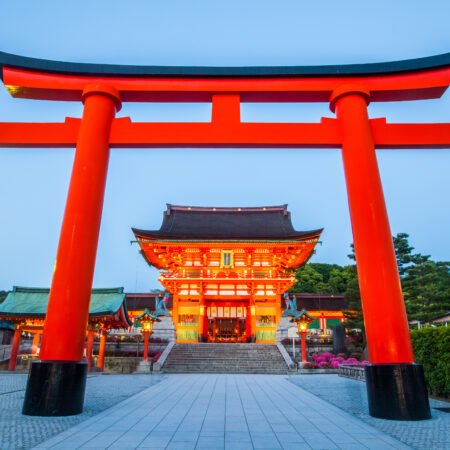
Note: images accompanying this article are illustrative stock photos and do not necessarily show the specific site discussed.
コメント