





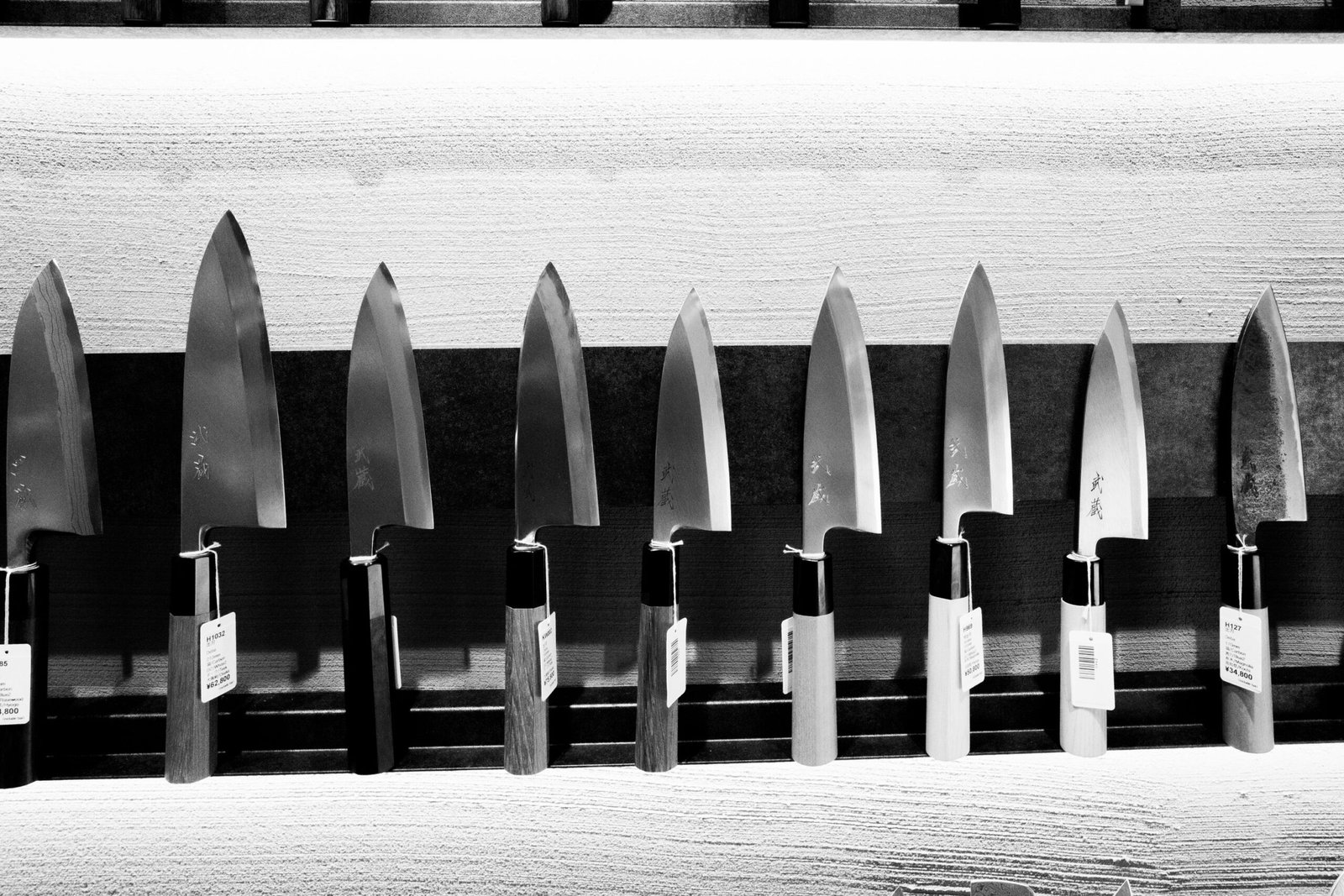
I was in Asakusa on an errand that had nothing to do with ghosts — tracking down a specific carbon-steel santoku for a translation client who wanted to know, in English, exactly why Japanese knife shops charge what they charge. Kappabashi-dori is the place for that: half a mile of restaurant-supply shops selling everything from plastic sushi models to hand-forged blades that cost more than my rent. I found my knife. But what stopped me on the walk back was a small bronze statue of a grinning, beak-mouthed creature sitting on a shell, tucked between a tableware shop and a noodle-bowl wholesaler. A shopkeeper, seeing me stare, said simply: “Kappa. That’s why it’s called Kappabashi.” He said it the way you’d mention the weather, as if a water goblin being the namesake of Tokyo’s biggest kitchenware district were the most ordinary thing in the world.
It isn’t, really. And once I started pulling the thread, I found that even the shopkeepers don’t agree on which story is true — which, for a street built entirely on practical matters like saucepans and deep-fryers, felt like a nice bit of unfinished business.
Two names fighting for the same bridge
Kappabashi sits in Taito Ward, between Asakusa and Ueno, and the name is written with the characters for “kappa” and “bridge” — but which kappa is doing the naming is where the trouble starts. There are, depending on who you ask, two competing explanations, and the local tourism association itself presents them as rival theories rather than settled fact.
The first is the drier, more bureaucratic version. In the Edo period, a lower residence belonging to the Katō family, lords of the Iyo-Niiya domain, stood near what is now the neighborhood’s western edge. According to this account, low-ranking samurai and foot soldiers attached to the residence took in raincoat-making as piecework, and hung their finished kappa — the word for a rain cape, written with different characters than the water spirit — out to dry along the bridge over the canal that once ran through the area. A bridge draped in raincoats. Kappa-bashi.
The second story is the one the shopkeeper told me, and it’s the one that’s given the street its mascot, its statues, and its gift-shop merchandise. It centers on a real, named figure: a shop owner called Kappaya Kihachi, also known by the nickname Kawatarō, who ran a raincoat business in the area during the Bunka era, in the early 1800s. The land around the canal flooded constantly — low, waterlogged ground that made life miserable for everyone nearby — and Kihachi, so the story goes, spent his own money trying to fix it, digging out drainage channels to get the water moving. It wasn’t going well, until, according to local legend, the kappa living in the nearby Sumida River took notice of his effort and his character and began slipping out at night to help him dig. One version of the tale has it that Kihachi had earlier saved a kappa’s life, and this was the creature’s way of settling the debt. Either way, the work got done, people who glimpsed the kappa at work were said to come into good luck afterward, and the neighborhood started calling itself after the obliging water spirits.
I want to be honest about how solid this is as history, because solid isn’t really the word. Even the sources that tell Kihachi’s story can’t agree on basic details — whether the drainage work dates to the early 1800s or far earlier, or whether the tool-street association’s own website lists the raincoat theory or the kappa theory first. What’s told as settled local lore turns out, on closer reading, to be several overlapping stories smoothed together over two centuries. That’s not a flaw in the legend, to my mind — it’s what makes it folklore rather than a plaque with a date on it.
The temple that keeps Kihachi’s name alive
If you want to follow the kappa version of the story to its physical end point, it leads to Sōgenji, a small temple a short walk from the tool street in the Matsugaya district, known locally as “Kappa-dera” — the kappa temple. Kihachi’s grave is said to be here, marked, according to the temple’s own account, with a stone carved with a verse about offering a drop of water to a departed Kawatarō, its top deliberately hollowed out to hold rainwater.
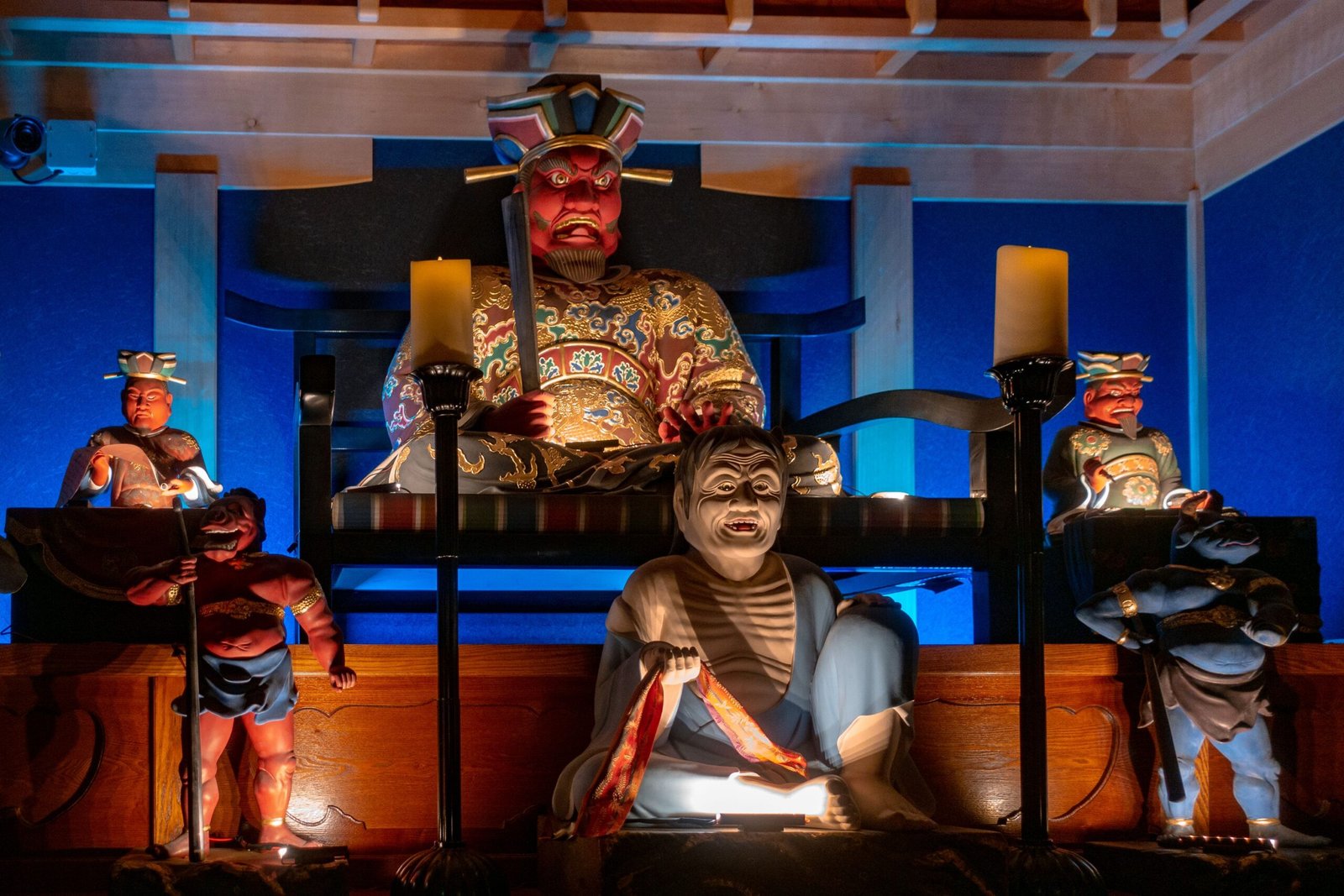
The temple has built a small devotional practice around the legend. A hall called the Kappa-dō enshrines a deity referred to as Kappa Daimyōjin, credited with bringing good fortune in business — a fitting patron for a street of shopkeepers — and visitors are told they can chant “On kappa ya sowaka” twenty-one times as a prayer. The temple also displays what it describes as a mummified kappa hand, alongside kappa statues scattered through the grounds. I can’t verify what that relic actually is, and the temple doesn’t claim scientific proof either — it’s presented as a sacred object, in the register of faith rather than forensics, and that’s the right way to hold it as a visitor too.
A street that kept the name and added a statue
The tool street itself, as a commercial district, is younger than its legend — most accounts place its growth as a dedicated wholesale area somewhere between the late Meiji and early Taisho periods, a twentieth-century business layered onto older place-name folklore. In 2003, to mark roughly ninety years of the street’s history, a bronze statue of “Kappa Kawatarō” went up along Kappabashi-dori itself, grinning out at tourists photographing knife displays. It’s become the de facto mascot of the district — kappa motifs show up on shop signs, mugs, and the tourism maps — a strange kind of afterlife for an Edo-era raincoat seller, if Kihachi was ever a real person at all.
What I like about Kappabashi, compared to a lot of the places I end up writing about, is that nobody here is asking you to believe in anything frightening. There’s no account of a disaster, no grave desecrated, no warning about what happens if you visit at the wrong hour. It’s a story about a flood, a shopkeeper who tried to do right by his neighbors, and a bit of civic gratitude expressed, centuries later, through a bronze statue outside a knife shop. If Japan’s haunted places tend to ask you to sit with grief, Kappabashi asks you to sit with a much gentler kind of mystery: which version of a nice story do you choose to believe, when both have holes in them?
Visiting respectfully
Kappabashi-dori is a working wholesale street as much as a tourist attraction, and most shops exist to serve restaurant owners, not sightseers, so remember the people behind the counters are often mid-shift, not mid-performance for visitors. Browse freely, but ask before photographing staff or shop interiors closely, and be mindful in narrower shops where stock is stacked floor to ceiling. Some stores close on Sundays, so check ahead if a specific shop is the reason for your trip. Sōgenji is a working temple, not a museum: keep your voice down, don’t touch the statues or grave markers, and treat any offerings left there as someone’s genuine gesture, not a prop for your visit. None of this requires trespassing or special access — everything here is in a public shopping street and a temple open to ordinary visitors during normal hours.
Note: images accompanying this article are illustrative stock photos and do not necessarily show the specific site discussed.


コメント