






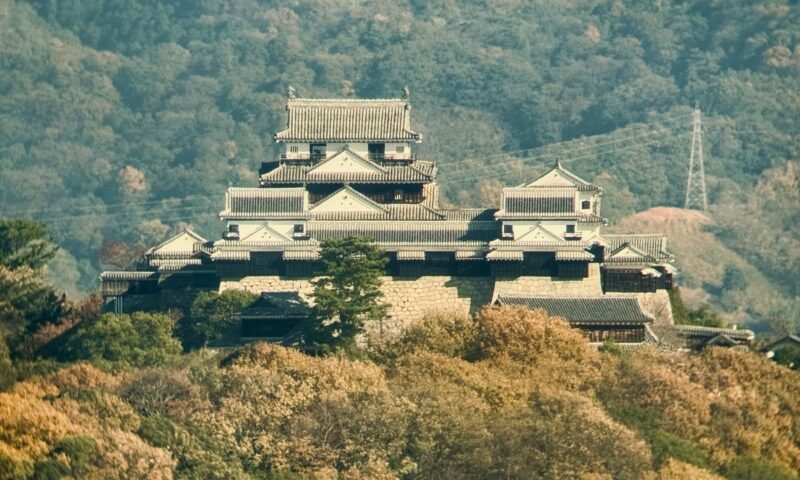
I got to Matsue Castle before the tour buses did, while the mist was still sitting low over the moat and the black timber of the keep looked almost wet in the early light. I’d come to Shimane for the castle itself – it’s one of only twelve in Japan with a keep that’s survived since the Edo period, unrestored concrete, the real wooden bones – but it was the woman at the ticket office who mentioned, almost in passing, that the reason there’s no Bon Odori dancing anywhere near the castle grounds is a girl who never got to finish hers. I’d been in Japan long enough to know that when a local drops a line like that and then changes the subject, you don’t let it go.
A Castle That Would Not Stay Standing
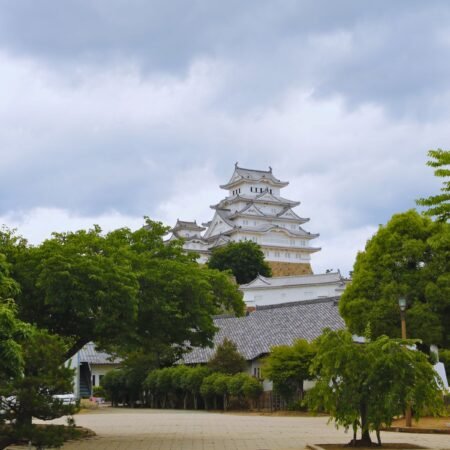
Matsue Castle was built between 1607 and 1611 by Horio Yoshiharu, the first daimyo of the Matsue domain, on a hill overlooking Lake Shinji. It’s often called Chidori-jo, “Plover Castle,” for the way its stacked gables sweep out like a bird’s wings, and in 2015 it became one of only five castle keeps in Japan to hold National Treasure status. Unlike the concrete rebuilds you’ll find at more famous castles, this one is original: the same pillars, the same joinery, standing through three and a half centuries of earthquakes, storms, and the demolition orders of the Meiji era, which took apart most of Japan’s other castles for scrap and left this one alone almost by accident.
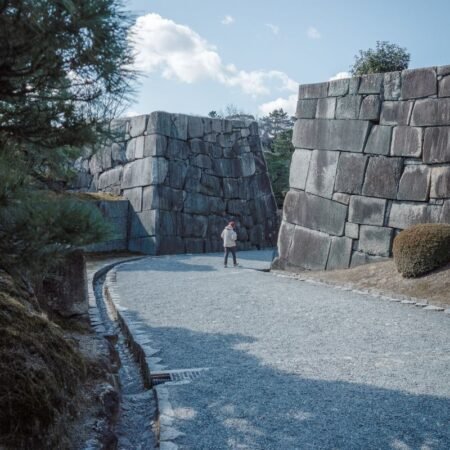
None of that grandeur, according to local lore, came easily. The story goes that during construction the stone ramparts kept giving way – sections that had been carefully fitted would slump or collapse overnight, no matter how the masons rebuilt them. In a period when castle walls were engineering as much as they were architecture, a wall that wouldn’t hold was a serious problem, and the people building it reached for an old and grim solution.
The Dancer Chosen by the Wall
According to the legend, the answer to the collapsing stonework was a hitobashira – a “human pillar.” The practice, recorded in folklore attached to castles, bridges, and dams across Japan, held that burying a living person within or beneath a structure’s foundations would placate whatever spirits were causing it to fail, binding the building together where mortar and stone alone could not.
The story told around Matsue is that the town held a Bon Odori dance during the height of the construction trouble, and that the most beautiful and skilled dancer in the crowd was seized and buried alive within the castle’s walls. It’s a difficult story to sit with, and I want to be honest about what it is: a piece of oral tradition, not a verified historical event. Most historians who study hitobashira folklore are skeptical that literal human sacrifice was common practice in Edo-period castle building, and no contemporary record names this girl or confirms what happened to her. What the legend almost certainly does preserve is something else that was very real – the enormous, often fatal toll that castle construction took on the laborers who cut, hauled, and stacked stone by hand, and a community’s need for a story that gave that suffering a shape.
The Keep That Still Remembers
Whatever its origin, the legend didn’t end with the wall standing. According to the tale, once the castle was finished, the tenshu would shudder and groan whenever Bon Odori was danced in the streets below it – as if the girl inside the stone remembered the last dance she never finished. Local authorities are said to have eventually banned the dance from the castle town altogether, and some retellings claim two successive lords of the domain were removed from their post not long after, a misfortune people were quick to attribute to her lingering anger. Even now, Matsue is one of the few historic castle towns in Japan without a Bon Odori tradition of its own, and residents I asked about it treated the connection to the legend as simple local fact, whether or not they believed the ghost story attached to it.
There’s a second half to the haunting that I like better, because it ends gently. Lafcadio Hearn – the Greek-Irish writer who settled in Matsue in 1890 and later took the name Koizumi Yakumo – recorded a version in which a woman in white burial clothes began appearing in the Tengu-no-ma, a room inside the keep, after the castle’s completion. The story goes that a subsequent lord, Matsudaira Naomasa, had a grilled konoshiro fish left in the room overnight as an offering, since the fish’s scent when cooked was traditionally likened to burning flesh and used in ceremonies meant to console the dead. By morning the fish was gone, and the ghost was never seen in the castle again.
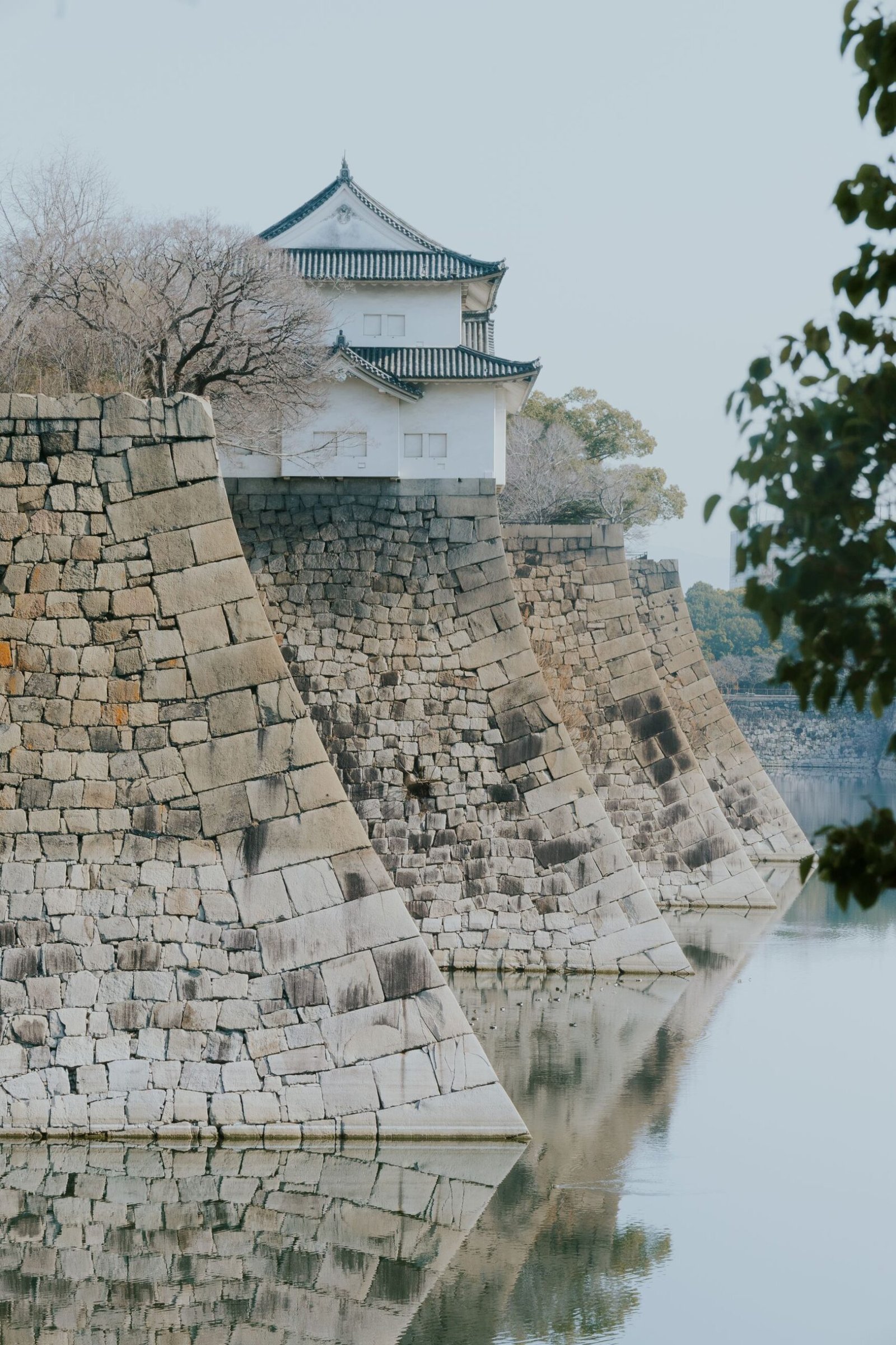
Standing on the Wall Today
I walked the full loop of the keep that afternoon, up the steep original staircases inside – steeper than almost any castle I’ve climbed in Japan – and out onto the veranda that circles the top floor, where you can see clear across the city to Lake Shinji. Nothing about the stonework tells you which section is supposed to hold the story; that’s sort of the point of a legend like this one. It isn’t attached to a marked stone or a roped-off corner. It’s folded into the whole structure, the way the taboo against dancing has folded itself into how the city marks its festivals, quietly, without needing anyone to fully believe it.
What stayed with me wasn’t a chill so much as a kind of respect – for a four-hundred-year-old building that people have kept alive, literally and in story, by refusing to forget what it might have cost.
If you’re planning a visit, Matsue Castle is a fully public, paid admission site within Matsue Castle Park, open daily with posted hours, and the keep interior, stairs, and grounds are all part of the regular visitor route – there’s no need, and no legal way, to go looking for a hidden or restricted section to “find” the legend. Move slowly on the original wooden staircases, which are narrow and steep by design; keep noise down in the upper rooms where other visitors are taking in the view; and if a shrine offering or memorial marker anywhere on the grounds catches your eye, admire it without touching or moving it. The dead this story is really about were ordinary laborers, not characters in a ghost story, and the castle they helped build deserves to be visited with that in mind.
Note: images accompanying this article are illustrative stock photos and do not necessarily show the specific site discussed.
コメント