





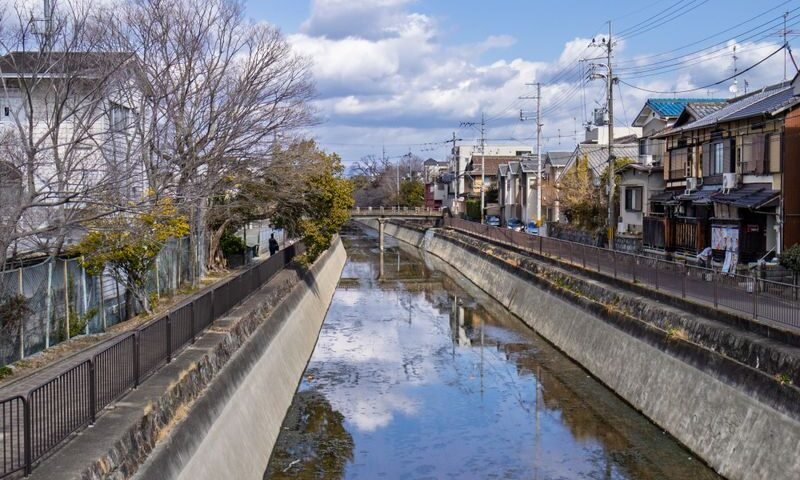
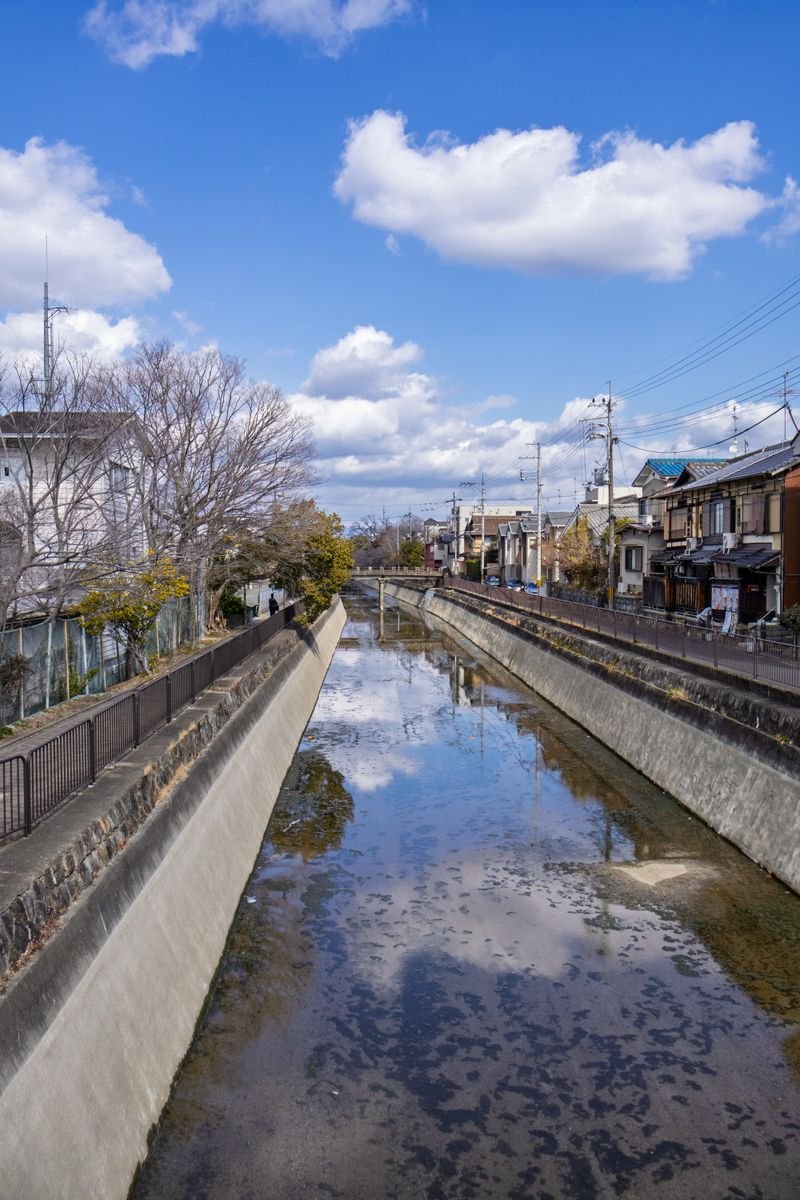
I nearly walked straight past it. Ichijo-dori is a fairly ordinary Kyoto street — traffic lights, a convenience store, cyclists weaving between parked delivery trucks — and the bridge itself is just a short stretch of grey concrete over the Horikawa River, no more than a few metres long. There’s no dramatic gate, no crumbling stonework, nothing that screams “haunted.” A small stone marker on the northeast corner is the only clue that this crossing has a name at all, let alone a thousand years of stories attached to it: Ichijo Modoribashi, the “Ichijo Return Bridge.”
I’d walked past a lot of famous names in Kyoto by that point — temples, shrines, the usual postcard shots — but this one stuck with me precisely because it’s so unassuming. You could drive over it without noticing. And yet, according to local tradition, this is a place people have quietly avoided, sought out, or crossed with real ceremony for centuries, depending on where they were headed in life.
The Funeral That Turned Back
The bridge’s name is said to come from a story recorded in Heian-period sources such as the Kojidan and the Jikkinshō, collections of anecdotes compiled a few centuries after the events they describe. According to the story, in the year 918, the funeral procession of the court scholar Miyoshi Kiyoyuki was crossing the bridge when his son, a monk named Jōzō, arrived back from his training in the mountains, having rushed home on hearing of his father’s death. Jōzō is said to have prayed over the coffin right there at the bridge, and that his father briefly returned to life to speak with him before passing on for good.
Whether or not you take the story literally — and it was already being told as legend, not reportage, within a few generations — it gave the crossing its name and its reputation: a place where the dead, however briefly, turn back. From there, the associations only multiplied.
Abe no Seimei’s Spirits Under the Bridge
A short walk from the bridge stands Seimei Shrine, dedicated to Abe no Seimei, the Heian-era onmyoji (cosmologist-diviner) whose reputation for reading omens and commanding spirits has only grown over the last thousand years of retelling. Local tradition places his residence near Ichijo Modoribashi, and one of the stories told about him is that he kept his shikigami — spirit servants he could summon to do his bidding — hidden underneath the bridge itself, because his wife found their appearance too frightening to have them in the house. He is said to have called them out only when he needed them, then sent them back beneath the water.
The bridge also appears in the older warrior tales collected in works like the Konjaku Monogatarishū, in a story involving Watanabe no Tsuna, a retainer of the general Minamoto no Yorimitsu. As the story goes, Tsuna was crossing the bridge one night when a beautiful woman asked him to carry her across the river. Sensing something wrong, he stayed alert — and when the “woman” seized him by the hair and revealed herself as a demon, he drew his sword and cut off her arm before she could pull him under. The tale is a folklore staple retold in Noh and kabuki versions for centuries, and it’s worth being clear that it belongs firmly in the realm of legend rather than history — but it’s part of why this particular stretch of water has such a reputation.
A Bridge With Two Opposite Meanings
What I find genuinely interesting about Modoribashi isn’t the demons — it’s how the same superstition gets read two completely different ways depending on the occasion. Because the name means “return,” Kyoto brides are traditionally said to avoid crossing the bridge on their way to a wedding, out of concern that a marriage begun by “returning” might end the same way, in separation. Wedding processions in the area are said to route around it rather than over it.
But for anyone heading into danger, “return” is exactly what you want. According to local accounts, it became customary for soldiers being sent off to war to cross the bridge, or to have family see them off there, in the hope that they would come home safely — a practice reportedly observed by families during the wartime mobilisations of the twentieth century. Students heading to sit entrance exams, and travellers setting off on long journeys, are said to follow the same logic today, treating a crossing as a small, private wish to come back safely. Two people can stand on the exact same bridge for opposite reasons, and both are, in their own way, taking the name completely seriously.
Standing on the Bridge Today
What’s actually there now is almost defiantly ordinary. The current bridge is a modern concrete structure — it’s been rebuilt more than once over the centuries, most recently in the twentieth century — carrying regular city traffic over the Horikawa, which at this point is a modest, tree-lined canal rather than a dramatic river. The stone marker is easy to miss if you don’t already know to look for it. Most of the atmosphere, if you want to call it that, comes from knowing the stories rather than from anything you can see.
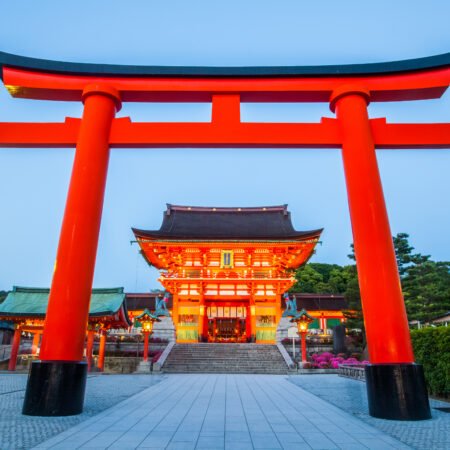
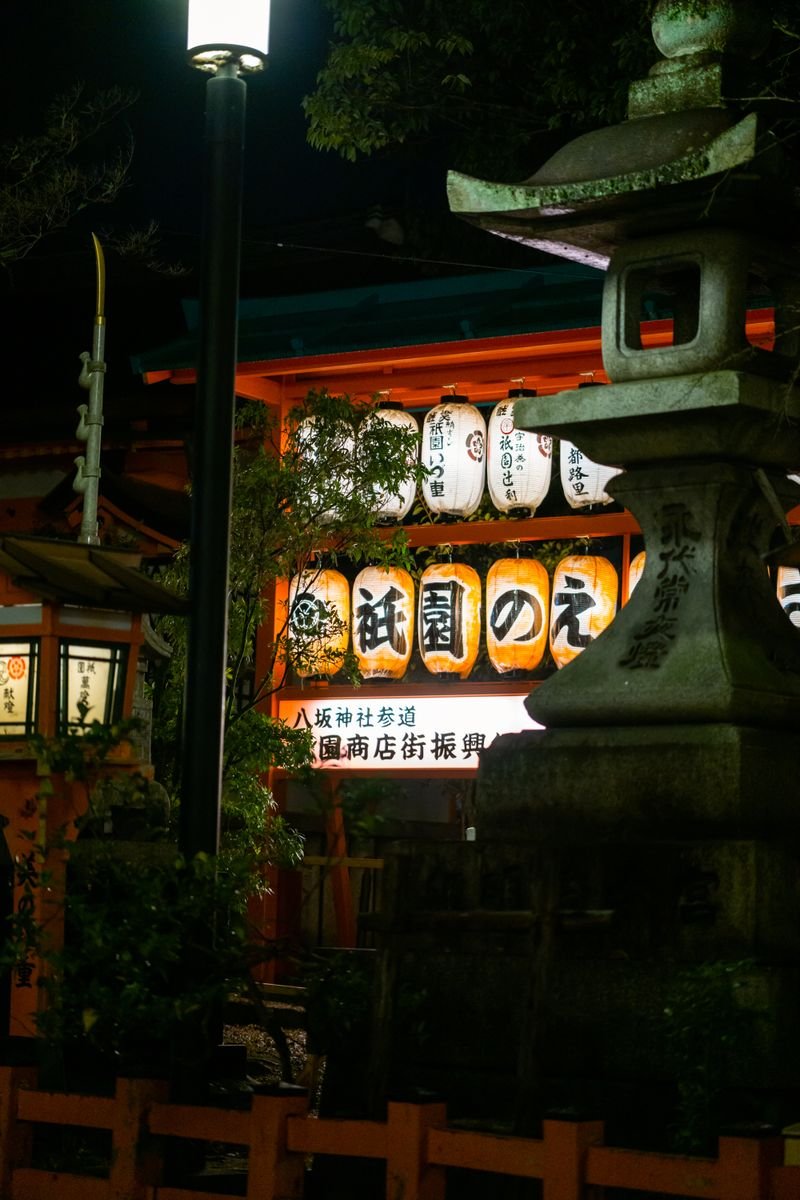
Seimei Shrine nearby does a much better job of announcing itself, with its five-pointed star crest (the seiman, associated with Seimei’s onmyoji practice) on lanterns and talismans, and a small stone relief said to depict his shikigami near the shrine’s well. It’s a genuinely popular stop on the Kyoto shrine circuit, particularly around New Year, and gets a steady stream of visitors well before dark.
Visiting Respectfully
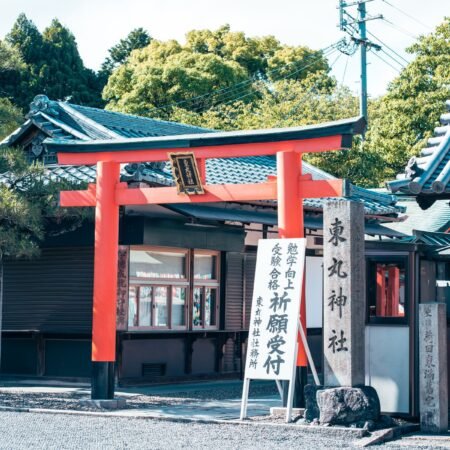
This is one of the more straightforward places on my list to visit responsibly, precisely because it isn’t a ruin or an abandoned building — it’s a working city street and a well-maintained, actively used shrine. That still comes with its own etiquette. The bridge carries real traffic, so it’s not a place to linger in the road for photos; step back onto the pavement for those. At Seimei Shrine, follow the usual shrine manners — a small bow at the torii, quiet voices, no flash photography near people in prayer, and don’t touch the talismans or offerings unless you’re buying them.
If you’re drawn here by the ghost stories rather than the history, I’d gently suggest sitting with the history a while first. The Watanabe no Tsuna tale and the shikigami story are wonderful pieces of Heian-period storytelling, but they were being told as legend even by the people who first wrote them down, centuries after the events they describe. What’s real, and rather touching, is the more recent layer: generations of Kyoto residents quietly choosing which way to read a single word — “return” — depending on whether they were walking toward a beginning or away from danger.
Note: images accompanying this article are illustrative stock photos and do not necessarily show the specific site discussed.


コメント