





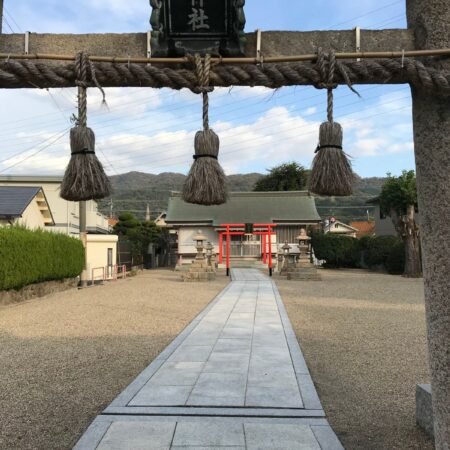
I almost didn’t stop at Yoshiwara Jinja. I’d been in Senzoku, in the quiet grid of streets north of Asakusa that used to be Tokyo’s largest licensed pleasure quarter, looking for something more photogenic — one of the old willow trees, maybe, or the marker at what used to be the Great Gate. The shrine itself is easy to miss: a modest concrete building wedged between apartment blocks. But behind the main hall sits a second, smaller shrine, Yoshiwara Benzaiten, and in front of it a small pond with a stone statue standing at its edge, hands folded, face worn soft by a century of rain. I didn’t know what I was looking at yet. I just knew, the way you sometimes do at these places, that something had happened here.
Something had. And the story of what, and of how Tokyo has argued with itself about it for a hundred years, turned out to be more interesting — and more unsettling, in a quiet way — than any haunting I could have hoped to find.
A pond in a pleasure district
Yoshiwara was Edo’s officially sanctioned red-light district from the early seventeenth century until prostitution was outlawed in 1958, a walled town-within-a-town that generated its own slang, its own fashions and an entire genre of woodblock prints. By the late nineteenth century, a public garden called Hanazono Park had been laid out just southwest of the quarter, with an ornamental pond known as Benten-ike at its centre, named for Benzaiten, the goddess of water and good fortune, whose shrine stood nearby. For the women who worked in Yoshiwara, many of whom had little freedom to leave the district at all, the park was apparently one of the few patches of open sky available to them.
On 1 September 1923, the Great Kanto Earthquake struck Tokyo, followed within minutes by fires that tore through the densely built wooden city. Yoshiwara burned along with everything around it. According to the account published by nippon.com, drawing on contemporary police records, panicked residents of the quarter and the surrounding neighbourhood fled toward Benten-ike as the flames closed in, and more than five hundred people drowned in its waters, with nowhere left to run.
The number that wouldn’t sit still
Here is where the story gets complicated, in the way real history usually does and ghost stories usually don’t.
For decades, the figure attached to Benten-ike was 490 — specifically, 490 Yoshiwara courtesans said to have died there that day, trapped, in the version I’d heard before I ever visited, behind a gate they weren’t permitted to pass. It’s a vivid, angry image, still repeated on plenty of sites about the district. The trouble, according to the more careful reconstruction in that same nippon.com piece, is that Yoshiwara had six emergency exits that weren’t barred that day, and Benten-ike sat outside the walls entirely, in the public park. A neighbourhood death toll cited in the article puts the fatalities actually connected to Yoshiwara households at around 155 — brothel owners, courtesans, geisha, staff — while the figure of 490 appears to belong to residents of the ordinary surrounding neighbourhood, caught in the same fire and drowned in the same pond. Somewhere across a century of retelling, the two counts seem to have been swapped, and a citywide disaster narrowed itself into a tidier, more sellable image: beautiful, trapped, doomed women.
I don’t say this to strip the story of its weight — if anything it feels heavier once you sort it out. Five hundred people, courtesans and shopkeepers and children and old men, the whole cross-section of a burning neighbourhood, drowned in an ornamental pond because there was nowhere else to go. That it was later simplified into a story about the quarter’s women specifically says something about how Yoshiwara’s memory has always worked: tragedy gets filtered through the district’s own myth of itself, and the actual dead, most of whom weren’t prostitutes at all, get pushed to the edges of their own story.
What’s standing at the water now
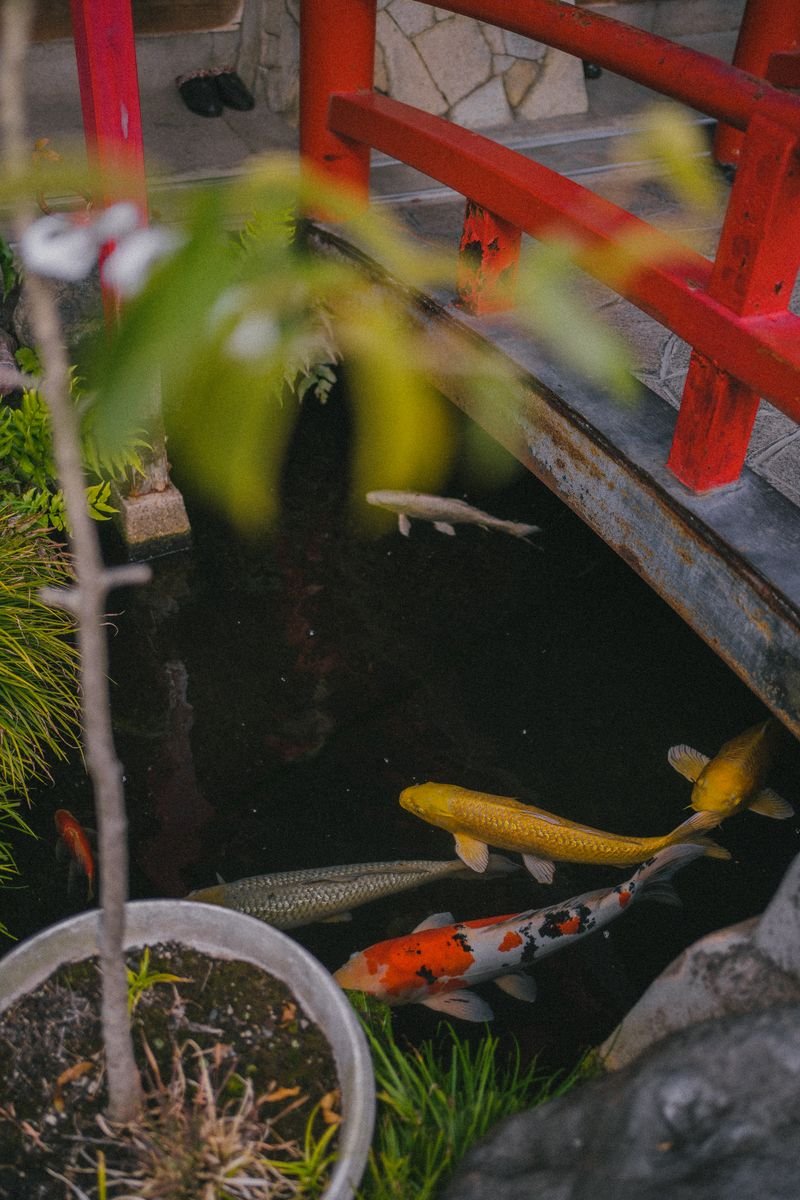
A Buddhist memorial service was held at the site on 1 September 1924, the first anniversary, and has reportedly been repeated there every year since. A stone Kannon statue was raised at the pond’s edge not long after, within a few years of the quake by most accounts, to watch over the dead — the same weathered figure I’d stood in front of without knowing why. The pond itself is now a fraction of its original size; locals recall the larger Hanazono Park pond being filled in around 1959, decades after the disaster, as the neighbourhood rebuilt around new roads and buildings. What remains sits inside the grounds of Yoshiwara Benzaiten today, a modest water feature with carp in it, easy to walk past without a second thought.
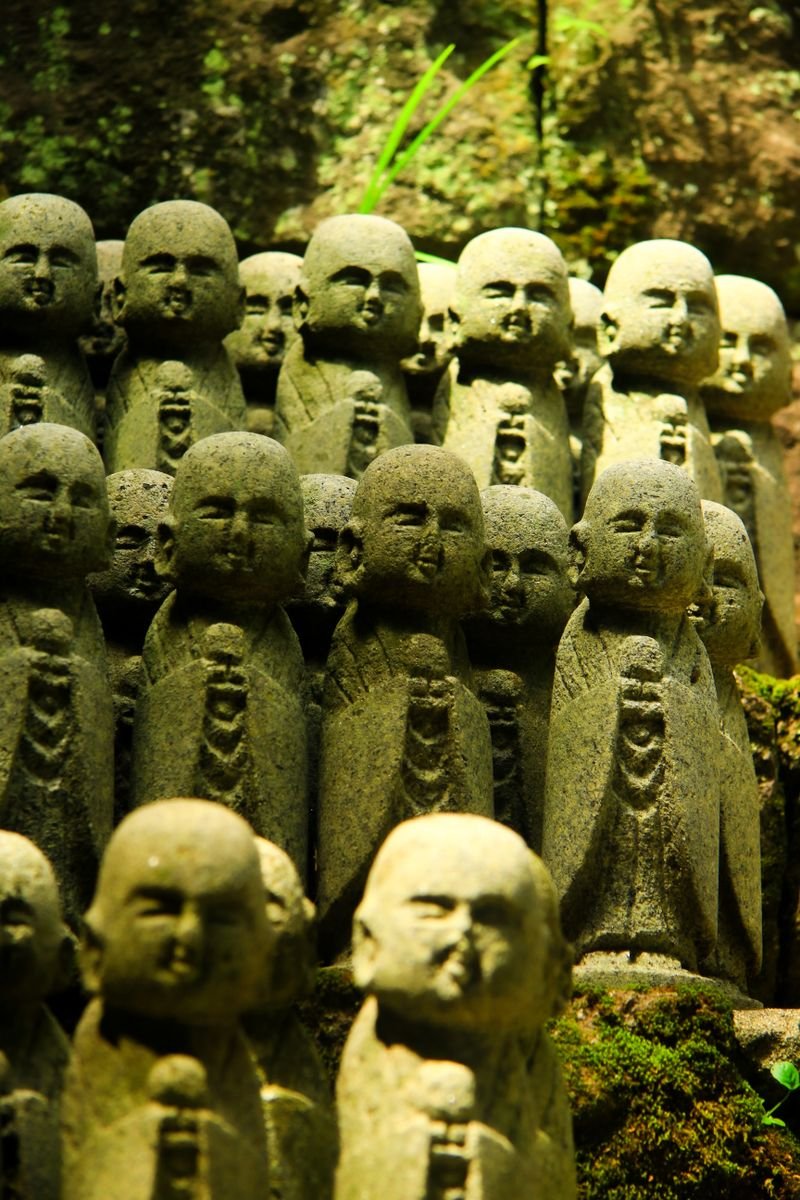
Yoshiwara Jinja has its own layered history of destruction and rebuilding that mirrors the pond’s. It was formed in 1872 from five small Inari shrines scattered around the quarter, flattened by the 1923 earthquake, rebuilt, and destroyed again in the 1945 air raids before the current building went up in 1968, by which time it had absorbed the Benzaiten shrine and its pond into the same small precinct. Local accounts describe it less as a haunted place than as a kind of accumulated memory — a site that keeps having to rebuild itself because the ground beneath it keeps getting paved over, burned, or forgotten, and keeps getting remembered anyway.
I wouldn’t call Yoshiwara Jinja frightening, and I’d be doing it a disservice to dress it up as a scare. I didn’t feel watched there, and I haven’t found a reliable account of anyone else who did. What I felt, standing by that small pond with the Kannon’s eyes worn nearly smooth, was closer to what I’ve felt at a few other sites I’ve written about here — Taira no Masakado’s mound in Otemachi, the memorial at Sunshine 60 — that particular Tokyo habit of letting a quiet shrine or statue carry a city’s grief long after the event itself has been argued down to a disputed number in a history article. Whatever happened at Benten-ike in 1923, and however the story got rearranged in the telling, somebody has shown up every September since 1924 to burn incense for it. That continuity is, in its own way, more affecting than any ghost would be.
Visiting with care
Yoshiwara Jinja sits in Senzoku, Taito-ku, a short walk from Minowa or Iriya stations, in an ordinary residential and commercial stretch of the city rather than a tourist district — so the first rule is to behave as you would at any neighbourhood shrine: keep your voice down, and remember this is a functioning place of worship, not a backdrop. The shrine and its Benzaiten precinct are generally open to visitors during the day; it’s worth checking current hours before you go rather than assuming. Treat the pond and the Kannon statue as what they are — a memorial to several hundred ordinary people who died in a catastrophe, not a stage prop — and skip close photos of the statue’s face if anyone else is quietly paying respects nearby. Yoshiwara’s history as a red-light district is well documented and worth reading about honestly, but the neighbourhood today is residential; there’s no “exploring” to be done beyond what a visitor would do at any city shrine, and nothing here that calls for trespassing of any kind. If you happen to be in the area on or around 1 September, keep a respectful distance from any memorial service in progress rather than treating it as a spectacle.
Note: images accompanying this article are illustrative stock photos and do not necessarily show the specific site discussed.

コメント