



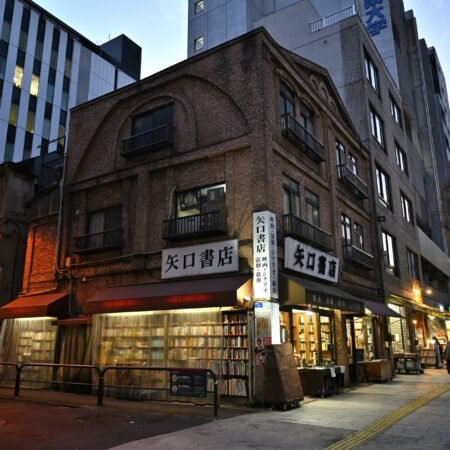



I first heard about the crying bell of Mii-dera from a secondhand bookshop owner in Otsu, a quiet lakeside city that most visitors treat as a forty-minute layover between Kyoto and the shinkansen home. “Go and listen to it,” he told me, half-joking, half-serious, in the way most good ghost stories in this country get told to you. I did not expect, when I eventually climbed the stone steps into Onjo-ji — the temple everyone just calls Mii-dera, “Temple of the Three Wells” — that the object worth listening to would be sitting quietly behind glass, dented and silent, in a small wooden hall most tour groups walk straight past.
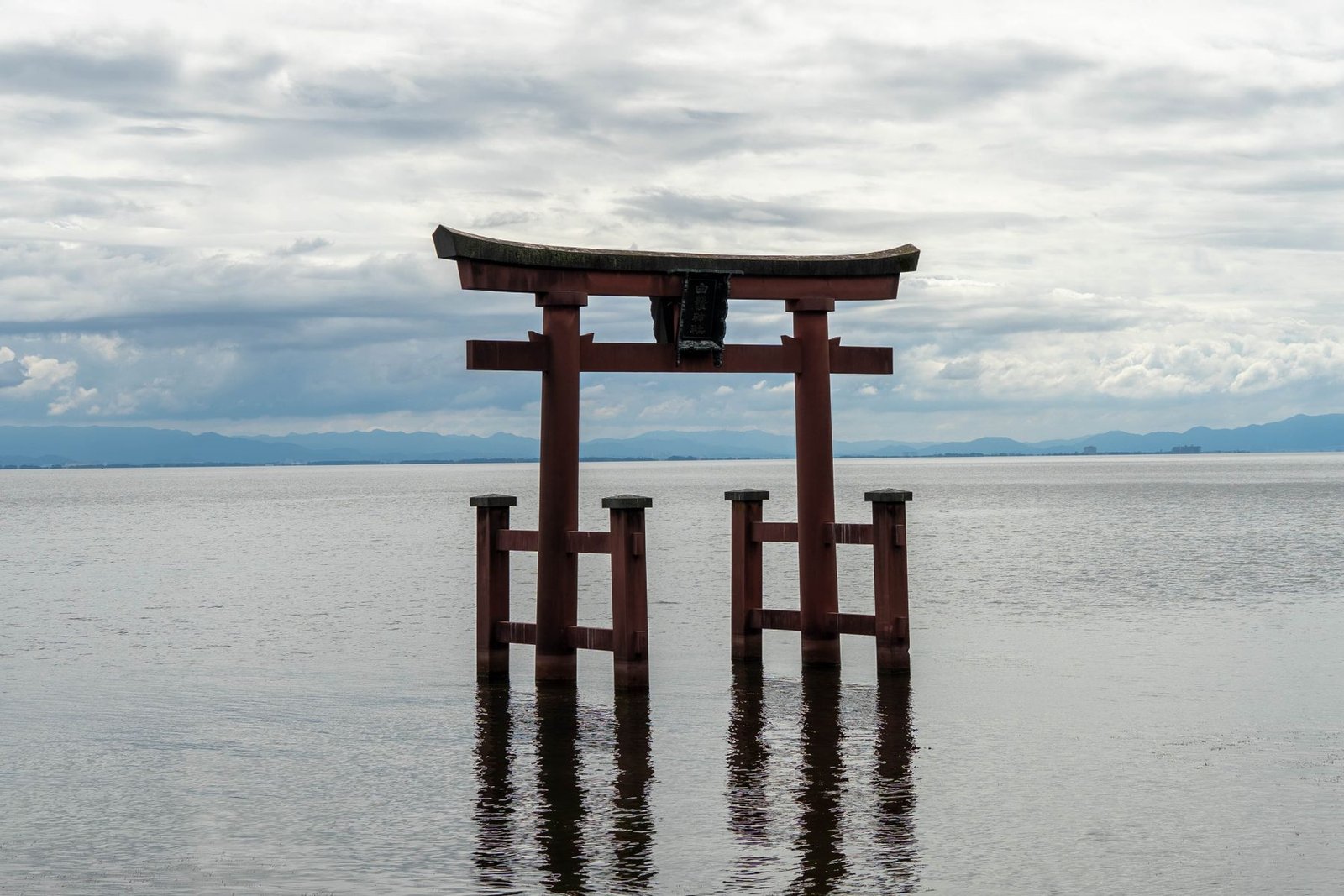
Mii-dera sits on the western shore of Lake Biwa, Japan’s largest lake, with the wooded slope of Mount Hiei rising directly behind it. According to temple tradition, it was founded in 672, in the aftermath of the Jinshin War, a succession struggle that split the imperial court in two. The temple’s present name only arrived two centuries later, once the priest Enchin had three sacred springs on the grounds that were said to have been used to bathe three emperors at birth — hence “Mii,” three wells. It’s a founding story built, quite literally, on grief and reconciliation, and that particular tension never really seems to leave the place.
A Rivalry Written in Ash
Mii-dera and its neighbour on the mountain, Enryaku-ji, both trace their lineage back to the Tendai school of Buddhism, but by the tenth century the two had split into rival factions — the Jimon branch based at Mii-dera and the Sanmon branch at Enryaku-ji — and the split, by most accounts, was less about doctrine than about which monastery’s monks got to run things. What followed, according to the temple’s own chronicles and several outside histories, were centuries of armed monks, known as sōhei, burning down each other’s halls. Mii-dera is recorded as having been destroyed by fire from Mount Hiei’s monks on more than one occasion across the medieval period, on top of damage from wider conflicts, including Oda Nobunaga’s 1571 campaign against Enryaku-ji, which also swept through parts of Mii-dera. It is, by its own telling, a temple that has been burned down and rebuilt more times than most of us would care to count — which makes the survival of one small, battered bronze bell feel almost improbable.
The Monk, the Bell, and the Walk Up the Mountain
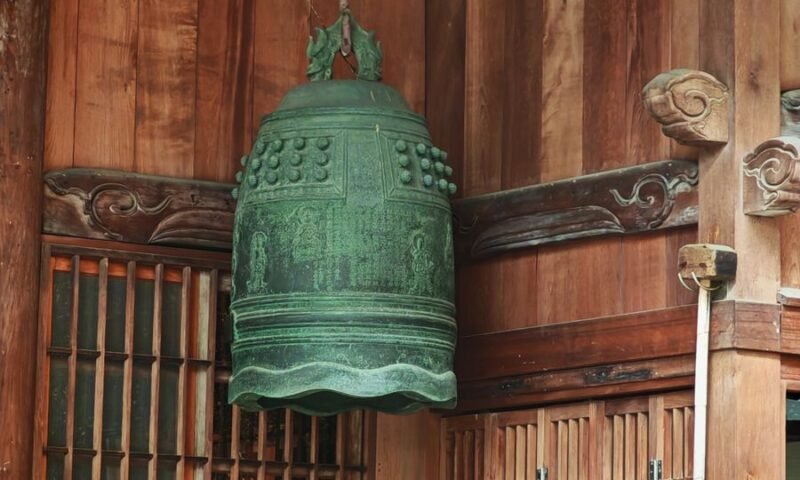
The bell in question — officially an Important Cultural Property dated to the Nara period, roughly the eighth century — is popularly known today as Benkei’s Bell, after the warrior-monk Musashibo Benkei, better remembered now as the loyal retainer of the tragic general Minamoto no Yoshitsune. Benkei himself sits in an odd space between history and folklore; most of what’s recorded about his life comes from later war tales and Noh plays rather than contemporary documents, so I tend to treat him the way the temple itself seems to: as a character the legend needed, whether or not every detail of his biography holds up.
According to the story told at Mii-dera, Benkei — in his earlier days as a monk of Enryaku-ji — coveted the temple’s bell so badly that he hauled it, by himself, up the mountain to his own monastery. It’s no small undertaking; the bell is a sizeable piece of bronze, and the climb up Mount Hiei isn’t gentle. Once it was installed at Enryaku-ji, the story goes, the monks struck it to test its tone, and instead of a clean note it let out something closer to a low, dialect-flavoured moan that locals interpreted as “inō, inō” — roughly, “I want to go home.” However many times they rang it, blessed it, or tried to coax a proper sound out of it, the bell is said to have kept making the same mournful complaint, over and over, for Mii-dera.
Accounts differ on what happened next. Some versions have an infuriated Benkei striking the bell hard enough to dent it before hurling it back down the slope toward the lake; gentler retellings simply have him returning it himself, chastened by its stubbornness. Either way, the bell made its way back down to Mii-dera, where, scuffed and dented, it has apparently remained ever since. It’s worth saying plainly that none of this is offered by the temple, or by me, as settled history — it’s a denshō, a local tradition, and some who’ve studied the bell’s damage point out, fairly, that the marks are just as plausibly the ordinary scars of being dragged along a mountain path during one of the temple’s many very real conflicts with Enryaku-ji. I find that reading, if anything, more interesting than the ghost story itself: a dented bell as the physical memory of centuries of actual monastic rivalry, dressed up afterward into a tale a visiting family could enjoy telling their kids.
Standing in Front of It
The bell is kept today in the Reishodo, a modest bell hall to the west of Mii-dera’s main Kondo, as part of the temple’s small cultural property museum. It isn’t rung any more. When I visited, a group of schoolchildren filed past it in under thirty seconds, clearly more interested in the vending machines near the car park, and I can’t entirely blame them — on its face, it’s an unassuming lump of old bronze sitting in a glass case. But crouching down to look at the dents and the dark, uneven patina up close, knowing the centuries of genuine raiding, theft, and retaliation that quite plausibly produced them, gave me more of a quiet chill than any fog machine at a haunted house ever has. I’d suggest pairing a visit to the Reishodo with the rest of the temple grounds — the Kondo, the lakeside views, the three-story pagoda — rather than treating the bell as a quick photo stop, since the whole site tells one long story of destruction and stubborn survival, of which the bell is only the most portable example.
Visiting Mii-dera Respectfully
Mii-dera is a fully functioning temple with an active congregation, not a ruin or a tourist prop, and the Reishodo sits inside its regular, fee-paying visiting route — there’s no need, and no legal route, to go looking for whatever path up Mount Hiei Benkei is supposed to have used. Stick to the marked paths and the temple’s posted opening hours, keep your voice down around the halls where people are quietly praying, and ask before photographing anyone at worship. If you head up Mount Hiei itself afterward, treat the forest trails with the same seriousness as any mountain hike — proper footwear, daylight hours, and a weather check, since the slopes around Otsu can turn from clear to misty with little warning. None of what happened at Mii-dera involves a specific, identifiable modern victim; it’s old, overlapping history and folklore, and it deserves the same quiet respect you’d give any working place of worship, ghost story or not.
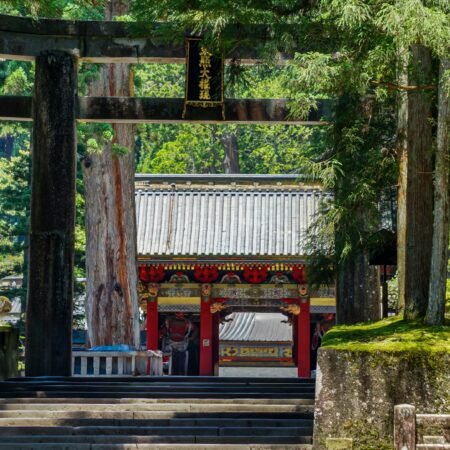
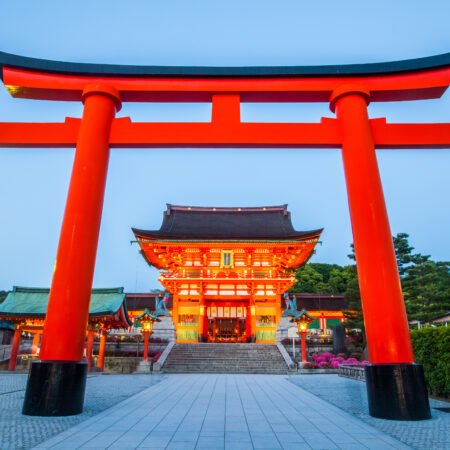
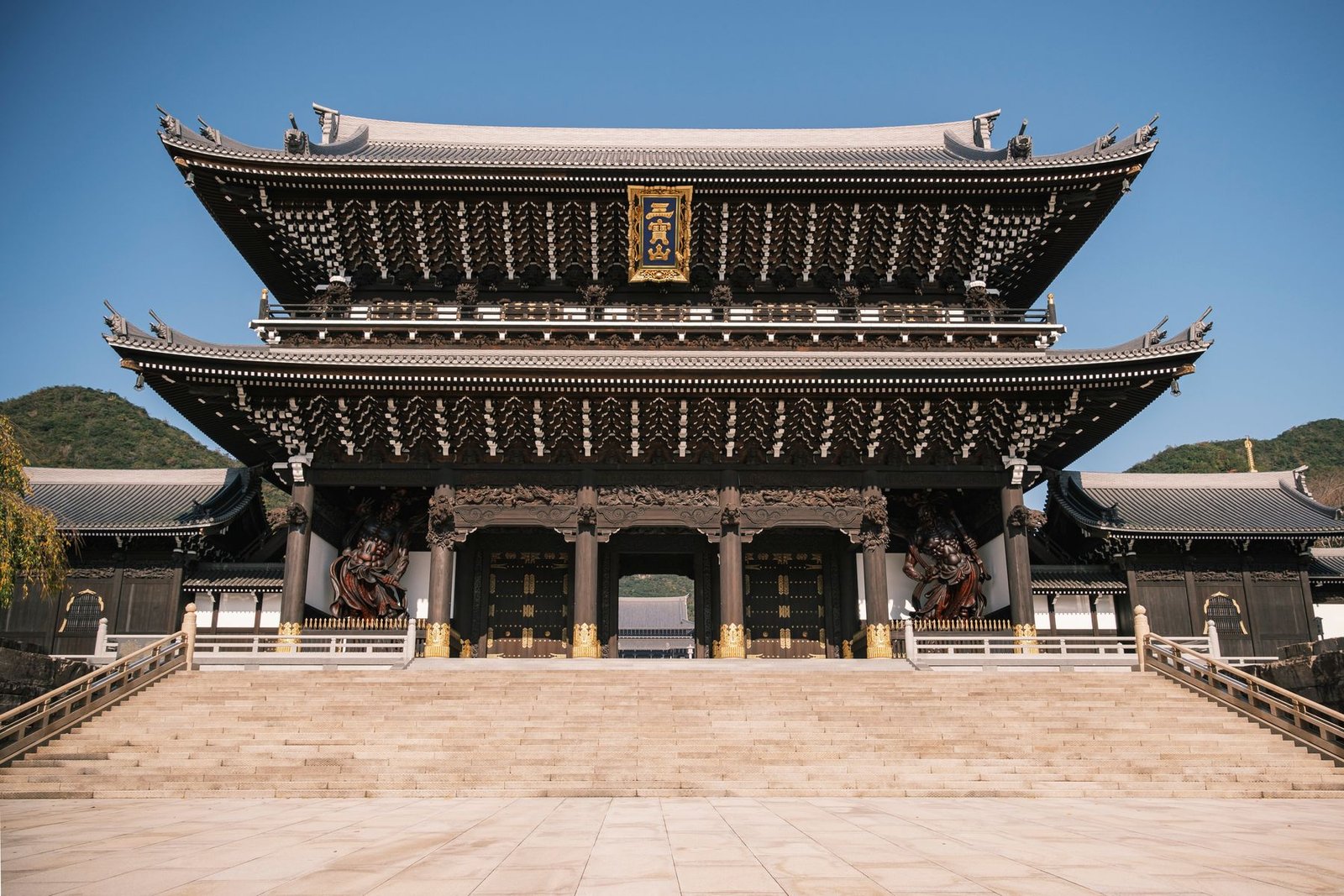
Note: images accompanying this article are illustrative stock photos and do not necessarily show the specific site discussed.

コメント