







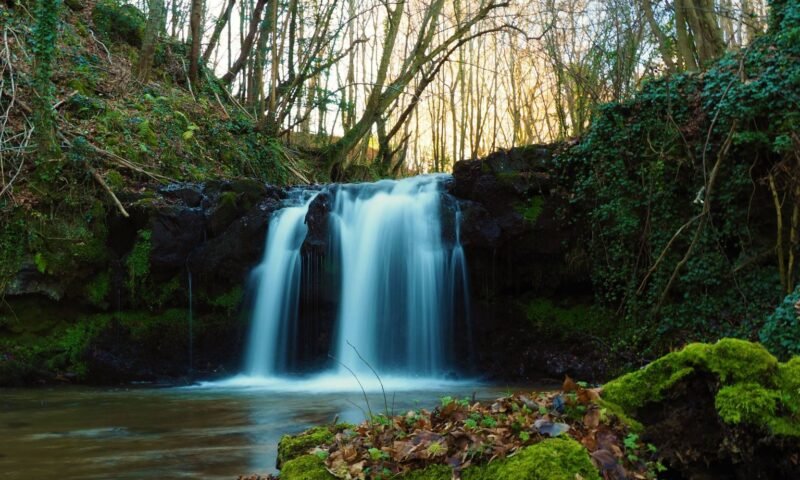
I’d gone to the Izu Peninsula for the wasabi, if I’m honest. Seven years in this country and I’d never had it fresh, grated at the table from a root the size of my thumb rather than squeezed out of a tube. The waterfall was meant to be the detour. Joren Falls sits down a long flight of stone steps outside Shuzenji, in the hills above the Kano River, and by the time I’d reached the viewing platform at the bottom, soaked more by spray than by the drizzle, I understood why generations of visitors have decided the water itself needed explaining. A pool that deep, at the foot of rock that dark, surrounded by columns of basalt stacked like something deliberately built rather than cooled from lava — it doesn’t take much imagination to start wondering what’s living in it. According to local legend, something is. Her name, depending on who you ask, is jorōgumo.
A Waterfall Named for a Temple That No Longer Exists
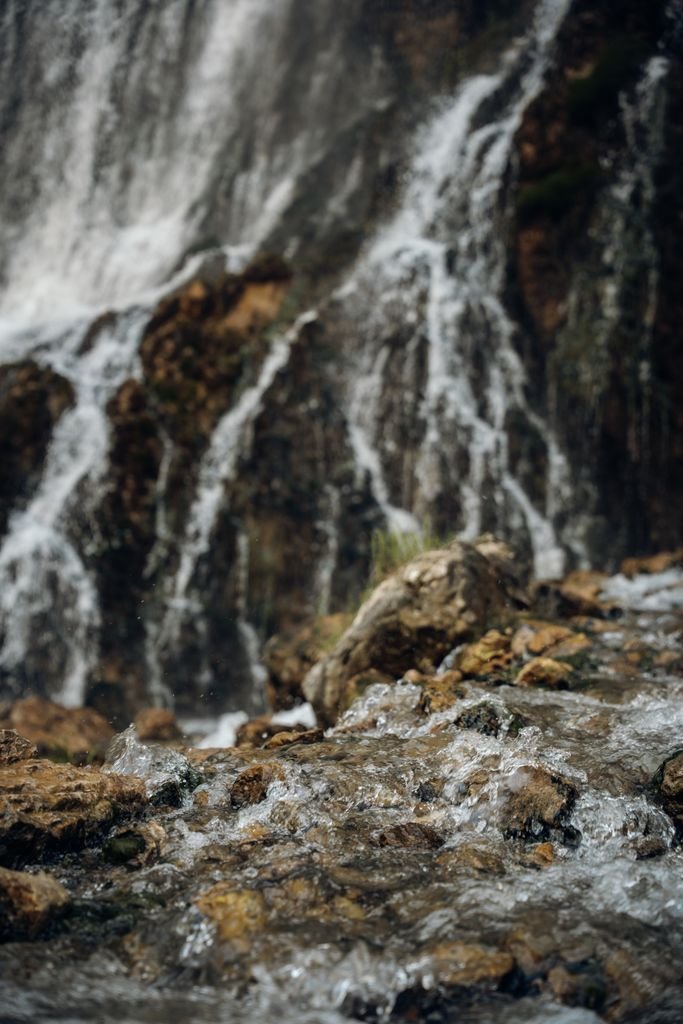
Joren Falls (浄蓮の滝, Jōren-no-taki) drops about 25 metres over a 7-metre-wide ledge of columnar basalt, into a pool local tourism material describes as some 15 metres deep, in the Yugashima district of Izu City, Shizuoka Prefecture. The rock itself is said to be the tail end of a lava flow from Mt. Hachikubo, a flank cone of the Amagi volcanic group, laid down something on the order of 17,000 years ago. It’s a designated Natural Monument of Shizuoka Prefecture and one of the “100 Famous Waterfalls of Japan,” the list the old Environment Agency drew up in 1990 — a reasonably official way of saying it’s worth the walk down.
The name is the first loose thread I pulled on. Jōren, I’m told, comes from a temple, Jōren-ji, said to have once stood near the falls. I couldn’t find a surviving building or a date for when it disappeared — only that the name outlived it, the way a shrine’s name can outlive the shrine. It’s a small, slightly melancholy detail for a place best known for its monster.
The Spider Who Minds the Pool
The story — and I want to be careful to call it that, because nobody I found is claiming it as history — comes in two parts, and they don’t always agree on the details depending on which local telling you read.
In the first, an old man resting by the pool feels something wind around his ankle. It’s a single strand of silk, and at the end of it, a spider. Rather than let it tighten, he slips the thread off his leg and loops it instead around a nearby tree stump. Moments later the ground shudders, the stump is torn out by its roots, and it’s dragged under the surface and gone. The telling I like best has him walking home convinced that the stump took his place.
In the second, a woodcutter working near the falls drops his axe into the water. He dives after it and comes up empty-handed, and while he’s still deciding what to tell his family about the lost tool, a woman rises from the pool holding it out to him. She returns the axe on one condition: that he never speak of having met her. Some versions have her simply asking for his silence; others have her naming a price for breaking it, and asking him, pointedly, to stop felling trees so close to her water. He agrees, goes home, and keeps the secret for years — until one evening, well into his drink, he tells it to the men beside him at the table. He falls asleep where he’s sitting. He doesn’t wake up.
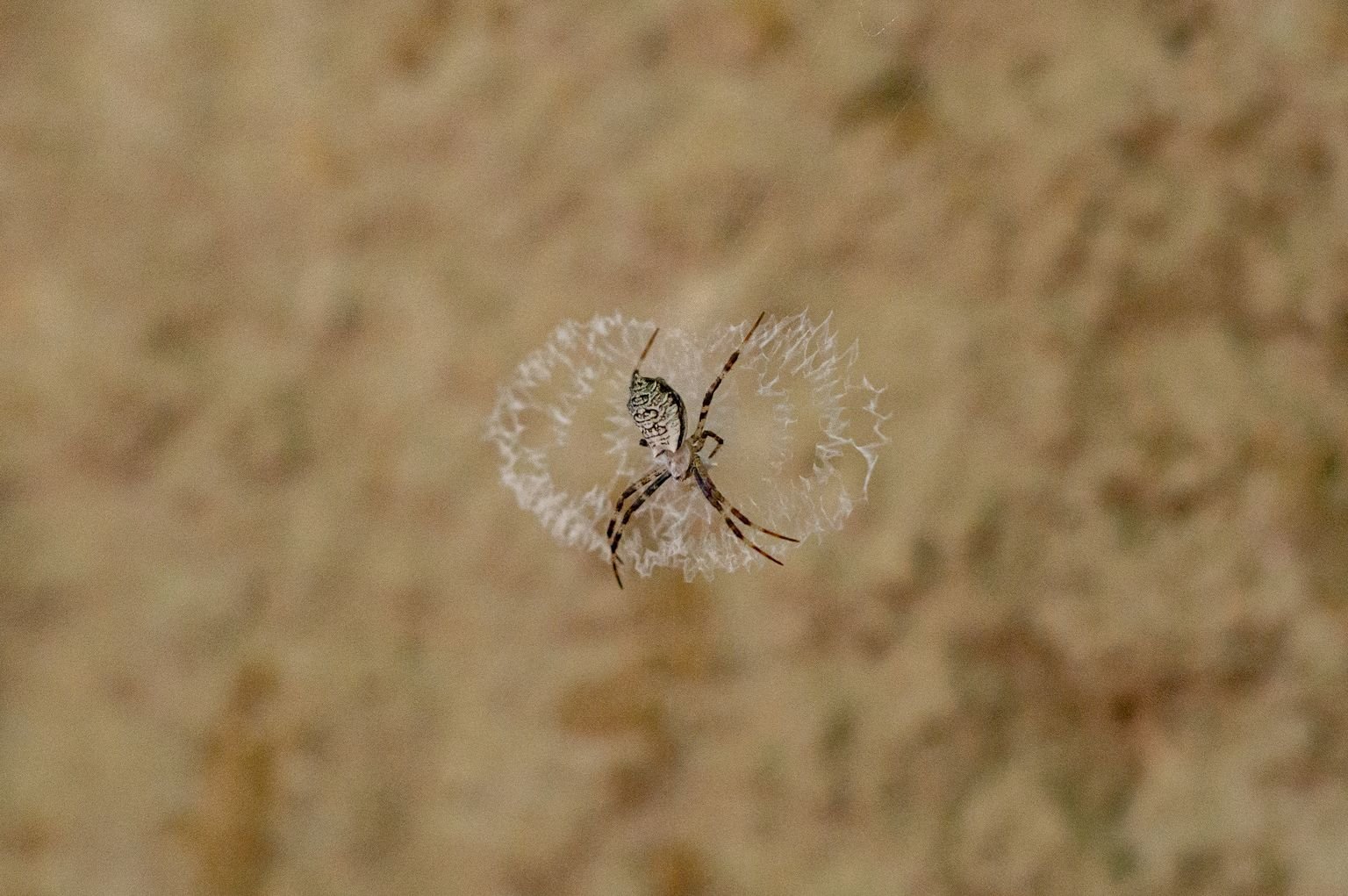
She is named, in both halves of the story, as the jorōgumo — one of the oldest and most widespread shape-shifting figures in Japanese folklore, a spider who takes the form of a beautiful woman to lure the unwary. What struck me, digging through a few variants, is that the thread-and-stump trick isn’t unique to Izu. A near-identical tale is told about a pool called Kashikobuchi in Miyagi, hundreds of kilometres north, where the water itself is said to murmur “clever, clever” at the man who outwits it. These stories seem to travel the way water does — the same current running under different hills.
An Enka Song, a Rumour, and a Scoop of Wasabi Ice Cream
Modern Joren Falls wears its legend fairly lightly. Several local sources note, without quite footnoting the claim, that the falls are popularly associated with “Amagi-goe,” Sayuri Ishikawa’s famous 1986 enka ballad about a woman crossing the Amagi mountains — the connection is repeated often enough locally that there’s reportedly a monument near the viewing area referencing it, though I’d treat it as the kind of local association that attaches itself to a scenic spot over decades rather than a documented fact about the song’s writing.
Online lists that file Joren Falls under “haunted spots” tend to describe a rumour that photographs taken at the pool sometimes come out wrong — a hand or a foot missing from the frame, or stretched unnaturally long, which locals trace back to the spider story rather than to anything that happened to anyone real. For what it’s worth, the one detailed write-up I found on this was careful to say the opposite of what you might expect from a ghost-story site: it specifically notes that it could not find any rumours of actual drownings, accidents, or deaths at the falls. Whatever is or isn’t in the water, nobody seems to be claiming it has hurt a living person.
And then there’s the ice cream. The path down and back up is lined with shops selling fresh wasabi grown in the paddies along the gorge — Izu’s cold, clean water makes it good wasabi country — and more than one of them will sell you a scoop of vanilla with a spoonful of it freshly grated on top. It is, for the record, exactly as strange and exactly as good as it sounds, and it’s a very effective way to stop thinking about spiders for a few minutes.
Visiting Joren Falls
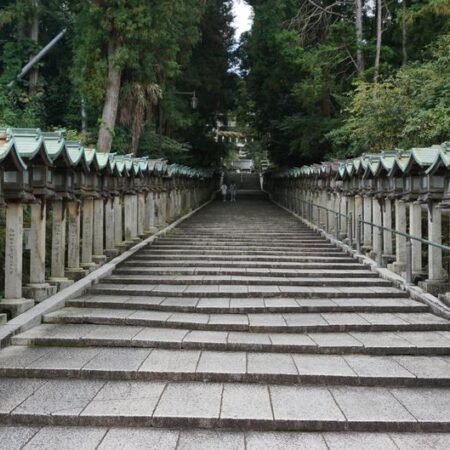
This is about as accessible as a “cursed” site gets in Japan: free admission, a paved car park with around a hundred spaces, and a signed stone staircase down to the viewing platform, with a small shop and rest area at the bottom and a modest exhibition hall near the exit. The only real hazard is the obvious one — the steps and the rock platform get slick in rain or spray, and the pool itself is deep and cold, so stay behind the railings rather than scrambling onto the basalt for a better photo. It’s a working tourist site with other visitors around, so keep the noise down near the water, don’t disturb the shops’ wasabi beds on the way in, and resist the urge to go hunting for a stray tree stump to test the legend yourself.
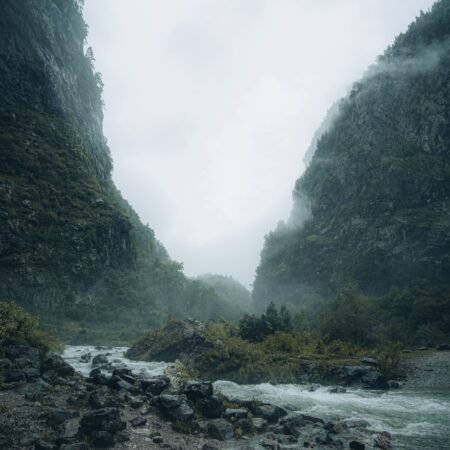
Note: images accompanying this article are illustrative stock photos and do not necessarily show the specific site discussed.
コメント