






I first heard the story of Hoichi the Earless the way most people outside Japan probably do – as a bedtime tale, filtered through Lafcadio Hearn’s Kwaidan, half-remembered from some anthology of world ghost stories I’d picked up as a kid. It never once occurred to me that the shrine at the centre of it was a real, physical place I could visit with a train ticket and a bit of patience. Then I moved to Shimonoseki for a few days of research on an unrelated translation job, glanced at a map, and there it was: Akama Jingu, sitting quietly on the edge of the Kanmon Strait, exactly where the story says it should be.
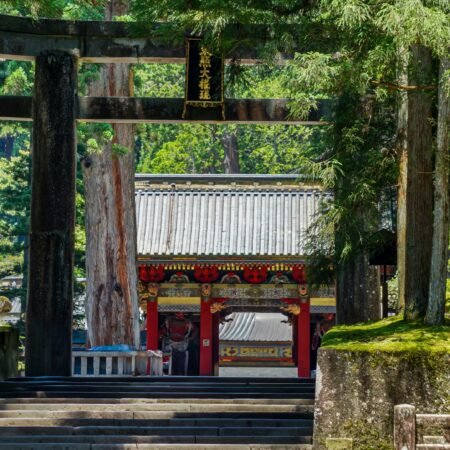
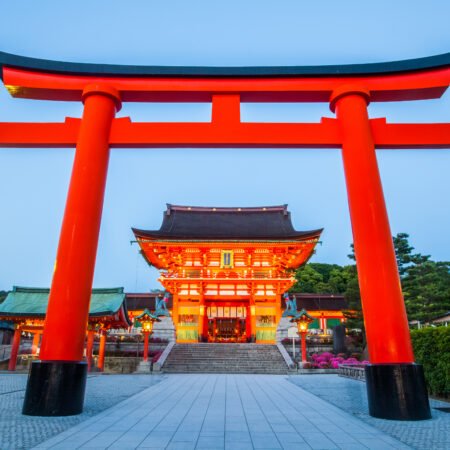
I went in the early evening, when the tour buses had cleared out and the vermilion gate – built in the shape of a dragon palace, all sweeping curves and white walls – was catching the last of the light off the water. Ferries and container ships slid past on the strait just beyond the seawall, close enough that you could hear their engines. It’s a strange feeling, standing at a place that is simultaneously a well-kept Shinto shrine, a national historic site, and the setting of one of the most famous ghost stories ever exported from Japan.
The Battle That Ended an Era
To understand why a shrine sits here at all, you have to go back to April 1185, when the Genpei War – the long civil conflict between the Taira (Heike) and Minamoto (Genji) clans – reached its final, decisive engagement in these waters. The Battle of Dan-no-ura was fought right off this stretch of coast, and it ended with the Taira fleet destroyed and the clan’s power broken for good. Among the dead was the child emperor Antoku, only seven or eight years old, who according to the Tale of the Heike was carried into the sea by his grandmother rather than face capture. Akama Jingu was built on the site traditionally associated with his mausoleum, and the shrine still maintains it today, along with a quiet memorial hall listing the Taira nobles who died alongside him.
I want to be careful here, because this is where a lot of “spooky Japan” content gets it wrong: the people involved were real historical figures from eight centuries ago, and the shrine treats the site as a place of mourning and remembrance first, curiosity second. Every year in May, Akama Jingu holds the Sentei Festival, with priestesses in Heian-period court dress performing rites for the emperor’s spirit. It’s solemn, not sensational, and that tone is worth carrying into any visit.
The Monk Who Lost His Ears
The ghost story itself is set a few centuries after the battle, at a temple called Amidaji that once stood on this exact spot before the Meiji-era separation of Buddhism and Shinto turned it into the shrine you see today. According to the version Hearn collected and retold, a blind biwa hōshi – an itinerant monk-musician who performed the epic Tale of the Heike to the accompaniment of a lute – named Hoichi lived at the temple and was renowned for his skill at reciting the Dan-no-ura chapters in particular.
One night, the story goes, a samurai in full armour summoned Hoichi to perform before “a gathering of high-ranking persons.” Night after night he was led away, until the temple’s priest grew suspicious, had him followed, and found him playing alone in the old cemetery – before the tomb of Emperor Antoku, surrounded by the cold, flickering fires the story associates with the Heike dead. To protect him, the priest covered Hoichi’s body in protective sutras, forgetting only his ears. When the spirit returned and could see nothing but two floating ears in the dark, it tore them off. Hoichi survived, and, local telling has it, found fame – and a new nickname – because of it.
I’ll say the obvious thing, since the content policy on a site like this basically requires it: nobody is claiming this happened as literal fact. It’s presented, then and now, as a denshō – a piece of local legend passed down through storytellers and eventually fixed in print by Hearn in 1904. What’s real is the temple’s historical existence on this site, the Genpei War itself, and the genuinely eerie atmosphere of a graveyard built for people who drowned rather than surrendered.
Crabs with the Faces of Samurai
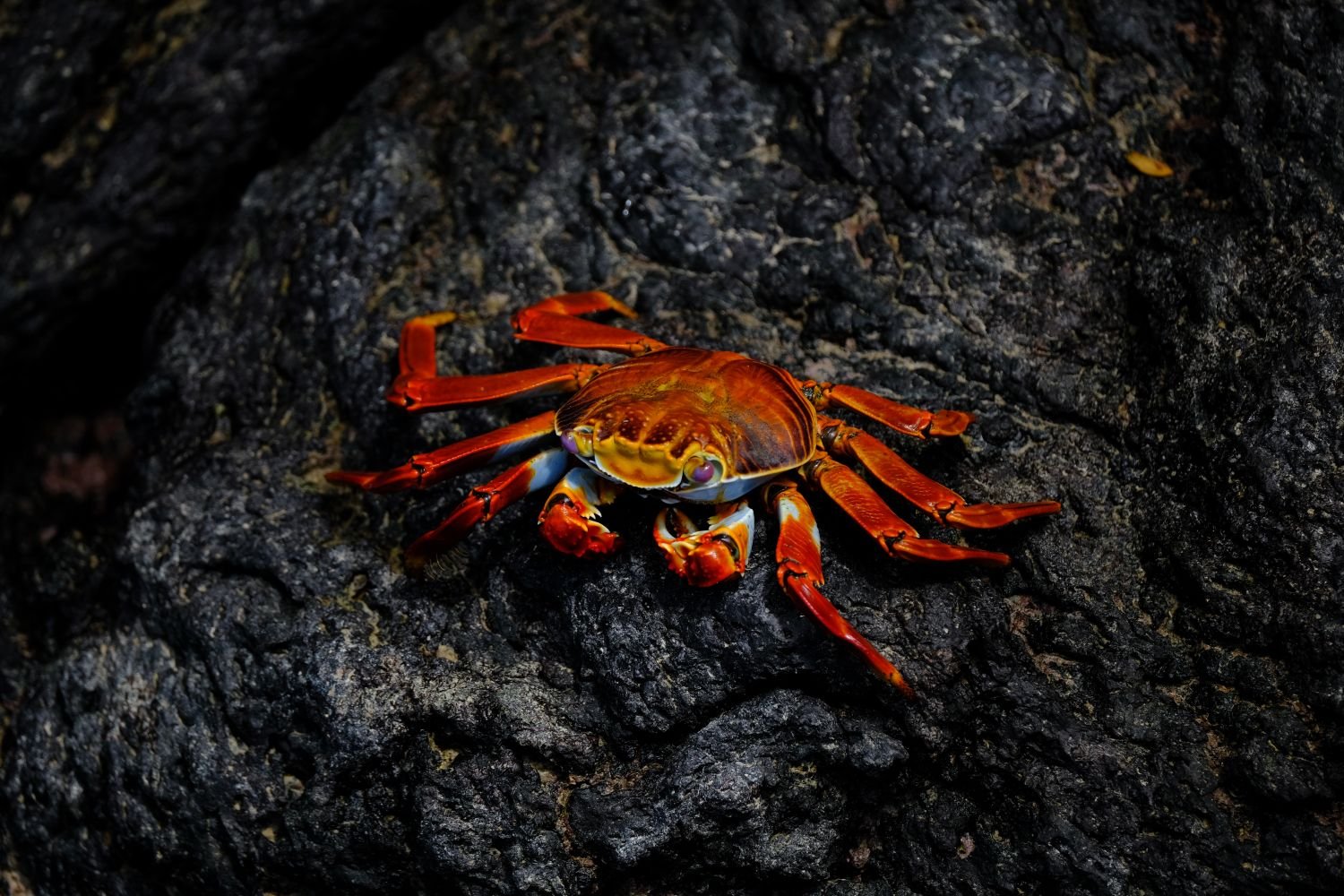
The strait has its own piece of folklore that predates Hearn by centuries. Heikegani, or “Heike crabs,” are a real species (Heikeopsis japonica) found in these waters, and the ridges on their shells form a pattern that, with a bit of imagination, resembles a scowling human face. Local tradition holds that these are the reincarnated spirits of Taira warriors who drowned at Dan-no-ura, their grief frozen into the shell forever. It’s the kind of folk explanation that turns up wherever people encounter something uncannily face-like in nature – the biologist Julian Huxley once suggested it might even be a case of unconscious artificial selection, with fishermen throwing back any crab bearing a particularly vivid “face” instead of eating it. A good example of a kaidan and a genuine biological curiosity ending up tangled together.
Visiting Akama Jingu Today
None of this requires trespassing anywhere or hunting down some abandoned building at 2 a.m. Akama Jingu is a fully public, actively maintained shrine, open during normal visiting hours, with the Antoku Tenno mausoleum and the Heike memorial hall both accessible as part of a respectful, ordinary visit. The Kanmon Strait waterfront around it is a pleasant public walking area, and on a clear day you can see all the way across to Kyushu.
A few things I’d ask you to keep in mind if you go. This is a mausoleum for people who died in a real war, however distant in time – treat the memorial hall like any war grave, not a backdrop for a “creepy Japan” reel. Follow the shrine’s normal etiquette: quiet voices, no climbing on structures, and whatever photography restrictions are posted inside the hall. If you’re there for the Sentei Festival in May, remember you’re watching an active religious ceremony, not a show, and give worshippers the space they need. The strait has real shipping traffic and strong currents, so mind your footing along the waterfront and don’t lean over the seawall for a shot.
Standing there at dusk, listening to the ferry horns and watching the tide pull at the same water where the Heike fleet went down eight hundred years ago, I didn’t feel frightened so much as aware – of how much history gets compressed into a single quiet shrine, and how a ghost story, however embellished over the centuries, can end up being one of the more honest ways a place remembers what happened to it.
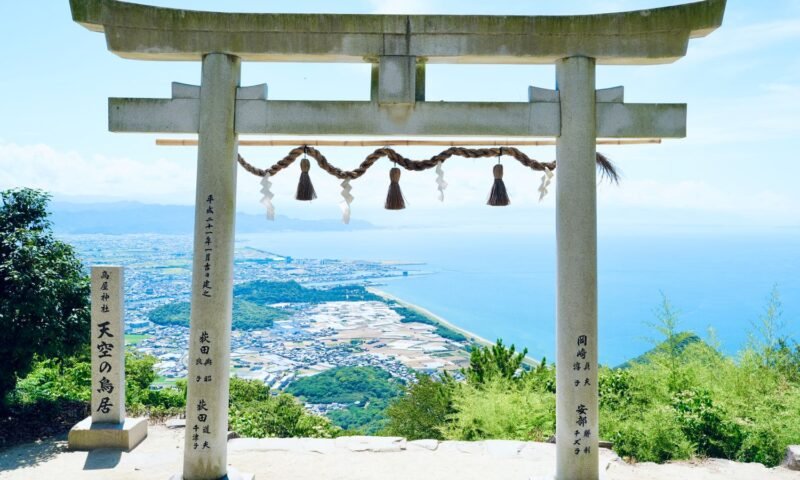
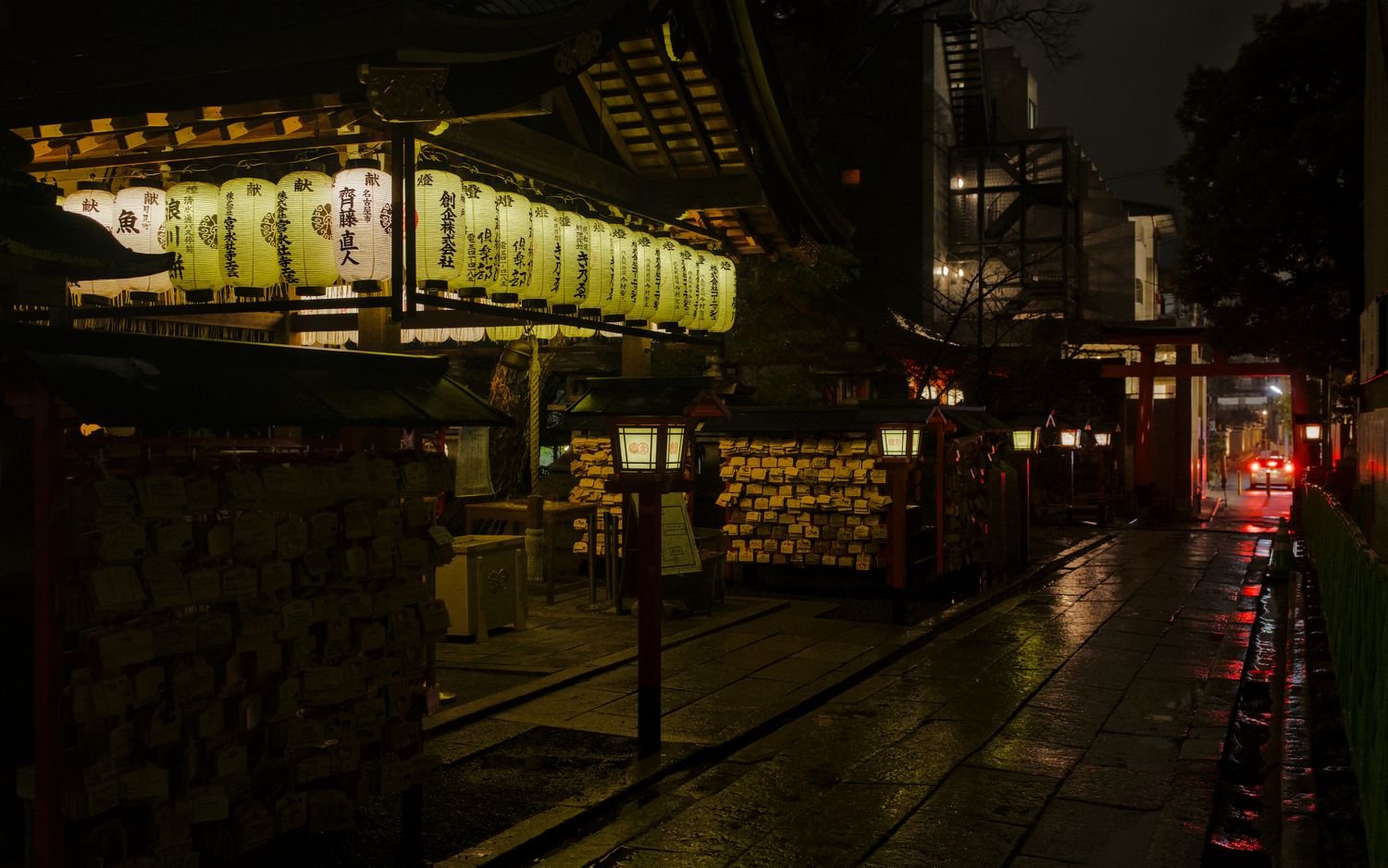
Note: images accompanying this article are illustrative stock photos and do not necessarily show the specific site discussed.



コメント