





I almost missed the whole thing because I couldn’t find parking.
That’s the honest way this story starts. I’d driven up to Aizuwakamatsu from where I live, circled the streets around Tsuruga Castle twice looking for a spot, and by the time I finally gave up and left my car at a coin lot ten minutes’ walk away, I could already hear drums. I jogged the last block with my camera bag bouncing against my hip, turned a corner onto the main avenue, and nearly walked straight into a line of men in full samurai armor on horseback. That’s the Aizu Festival for you — one second you’re worrying about parking, the next you’re standing three feet from a mounted retainer in lacquered armor who looks like he stepped out of 1868.
I’d come to Aizuwakamatsu, a castle town tucked into the mountains of Fukushima Prefecture, specifically for this festival, but I hadn’t quite understood what I was walking into until I was standing in it. What I found wasn’t just a costume parade. It was a town publicly, deliberately remembering something painful, and doing it every single year without fail.
Who Were the Byakkotai?
Before the festival, I climbed Iimoriyama, a small hill on the edge of town that you can reach by a covered escalator (genuinely — it’s one of the more surreal transitions I’ve had in Japan, gliding up a hillside past cicadas in an enclosed moving walkway). At the top is a row of nineteen graves, and the story behind them is the reason the whole festival exists.
In 1868, during the Boshin War, a group of teenage boys from Aizu’s samurai families — mostly sixteen and seventeen years old — were formed into a reserve unit called the Byakkotai, the “White Tiger Force.” When the fighting reached Aizuwakamatsu, twenty of them were separated from their unit and retreated to Iimoriyama, where they looked down toward Tsuruga Castle. Through the smoke of the burning castle town, they believed the castle itself had fallen. Rather than surrender, they attempted seppuku on the hillside; nineteen died, and only one survived to later tell their story. The castle, as it turned out, hadn’t actually fallen — they’d misread the smoke.
Standing up there, looking down at the same view they would have had, is a genuinely sobering way to start a festival day. It’s not tucked away as a footnote, either — you’ll see the Byakkotai referenced constantly around town, and on the festival’s third day, local children march in their honor, dressed in the same white sashes.
Watching 500 Samurai March
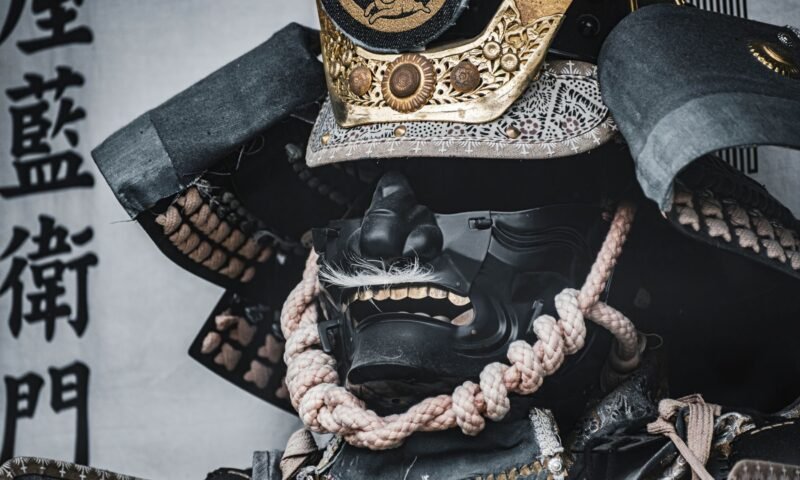
The festival’s centerpiece is the Lord’s Procession, or Aizu Hanko Gyoretsu, held on the second day. Close to 500 participants — residents, local officials, students, and hired performers alike — dress as the Aizu domain’s feudal lord and his full retinue: mounted samurai, spear carriers, foot soldiers, court ladies, drummers. It sets off from near Tsuruga Castle around mid-morning and winds through the main streets for a couple of hours.
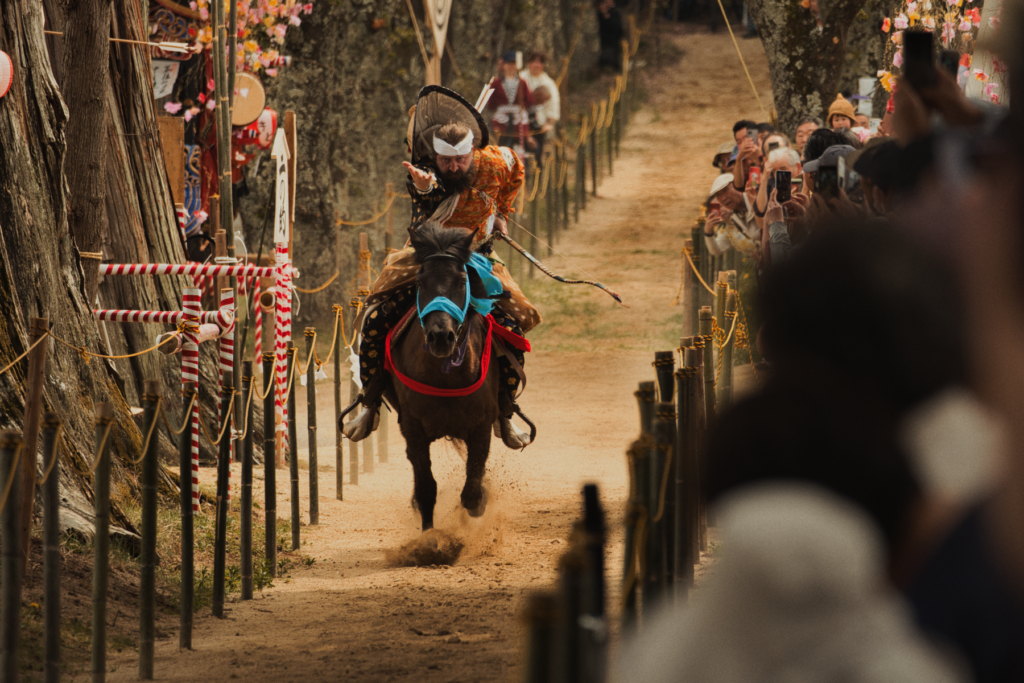
What struck me most wasn’t the scale, though that’s impressive enough — it’s how unhurried it is. Nobody’s rushing through this. The armor is real lacquer and metal, heavy enough that you can see the participants sweating in the September sun, and the horses are clearly used to crowds but still skittish enough that everyone gives them a respectful berth. I got close enough to one retainer to ask (badly, in my still-imperfect Japanese) how long it takes to put the armor on. He laughed and said close to an hour, with help. Later, back near the castle, there were sword performances and demonstrations by young Byakkotai reenactors — teenagers in white, moving through choreographed routines that are clearly rehearsed for months beforehand.
Lanterns, Drums, and Dancing in the Street
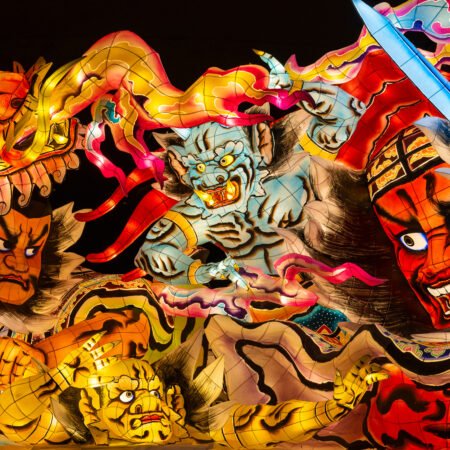
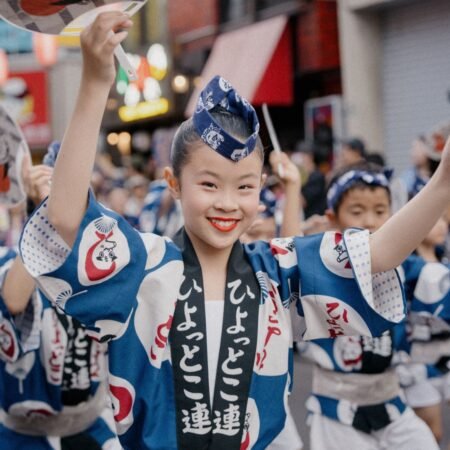
If the Lord’s Procession is the festival’s serious center, the first evening is its warm, loud counterpart. On day one, there’s a lantern procession from the castle down to Shinmachi-dori, and once the sun goes down, the street turns into a proper street party: taiko drummers set up at intervals, and the Aizu-Bandaisan Odori — a local bon-dance-style circle dance — gets going with locals of every age joining hands and shuffling through the steps together.
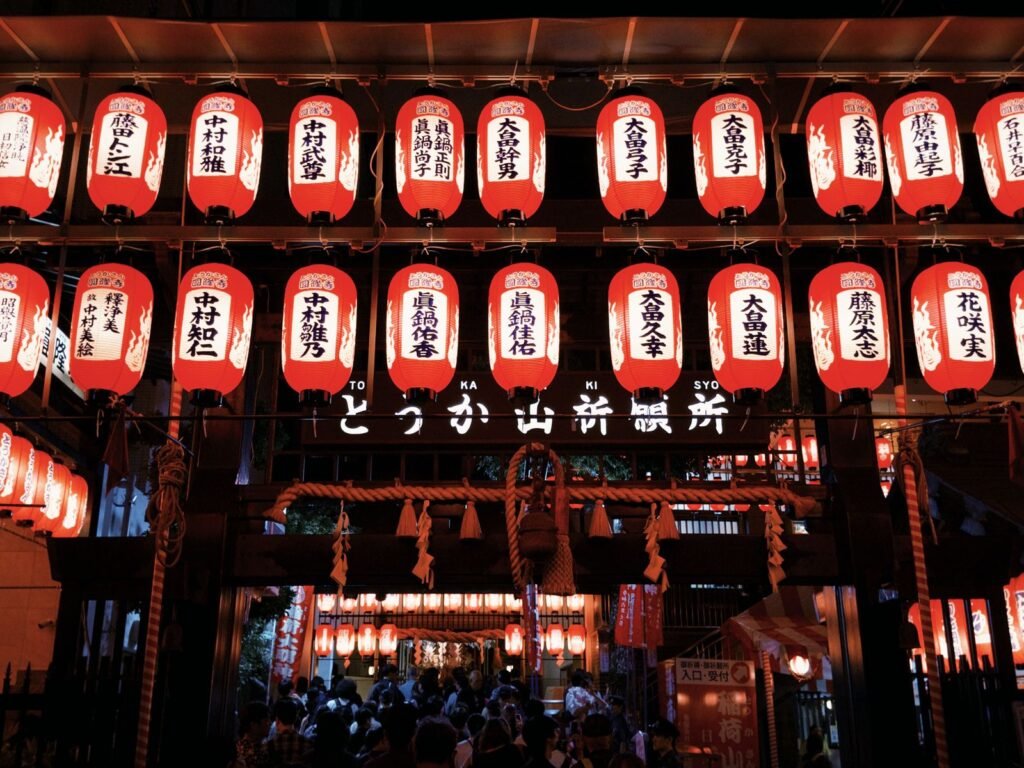
Nobody minded that I didn’t know the choreography. An obaachan running one of the yakitori stalls physically pulled me into the circle at one point, laughing the whole time, and just let me follow along a half-beat behind everyone else until I more or less got it. That’s the part of the festival I didn’t expect — how much of it is genuinely participatory rather than something you just watch from the sidelines.
Planning a 2026 Visit
The Aizu Festival runs September 19–21, 2026, centered on Tsuruga Castle in Aizuwakamatsu. If you only have time for one day, day two — the Lord’s Procession — is the must-see, with the parade typically departing the castle area mid-morning. Day one’s lantern procession and street dancing in the evening is worth staying for if you can, and day three brings the children’s parade and closing performances, a quieter and more moving way to end the weekend.
Aizuwakamatsu is reachable by the JR Ban’etsu West Line, with Aizuwakamatsu Station or Nanukamachi Station both a short bus ride or a longer walk from Tsuruga Castle. If you’re coming from Tokyo, the easiest route is the Tohoku Shinkansen to Koriyama, then transferring to a local line. Most of the festival is free to watch and centers on public streets, though I’d genuinely recommend booking accommodation early — rooms in town fill up fast for festival weekend, and I ended up staying in a business hotel a station away my first year.
Bring cash for the food stalls, wear shoes you don’t mind standing in for hours, and if you climb Iimoriyama beforehand, budget some quiet time at the top before you head back down into the noise and color of the festival proper. It’s a strange, moving way to bookend the day, and honestly, I think that’s exactly the point.
A quick note on photos: some of the images here are stock photos I’ve used to set the mood — they may not be the exact spot or moment I’m describing, just close in spirit.


コメント