






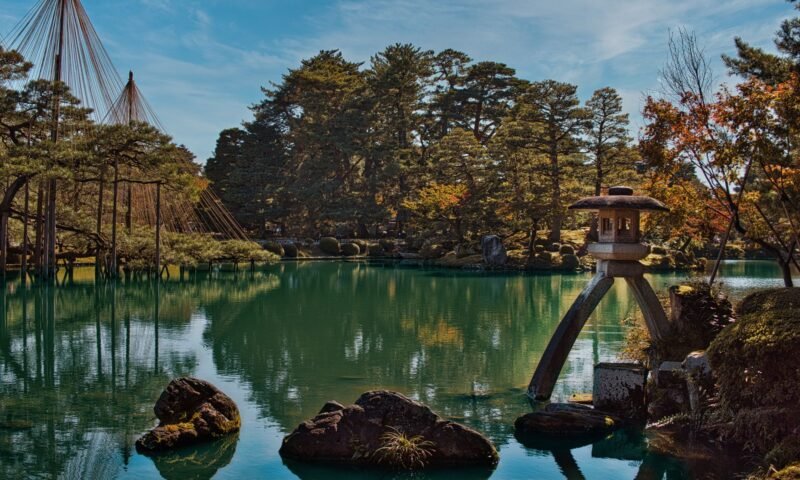
The first time I saw a man standing on top of a twelve-foot pole in the middle of Kenrokuen Garden, calmly tying rope to a pine tree like it was the most normal Tuesday in the world, I nearly walked into a hedge. It was early November, the maples were just starting to blush, and I’d come to Kanazawa expecting a quiet stroll through one of Japan’s most famous gardens. Instead I found a small army of gardeners climbing ladders, hauling coils of straw rope, and slowly wrapping the pines in what looked like giant, elegant teepees.
Nobody warned me about yukizuri. Five years into living in Japan, I thought I’d seen most of the seasonal rituals — the cherry blossom forecasts, the summer festival countdowns, the obsessive New Year’s cleaning. But watching Kenrokuen get dressed for winter, tree by tree, rope by rope, might be my new favorite. It’s not flashy. There’s no music, no crowds, no stalls selling grilled squid. It’s just quiet, careful work that happens every single year, and most tourists walk right past it without realizing what they’re looking at.
What Exactly Is Yukizuri?
Yukizuri (雪吊り) literally means “snow hanging,” and it’s a technique developed in snow country to keep heavy, wet snowfall from snapping tree branches. Kanazawa sits on the Sea of Japan side of the country, and while it doesn’t always look it in November, the city gets buried in heavy snow most winters. Pine branches, especially the old, wide, carefully trained ones in a garden like Kenrokuen, simply can’t take that kind of weight on their own.
The solution is almost sculptural. Gardeners plant a tall central pole next to the tree, then run ropes from the top of that pole down and out to individual branches, so the whole thing fans out into a cone — like a maypole frozen mid-spin, or a very dignified umbrella skeleton. Once snow falls, it slides down the taut ropes instead of piling up and breaking the limbs underneath. There’s even more than one style: some trees get the cone treatment, others get ropes tied in little loops along the trunk or branches (what’s sometimes called an “apple-tying” style because of how each loop bunches the branch), depending on the tree’s shape and how much support it needs.
What struck me most, standing there with my coffee going cold, was how deliberate the whole process is. This isn’t a tarp thrown over a bush. Gardeners work tree by tree across the whole park, usually starting in early November and continuing for weeks, checking the weather before they climb anything — rainy or windy days get pushed to smaller, lower trees first, since nobody wants to be forty feet up a ladder in a gust. The ropes stay up all winter and don’t come down again until mid-March, once the real risk of snow has passed.
The Pine That Gets the Star Treatment
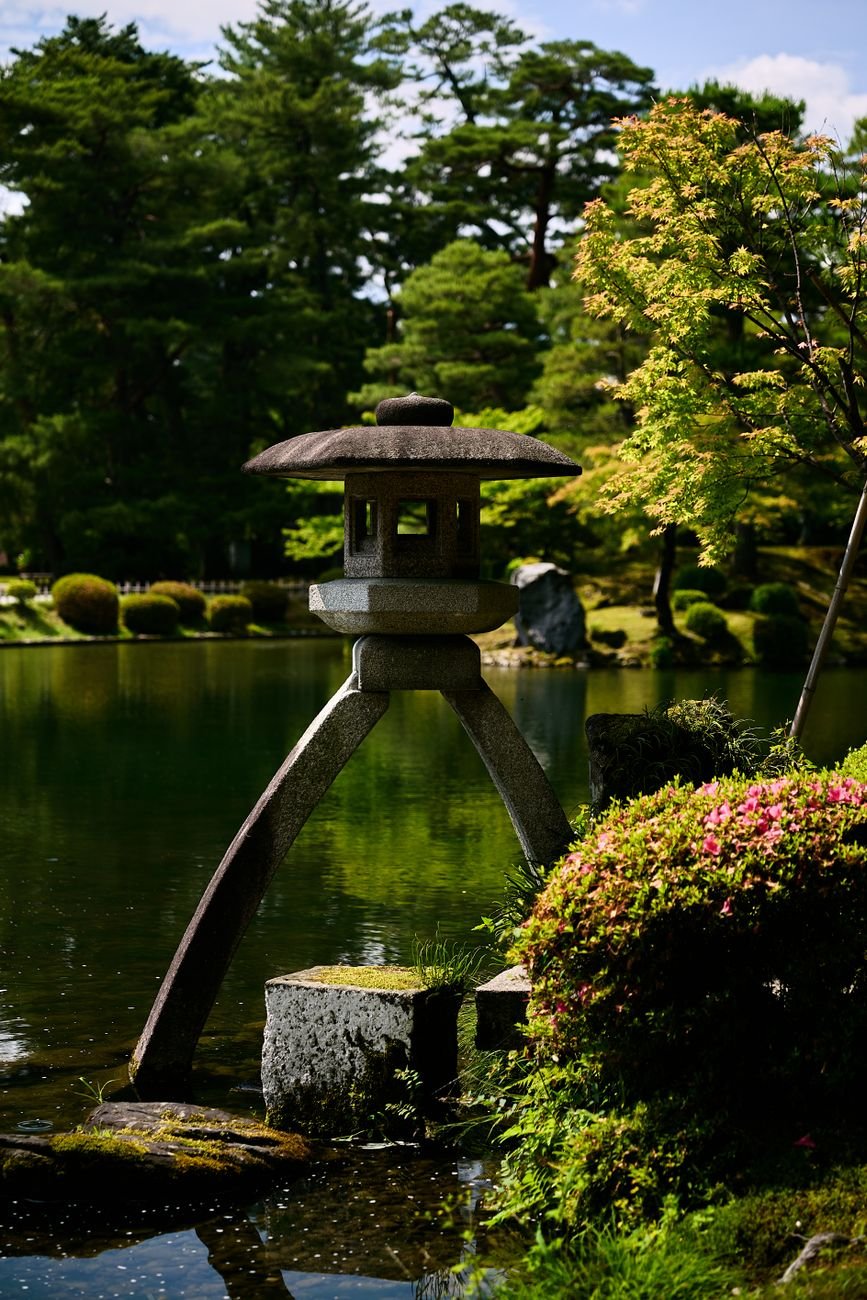
If yukizuri has a celebrity, it’s the Karasaki pine (Karasaki-no-matsu), and it’s always the first tree the gardeners work on each year. The story goes that the thirteenth lord of the Kaga domain, Maeda Nariyasu, had the tree grown from a seed brought from Karasaki, near Lake Biwa, generations ago. Today it has the widest, most sprawling branch structure in the entire garden, stretching out low and flat over the edge of Kasumi Pond like it’s trying to touch the water.
Because it’s so large and so prized, the Karasaki pine doesn’t get a single pole — it gets five, with something close to 800 individual ropes radiating out to support its branches. When I came back a few days after my first visit, the tree had been completely transformed: what had been a sprawling, slightly unruly mass of green was now this perfect, towering cone of rope, each strand pulled taut and even. It’s honestly one of the most photographed sights in the garden come winter, and standing underneath it, craning my neck up at all those lines converging at the top, I finally understood why people build entire trips around seeing it.
A Garden Three Centuries in the Making
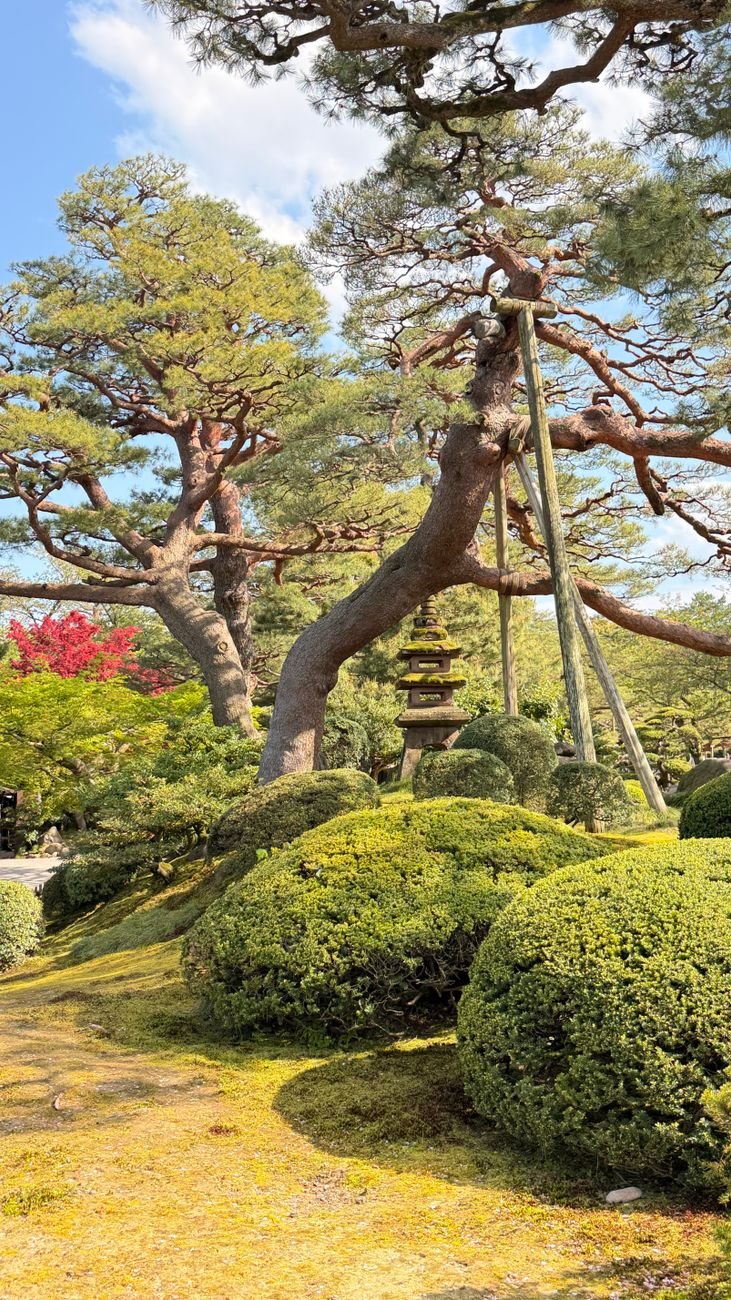
Kenrokuen is one of what’s traditionally called Japan’s “three great gardens,” alongside Kairakuen in Mito and Korakuen in Okayama, and wandering through it you can feel how much time went into building it — this wasn’t finished in a single lord’s lifetime. Construction stretched across more than two centuries, started by the Maeda clan, the rulers of the Kaga domain, back in the 1620s, with different lords adding ponds, streams, and teahouses over generations until the thirteenth lord rounded it out into roughly its current form in the 1840s.
The name itself, Kenrokuen, means something like “garden of six attributes,” given to it in 1822 by the scholar Matsudaira Sadanobu, who judged it to combine the six qualities a perfect garden was supposed to have according to an old Chinese classic — spaciousness, seclusion, artifice, antiquity, water features, and sweeping views. It’s a lot to live up to, but honestly, between the ponds, the curved bridges, the centuries-old pines, and now the sculptural rope work draped over everything in winter, it earns the name.
Planning Your Own Visit
If you want to see the yukizuri actually going up, aim for the first couple of weeks of November — that’s when the gardeners work their way through the park, and you might get lucky and catch someone mid-rope the way I did. If you’d rather see the finished product in all its geometric glory, any time from late November through early March works, and the ropes stay striking even without snow on them, though obviously they’re at their most magical dusted in white.
Getting there is easy: from JR Kanazawa Station, hop on a bus toward Kenrokuen-shita, which takes about twelve minutes, or use the Kanazawa Loop Bus or the Kenrokuen Shuttle Bus, which run a little longer but hit more sightseeing stops along the way. The garden itself is walkable in an hour if you’re rushing, but give yourself at least two or three if you want to actually sit by Kasumi Pond and take it in. Admission is modest — well under the price of a coffee back home — and the garden’s open daily during daylight hours, though I’d check current times online before you go since they shift a bit by season. Pair it with Kanazawa Castle right next door, or the Higashi Chaya geisha district a short walk away, and you’ve got a full, unhurried day.
I keep coming back to Kenrokuen in different seasons, and every time I think I’ve seen its best version of itself. But there’s something about watching it get carefully, patiently prepared for a winter it hasn’t even had yet that made this visit stick with me more than the others. It’s a garden that plans ahead, I guess, which is more than I can say for myself most weeks.
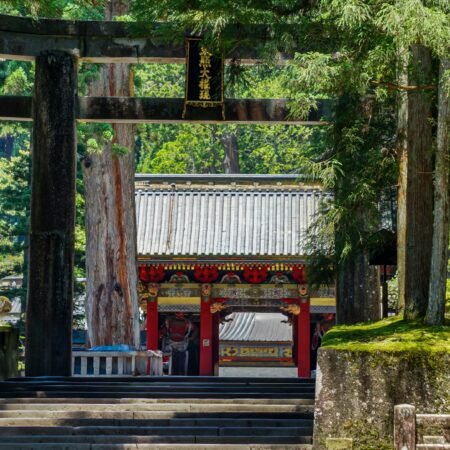
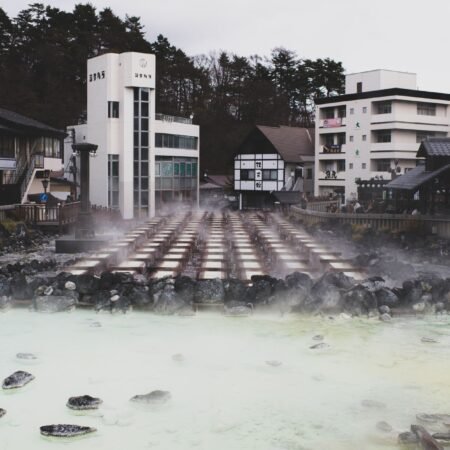
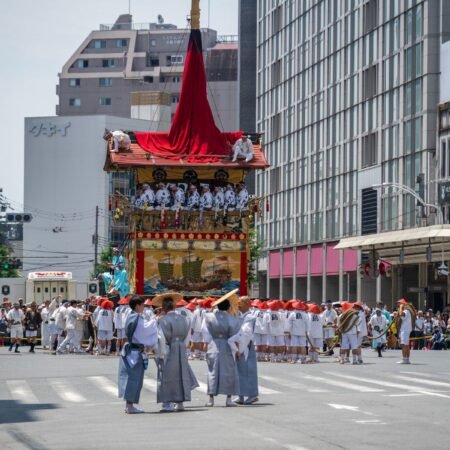
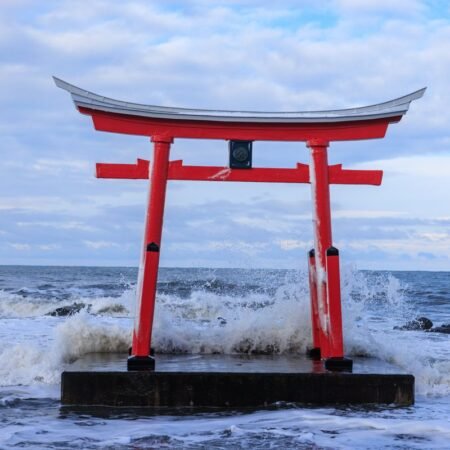
A quick note on photos: some of the images here are stock photos I’ve used to set the mood — they may not be the exact spot or moment I’m describing, just close in spirit.

コメント