






I almost didn’t believe the photo. A friend sent it to me in a group chat with the caption “this is real, this is in Japan,” and I spent a solid minute convinced it had been run through some kind of filter. A hill, completely blue, rolling down toward the ocean like someone had tipped over a bucket of sky. I’d lived in Japan for four years at that point and thought I’d developed a decent radar for “too good to be true” tourist spots. This one broke the radar. So on a gray Tuesday in late April, I got on a train with zero expectations of it looking anything like that picture.
It looked exactly like that picture. Possibly bluer.
The Hill That Looks Photoshopped
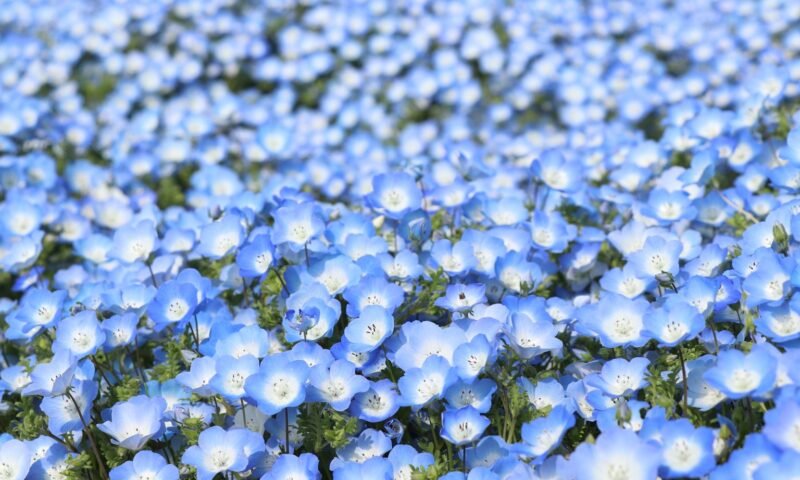
The spot in question is Miharashi no Oka — “the hill with a view” — inside Hitachi Seaside Park in Hitachinaka City, up in Ibaraki Prefecture. For a few weeks every spring, usually from late April into mid-May, the hill is carpeted in nemophila, a small five-petaled flower also known as “baby blue eyes.” The park plants and maintains close to 4.5 million of them across the slope, and the effect from the top is genuinely disorienting — there’s no obvious edge where the flowers stop and the sky begins, especially if you catch it on a clear day with the Pacific Ocean glinting beyond.
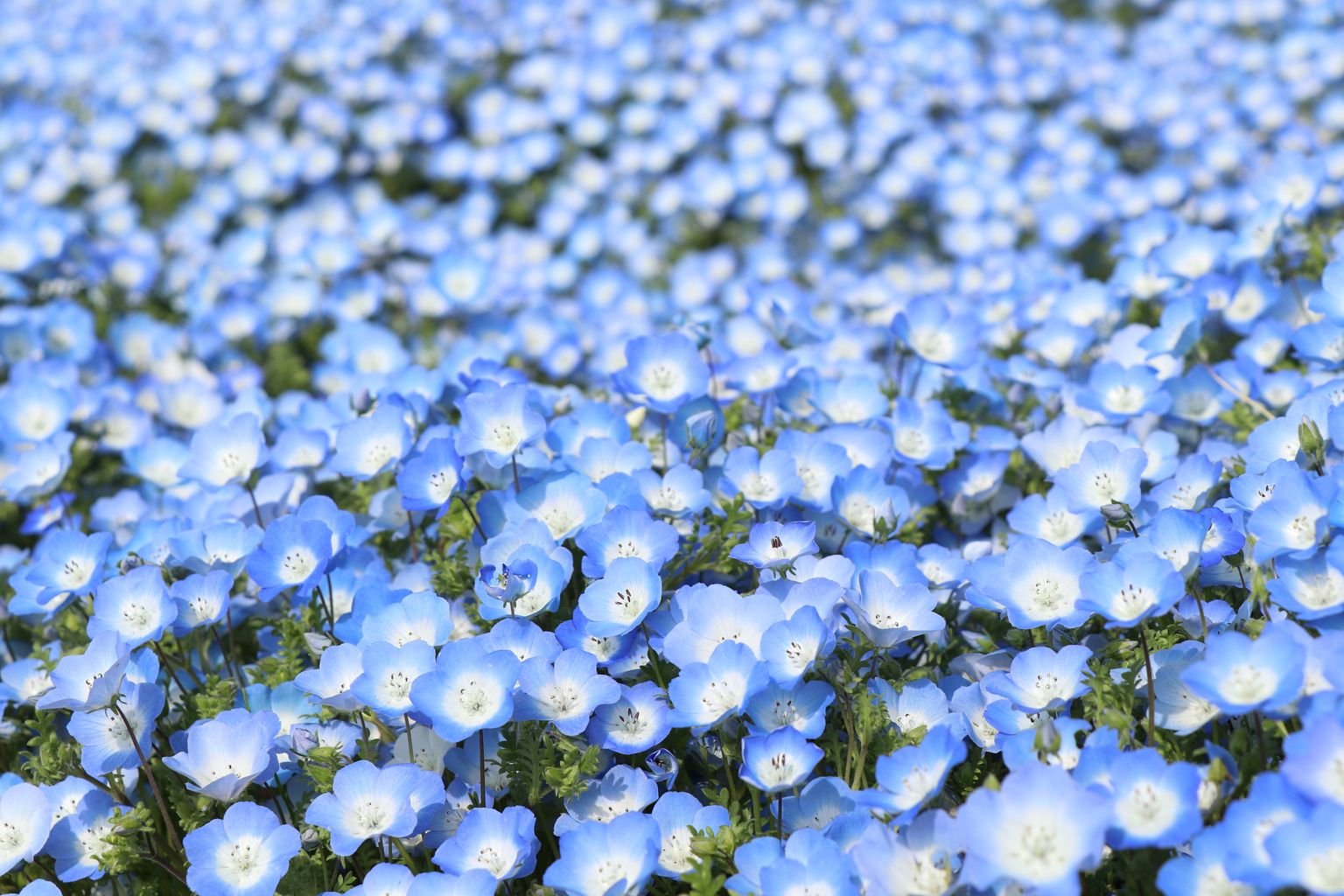
What got me wasn’t just the color, though. It was the scale. I’m used to flower viewing in Japan meaning a few hundred cherry trees along a riverbank, lovely but containable. This was different — an entire hillside, no paths cutting through the middle of it, just flowers from your shoes to the horizon. I walked up slowly, stopped halfway, and just stood there for a while like an idiot while people with much nicer cameras than mine politely stepped around me.
If nemophila isn’t your season, don’t write the hill off. Come back in early October and the same slope is covered in roughly 32,000 kochia bushes that have turned a deep, almost velvety red — locals call it the “red hill” that time of year, and it’s just as strange and lovely in its own way. In between, there are tulips, poppies, cosmos, and fields of buckwheat flowers taking their turns across the park’s grounds, so there’s rarely a dead month here.
A Park With a Strange History
Here’s the part that surprised me more than the flowers: this land used to be a military firing range. Japan’s Mito Army Flight School operated here starting in 1938, and after the war the U.S. military took it over and used it as a firing range into the early 1970s — a 1949 accident here, caused by a misfire, even killed a local resident. The land wasn’t returned to Japan until 1973, and the park we walk around today didn’t open until 1991.
Knowing that changed how I looked at the place on my way out. It’s easy to assume a spot this polished and cheerful has always been a park, but spread across roughly 190 hectares, it’s a reminder of how much land in this part of Japan carries a layered, not-always-gentle history before it became somewhere people go to take nice photos on a Saturday. I didn’t see any markers explaining this inside the park itself — I only learned it afterward, digging around — so I’m passing it along here in case you’re the type who likes to know what you’re standing on.
Not Just a Flower Field
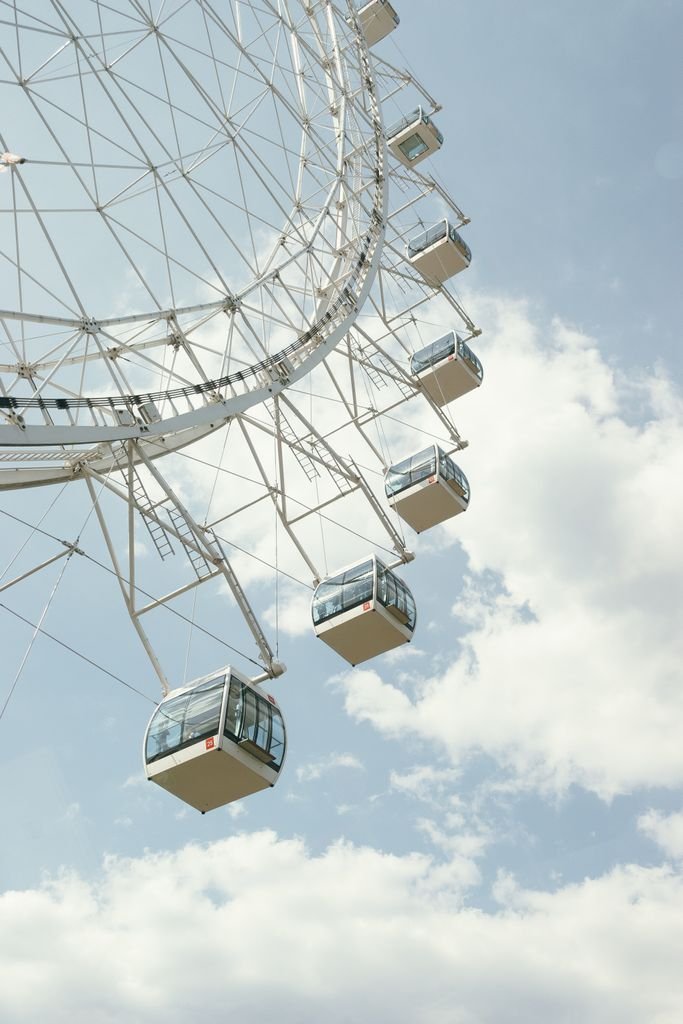
Hitachi Seaside Park is bigger and more varied than I expected going in, and I’d budget more than just “see the hill, leave” if you’re making the trip. There’s a Ferris wheel and a cluster of other rides near the main entrance that gives the place a bit of a retro amusement-park feel, which felt almost funny set against the quiet, windswept hill a short walk away.
An 11-kilometer cycling course loops through the park’s pine groves and dunes, and you can rent a bicycle near the entrance for a few hundred yen if you’d rather cover more ground than your feet can manage in an afternoon.
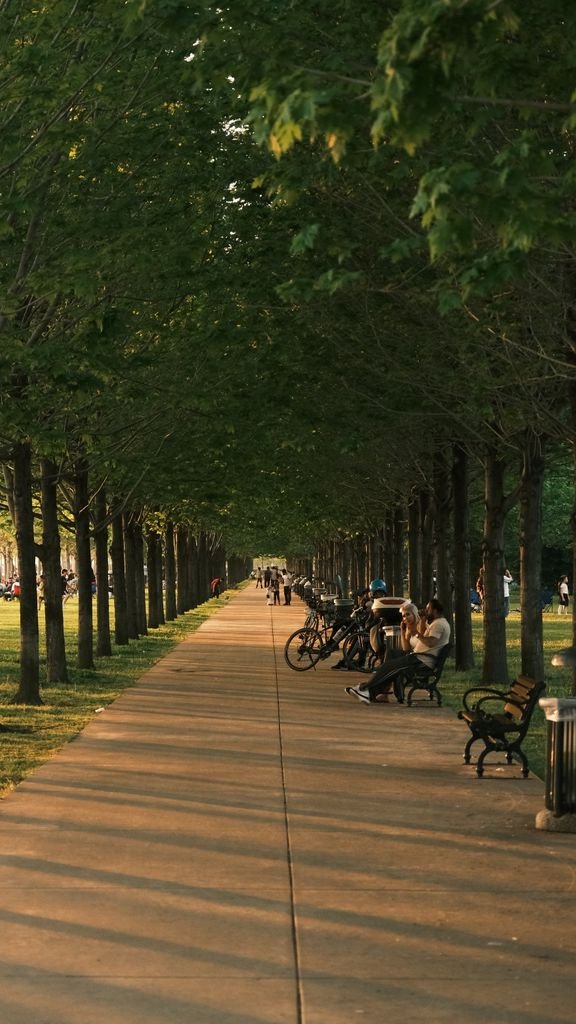
I ended up spending close to four hours there without meaning to — the hill, a slow loop on a rental bike through the pine trees, and a sit-down by the dunes watching the ocean before heading back. It’s the kind of place that quietly eats your whole day if you let it, and I’d recommend letting it.
Getting There
From Tokyo or Ueno, take a JR Joban Line limited express (the Hitachi or Tokiwa trains) to Katsuta Station — it’s roughly 75 to 85 minutes, so closer than most people expect for how remote the photos make it look. From Katsuta, a local bus gets you to the park’s west gate in about 15 minutes, and during peak nemophila and kochia seasons the park runs extra buses to handle the crowds, which get real on weekends. Admission is modest most of the year but rises somewhat during the two flower peaks, so check the park’s own site for current pricing before you go. I’d aim for a weekday morning if your schedule allows it — I went on a Tuesday and still had to share the view, just not elbow-to-elbow.
Bring a hat. There is approximately zero shade on that hill, and I learned that the hard way around hour two.
A quick note on photos: some of the images here are stock photos I’ve used to set the mood — they may not be the exact spot or moment I’m describing, just close in spirit.

コメント