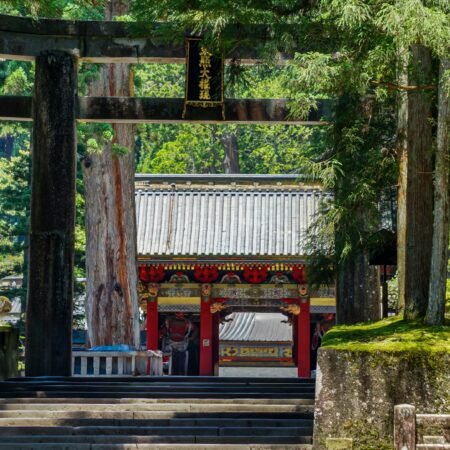





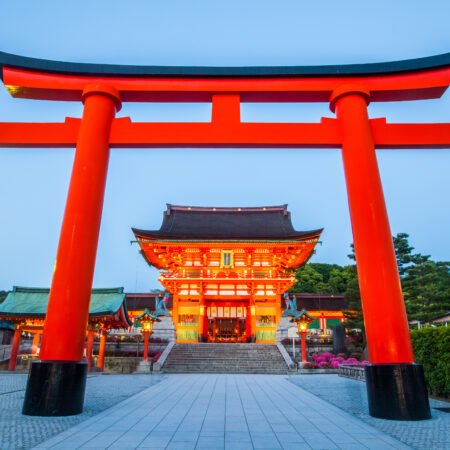

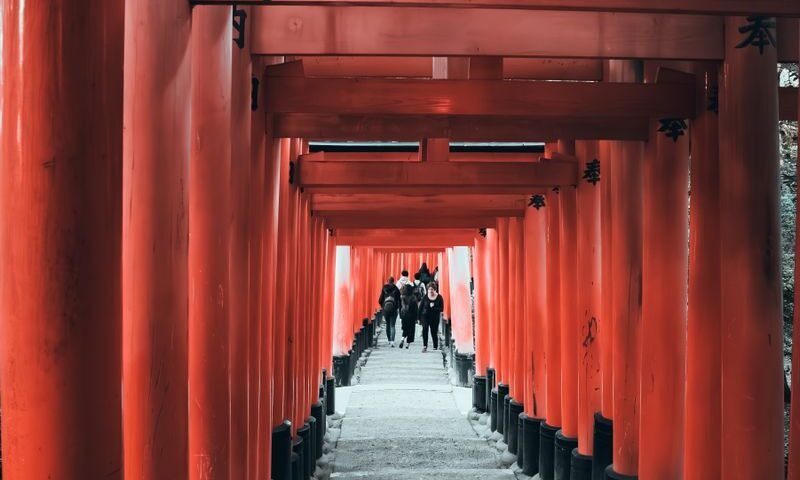
I climbed Fushimi Inari at half past five in the morning, before the first tour buses arrived from Kyoto Station, because I wanted to know what everyone meant when they said the mountain “feels different” once the crowds thin out. For the first twenty minutes it was exactly what the postcards promise: vermilion torii gates stacked so close together that the morning light came through them in thin orange slats, the path climbing gently through Senbon Torii, the famous “thousand gates” tunnel. Then the gates thinned out, the tour groups never arrived at all, and I found myself alone on a mountain path lined with thousands of small stone shrines I hadn’t expected and couldn’t entirely account for. That is the thing about Fushimi Inari Taisha. Everyone photographs the gates. Almost nobody talks about what is standing quietly behind them.
Ten Thousand Gates, and the Fox Who Doesn’t Own Them
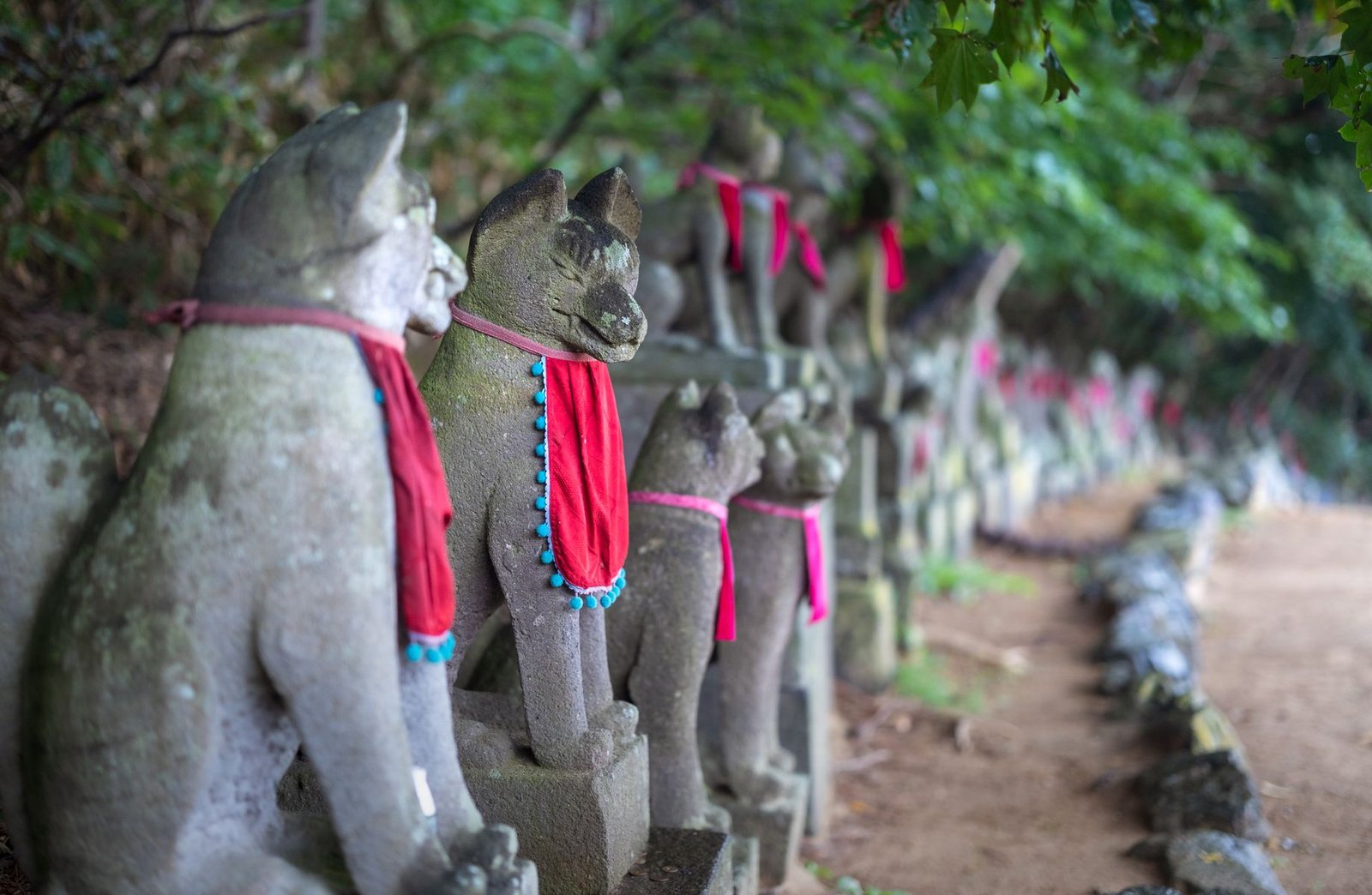
Fushimi Inari Taisha, at the base of Mount Inari in southern Kyoto, is traditionally dated to 711 CE, founded by the Hata clan, a family with roots on the Korean Peninsula who had settled in the Kyoto basin generations earlier. The shrine is dedicated to Inari Ōkami, the kami most closely associated with rice, agriculture, and, by extension, business prosperity, which is why so many of the gates along the path were donated by companies rather than individuals. A popular misconception, one I believed myself for my first year or two in Japan, is that the fox statues flanking the shrine’s approach are Inari. They are not. The fox, or kitsune, is understood as Inari’s messenger, often shown with a key to the rice granary held in its mouth. The deity itself has no fixed form in most depictions.
The figure usually quoted, ten thousand torii, is treated by the shrine itself as traditional shorthand rather than an exact census. The custom of donating a gate as thanks for a wish granted, or in hope of one, spread widely during the Edo period and continues today. The Senbon Torii section nearer the base, the “thousand gates” everyone photographs first, is in fact closer to eight hundred by most counts. Nobody seems bothered by the discrepancy.
The Photograph Nobody Could Quite Explain
In June 2018 a Kyoto visitor posted a night photograph taken inside the gate tunnel, a smeared streak of light curling through the torii that, once zoomed in on, appeared to other users online to resemble a human silhouette. The photo circulated for days. The likeliest explanation, and the one I find myself agreeing with after years of taking my own photographs in dim shrines, has nothing to do with anything walking the mountain after dark. The gates at Fushimi Inari are donated continuously, by different patrons, in different years, so no two are painted, weathered, or fitted with brass plaques in quite the same way. Photographed at night with a flash or a long exposure, that uneven, decades-old surface throws light back unevenly, and unevenly reflected light has a way of resolving, in a tired brain scrolling through a phone screen at midnight, into something that looks uncomfortably like a figure. The shrine’s own website is proud of the fact that the approach and the main hall are lit through the night and that there is no entrance fee, no closing gate, nothing stopping a determined visitor from climbing after dark. I would still suggest not doing it alone, not because of anything supernatural, but because the higher you climb Mount Inari, the farther you get from the glow of Kyoto, and an unlit forest path with loose gravel underfoot deserves more respect than a ghost story does.
What unsettled me more than the photograph, walking the upper paths myself, were the otsuka. These are small personal altars, stone markers each inscribed with its own name for Inari, erected not by the shrine but by individual worshippers, and there are, by most estimates, tens of thousands of them scattered across the mountainside in clusters that thicken the further up you go. Nobody I spoke with could tell me exactly how many there are, which feels appropriate, since nobody seems able to count them with confidence either. Passing between them before sunrise, with no other visitors in sight, I understood why some hikers describe Inariyama as the one mountain in Kyoto where you occasionally feel like you are intruding on a conversation rather than visiting a monument.
The Stone That Answers Before You Finish Asking
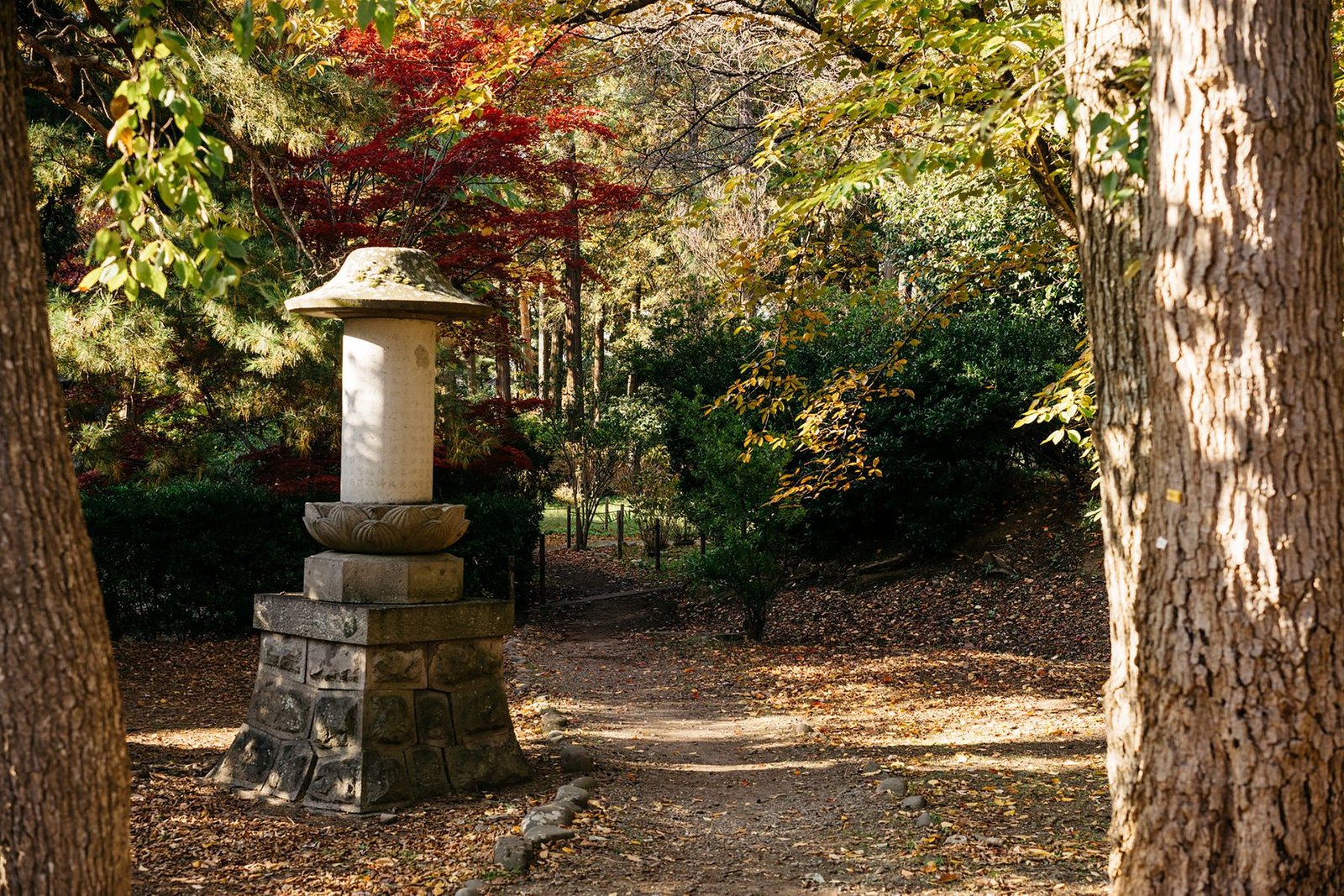
Near the Okusha, the inner shrine partway up the mountain where most day visitors turn back, a pair of stone lanterns sits beside the worship hall, each topped with a loose, rounded stone. The custom, as it’s explained to visitors there, is to make a wish silently, form in your mind a guess at how heavy the stone should feel, and then lift it. If it feels lighter than you expected, the local telling goes, your wish will be granted with little trouble. If it feels heavier than you expected, the custom isn’t especially cruel about it; you are simply told to come back another day and try again. I lifted both stones on a visit two years ago and got one of each, which I choose to interpret as the mountain declining to take sides.
It is worth being honest about what this ritual, and the ghost photograph, and the otsuka all have in common: none of them are claims anyone is asking you to accept as literal fact. They are, every one of them, denshō, things that are said and passed along rather than things that are proven, and the shrine itself treats them that way. That distinction matters to me more the longer I live here. A country can hold a story at arm’s length, turn it over, enjoy the shiver it gives you, and still not mistake it for history.
Visiting Mount Inari Properly
The full circuit to the summit and back runs roughly four kilometres and takes about two hours at an easy pace, entirely on the shrine’s own maintained paths, so there is no reason to leave them, and several thousand private stone altars along the way are reasons enough on their own not to. Treat the otsuka as you would any grave or private shrine: look, but don’t touch the offerings, and keep your voice down once the crowds thin out, because for the people who placed them, these mean exactly as much as they appear to. If you do decide to climb before dawn or after dusk, bring a proper light, wear shoes with real grip, and ideally bring a companion, not for the fox spirits, but for the gravel. And whatever time of day you go, give way to anyone there for the second sense of the word “visit”, the people climbing Inariyama not for a photograph but to speak, quietly, to a god of rice and rather a lot else besides.
Note: images accompanying this article are illustrative stock photos and do not necessarily show the specific site discussed.
コメント