





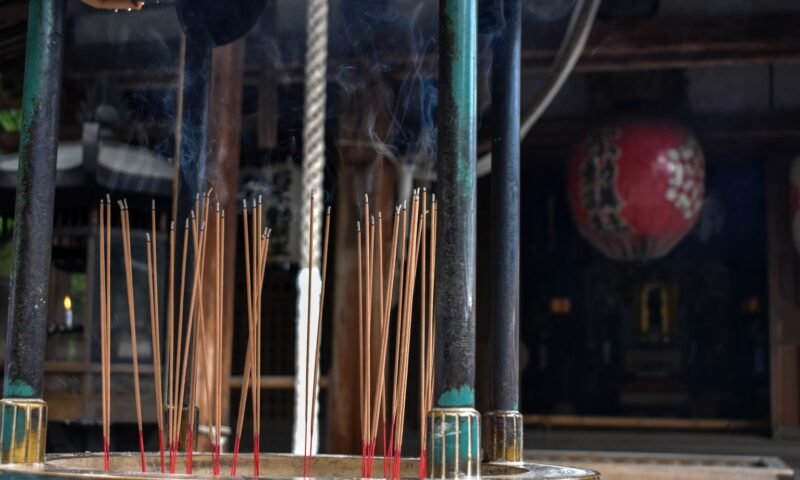
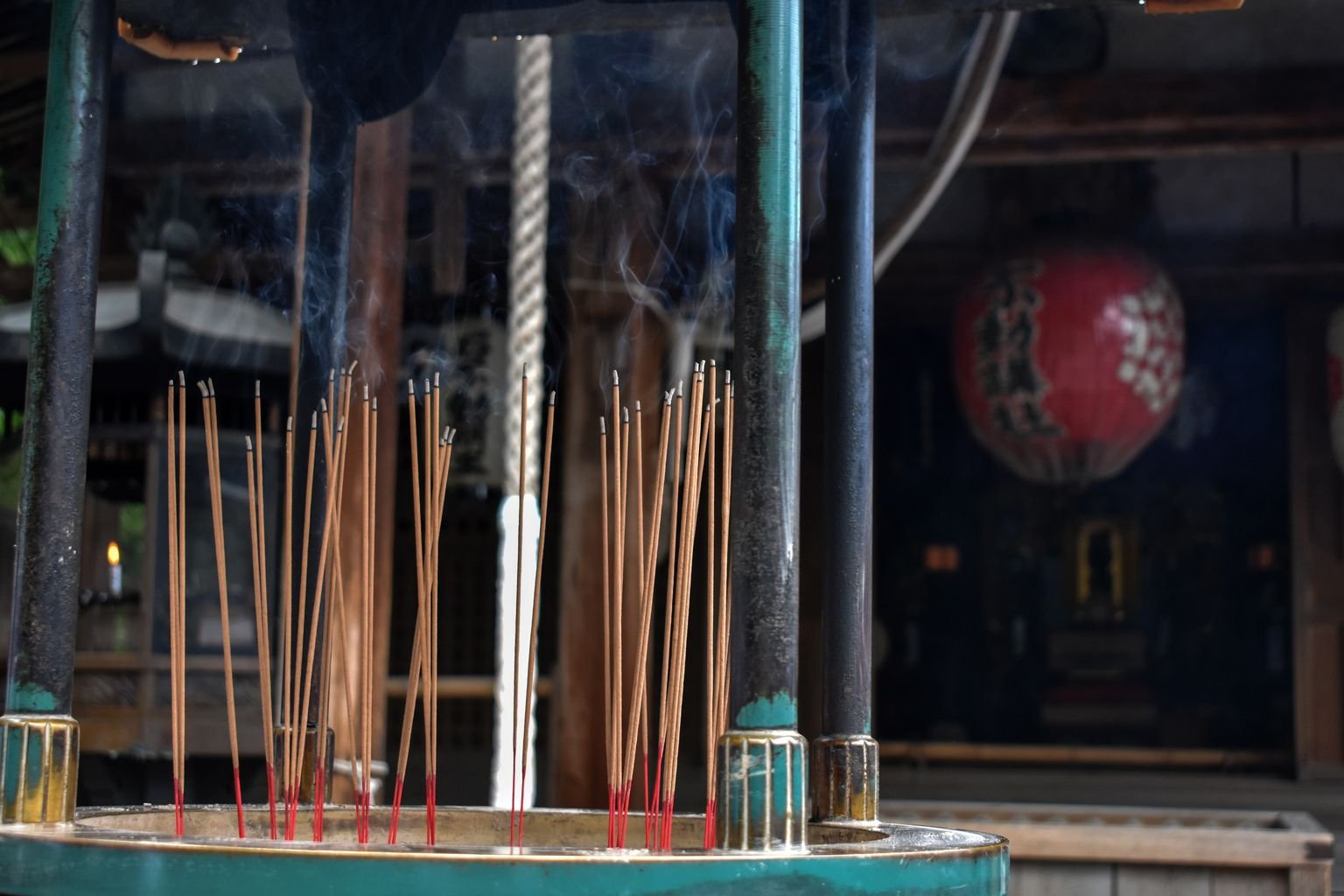
I got off at Sengakuji Station on a weekday morning, expecting a quiet side-street temple like a hundred others I’ve wandered into over the years. Instead I followed a thin trail of smoke up a short flight of stone steps, through a gate that had clearly seen a few centuries of weather, and into a graveyard where the smell of incense was thick enough to catch in the back of my throat before I’d even found the first tombstone. There were fresh sticks burning at nearly every grave in the row, on a Tuesday, with no festival in sight. That’s when it occurred to me that this wasn’t an ordinary temple at all. This is where Japan buried its most famous act of revenge, and where, by the look of things, people still haven’t quite finished paying their respects.
The insult in the corridor
The story that put Sengaku-ji on the map starts a long way from here, inside Edo Castle, in March 1701. A provincial lord named Asano Naganori, in Edo to help host envoys from the imperial court, drew his short sword in a corridor of the castle and attacked a court official named Kira Yoshinaka. Historical accounts differ on exactly what provoked him — slights over gifts, coaching fees, or simple humiliation are all mentioned — but what happened next is not in dispute. Drawing a blade inside the shogun’s castle was itself a capital offence, whatever the reason. Asano was ordered to end his own life that same day. His domain was confiscated, his family’s name disgraced, and Kira, the man he’d attacked, was never punished at all.
For Asano’s retainers, suddenly masterless, this was an injustice that demanded an answer. Forty-seven of them, led by a chief retainer named Oishi Kuranosuke, began making a show of giving up on the idea entirely — drifting, drinking, behaving as though their old loyalty had died with their lord. According to the story that’s been told and retold ever since, this was a performance, meant to convince Kira’s spies that there was nothing left to fear.
The night they came for Kira
Almost two years later, on the night of the fourteenth of the twelfth month in 1702, the forty-seven men put the performance down. They stormed Kira’s Edo mansion in the snow, overpowered his guards, and found him hiding in a shed on the property. They gave him the chance to end things with his own hand, as his rank entitled him to. When he didn’t take it, they beheaded him.
What they did next is the part that still draws people here. Rather than disappear, they marched across the city, the head in tow, to this temple — to the grave of the lord they’d spent two years avenging. On the grounds there is a well, fenced off today but still very much in its original spot, where the story says they paused to wash the head clean before laying it at Asano’s grave to report, formally, that the debt was settled. Afterward the men surrendered themselves to the authorities. The shogunate, caught between admiration for their loyalty and the plain fact that they’d committed a calculated killing, eventually ordered all forty-six of the surviving raiders to end their own lives as well, in early 1703. They were buried here, around their lord, where they remain.
Forty-seven graves and a debate that won’t end
Walk the rows today and you’ll find small stone markers for each man, Oishi’s grave usually the most heavily visited, often half-buried under incense sticks left by a steady stream of strangers. Locals will tell you — and I’ll frame it exactly as they do, as something that’s said rather than something provable — that the smoke from this one corner of the cemetery never fully clears, even on days when the rest of the grounds are still. I can’t confirm that, standing there with stinging eyes on a windless morning, but I understood immediately why someone might believe it.
What’s easier to pin down is how thoroughly this story has been reworked since 1703. Within a few decades it had become a kabuki and bunraku staple under the title Chushingura, and the dramatized version — more dialogue, tidier motives, a clearer villain in Kira — is what most people in Japan actually grew up with, rather than the comparatively sparse historical record. The temple’s own small museum on the grounds displays letters, armor, and other relics connected to the raid, alongside an account that tries to separate the two: what the retainers are recorded as having done, and what playwrights later gave them to say while doing it. I’d treat the emotional texture of the story — the loyalty, the restraint, the two years of waiting — as something closer to legend than transcript, even if the raid itself and the burials here are not in question.
Every December 14th, the anniversary draws crowds large enough that the narrow paths between the graves become genuinely difficult to move through, with incense smoke hanging over the whole cemetery and food stalls doing business just outside the gate. It’s less a solemn pilgrimage on that day than a city-wide memorial fair, which felt, when I asked around, entirely in keeping with how Tokyo seems to feel about these men: not frightened of them, exactly, but not finished with them either.
Visiting with a bit of care
Sengaku-ji is a working temple and an active burial ground, not a theme-park set piece, and it’s worth remembering that while you’re there. The graves and the museum sit inside the normal, publicly accessible temple grounds — there’s nothing here that calls for climbing a fence or wandering off a marked path, and I’d gently discourage anyone looking for that kind of thrill. If you go, light a stick of incense if you’d like to, keep your voice down among the graves, and give other visitors paying their respects some space, particularly around Oishi’s grave where the crowd tends to gather. The small memorial hall charges a modest entry fee and is worth the quarter hour it takes to see the relics up close. Go on an ordinary Tuesday, like I did, and you’ll likely have long stretches of the cemetery to yourself — just you, the stone markers, and more incense smoke than the weather can really explain.
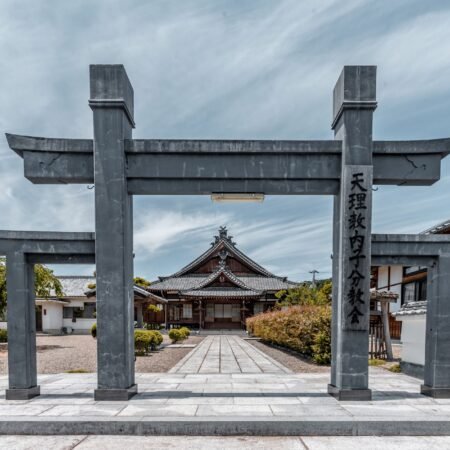
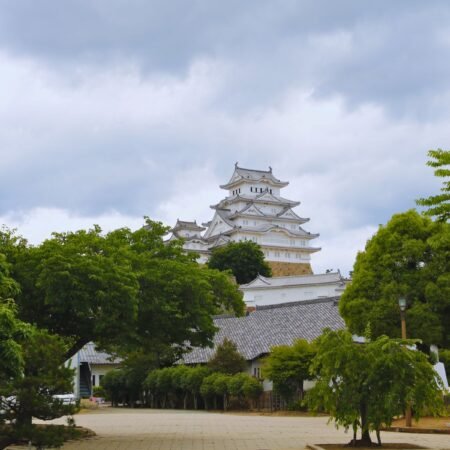
Note: images accompanying this article are illustrative stock photos and do not necessarily show the specific site discussed.
コメント