





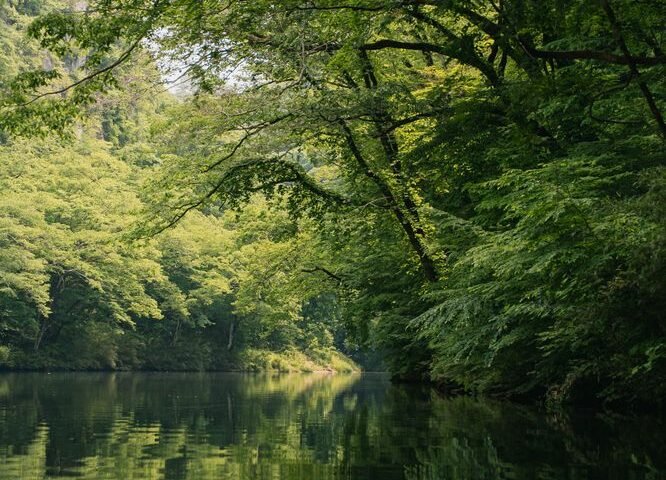
The first thing that struck me about Kappa Fuchi wasn’t a monster. It was the quiet. I had cycled out from Tono Station along a river road lined with old farmhouses, half expecting something more dramatic than a bend in a stream behind a temple. But that’s the thing about the most famous haunted places in the Tohoku region: they rarely announce themselves. You just find a gate, a set of stone steps, and a pool of dark green water sitting under the trees like it’s been waiting for you.
Kappa Fuchi, the “kappa pool,” sits directly behind Jokenji Temple in the Tsuchibuchi area of Tono City, Iwate Prefecture, a short ride from the station. It isn’t a ruin, it isn’t fenced off, and nobody is going to tell you it’s cursed. What it has instead is over a century of documented folklore, a temple that still tends the site, and one of the strangest bureaucratic traditions I’ve come across anywhere in Japan: you can walk into a nearby museum and, for two hundred and twenty yen, obtain an official license to try to catch one.
The Pool Behind the Temple
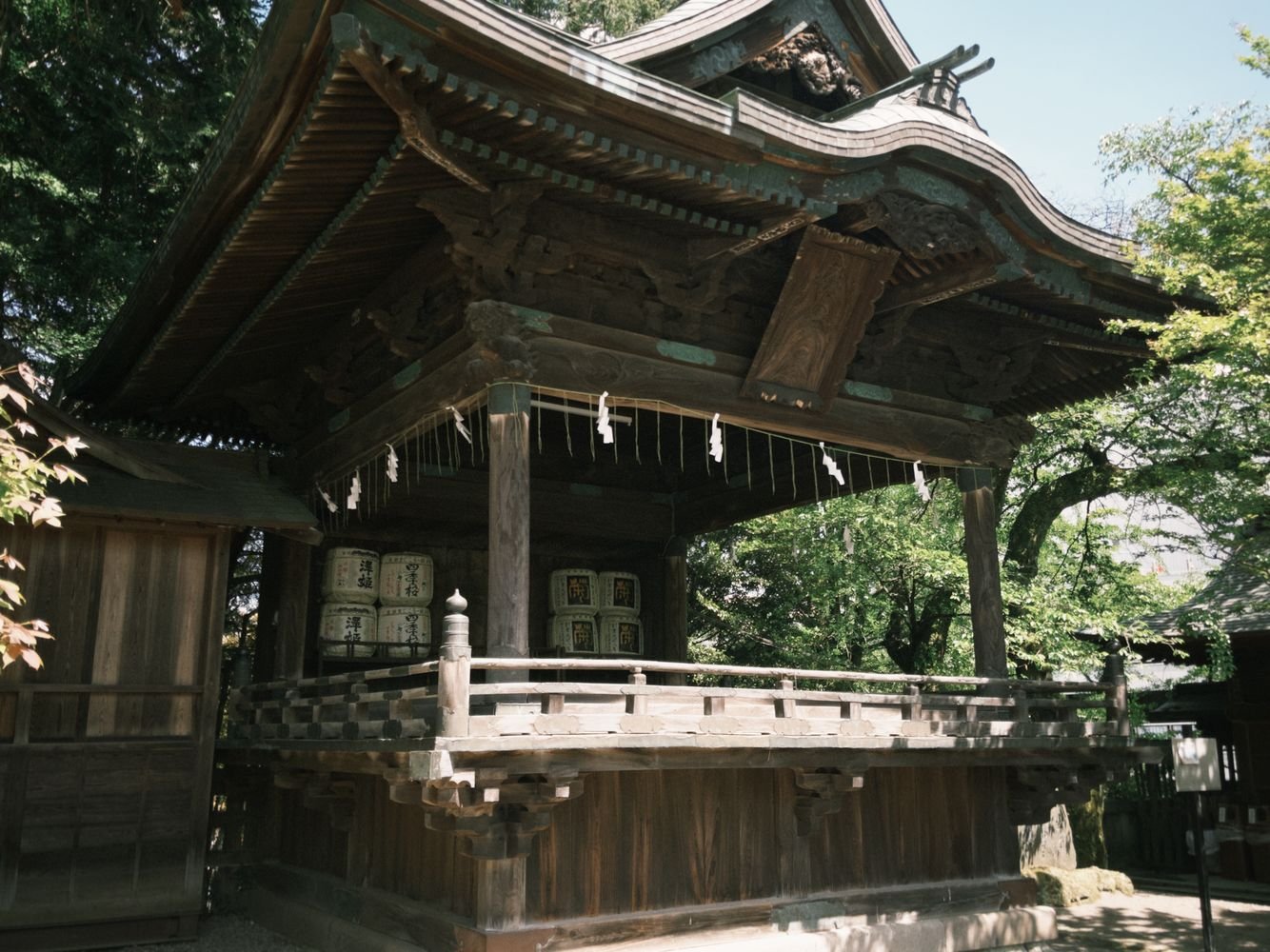
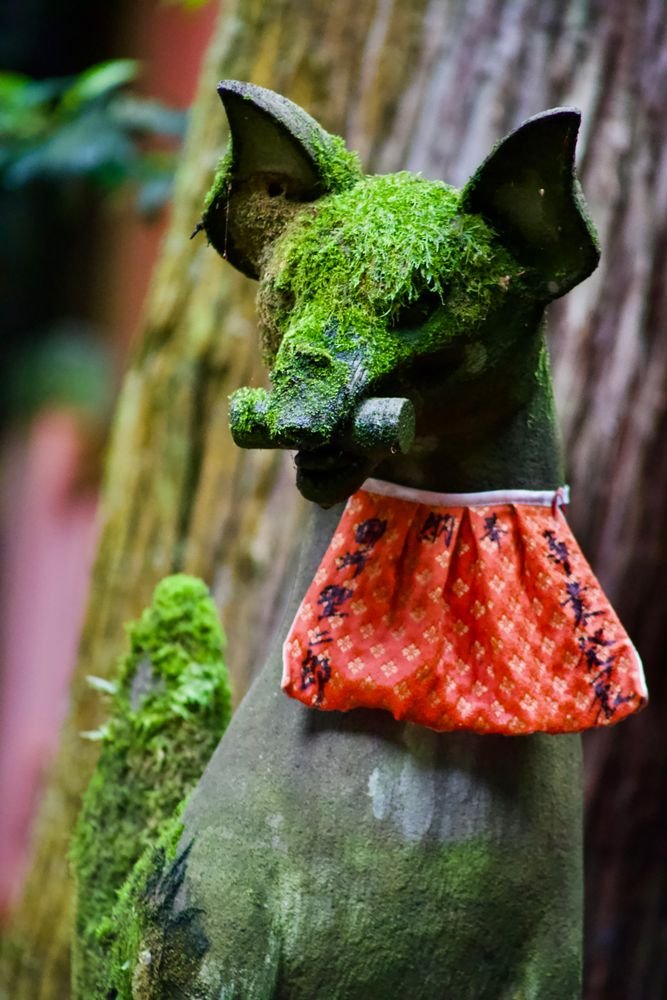
Jokenji is a modest temple, easy to miss if you’re not looking for it, and that’s part of its charm. Walk through the grounds and out the back, cross a small bridge, and you arrive at the pool itself: shallow, slow-moving, shaded by thick bushes on both banks. According to local tradition, the kappa here didn’t only cause mischief. They were said to have helped protect the temple generations ago, and are still associated with a shrine near the water where local women have long come to pray for an abundant supply of breast milk, leaving red cloth offerings shaped like the thing they’re asking for. It’s an odd pairing, guardian spirit and fertility blessing, but it’s exactly the kind of layered, slightly contradictory folklore that makes a place like this worth taking seriously rather than just spooky.
Two kappa statues now stand at the water’s edge, and a fishing rod is propped nearby, less a serious attempt at capture than a nod to the tradition, and a favorite photo spot for visitors. The pool itself is unremarkable to look at. That’s rather the point. Tono’s ghost stories were never about grand, cinematic hauntings. They were about the ordinary corners of a farming village where something might be watching from the water.
Where the Legend Was Written Down
Tono’s reputation as Japan’s folklore capital rests almost entirely on one book: Tono Monogatari, published in 1910 by the folklorist Yanagita Kunio. Yanagita didn’t invent these stories himself. He compiled them from tales told to him by Sasaki Kizen, a Tono native who had grown up hearing them from his own family and neighbors. The result was a slim volume of local legends, mountain spirits, and yokai that is now considered the founding text of modern Japanese folklore studies.
Kappa feature prominently in it, alongside the zashiki-warashi, the child-spirits said to bring good fortune to the houses they haunt. Yanagita’s own account of the kappa is refreshingly matter-of-fact for something so strange: he notes that it was not uncommon, in his telling, to see what were said to be kappa footprints in the riverbank sand, particularly the morning after rain. It’s a small, almost mundane detail, and I find it far more effective than any lurid description would be. The story goes that something walked along that bank in the night. Nobody claims to have seen it do so.
What a Kappa Is Supposed to Be
If you grew up outside Japan, as I did, your first introduction to the kappa is probably a cute one: a green, turtle-shelled figure with a dish of water on its head, appearing on snack packaging and mascot merchandise. The folklore is considerably more unsettling. Kappa were traditionally blamed for drownings, for pulling livestock and children too close to the water’s edge, and for general misfortune along riverbanks across rural Japan, not only in Tono. The dish on its head is the detail that matters most: spill the water inside it, whether through a bow, a trick, or a fall, and the kappa is said to lose its strength.
Historians and folklorists generally read these stories as a kind of practical warning system. A stretch of river in a farming village will, over generations, claim its share of accidents and near-misses, particularly among children too young to judge a current’s strength. Turning that danger into a named, semi-comic creature with rules and weaknesses gave communities a way to talk about the risk, teach caution to the next generation, and process loss without dwelling on specifics. I don’t think that makes the story less interesting. If anything, it’s the opposite: a piece of folklore that was doing real, quiet work long before anyone thought to write it down.
Getting Your Kappa Capture License
A short walk from the pool is Denshoen, a folk village and open-air museum dedicated to Tono’s traditions, and the place where the area’s sense of humor about all this becomes obvious. For a small fee, staff will issue you an official-looking “kappa capture license,” complete with a set of seven rules you’re expected to follow should you succeed. They cover things like not damaging the kappa’s head-dish and being careful not to let the water inside it spill, which tells you everything about how the joke is constructed: it takes the folklore’s own internal logic and turns it into etiquette.
It’s a genuinely fun bit of local tourism, and it says something about how Tono treats its own ghost stories. There’s no attempt to convince you any of this is literally true, and no cynicism about it either. The legend is treated as something worth preserving carefully, performed with a straight face and a wink at the same time. I left with a laminated license I have no intention of ever using, and a much better understanding of why this particular pool, out of every stretch of river in Iwate, is the one people still visit.
Visiting Kappa Fuchi
Kappa Fuchi is an easy, low-key stop, and there is nothing here that requires trespassing or risk-taking to appreciate. Stick to the marked paths through Jokenji’s grounds and along the riverbank, since the ground near the water can be uneven and slippery, especially after rain. The shrine near the pool is still an active site of prayer for local visitors, so treat any offerings you see, including the red cloth ties, with the same respect you’d show at any temple or shrine precinct, and don’t handle or move them. Tono itself is a working farming region rather than a tourist backdrop, so keep noise down and be mindful of private land as you cycle or drive between sites. None of this is a place associated with a specific tragedy or crime; it’s older and stranger than that, a piece of living folklore that happens to still have an address.
Note: images accompanying this article are illustrative stock photos and do not necessarily show the specific site discussed.
コメント