





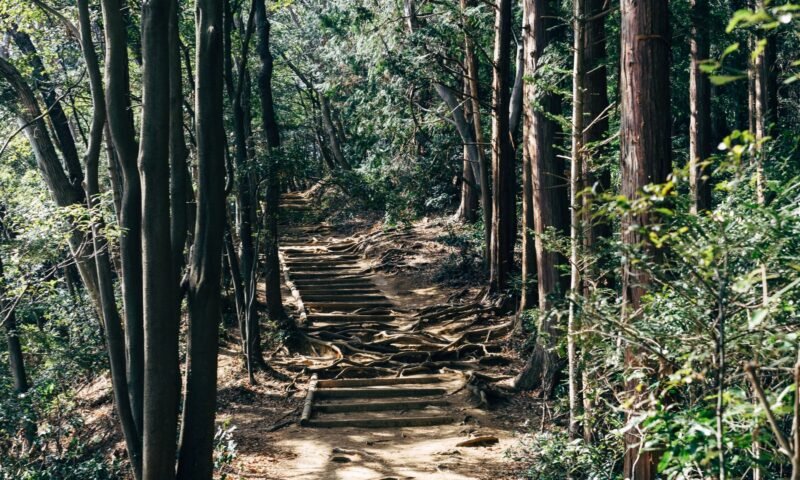
There is a particular kind of quiet on old mountain passes in Japan, the kind that makes you lower your voice without quite deciding to. I felt it the first time I climbed the narrow road up Sayo-no-Nakayama in Kakegawa, Shizuoka, on a stretch of the old Tokaido highway that once linked Edo and Kyoto. Pilgrims, feudal lords, and in more recent years mildly obsessive British writers have all walked the same slope between the old post towns of Nissaka and Kanaya. Near the top, inside the grounds of a small temple called Kyuenji, sits a stone that is said to have cried in the night. According to local legend, it still remembers.
I want to be upfront about something before I go further: the story behind this stone is not presented, even by the people who tell it best, as a factual record of a crime. It comes from literature. And that, I think, makes it more interesting, not less.
The Story the Stone Is Said to Tell
The version most people repeat today traces back to a early-1800s work of fiction by the novelist Kyokutei Bakin, best known for sprawling historical adventures. In his 1805 tale “Sekigon Ikyo,” a pregnant traveler is attacked on this pass by a bandit. The attacker’s blade, the story goes, struck the stone itself as she fell, leaving a mark that locals later pointed to as proof. She dies giving birth beside the road, and the orphaned infant is said to have been taken in and raised by the priest of Kyuenji, fed on mizuame, a thick starch syrup still sold as a local specialty.
Other tellings, gathered by local shopkeepers and retold in travel writing over the past century, add further layers: a candy seller who hears a monk buying sweets each night for a crying infant, a temple elder who concludes that the bodhisattva Kannon herself walked the road in disguise to keep the child alive, a son who grows up to become a blade sharpener and, years later, recognizes the chip in a stranger’s sword. I mention these variations because that is what this story actually is: a living folk tale that has picked up new details with each generation of tellers, not a single fixed account. Older sources are more modest. A 1659 guidebook to the Tokaido mentions a “crying pine” at this exact spot, not a stone at all. It seems the stone version only became fixed in local memory sometime in the early 1700s, according to a later Edo-period miscellany. So even the ghost story has a history of its own, one that shifted in the telling long before anyone wrote it down for good.
None of this points to a real, documented crime, and I would ask readers not to treat it as one. There is no verified victim, no case file, no name beyond the one assigned to her centuries later by a novelist. It belongs to the same shelf as a fairy tale, even if it is told with a straighter face.
A Pass With Two Stones
Here is where the story gets genuinely strange, in a way I rather like. When I asked at the small shop near the temple which stone was the real one, the woman behind the counter told me it had been “brought up” to the temple grounds from somewhere else on the hill at some point in the past. She could not, or would not, say which stone had been the original. A second stone, on the far side of the slope, is pointed to by some as the true site. Nobody I spoke to seemed bothered by the contradiction. The pass is listed locally among the “Seven Wonders of Enshu,” a regional catalogue of strange sites, and perhaps a legend with two possible homes fits that spirit rather well.
The temple grounds also hold a smaller companion stone, sometimes called the “child’s crying stone,” and the shop still sells kosodate-ame, child-rearing candy, made from glutinous rice and malt, the same sweet the old story credits with keeping an orphaned infant alive. People climbing the pass today still stop to pray here for a safe pregnancy and an easy birth, which tells you plainly what the legend has become in practice: not a tale meant to frighten, but a small, specific hope that travelers have carried up this hill for a very long time.
A Shogun Took Tea Here Too
What drew me to Kyuenji in the first place, if I am honest, was not the ghost story but the history sitting right beside it. In 1600, the local lord Yamauchi Kazutoyo hosted Tokugawa Ieyasu at a teahouse on these same temple grounds, as Ieyasu marched north to confront a rival before the decisive campaign that would make him shogun. A stone marker on the site today notes where the teahouse stood, and a well nearby, said to have supplied water for that tea, still exists. It is a small, dusty footnote in the story of how Japan’s early modern order was assembled, and it happened on the exact same patch of hillside as the crying stone.
I find that pairing more compelling than either story alone. One is a documented, dateable event involving one of the most consequential men in Japanese history. The other is an undated folk tale about an unnamed traveler that nobody can even agree on the correct location for. Both are treated by the temple, and by the pass itself, with the same quiet respect. I think that says something true about how history and legend actually sit together in a place like this: not competing for the same ground, but sharing it.
Visiting Sayo-no-Nakayama
The temple and both stones are open to the public and easy to reach respectfully. From JR Kakegawa Station, a local bus runs partway up, followed by a walk; drivers can reach the site in a few minutes from the Shimada-Kanaya interchange on the Shin-Tomei Expressway, where a small free car park is available. There is no need, and no excuse, to go wandering off the marked paths or onto neighbouring private farmland to “find” the other stone; both sites associated with the legend are accessible from the public road and temple grounds.
If you do visit, keep your voice down inside the temple precincts as you would at any working place of worship, and resist the urge to touch or climb on the stones themselves, particularly if you see offerings or candles left nearby. The pass road is narrow and still used by local drivers, so take care on blind corners if you are walking it. And if, like me, you end up buying a bag of kosodate-ame from the shop at the top, consider it less a souvenir than a small continuation of a very old local custom.
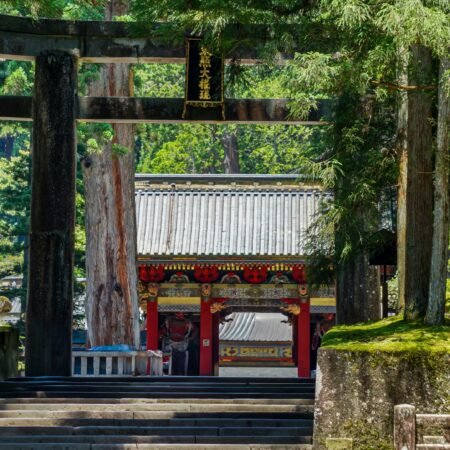
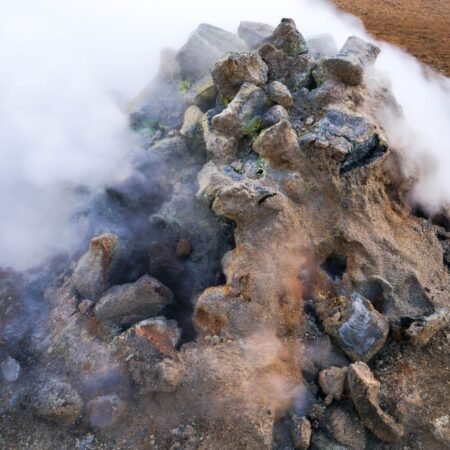
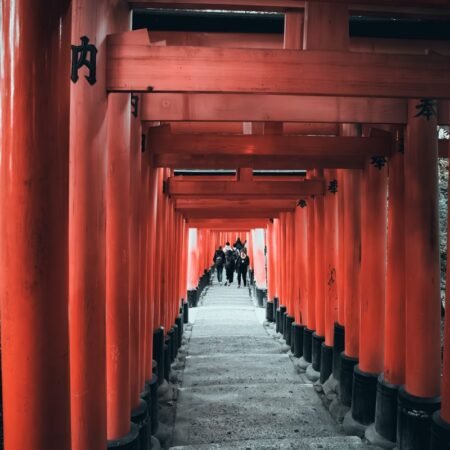
Note: images accompanying this article are illustrative stock photos and do not necessarily show the specific site discussed.
コメント