





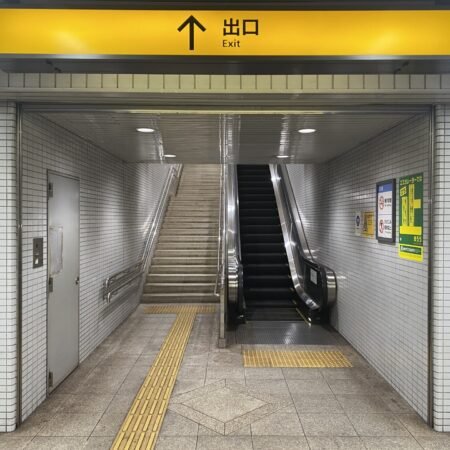

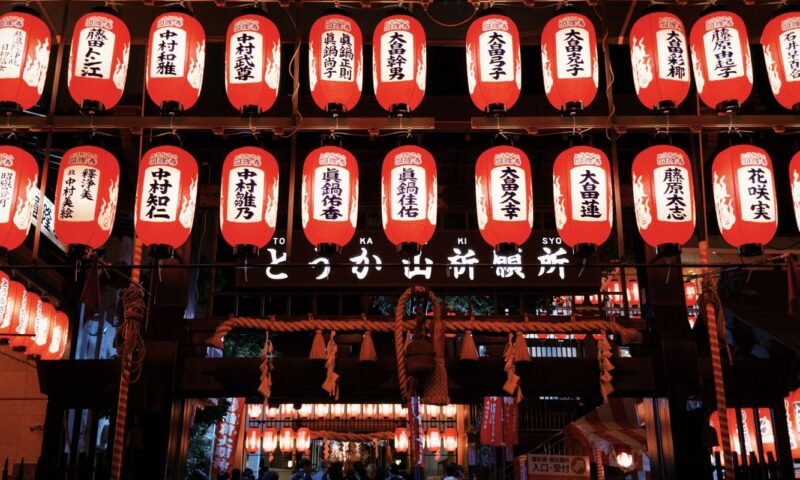
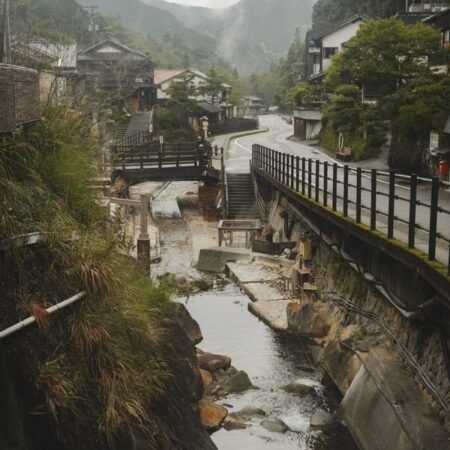
I almost didn’t go. It was a Tuesday, the last week of August, and I had a mountain of freelance work sitting in my inbox. But a friend in Toyama texted me a single line — “Kaze no Bon starts in a few days, come” — and something in me just closed the laptop. Twelve hours, one shinkansen transfer, and a very sleepy local train later, I was standing in the narrow streets of Yatsuo, a hillside district on the edge of Toyama City, watching paper lanterns flicker on in the dusk one by one like the town was slowly exhaling.
If you haven’t heard of Owara Kaze no Bon (おわら風の盆), I don’t think you’re alone — it doesn’t get nearly the attention of Awa Odori or the big Tohoku summer festivals, and honestly, I think the people of Yatsuo are a little relieved about that. This is a festival that runs on hush, not hype. Held every year from September 1st to 3rd, it’s a “wind festival” — a ritual meant to appease the autumn winds before they can flatten the year’s rice crop. That’s the practical origin. What it’s actually become, over three centuries, is one of the most hauntingly beautiful things I’ve watched in five years of living in Japan.
A Festival Built on Restraint
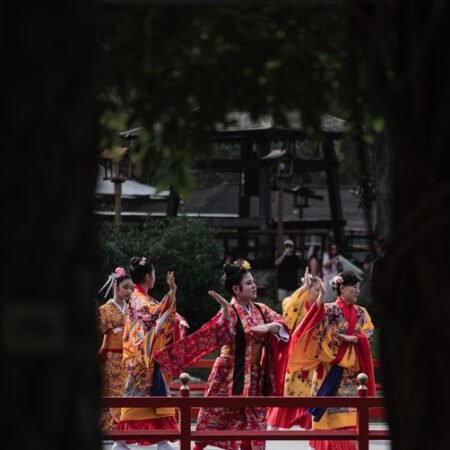
The first thing that struck me was how quiet it all was. No taiko drums pounding, no crowds shouting encouragement, no fireworks. Just the reedy, melancholic wail of a kokyu (a bowed string instrument that’s become rare almost everywhere except here), a shamisen, and a hand drum, threading through the dark streets. The dancers — men and women in separate troupes called “ren,” representing each of Yatsuo’s eleven neighborhoods — move in slow, sweeping lines down the sloped, cobbled lanes.
The men’s dance is low and grounded, almost like a farmer’s movements exaggerated into art: sweeping motions that mimic harvesting, sowing, cutting rice. The women’s dance is the opposite — impossibly graceful, arms curving overhead, faces mostly hidden beneath wide straw hats tilted down. I later learned that hiding the eyes is deliberate. The dance is meant to hold a kind of quiet sorrow, and showing too much expression is considered almost indulgent. I stood pressed against a wooden lattice fence for probably forty minutes just watching one ren pass, and I didn’t want it to end.
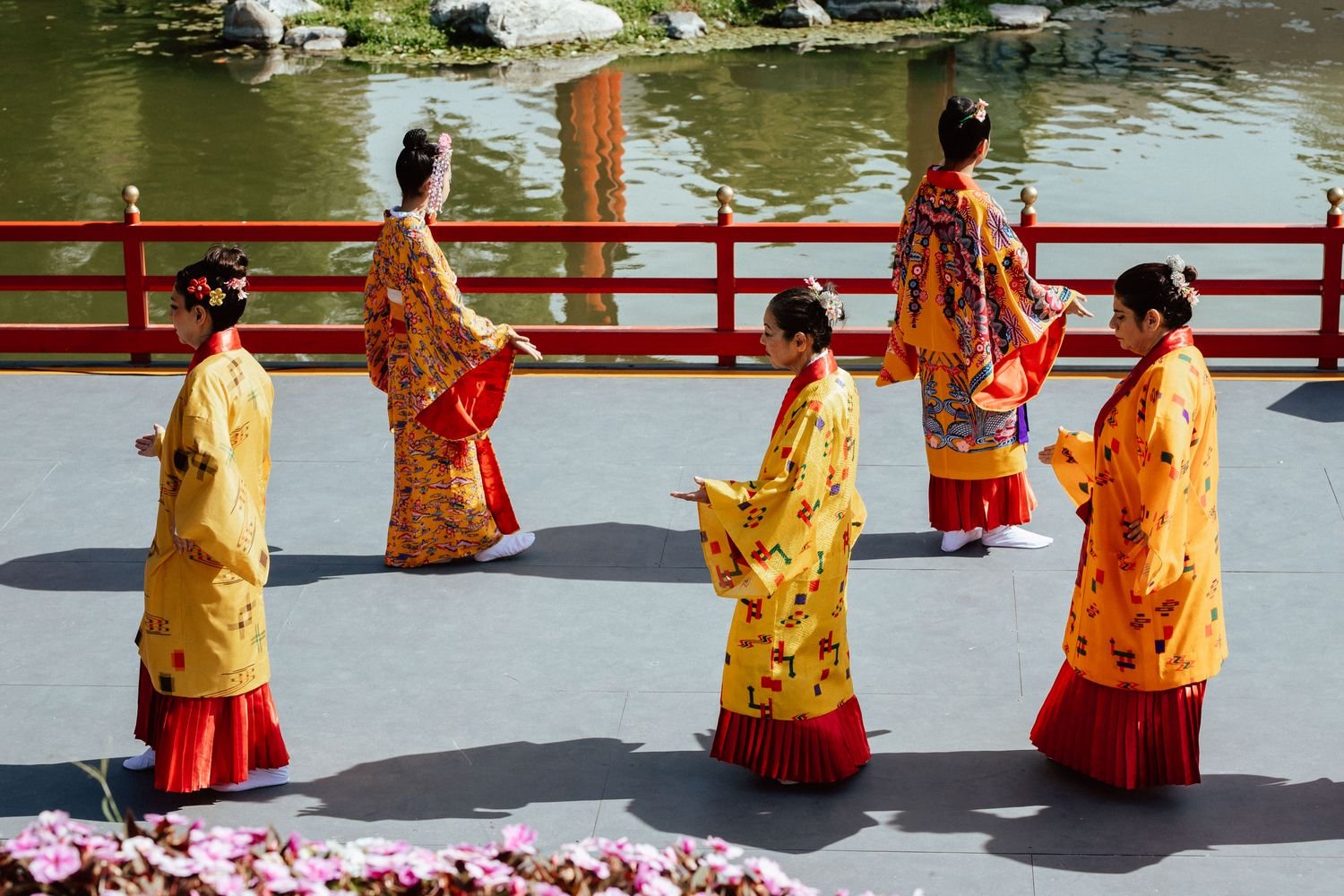
What really got me was learning how seriously Yatsuo takes the craft of this. Kids here start training in the dance and the accompanying song, called Ecchu Owara Bushi, from elementary school. It’s not a costume you rent for a weekend — the kimono, the obi, the specific tilt of the hat, all of it is passed down and corrected by elders in the neighborhood associations for years before someone is allowed to dance in the actual festival lines. Talking to a woman running a small snack stand near Suwa-machi, she told me her daughter had been practicing since age seven and still, at seventeen, felt nervous every single year. That kind of multigenerational discipline, for a three-day festival, told me everything about how much this town cares about doing it right.
Getting Lost in Suwa-machi at Night
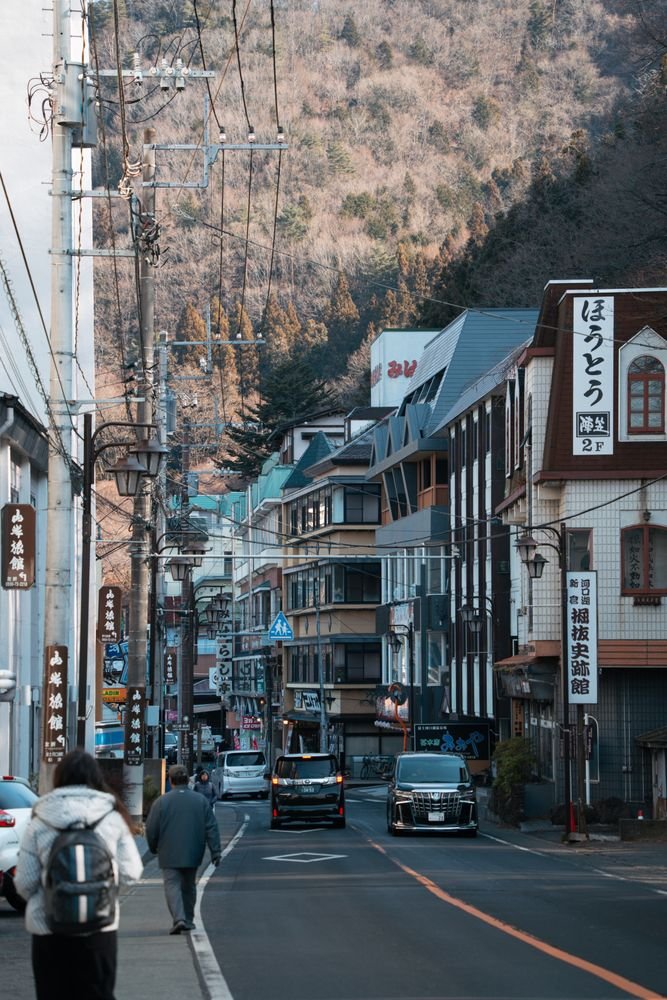
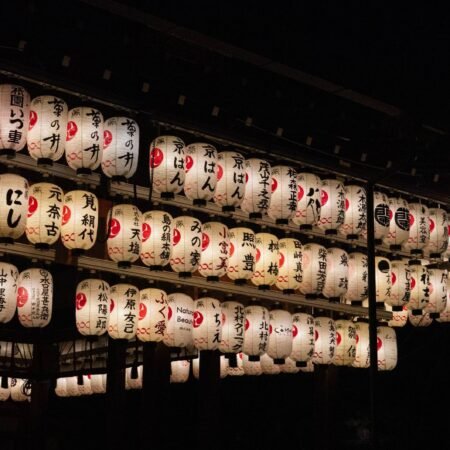
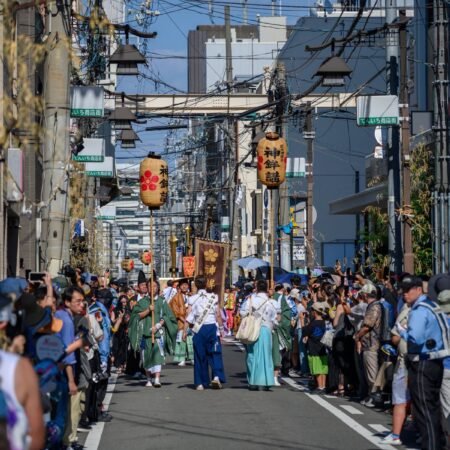
If you only have time for one street, make it Suwa-machi — the stone-paved lane with the old bell tower (Suwa-machi Kyoshiro no Kane) at one end. This is the postcard image of Owara Kaze no Bon, and for good reason. The lanterns lining the street cast this warm, low amber light against the wooden lattice facades of the old merchant houses, and when a ren processes through, their shadows stretch long across the stones. I’d budget at least two hours just to wander this one street slowly, because the crowds do bunch up, and honestly, rushing defeats the entire point of a festival about restraint.
One practical thing nobody told me before I went: the “official” stage performances (yukemuri stages set up around town, where you can sit and watch a scheduled show) are honestly worth doing first if it’s your first time, because it’s the only way to actually see the choreography clearly without craning over someone’s shoulder. The wandering street performances later at night are more atmospheric but far more crowded, and you’ll mostly catch fragments rather than a full dance.
Practical Notes for Visiting in 2026
Owara Kaze no Bon runs September 1–3, with the biggest crowds on the final night. Yatsuo is about a 30-minute bus or train ride from Toyama Station (take the JR Takayama Line to Etchu-Yatsuo Station, then it’s a short walk uphill into the old town). Toyama itself is easily reached by Hokuriku Shinkansen from Tokyo in a little over two hours, which honestly surprised me — I’d assumed it would be a whole ordeal, and it wasn’t.
A few things I wish I’d known: accommodation in Yatsuo itself is extremely limited, so most visitors, myself included, stay in Toyama City and commute out for the evening. Book that Toyama hotel well in advance — by mid-August rooms were already tightening up. Bring cash for the food stalls (I lived on grilled squid and Toyama’s famous masuzushi, pressed trout sushi, that whole weekend), wear shoes you can stand in for hours, and if you want a decent photo spot along Suwa-machi, get there before 5pm to claim a bit of curb space before the lanes fill in.
Also — and I learned this the awkward way — resist the urge to use flash photography near the dancers. The whole atmosphere depends on that soft lantern light, and a phone flash going off mid-dance draws exactly the kind of attention this town is trying not to make a spectacle of.
Why It Stuck With Me
I’ve been to a lot of festivals in Japan now — the roar of Awa Odori, the barely-controlled chaos of Danjiri Matsuri, big city fireworks that shake your chest. Owara Kaze no Bon is the opposite of all of that, and maybe that’s why it’s the one I keep thinking about. It’s not trying to impress anyone. It’s a town quietly asking the wind to be gentle with them for one more harvest, using a dance their grandparents’ grandparents knew. Standing in that lantern light, I felt like I’d been let in on something the town wasn’t performing for tourists at all — I just happened to be there, watching.
If you’re anywhere near Toyama the first days of September, close the laptop. Go.

コメント