






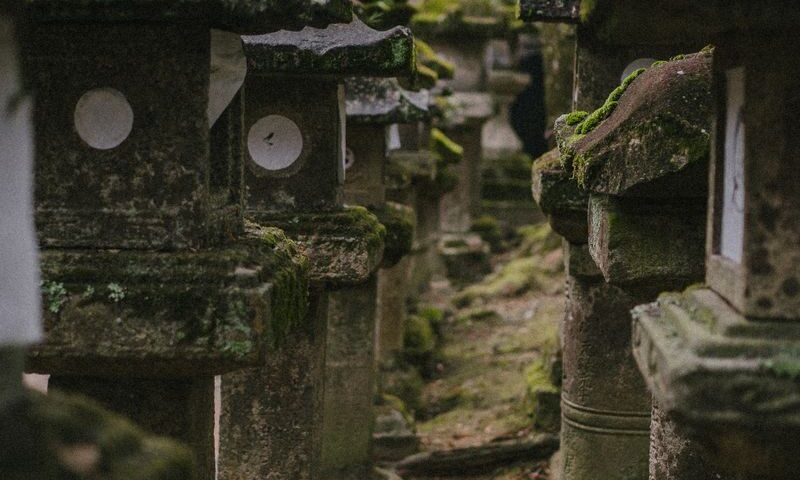
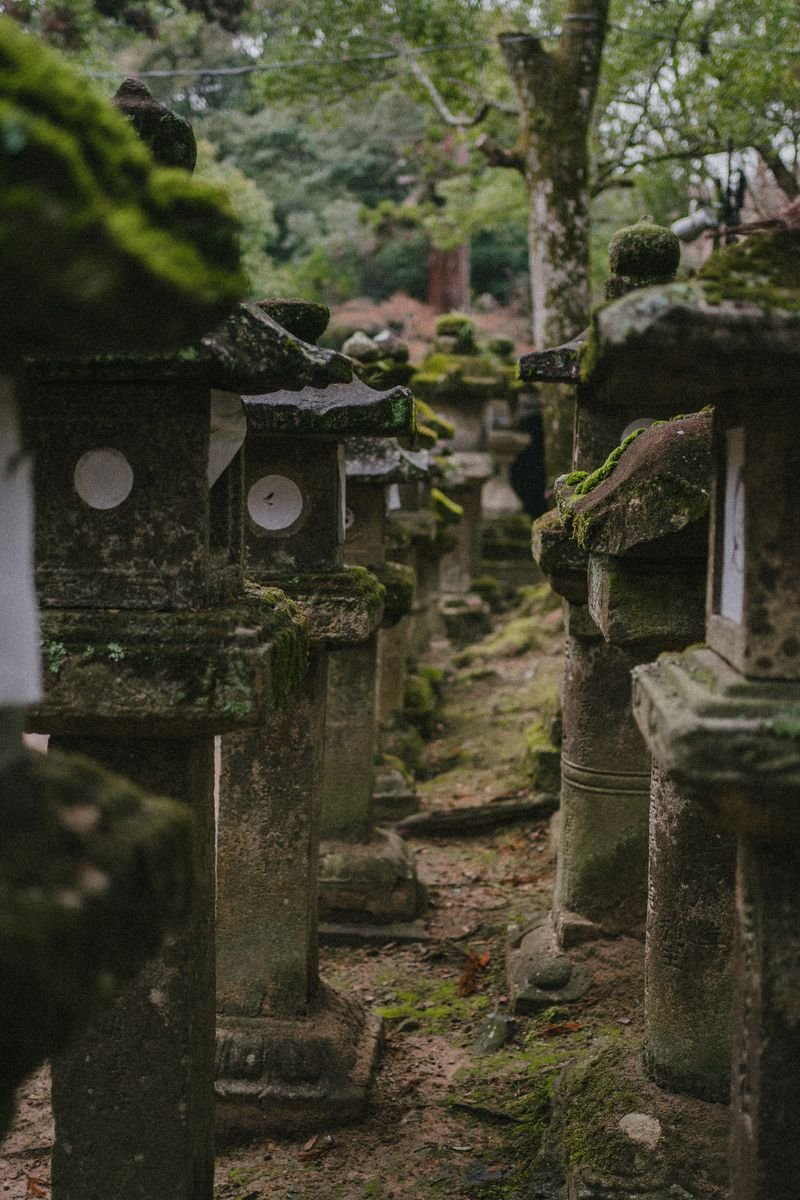
The first thing you notice at Okunoin isn’t a gravestone. It’s the quiet. I’d walked into a lot of Japanese cemeteries by the time I made it to Koyasan, usually for research, sometimes just out of habit, but nothing prepared me for two kilometres of cedar trees so tall they blot out the sky, with stone monuments stacked on either side of the path like an audience that never leaves. I went at dusk, on purpose, because that’s when the guides say the place changes character. They were right. By the time I reached the inner sanctum, my phone torch was the only light I trusted, and I kept catching myself walking a little faster than I meant to.
Okunoin isn’t a spooky detour dressed up for tourists. It’s the single most sacred site in Shingon Buddhism, and depending on who you ask, it isn’t entirely a cemetery of the dead at all.
A City of the Dead That Isn’t Quite Dead
Okunoin was founded in 835, the year the monk Kūkai — better known by his posthumous title, Kōbō Daishi — is said to have entered eternal meditation here. Kūkai founded Japan’s Shingon school of Buddhism, and according to that tradition, he didn’t die so much as step sideways out of time. The belief is that he remains in a state called nyūjō, a deep, unbroken meditative trance, waiting inside his mausoleum for the arrival of Miroku, the Buddha of the future. To this day, monks carry ceremonial meals to his resting place twice a day, a ritual that has apparently continued for over a millennium.
That belief is the reason more than 200,000 graves and memorial monuments now line the two-kilometre stone path leading to him. Feudal lords, monks, and ordinary families have paid for centuries to be buried as close as possible to Kūkai, on the theory that proximity to his eternal vigil might do something for their own souls when Miroku finally arrives. It makes Okunoin, by most counts, the largest cemetery in Japan — and one of the only ones where local tradition insists nobody buried here is actually gone. According to the old idea behind the site, they’re sleeping, not dead, waiting alongside him.
Whether or not you take any of that literally, walking the sandō path at dusk with that story in your head does something to how you read the silence.
The Hall of Ten Thousand Lanterns
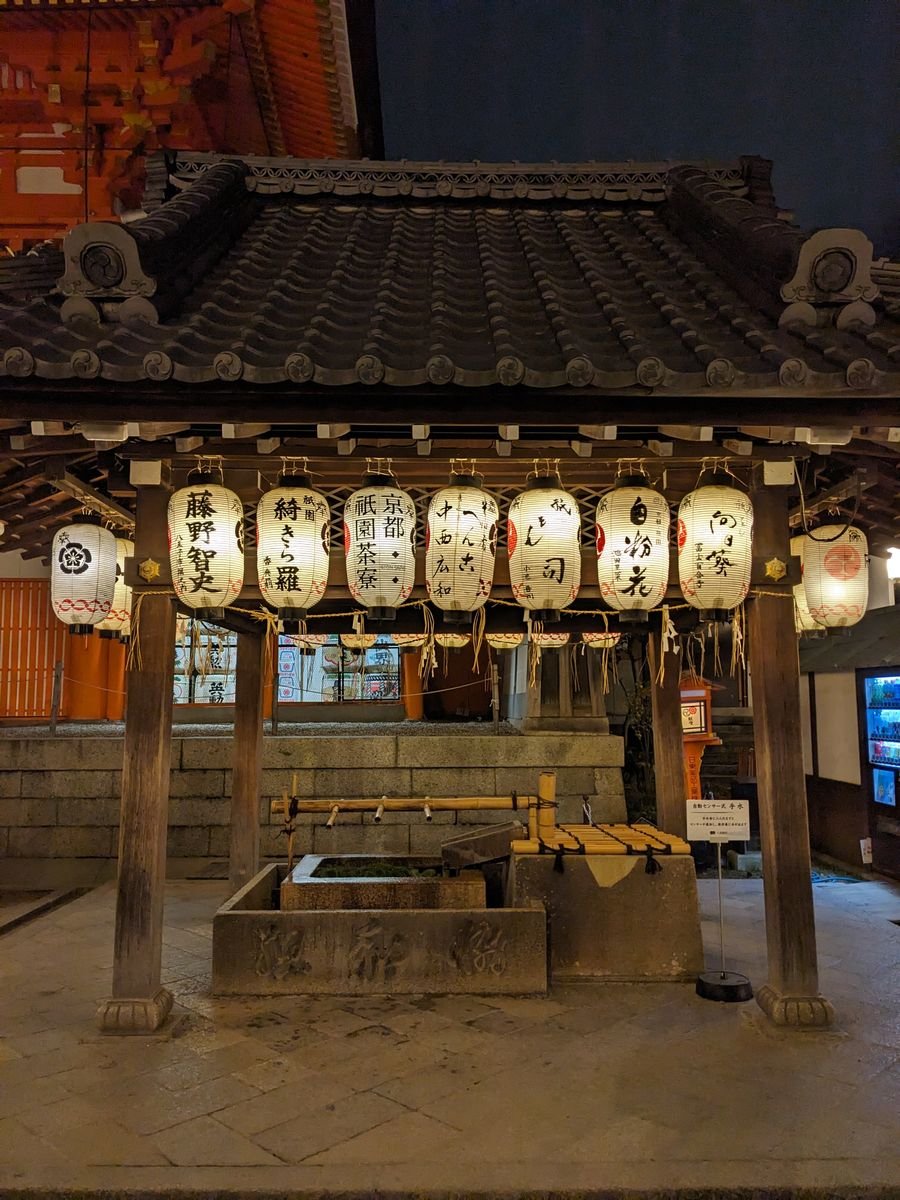
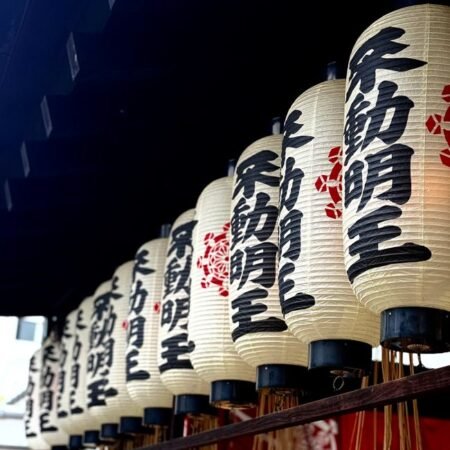
The path ends at the Tōrō-dō, the Lantern Hall, built directly in front of Kūkai’s mausoleum. Inside are more than ten thousand lanterns, donated by worshippers over the centuries and, according to the temple, kept burning without interruption. A couple of them are said to have been alight for over nine hundred years. I have no way to verify that claim, and neither, really, does anyone else — but standing in a room lit entirely by flame, with the mausoleum sealed just behind it, it’s easy to see why nobody wants to be the one who lets a lantern go out.
Beyond the hall is the Gobyō-no-hashi, a narrow bridge of thirty-six wooden boards, each said to be carved with a Buddhist deity. This is the actual boundary of the inner sanctum. Photography and food are prohibited past this point, and pilgrims traditionally bow before crossing, the same way they bow at the Ichi-no-hashi bridge back at the cemetery’s entrance. It’s one of the few spots in Japan where the “no photos” rule feels less like signage and more like a request you’d feel genuinely rude ignoring.
The Well, the Stairs, and Three Years You Might Not Get
Not every story at Okunoin is about eternal monks and burning lanterns. Tucked into the middle stretch of the path, near the Naka-no-hashi bridge and a Jizō statue known as Asekaki Jizō — the “Sweating Jizō” — sits a small well called Sugatami-no-Ido, the Well of Reflections. According to local legend, if you look into the water and don’t see your own reflection looking back, you’re fated to die within three years. I looked. I saw myself, slightly unnerved, looking back. Make of that what you will.
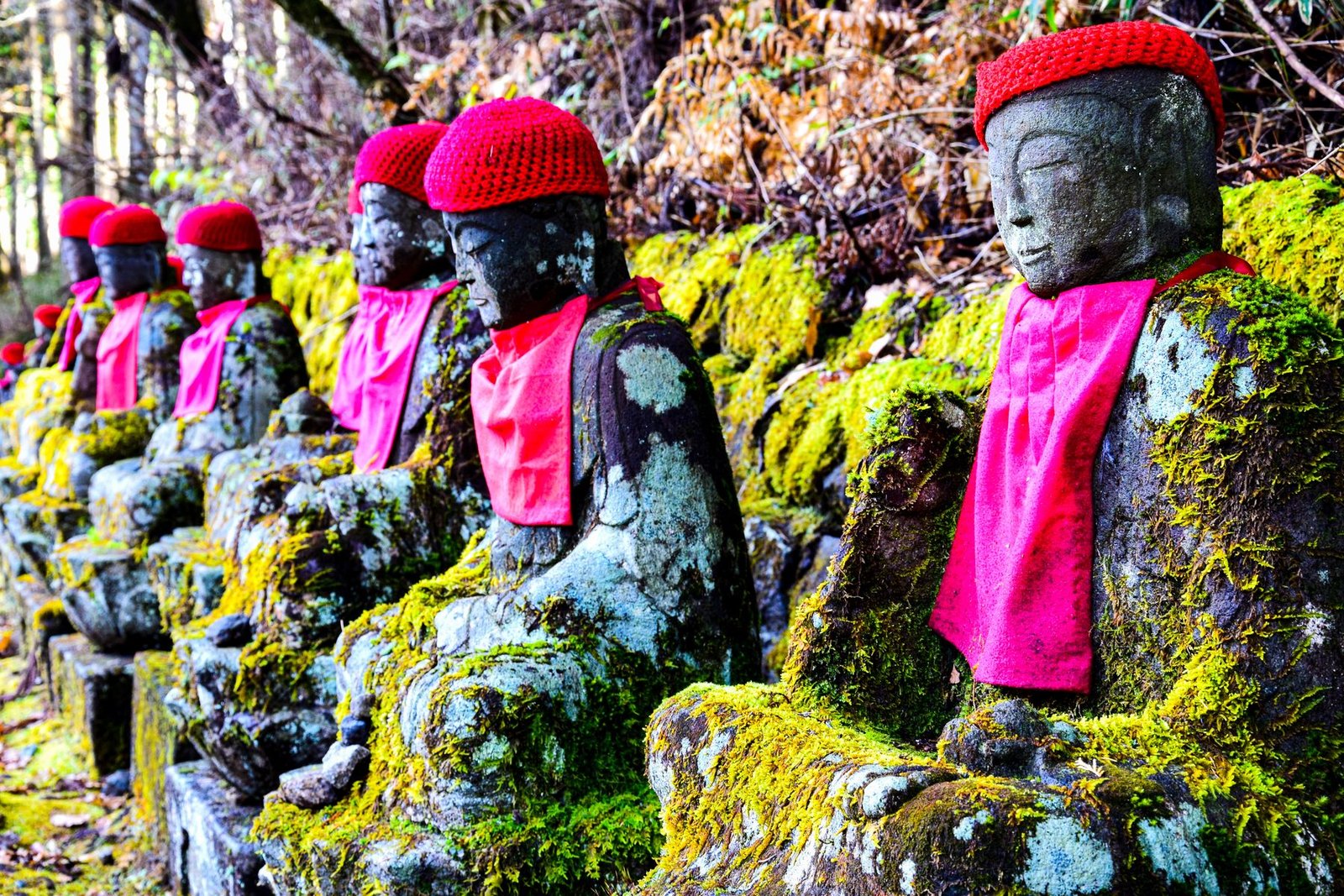
A short walk away is the Kakuban-zaka slope, a flight of forty-three stone steps. The number is deliberate — the temple added an extra step so the staircase wouldn’t total forty-two, a number that sounds uncomfortably close to the Japanese words for “unto death.” Local lore holds that stumbling on these particular stairs carries the same three-year sentence as the well. I’d call it superstition, and I’d still tell you to watch your footing anyway, if only because the stones are old, uneven, and genuinely easy to trip on in the dark, curse or no curse.
None of these stories are the kind of thing anyone at Koyasan treats as settled fact. They’re told the way most good ghost stories in Japan are told — as denshō, handed-down lore, offered with a shrug and a half-smile rather than a solemn warning. That’s part of what makes Okunoin different from a lot of “haunted” locations. Nobody here is trying to frighten you into a viral video. The temple would clearly rather you left thoughtful than terrified.
Visiting Respectfully
Okunoin is a working cemetery and an active pilgrimage site, not an attraction built for thrill-seekers, and it’s worth treating it that way. Stay on the main sandō path and any marked side trails; the surrounding forest and the individual family plots are not places to wander off into for a better photo. Photography is fine along most of the route but is explicitly forbidden past the Gobyō-no-hashi bridge, and it’s good practice to avoid photographing individual graves or mourners up close anywhere on the grounds. Guided night walks are run through the local tourism association and are a genuinely good way to experience the cemetery after dark safely, with someone who knows the path and its history, rather than trying to find your own way through unlit forest. Keep your voice down, especially near the inner sanctum, and remember that for a great many visitors, this isn’t folklore tourism at all — it’s where a relative is buried.
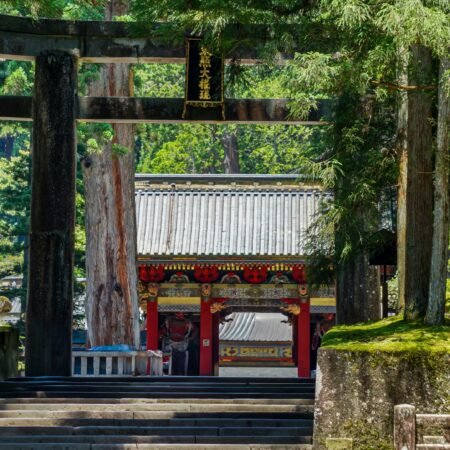
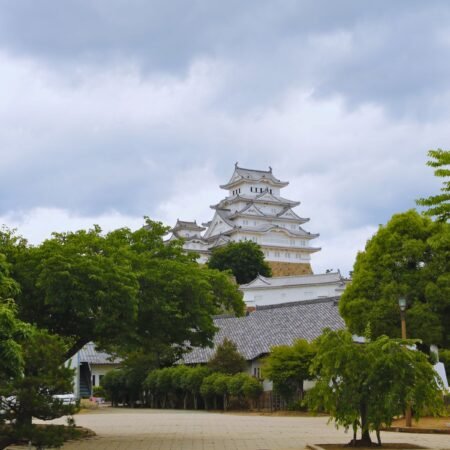
Note: images accompanying this article are illustrative stock photos and do not necessarily show the specific site discussed.

コメント