










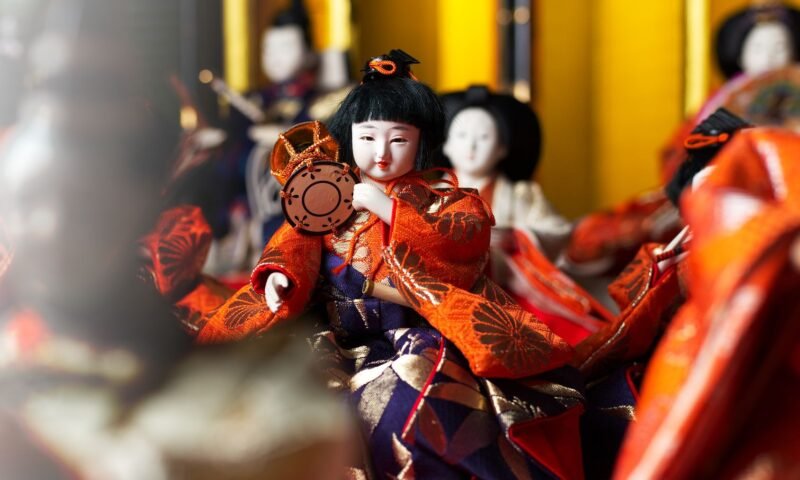
A reader tipped me off to this one a few months back, in an email with the subject line “a doll you should be careful writing about.” That’s usually a sign I should slow down rather than speed up. The story concerns a small doll kept at a working Buddhist temple in rural Hokkaido, said to have grown human hair for more than eighty years. It’s one of the most widely repeated ghost stories in Japan, and also one of the easiest to get wrong — either by mocking it as internet clickbait, or by presenting it as settled fact. I’ve spent the last few weeks trying to find the version in between: what the temple itself says happened, what can and can’t be verified, and why a grieving family’s private ritual became a story the whole country knows.
A Sister’s Doll from the Taisho Exposition
According to the temple’s own account, the story begins in August 1918, at an exposition held in Sapporo during the Taisho era. A seventeen-year-old named Suzuki Eikichi bought a bob-haired doll there as a souvenir for his three-year-old sister, Kikuko. By every account, she adored it — carrying it everywhere, sleeping with it at night, the way small children attach themselves to one object out of an entire toy box. The following January, the story goes, Kikuko caught a cold that turned to pneumonia, and she died before the year was much older.
It’s worth pausing on how ordinary this part of the story is. Child mortality from respiratory illness was tragically common in Japan a century ago, long before antibiotics. There is nothing supernatural in this half of the account — just a family’s grief, and a doll that had been a small girl’s favourite thing.
From a Family Altar to a Temple’s Care
Kikuko’s family is said to have placed the doll on their household altar, the kamidana, as a way of keeping her memory close — a common practice. It was there, according to the family’s own retelling, that they first noticed the doll’s cropped, bobbed hair seemed to be getting longer. In 1938, when the family relocated, they entrusted the doll to Mannenji, a temple in what is now Iwamizawa, Hokkaido, asking the priests to look after it and continue the memorial.
The most-repeated part of the legend concerns what happened next. By some retellings, it was years before anyone at the temple paid the doll much attention, until a priest reportedly dreamed of a drenched, unfamiliar man asking that “the doll’s hair be trimmed.” Investigating, the priest is said to have found the doll’s hair had grown well past its original bob, down toward the shoulders. Whatever the exact sequence, the temple has treated the doll’s hair as something requiring regular care ever since, trimming it periodically as part of an ongoing memorial for Kikuko.
What the Evidence Actually Shows
I want to be honest about where the hard evidence ends and the legend begins, because most write-ups blur the two. Some tellings claim the hair has been “scientifically confirmed” as human and found to grow at a rate matching a young child — I could not find a published, peer-reviewed study behind that claim, and neither could several Japanese researchers who have looked into the case before me. What we do have is a temple with a genuine, decades-old ritual, a family history that checks out in its broad strokes, and hair that visitors and priests alike describe as noticeably longer than old photographs suggest it once was.
There’s also a mundane possibility worth naming, in the spirit of the “quiet detective work” I try to bring to these places: dolls from that era were often fitted with wigs of real human hair, hand-knotted into the scalp. Over decades of humidity, handling, and loosely tied buns slowly working free, a tightly bound child’s hairstyle can appear to “grow” simply by unravelling. I’m not offering that as a debunking — the temple’s own tradition doesn’t need my verdict, and I’m not in a position to examine the doll myself — but it’s the kind of ordinary explanation that these stories rarely make room for.
Visiting Mannenji Temple
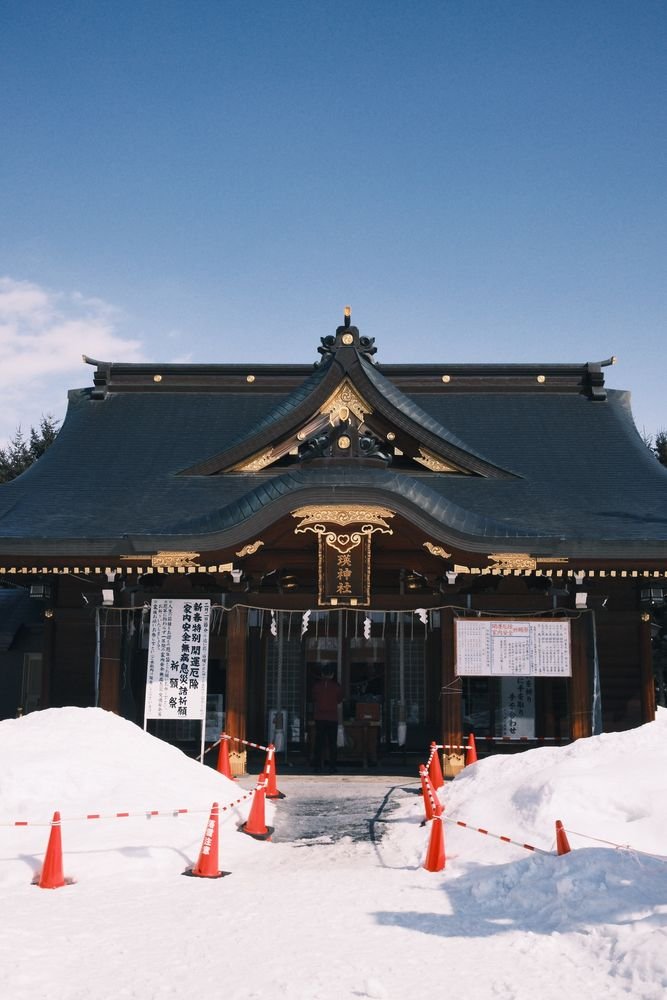
Mannenji is a small, active temple in the Manji-kōmachi area of Kurisawa, part of Iwamizawa city in central Hokkaido — a former coal-mining district that has quietly emptied out over the decades. This is not a tourist attraction built around the doll; it’s a functioning place of worship where a real memorial has continued, largely uninterrupted, for over a century. The doll itself is kept in a case and is not on permanent public display; it’s shown only occasionally, and photography of it is not permitted, out of respect for what the temple considers an ongoing act of mourning rather than a curiosity. If you do visit, I’d treat it exactly like visiting anyone else’s family grave — quietly, and without expecting a performance.
A Final Thought, and Some Practical Notes
What stays with me about this story isn’t the hair. It’s how much care a family put into making sure a three-year-old who died over a hundred years ago would not simply be forgotten — first on a home altar, then in the hands of strangers they trusted to keep going what they’d started. Most of the “haunted doll” coverage I’ve read treats Okiku as a prop in a horror story. I’d rather treat her as what the temple itself does: a child who is still, in a very real sense, being looked after.
If you do plan to visit Mannenji, remember it is an active temple, not a museum — call ahead or check current visiting arrangements rather than turning up unannounced, dress and behave as you would at any temple, and don’t ask to see or photograph the doll if it isn’t offered. Hokkaido’s rural roads can be genuinely difficult in winter, so plan around the season if you’re travelling out to Iwamizawa between November and March. As with every place I write about here, there’s nothing at this site that requires or rewards trespassing — it’s a legitimate, respectfully maintained place of worship, and the story is best encountered on those terms.
Note: images accompanying this article are illustrative stock photos and do not necessarily show the specific site discussed.




コメント