






The first thing that surprised me about ukai wasn’t the birds. It was how quiet everyone got. I was sitting cross-legged on a wooden guest boat on the Nagara River in Gifu, a plastic cup of cold sake going warm in my hand, and the whole boatload of tourists — most of them Japanese, a handful of us foreigners squeezed in near the back — had gone completely silent the second the first flicker of orange appeared upstream. My friend Aya, who’d dragged me out here after I complained for the third time that I “still hadn’t seen real ukai,” just grinned and pointed. “Here they come,” she said. And then the fire came around the bend, and I understood why nobody was talking anymore.
I’d heard the word ukai (鵜飼い) — cormorant fishing — tossed around before, which sounds almost too plain for what I watched that night. It’s one of those things in Japan that’s been happening in roughly the same form for so long it stops feeling like a tourist activity and starts feeling like a historical reenactment that also happens to be real life, still catching actual fish for actual money. I went in expecting a cute performance. I left having watched something genuinely old.
A Tradition Older Than Most Countries
Ukai on the Nagara River is mentioned in the Nihon Shoki, Japan’s second-oldest chronicle, compiled in 720 AD — which means people have been doing this, roughly this way, for something like 1,300 years. That number gets thrown around a lot in Japan (“oldest this,” “1,000-year-old that”), and I’ll admit I’ve gotten a little numb to it. But sitting there watching it happen, the age of the thing actually landed for me in a way it hadn’t on paper.
What makes Gifu’s ukai especially unusual is that it isn’t just a local craft that survived — it’s an official one. The handful of ushō (鵜匠) who do this hold the title of Imperial Household Agency employee, and part of their catch — ayu, or sweetfish — has historically been sent to the Imperial Court. The position is passed down within families; the ushō I saw that night was using a technique his father and grandfather had taught him on that same stretch of river. That’s not a job. That’s a lineage.
Climbing Aboard as the Sun Goes Down
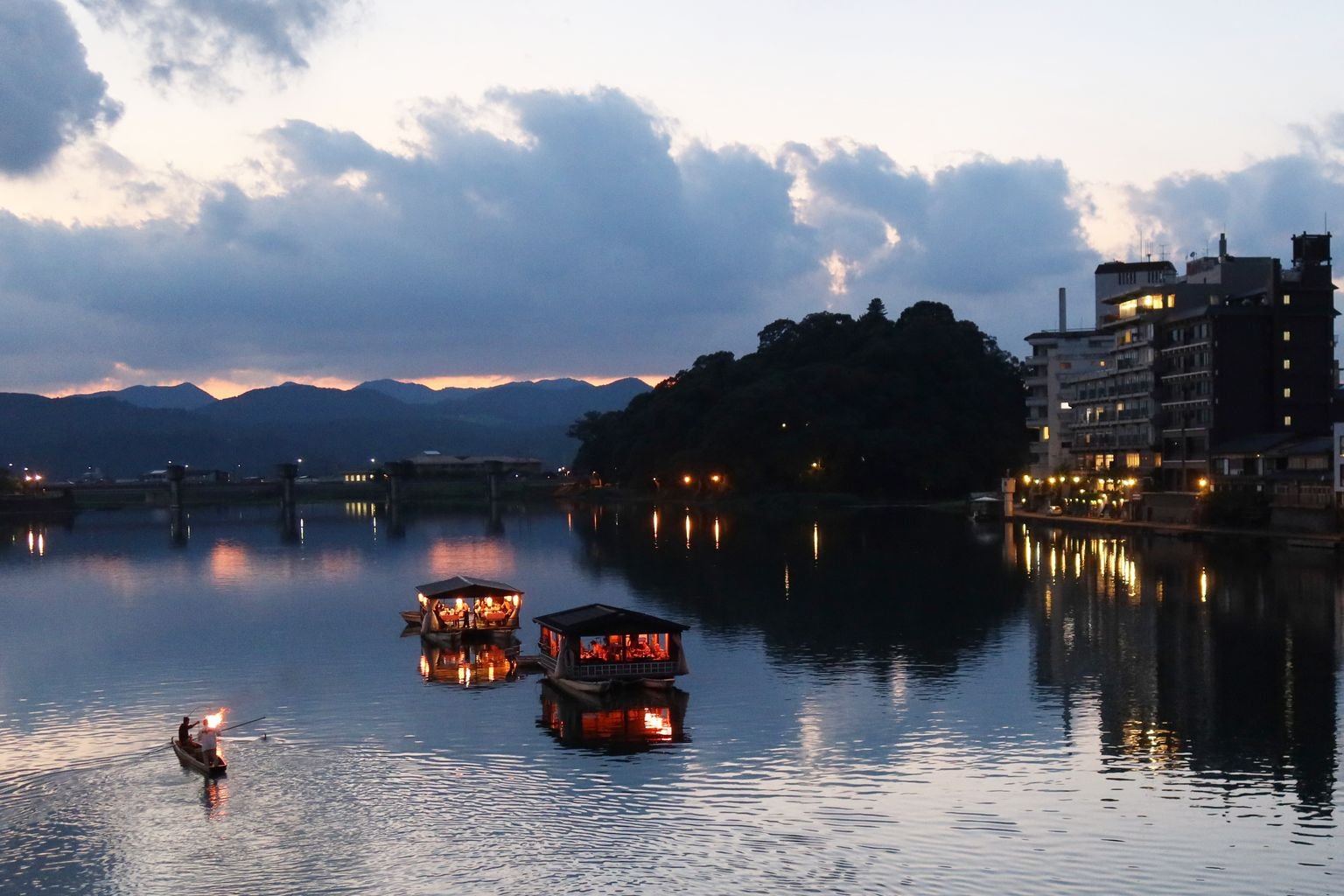
You can catch glimpses of ukai from the riverbank for free, but the real experience is from the water, on one of the big flat-bottomed guest boats that depart from the pier near Nagarabashi bridge in central Gifu City. We’d booked ours a few days ahead through the local tourism office, and I’m glad we did — by the time we showed up at dusk, the departure area was already filling with families, couples, and a surprising number of serious photographers hauling tripods.
The boat itself is basic — no cushioned seats, just tatami-style mats and little low tables for snacks and drinks, which, yes, you’re allowed to bring aboard, and yes, most people do. As we pushed off and drifted out onto the dark water, Gifu Castle lit up faintly on top of Mount Kinka behind us, and the city noise just sort of fell away. It’s a strange feeling, floating in near-total darkness in the middle of a modern city, waiting for something.
Watching the Ushō and Their Cormorants Work
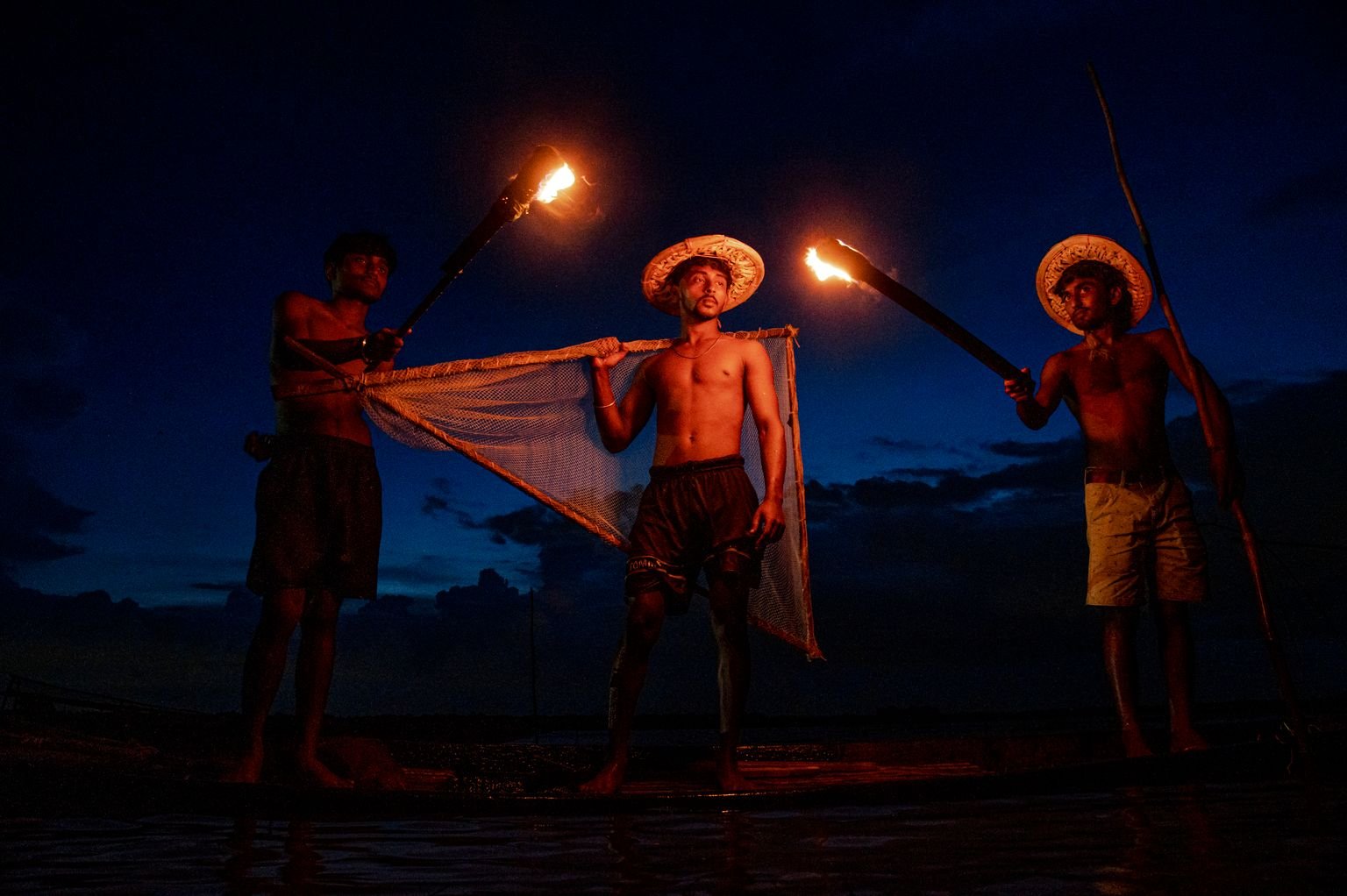
Then the ubune — the narrow fishing boats — came around the bend, each one carrying an ushō dressed in a getup that looked like it had been pulled straight out of an Edo-period woodblock print: a black eboshi hat, a straw skirt called a koshimino, and a chest covering meant to protect him from flying sparks. Hanging off the bow of each boat was an iron basket piled with burning pine, the kagaribi, throwing orange light and smoke across the water and — this is apparently the whole point — confusing and attracting the ayu swimming below.
Each ushō controls up to a dozen cormorants at once, each bird on its own long cord, diving and surfacing and diving again with a kind of chaotic, almost comic energy that’s completely at odds with how serious and ceremonial everything else about the scene feels. There’s a loose cord tied around each bird’s throat — not tight enough to hurt it, just tight enough that it can swallow small fish whole but has to bring the bigger ones back up to the surface, where the ushō hauls it in and makes it spit the catch onto the boat. I watched one cormorant come up with what looked like three or four fish in a row before the ushō finally reeled it in, and the whole boatload of us actually clapped.
The Sōgarami Finale
The real showstopper, though, comes at the very end, when all six of the ushō boats line up side by side across the width of the river and drive forward together in a formation called sōgarami — “all together,” more or less. The idea is to drive every last fish toward the guest boats in one final, coordinated sweep, and the visual effect of six fire-lit boats moving in a slow, deliberate line toward you, cormorants splashing on every side, is honestly one of the more striking things I’ve watched happen in front of me in five years of living here. Nobody on our boat was looking at their phone. That tells you something.
Practical Tips If You Want to Catch It
Ukai runs on the Nagara River from around May 11 through October 15 every year, pausing on nights near the full moon (too bright for the fire technique) and after heavy rain, so double-check the schedule before you book — the current season may be in its final nights. Boats depart from the pier near Nagarabashi bridge in Gifu City, about 20 minutes by train from Nagoya on the JR Tōkaidō Line or Meitetsu Line to Gifu or Meitetsu-Gifu Station, then a short bus or taxi to the river. Reservations go through the Gifu City ukai tourism office; book a few days ahead on weekends, since boats do sell out. Bring cash for snacks, dress warmer than you’d think (it gets cold on the water even in September), and sit facing upstream for the best photos — that’s the direction the ushō boats approach from.
I went into that night thinking I was humoring Aya’s enthusiasm for what sounded like a slow evening on a boat. I came home having rearranged how I think about what “old Japan” even means — not something behind glass in a museum, but a guy in a straw skirt, doing exactly what his grandfather did, on exactly the same river, lighting a fire so a dozen birds can go fishing for him. I don’t know how much longer traditions like this survive once the current generation of ushō retire, honestly, and that thought sat with me the whole train ride home.
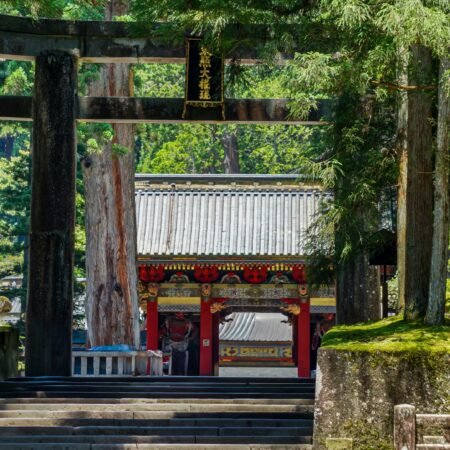
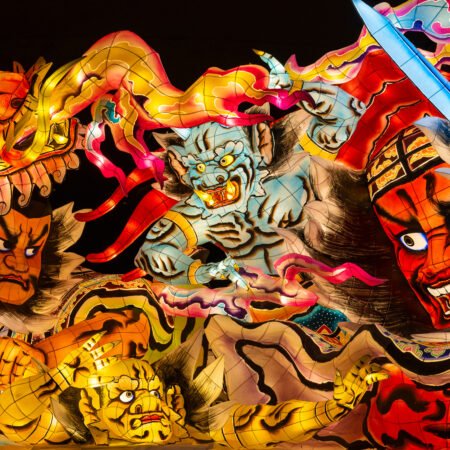
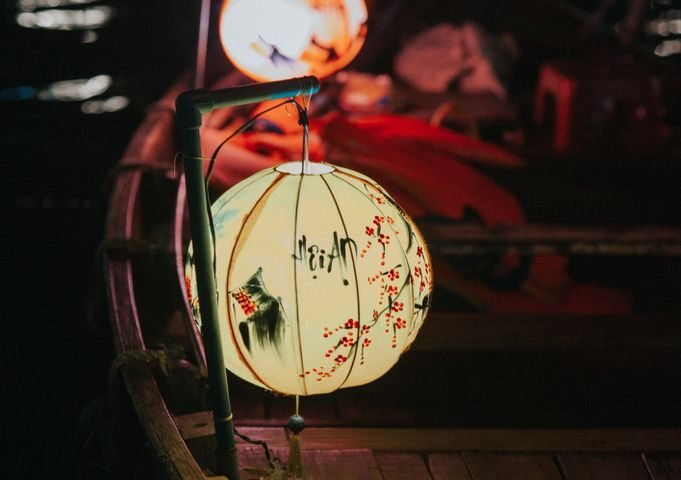
A quick note on photos: some of the images here are stock photos I’ve used to set the mood — they may not be the exact spot or moment I’m describing, just close in spirit.

コメント