





I almost didn’t make it up the hill. That’s the first thing I should tell you about the Kurama Fire Festival — by the time I stepped off the little Eizan Railway train at Kurama Station, the single road running through the village was already shoulder to shoulder with people, and somewhere above the crowd I could hear a low, rhythmic chant getting louder, like the whole mountainside was breathing in unison. I’d come up from central Kyoto expecting a nice evening shrine visit. What I got was one of the wildest, most primal-feeling festivals I’ve experienced in five years of living here.
What Exactly Is the Kurama Fire Festival?
The Kurama Fire Festival, or Kurama no Hi Matsuri, happens every October 22nd in the small mountain village of Kurama, at the northern edge of Kyoto City. It’s tied to Yuki Shrine, and the story behind it goes back over a thousand years: in 940, the shrine’s deity was relocated from the Imperial Palace to Kurama for safekeeping during a period of unrest, and the villagers are said to have lit huge torches along the road to guide the procession up the mountain. Ever since, the village has restaged that welcome every autumn, and it has never really stopped feeling like an act of devotion rather than a show for tourists — even though, these days, plenty of us tourists show up to watch.
What surprised me most is how much of the festival is powered by the village itself. Kurama isn’t a big place. It’s one main street, a handful of ryokan and soba shops, a train station, and a shrine tucked into the hillside. On this one night a year, essentially every household along that street is involved — sons carrying torches their fathers carried before them, kids proudly hauling smaller versions almost as tall as they are, neighbors handing out cups of sake to keep everyone warm as the temperature drops.
The Torches Themselves
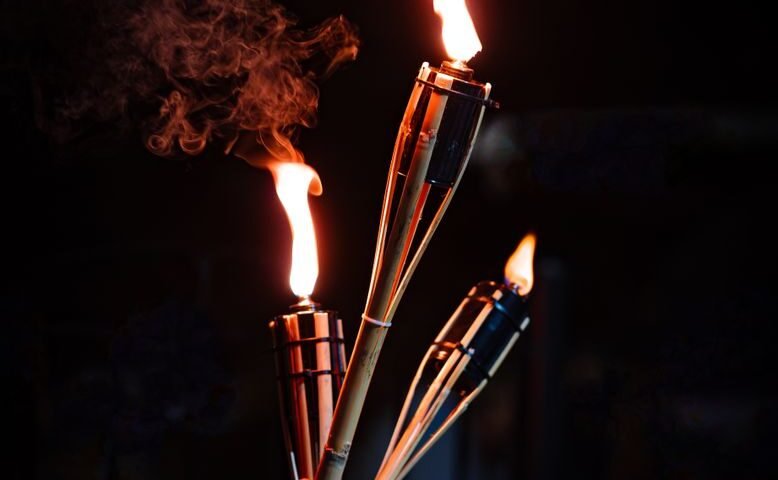
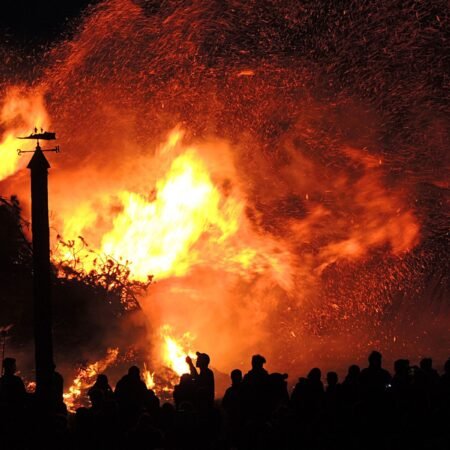
You hear the festival before you see it. As dusk falls, small pine-bundle torches carried by local children start moving down the street, and the chanting begins — a call-and-response rhythm that echoes off the wooden buildings and just keeps building in volume as the evening goes on. By full dark, the torches get progressively larger, and the last ones are genuinely enormous — heavy bundles of pine that take real strength to lift, hoisted onto the shoulders of young men from the neighborhood associations while everyone else clears a path.
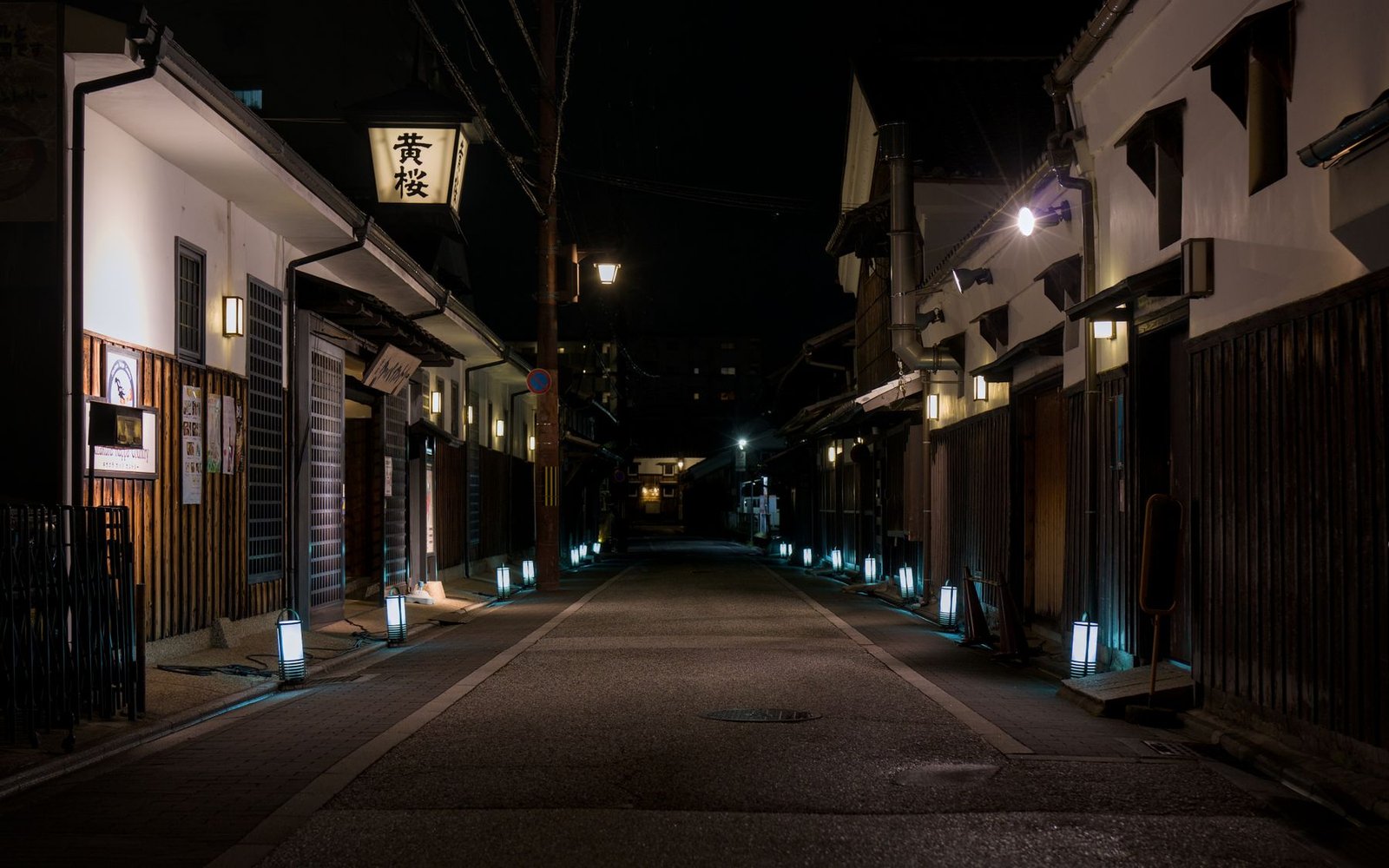
Sparks drift up into the dark, the smoke smells like burning pine and street food, and the whole narrow road glows orange from one end to the other. I kept catching myself just standing there with my mouth open. It’s loud, it’s hot even in the October night air, and it does not feel remotely staged — this is a community doing something it has done for a very long time, and you’re just lucky enough to be standing nearby.
Up to the Shrine: The Mikoshi Comes Down
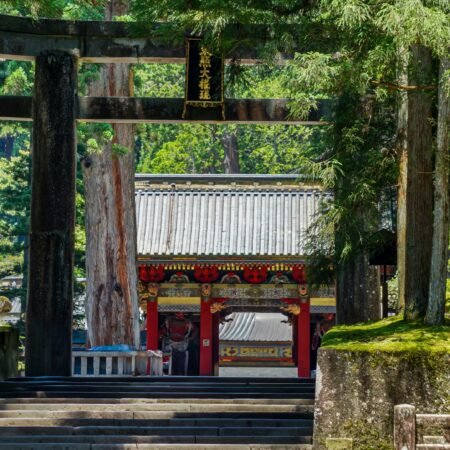
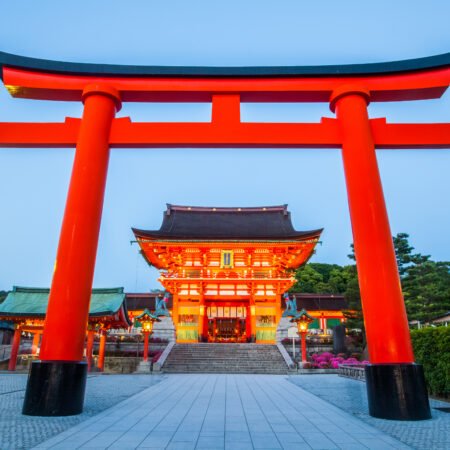
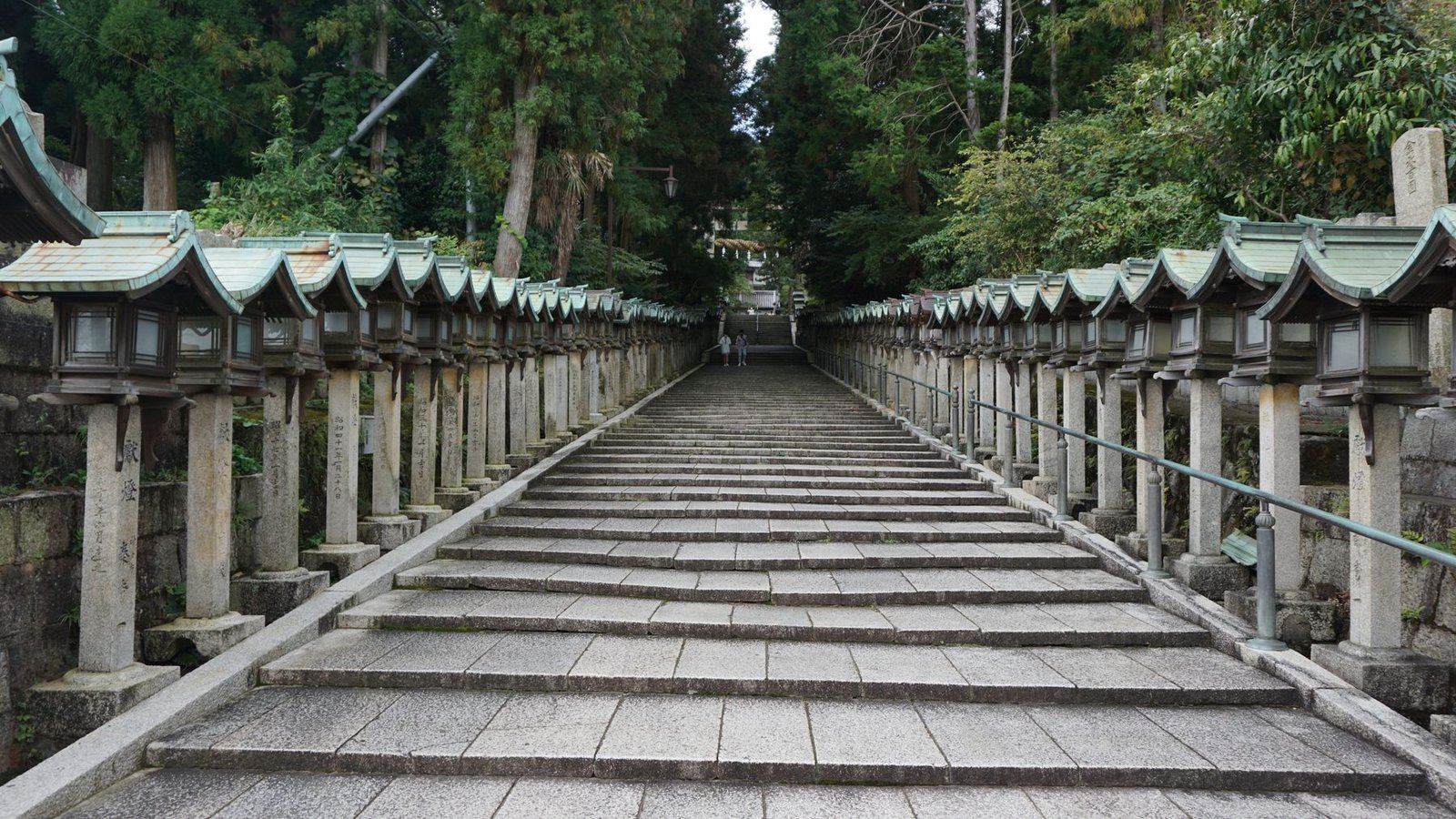
The night builds toward a specific moment at Yuki Shrine itself, which sits above the village at the top of a steep flight of stone steps. As the evening goes on, the enormous torches are gathered near the shrine’s torii gate, and eventually two mikoshi — portable shrines carrying the local deities — are carried out and brought down that same steep staircase, guided (and sometimes almost restrained) by ropes held by the crowd below.
Getting a clear view of this part takes patience and a bit of luck with crowd positioning, since the area right around the shrine steps fills up early. I ended up watching from partway down the hill, which still gave me a great sightline of the torches massed together and the shrine gate lit up above them. Even from a distance, there’s something moving about watching an entire village funnel its energy into carrying something sacred down a mountain in the dark, the way it’s apparently been done for over a thousand years.
Practical Tips If You’re Planning to Go
A few things I wish someone had told me before I went. First, get to Kurama early — ideally by mid-afternoon. The Eizan Railway line from Demachiyanagi Station is the main way in, and on festival night it gets restricted to one-way, timed entry because the platforms and the village itself simply cannot hold everyone who wants to come. If you arrive after the crowds build, you may find yourself waiting a long time just to get on a train headed up the mountain, let alone find a decent spot to stand.
Second, dress warmer than you think you need to. Kurama sits at higher elevation than central Kyoto, and by late October the mountain air after dark has real bite to it, torches or no torches. Third, the single road through the village is the only place to stand, so once you’ve found a spot with a reasonable view, it’s often smarter to hold it rather than trying to push through the crowd to somewhere “better” later on. And bring cash — small stalls sell warm food and drinks along the route, but card readers are not the norm here.
Finally, pace yourself on how late you stay. The festival runs well into the night, trains back to Kyoto proper get packed and delayed, and the walk back down to the station in a crowd of a few thousand people takes far longer than you’d expect. I budgeted extra time to get home and was still glad I had.
Why It’s Stuck With Me
Kyoto gets a reputation as the polished, photogenic version of Japan — temples, gardens, geiko slipping down quiet alleys. The Kurama Fire Festival is something rougher and more elemental than that, and I mean that as the highest compliment. It’s smoky, chaotic, loud, and completely unconcerned with being pretty for a camera. What it is concerned with, apparently, is keeping a very old promise: that when the mountain calls, the village answers with fire. Five years into living here, moments like that are still the ones that remind me why I moved to Japan in the first place.
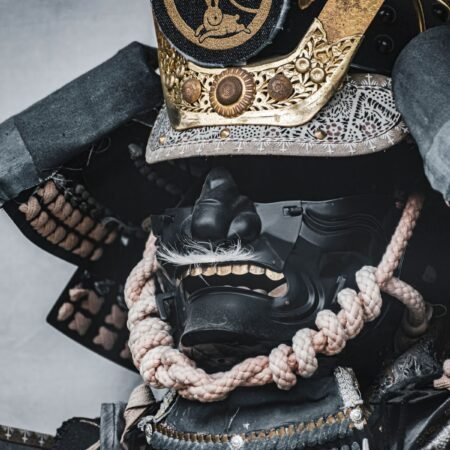
A quick note on photos: some of the images here are stock photos I’ve used to set the mood — they may not be the exact spot or moment I’m describing, just close in spirit.
コメント