





The first thing that struck me about Akita’s Kanto Matsuri wasn’t the lanterns — it was the silence right before they went up. I was standing on Kanto Odori, Akita City’s wide main street, elbow to elbow with a few thousand other people, and for one beat nobody was talking. Then the taiko drums kicked in, and down the street, one after another, men and women started hoisting ten-meter bamboo poles strung with glowing paper lanterns straight up into the night sky. I’d lived in Japan for five years at that point and had seen a lot of festivals, but I’d never seen anyone balance something that heavy and that tall on one palm, let alone on a forehead. I actually gasped out loud, which embarrassed me for about two seconds before I realized everyone around me was doing the same thing.
I’d come up to Akita Prefecture, in the Tohoku region of northern Honshu, specifically for this. I’d read that the festival was old, that the lanterns were shaped to look like something, and that grown adults apparently balance poles on their faces for fun. All of that turned out to be true, and somehow still undersold it.
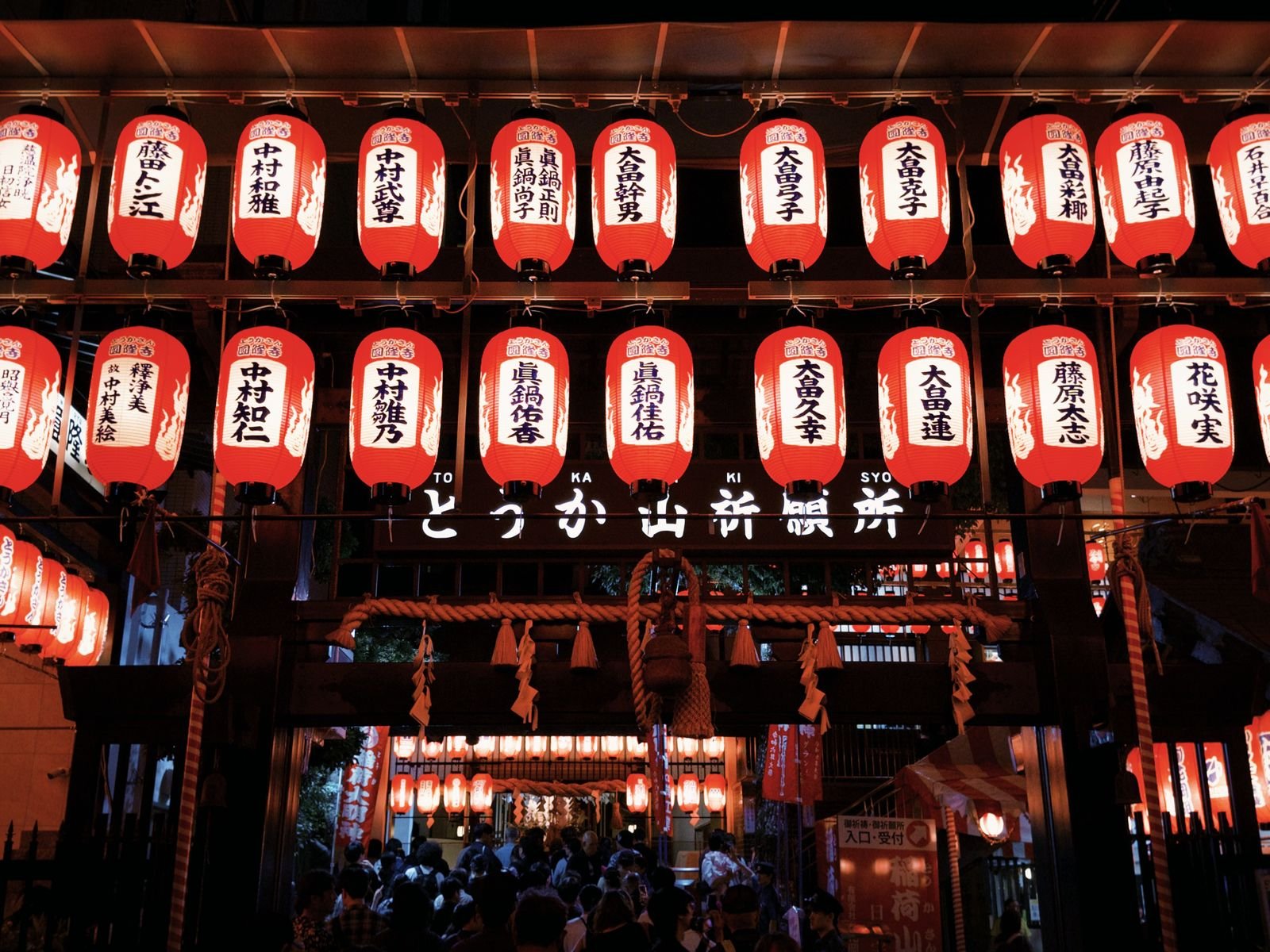
A Festival Born From Washing Away the Drowsiness of Summer
Kanto Matsuri has roots that go back a lot further than I expected. The earliest written account of it shows up in a 1789 travel diary by a writer named Soan Tsumura, but locals say the custom itself was already around in the Horeki era, sometime between 1751 and 1764. The festival grew out of a Tohoku purification custom called neburi nagashi, which roughly translates to “washing away drowsiness” — the idea being that you parade lanterns through town to drive off the sluggishness and bad luck of midsummer before the busy rice harvest. The name “Kanto” itself wasn’t formally adopted until 1881, and in 1980 the whole tradition was designated an Important Intangible Folk Cultural Property by the Japanese government. So by the time I was standing there slack-jawed on Kanto Odori, I was watching something with roughly 270 years of continuous history behind it, not a modern recreation dressed up to look old.
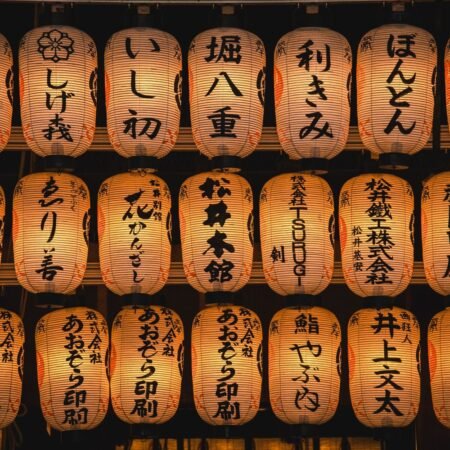
That harvest connection is also why the poles look the way they do. Each kanto is meant to resemble a stalk of rice bowing under the weight of a good crop, with the lanterns standing in for bags of grain. It’s a prayer for abundance dressed up as a street performance, and once someone explained that to me, I couldn’t look at the lanterns the same way again — they stopped looking decorative and started looking like something closer to a wish.
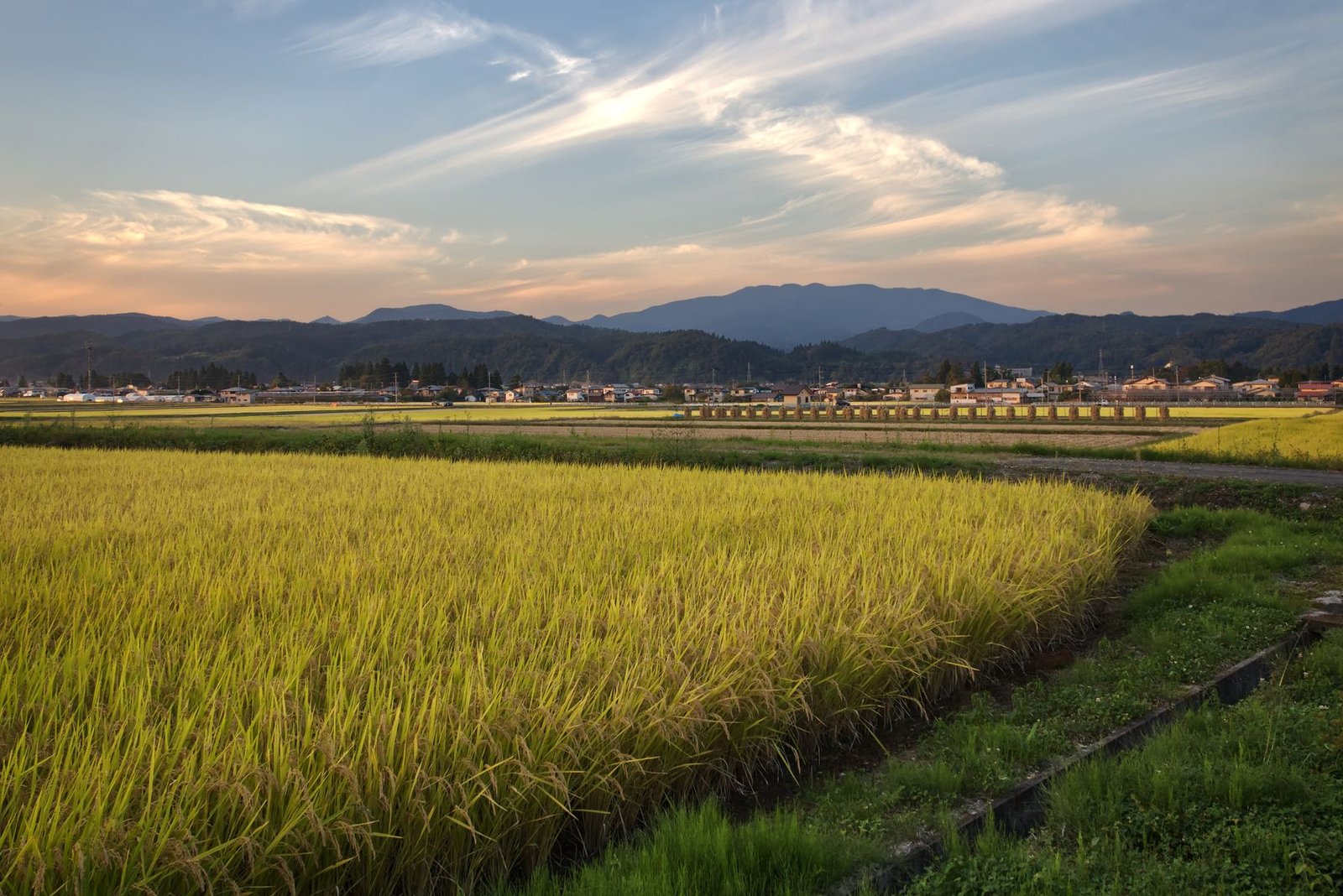
Forty-Six Lanterns, Fifty Kilograms, and a Forehead
Here’s where the festival gets genuinely athletic. The kanto poles come in four official sizes. The largest, the owaka, is 12 meters long, weighs 50 kilograms, and carries 46 lanterns, each one roughly 64 by 45 centimeters. Step it down and you get the chuwaka (9 meters, 30 kilograms, also 46 lanterns), the kowaka (7 meters, 15 kilograms, 24 lanterns), and the smallest, the yowaka, which at 5 meters and just 5 kilograms is sized for children to carry. Across the festival, organizers put up more than 230 of these poles — some sources from the festival’s own organizing committee put the number as high as 280 poles carrying a combined 10,000 lanterns — and on a clear night the whole street glows orange from one end to the other.
What actually had me staring, though, was how the carriers move the poles once they’re up. There are five recognized techniques, called myogi: nagashi, where the pole is balanced and walked along flowing almost like it’s being carried on a current; hirate, balanced flat on an open palm; koshi, braced against the hip; kata, resting on a shoulder; and hitai, balanced directly on the forehead, which is exactly as nerve-wracking to watch as it sounds. I watched one man shift a pole from his palm to his shoulder to his forehead in a slow, deliberate sequence while the crowd around me counted along with the drumbeat, and when he finally lowered it back down safely, the whole block erupted. I’m fairly sure I clapped harder for that stranger than I have for people I actually know.
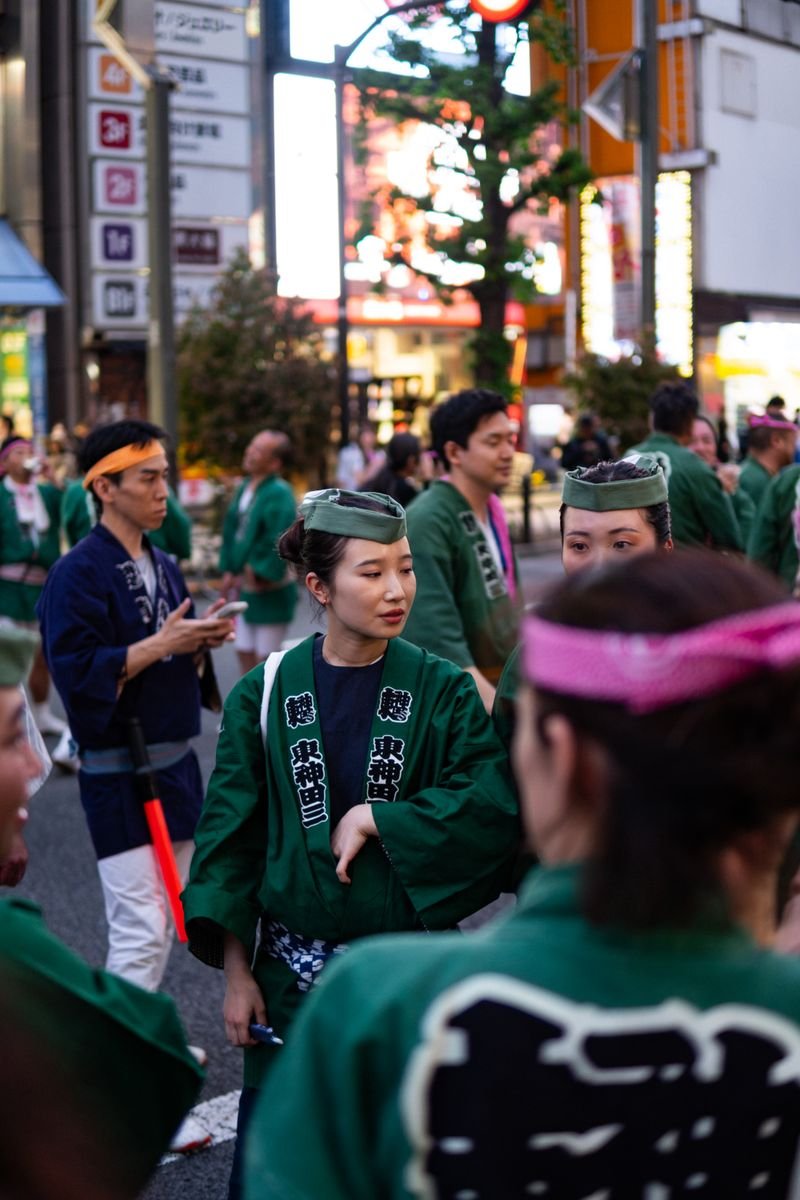
Standing on Kanto Odori
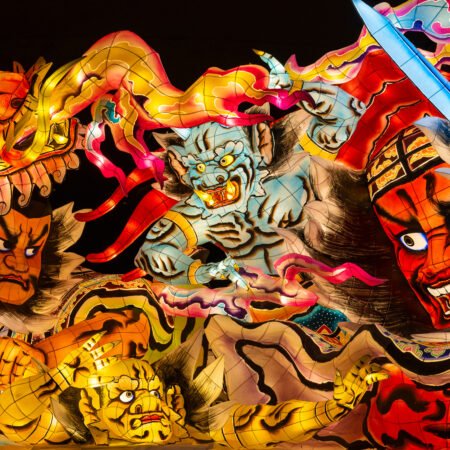
The main evening performances happen on Kanto Odori, one of Akita City’s central streets, which gets closed off and lined with spectators for the duration of the festival. The festival runs for four nights every year, from August 3rd to August 6th, and it’s considered one of the great summer festivals of the Tohoku region, mentioned in the same breath as Aomori’s Nebuta Matsuri and Sendai’s Tanabata Matsuri. If you’re doing a Tohoku summer festival circuit — and a lot of people do, since the three cities aren’t far apart by train — Kanto Matsuri tends to be the one people describe as the most purely physical. Nebuta has its enormous illuminated floats and Tanabata has its sweeping paper streamers, but Kanto is just people, bamboo, and gravity, which is maybe why it felt so immediate to me.
Daytime demonstrations are worth building into your schedule too — they let you get close enough to see the bamboo joints and counterweights, which helped me understand how much footwork actually goes into something that looks, from a distance, like simple balance.
If You’re Planning to Go
Akita City is reachable by the Akita Shinkansen from Tokyo in a little under four hours, so it’s a realistic extension if you’re already routing through Tohoku, though I’d recommend staying the night since the best viewing is after dark. Evening performances run for a couple of hours and the street fills in early, so get to Kanto Odori well before the drums start. Bring cash for the yatai food stalls that line the side streets — I ate my way through more grilled squid and Akita-style kiritanpo skewers than I probably should admit — and dress for August humidity, because Tohoku summers are no joke even this far north. If you want to try lifting a kanto yourself, some events let visitors attempt it with a smaller practice pole under supervision, and I will tell you from experience that it is much, much heavier than it looks.
What stayed with me longest wasn’t the spectacle, honestly — it was the quiet pride in it. Nobody was performing for tourists. The carriers were mostly neighborhood groups who’d been practicing all year, doing something their grandparents’ grandparents might have done on the same street, for the same reason: to shake off the summer haze and ask, in the most literal and physical way possible, for a good harvest. I flew home still feeling like I’d borrowed a little bit of that focus for myself.
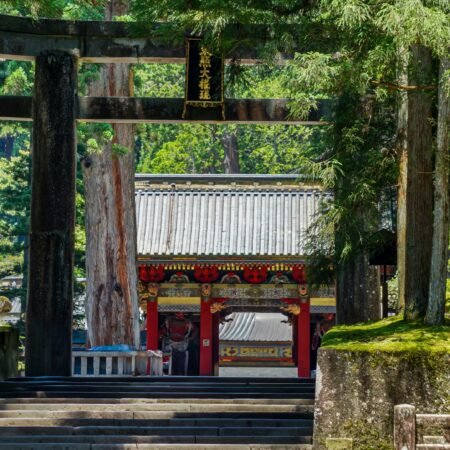
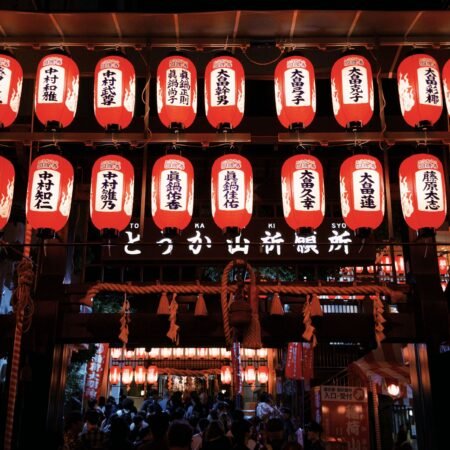
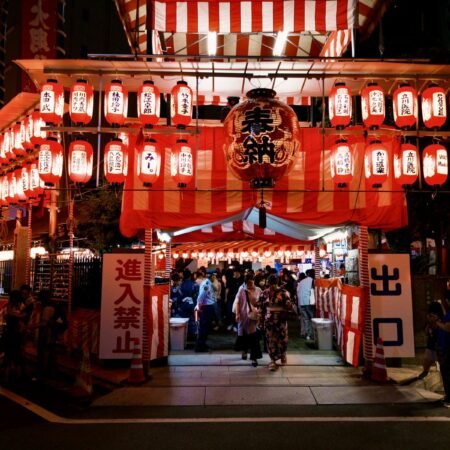
A quick note on photos: some of the images here are stock photos I’ve used to set the mood — they may not be the exact spot or moment I’m describing, just close in spirit.
コメント