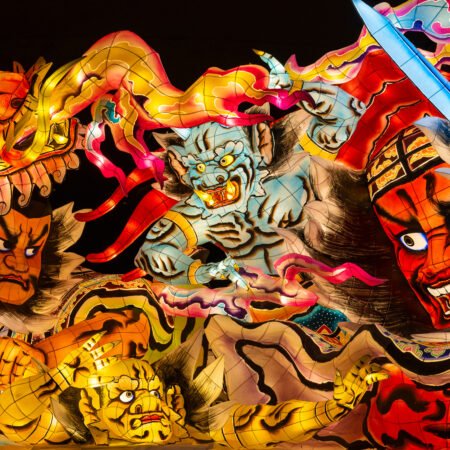







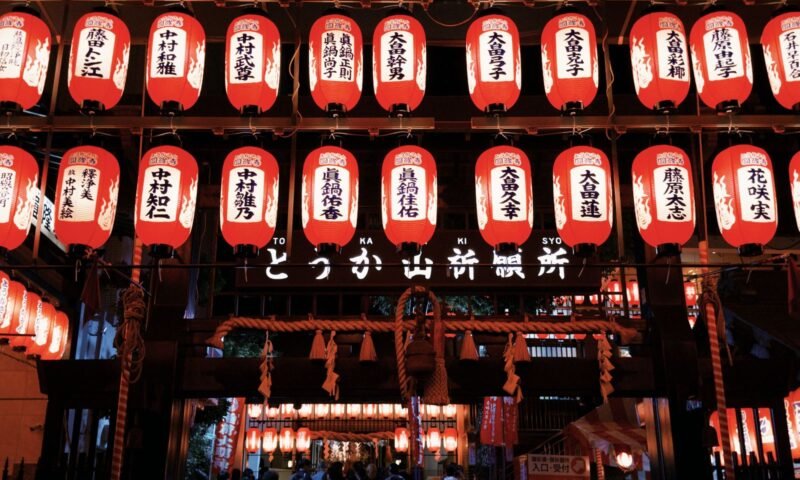
I heard Nebuta Matsuri before I saw it. I’d just gotten off the train in Aomori, dragging a suitcase through the muggy early-August air, when a wall of taiko drums rolled down the street toward me — not a recording, not a speaker, just dozens of drummers hitting something ancient in my chest at the same time. I turned a corner and there it was: a float three stories tall, glowing gold and red from the inside like a paper lantern the size of a house, with the snarling face of a warrior god staring down at a crowd of a hundred thousand people. I’ve lived in Japan for five years now and gone to more matsuri than I can count, but nothing had prepared me for the sheer scale of this one.
If you haven’t heard of it, Nebuta Matsuri is Aomori City’s biggest week of the year, and honestly one of the most visually stunning festivals in the entire country. I went in expecting a nice regional event. I left with sore feet, a hoarse voice, and a genuine obsession.
What Exactly Is Nebuta Matsuri?
Every year from August 2nd to 7th, the streets of Aomori City fill with nebuta — enormous illuminated floats built from washi paper stretched over hand-bent wire frames, lit from within by hundreds of LED bulbs (they used to be candles, which sounds both beautiful and terrifying). Each one depicts a scene from kabuki theater, Japanese mythology, or historical legend: fierce-eyed samurai mid-battle, dragons coiled around gods, demons frozen in a snarl. Some of the biggest floats stretch nine meters wide and weigh around four tons, and local neighborhood associations and companies spend the better part of a year designing and building them, guided by a small number of master nebuta artists whose names are minor celebrities in this city.
The festival’s roots reportedly trace back to a Tanabata-related purification custom called nemuri nagashi, or “sleep flushing” — sending drowsiness and the exhaustion of summer farm work floating away on a river before the harvest. Over the centuries that ritual merged with lantern processions and grew into the spectacle it is today. Whatever the exact history, the effect now is somewhere between a parade, a moving art exhibition, and a block party that swallows the entire downtown.
Becoming a Haneto for a Night
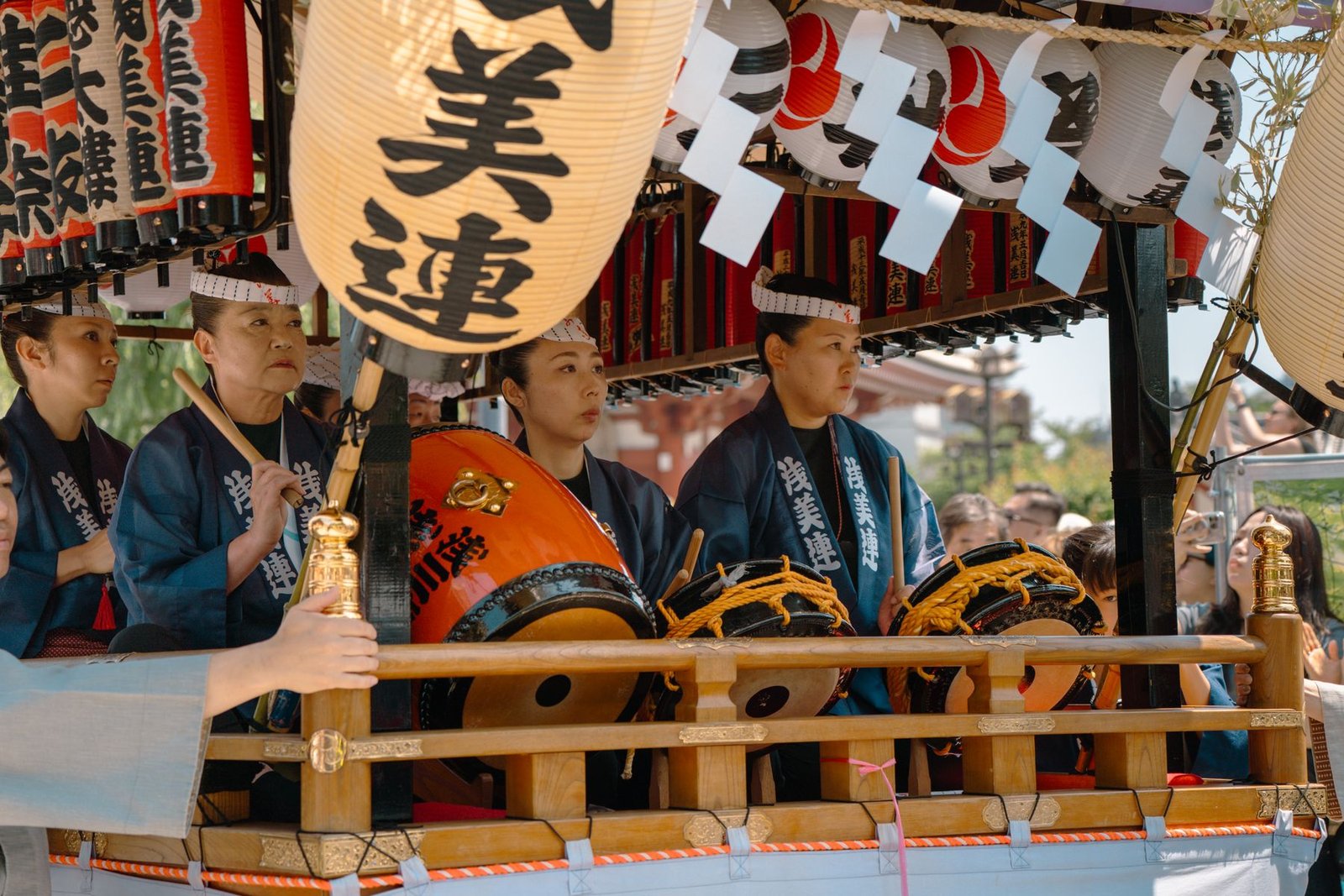
Here’s the part that surprised me most: you don’t just watch Nebuta Matsuri, you can dance in it. The dancers who trot alongside each float are called haneto, and anyone — tourists absolutely included — can join in if you’re wearing the official haneto costume. I rented mine from one of the shops near ASPAM (the pyramid-shaped tourism building by the bay) for a couple thousand yen: a bright floral yukata-style top, a woven straw hat jingling with bells, and little bells tied around my ankles that made me feel simultaneously ridiculous and thrilled.
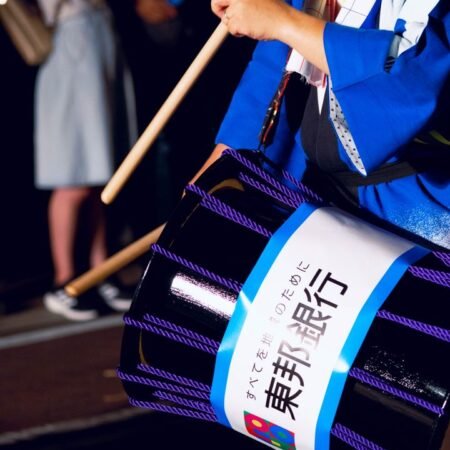
The dance itself is simple once you catch the rhythm — a springy hop-and-turn done to the chant of “Rasse-ra, rasse-ra!” shouted by the crowd over flutes, hand cymbals, and that relentless taiko beat. I fumbled through the first ten minutes watching the woman next to me, a total stranger who cheerfully corrected my footwork without a word of shared language, and by the end I was shouting the chant at full volume with everyone else. There’s something about moving through the street at night, lit up by a giant glowing dragon float, surrounded by strangers doing the same goofy hop, that breaks down whatever self-consciousness you walked in with.
Practical Tips for Visiting
If you want to go, a little planning goes a long way, because this festival draws around three million visitors over its six days. The evening parades run August 2nd through 6th, usually from around 7pm, with the floats and haneto groups looping through a set course in the city center. August 7th flips the schedule: the floats parade in daylight for the final time, then several of the award-winning nebuta are loaded onto boats for the Umi-Nebuta, a procession across Aomori Bay, capped off with a large fireworks display over the water. That last night is, without question, the one to plan your trip around if you can only make one.
You can watch for free by standing along the parade route, but the good spots fill up hours ahead, so I’d recommend either arriving early to stake out a curbside spot or booking a paid seat in the numbered viewing stands (these go on sale a few months in advance and are worth it if you want to actually sit down). Hotels in Aomori City book out fast for festival week, so reserve well ahead or consider staying in nearby Hachinohe or even Aomori’s neighboring towns and taking a short train in.
If your visit doesn’t line up with early August, don’t skip Aomori entirely — the Nebuta Warasse museum near the waterfront displays several full-size floats from past years year-round, along with recordings of the taiko and haneto performances, so you can get a real sense of the scale even in the off-season. Aomori City itself is easy to reach via the Tohoku and Hokkaido Shinkansen to Shin-Aomori Station, about three hours from Tokyo.
Final Thoughts
I went to Nebuta Matsuri expecting a nice photo op and left with genuinely aching legs, a permanently louder appreciation for taiko drumming, and a new tradition I’m already planning to repeat. There’s a specific kind of joy in dancing down a street at night next to a glowing three-story dragon with a few hundred thousand strangers, and I don’t think a photo or a video really gets it across. You kind of have to go shout “rasse-ra” yourself.

コメント