








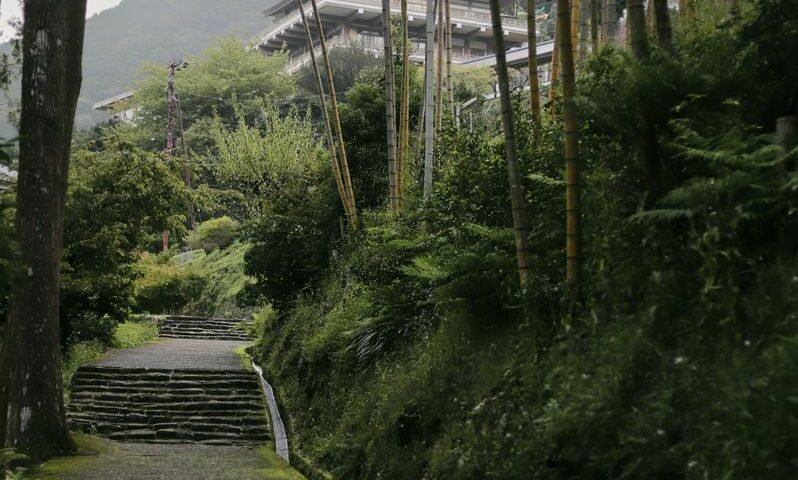
I go to Mount Takao more often than almost anywhere else I write about, and not because it’s haunted in the way a sealed tunnel or an abandoned hotel is haunted. It’s the opposite kind of place: a working temple, a cable car full of school trips, a soba shop at the summit selling tororo noodles to red-faced hikers. And yet every local I’ve ever talked to there, from a shopkeeper to a monk sweeping the approach to Yakuoin Temple, will tell you the same thing without blinking: this mountain belongs to the tengu. Not belonged. Belongs, present tense.
I’d walked past the two carved guardians outside the Izuna Gongen Hall a dozen times before I actually stopped to look at them properly. One is small, almost boyish, with a crow-like beak instead of a nose. The other is older and much larger, with the oversized nose everyone pictures when they hear the word tengu. A temple volunteer once explained it to me simply: the beaked one is a tengu still in training, the big-nosed one is a tengu who has finished his training. Mount Takao, in other words, isn’t just visited by tengu. It’s where they go to graduate.
A Mountain Built on a Vision
Yakuoin’s official history goes back to 744, when the monk Gyoki — the same figure associated with the Great Buddha at Nara’s Todai-ji — is said to have founded a temple here under the reign of Emperor Shomu. For centuries it was a straightforward Yakushi Nyorai worship site. The tengu connection comes later, and the story behind it is the kind of thing I can never quite decide whether to call history or legend, because it’s told as both.
In the late 1300s, the priest Shungen Daitoku arrived from Mount Daigo to restore the temple, which had fallen into decline. According to the temple’s own account, Shungen performed a demanding goma fire ritual to the deity Fudo Myo-o, burning some eight thousand ritual sticks, and in the aftermath had a vision of Izuna Daigongen — a composite protective deity whose cult had originated on Mount Izuna in present-day Nagano Prefecture during the Heian period. Izuna Daigongen is usually depicted riding a white fox, with a face and bearing close to a tengu’s, and tengu are held to be part of that deity’s retinue. From Shungen’s vision onward, Takao became known as a tengu mountain, and Sengoku-period warlords — Takeda Shingen and Uesugi Kenshin among them, by temple record — are said to have venerated Izuna Daigongen before battle. The Tokugawa shogunate later patronized the temple too, and Yakuoin grew into one of the three head temples of the Shingon sect’s Chisan school.
The Cedar That Changed Its Mind
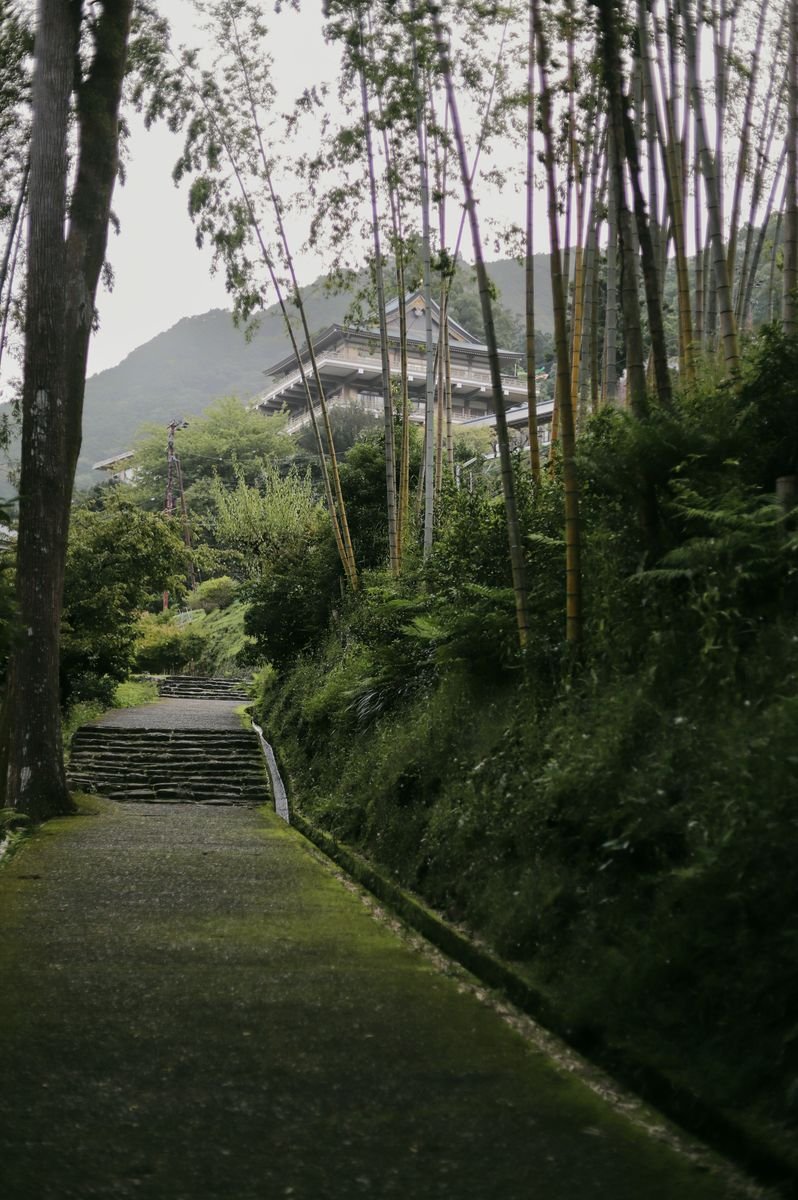
A short walk from the main hall stands a tree the temple itself treats as a minor shrine: the Tako-sugi, the “octopus cedar.” Its exposed roots coil and loop across the ground in a way that does, unmistakably, look like tentacles.
The story — and I’ve heard it told two slightly different ways by two different guides, which says something honest about how folklore actually survives — goes roughly like this. When the path up to Yakuoin was first being cut, this cedar’s roots grew straight across where the trail needed to go. In one version, the tengu who were building the path planned to rip the roots out overnight; by morning, the roots had curled themselves up and out of the way on their own, as if the tree had decided to behave rather than be removed by force. In the version I’ve heard more often, workers had already decided to cut the tree down, and it was the tengu’s intervention — not the tree’s own choice — that pulled the roots clear overnight and spared it. Either way, the result was treated as a small miracle, and the tree became a symbol of “opening a path.”
It may be more than 450 years old, though I’ll say plainly that figure isn’t independently verifiable and the temple presents it as tradition rather than fact. For years, visitors touched the roots directly for luck, until a protective fence went up in 2007. There’s a stone marker nearby now, carved in the shape of the octopus’s head, which you’re invited to touch instead — a small, practical compromise between reverence and foot traffic that I rather admire.
Laughter With No One Laughing
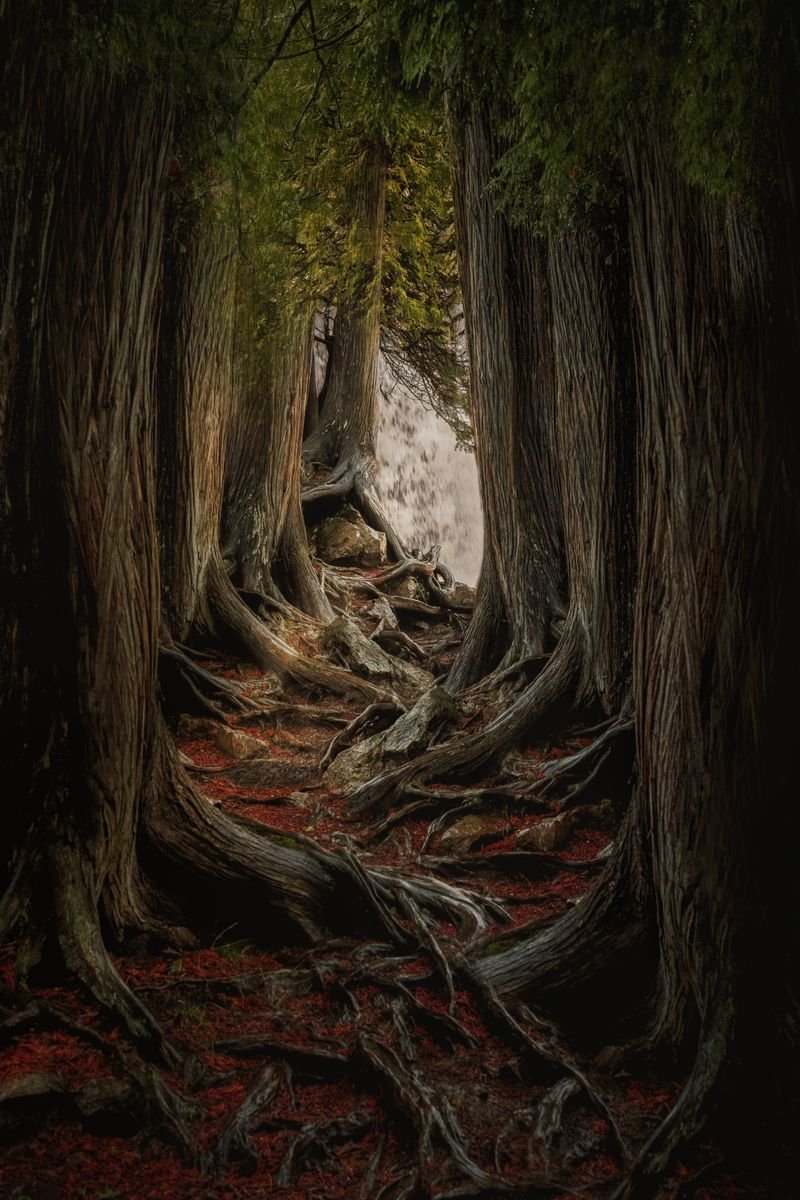
The ghost stories that cling to Takao are quieter than the ones I usually write about. There’s no single tragedy, no execution ground, no named victim. What gets passed around instead are two small, specific phenomena that hikers and woodcutters have apparently reported for generations: the “laughing tengu,” a burst of group laughter from somewhere in the trees with no one in sight to be laughing, and the “toppling tengu,” the unmistakable crash of a large tree falling nearby — followed, the next morning, by every tree still standing exactly where it was. I want to be careful here and say plainly that these are told as denshō, local sayings passed down rather than documented events, and I’m not aware of any serious attempt to verify them. But I’ll admit that the first time something that might have been laughter drifted across a quiet stretch of trail near dusk, I didn’t linger to investigate the acoustics.
Fire on the Mountain
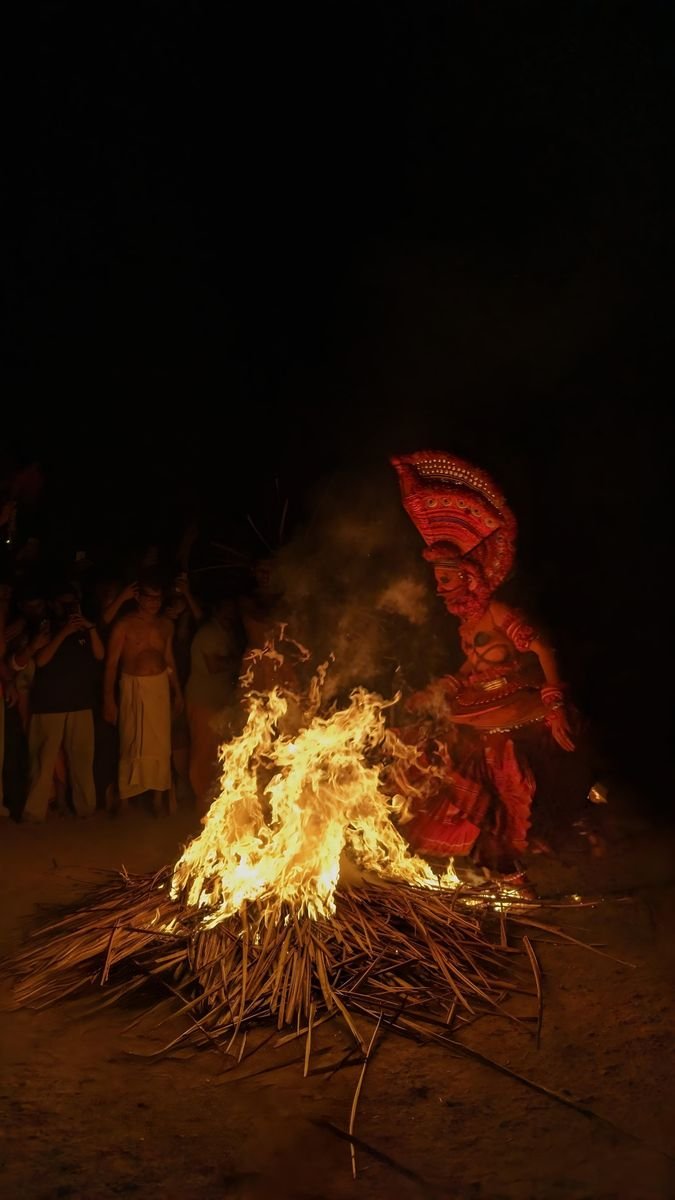
Yakuoin’s shugendo roots — the tradition of mountain ascetic practice that Shungen’s restoration revived — are still visible once a year, when yamabushi practitioners hold a fire-walking ceremony at the base of the mountain, traditionally on the second Sunday of March. After a ritual sword dance re-enacting a hero defeating a demon, a large bonfire of cypress branches is lit and raked into a glowing path once it has burned down to embers. The lead yamabushi crosses first after a purification with boiling water, and — this is the part that always surprises first-time visitors — ordinary members of the public are then invited to cross the embers themselves, barefoot, shoes in hand. I haven’t done it. I’ve stood in the queue and watched enough people my age walk across glowing coals with a look of mild surprise on their faces to suspect it’s less dramatic than it sounds, but it’s still one of the more vivid pieces of living shugendo you can watch this close to central Tokyo.
Visiting Respectfully
Takao is one of the most accessible “haunted” places I cover, which is exactly why it’s worth visiting with some care. Keep to the marked trails and the cable car or chairlift route rather than cutting across the mountain’s many unofficial paths — it’s a working forest as much as a sacred one. If you’re there for the March fire festival, treat the roped-off ember path as ritual space, not a photo backdrop, and queue as the yamabushi direct you. Don’t go looking for the tengu’s roots to touch directly; use the stone marker provided. And if you do hear laughter with no obvious source on a quiet stretch near dusk, I’d suggest doing what I did: nod to it, and keep walking.
Note: images accompanying this article are illustrative stock photos and do not necessarily show the specific site discussed.

コメント