






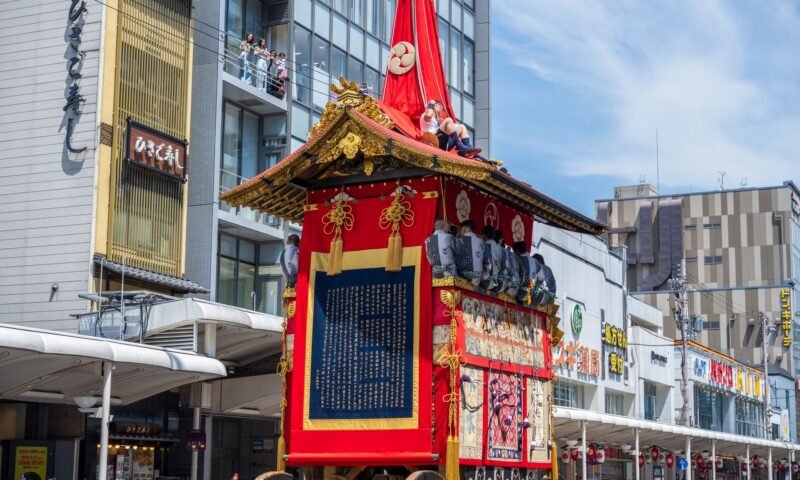
I almost missed the whole thing because I was looking in the wrong direction. I’d planted myself outside Nagahama Hachimangu Shrine expecting a parade to come marching past, the way floats do at most of the festivals I’ve covered — big, loud, moving. Instead, a hush fell over the crowd packed into the shrine grounds, a narrator’s voice cracked open into song from somewhere above me, and I realized the “stage” was the float itself, and the star was a boy who couldn’t have been older than seven, in full kabuki makeup, about to perform a role some of Japan’s most famous actors have spent entire careers mastering.
That’s the Nagahama Hikiyama Matsuri in a nutshell: a festival where children do the heavy lifting, artistically speaking, while grown men do the actual heavy lifting of hauling multi-ton wooden floats through the streets of this small city in Shiga Prefecture, on the shore of Lake Biwa. I’d heard about it from a friend in Kyoto who called it “the one with the kid kabuki” and left it at that. I had no idea what I was in for.
A Shrine, a Warlord, and Three Centuries of Floats
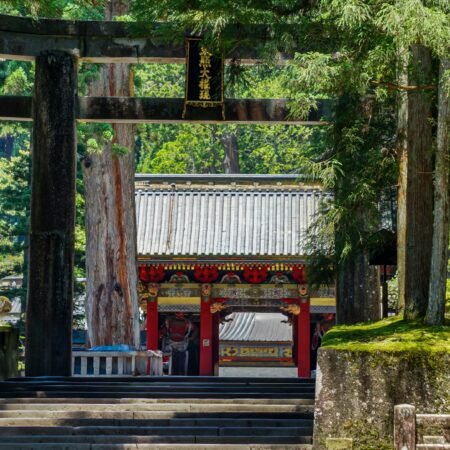
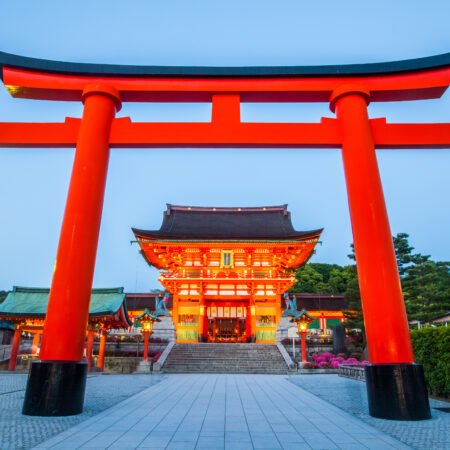
Nagahama Hachimangu Shrine itself goes back to 1069, founded by Minamoto no Yoshiie, but by the 16th century it had been battered by civil war. Enter Toyotomi Hideyoshi, who was lord of Nagahama Castle at the time. He rebuilt the shrine and used his own samurai retainers to restart its annual festival procession — the seed that eventually grew into the float festival I was standing in the middle of. Local legend adds a sweeter detail: that Hideyoshi handed out gold to the townspeople to celebrate the birth of his son, and some of that money went toward building the first floats. Like a lot of good festival origin stories, it’s part documented history and part story people like to tell each other, and honestly I love that it’s both.
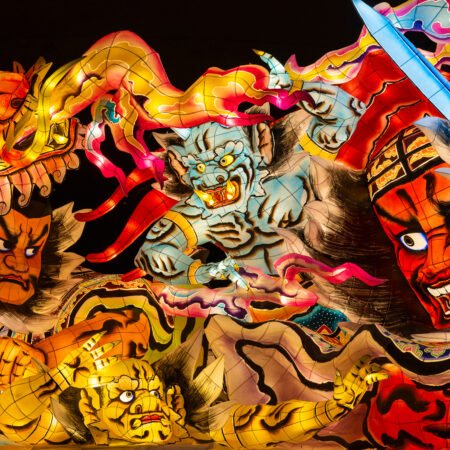
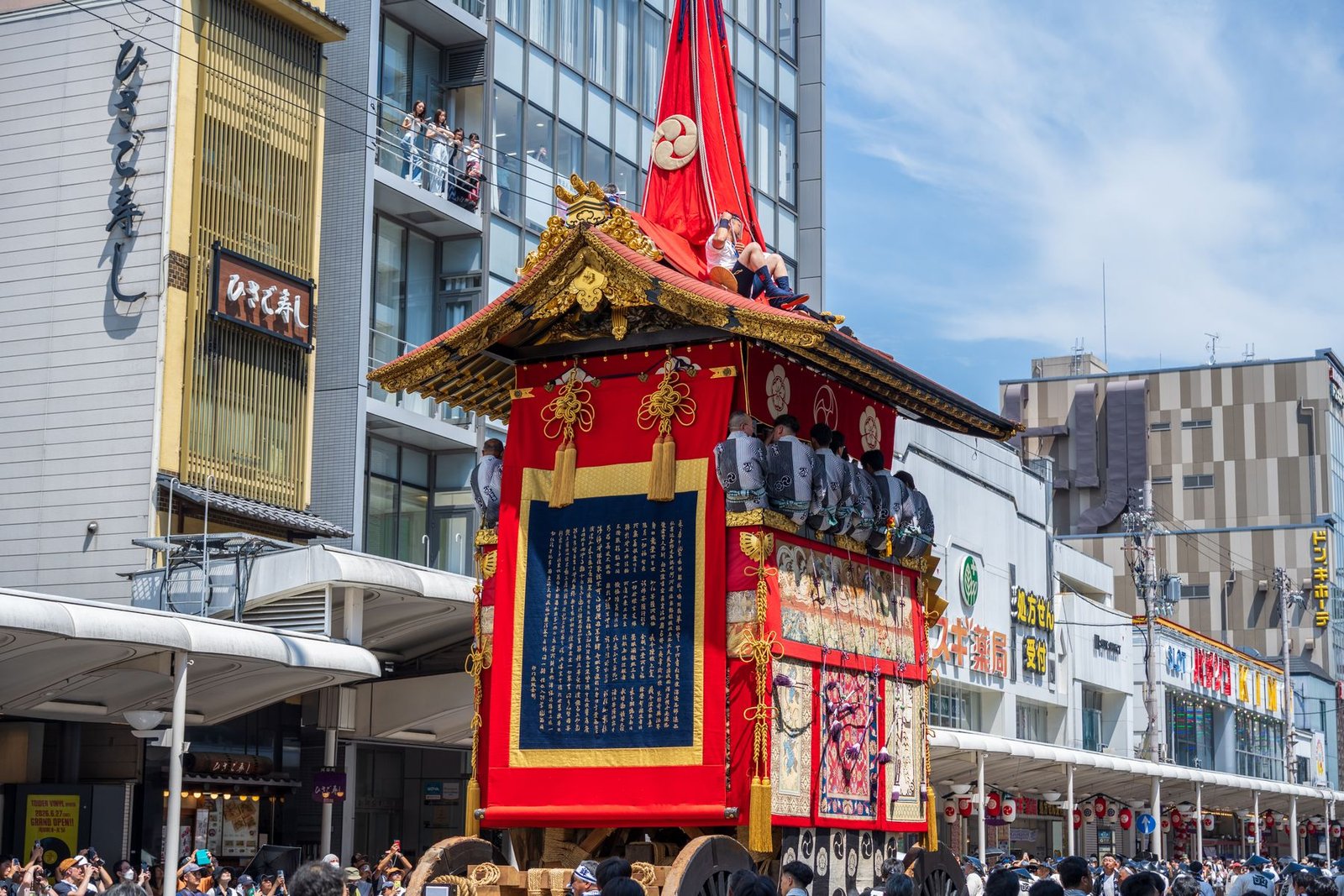
Most of the actual floats — called hikiyama — were built later, mostly in the 18th and 19th centuries, as the neighborhoods of Nagahama competed to outdo one another in craftsmanship. There are twelve hikiyama with kabuki stages built right into them, plus one extra float called Naginata-yama that has no stage and functions more like a ceremonial guardian leading the way. Here’s the part that made me want to come back immediately: the twelve performing floats are split into three groups of four, and only one group performs each year on a rotating basis. See the full lineup, and you’re committing to three separate Aprils. I’d apparently caught one rotation out of three, and I already knew it wasn’t going to be my last.
Five-Year-Olds Playing Roles That Would Intimidate Adults
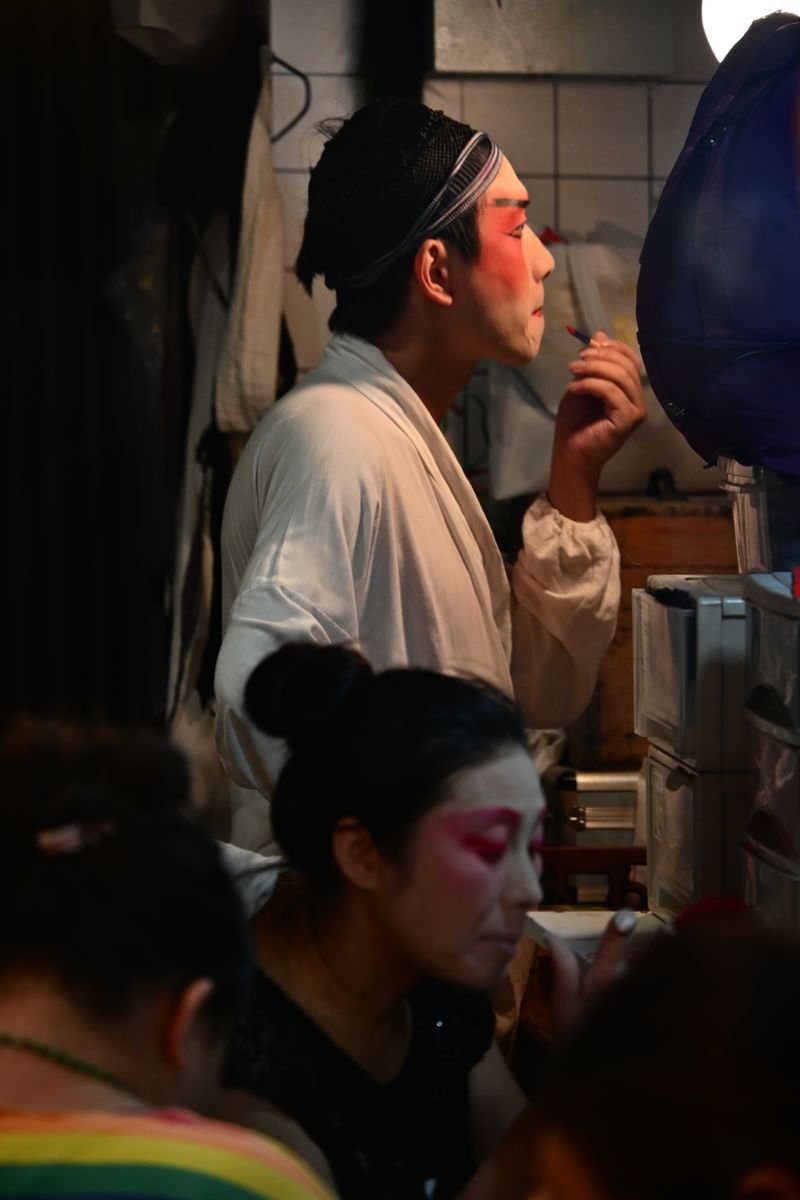
The thing that actually stopped me in my tracks wasn’t the floats, gorgeous as they are with their lacquer and gold fittings — it was the performers. The boys playing the kabuki roles are somewhere between five and twelve years old, and they are not doing a cute children’s-hour version of the plays. They’re performing full, serious kabuki scenes, complete with the stylized vocal delivery, the dramatic poses, the whole theatrical machinery, pulled off by kids who in a lot of cases can barely read the programs listing their own character names.
None of this happens by accident. Each float’s production is overseen by three specialists known as the san’yaku: a choreographer (often a professional kabuki actor brought in for the role), a tayu narrator who sings and speaks the story, and a shamisen player providing the music. Since 1990, the Nagahama Hikiyama Cultural Association has been training local residents to become tayu narrators and shamisen players themselves, so the knowledge doesn’t have to be imported from Tokyo or Kyoto every single year — it’s becoming something the town holds onto on its own. I watched one rehearsal-adjacent moment where a boy who’d clearly just finished having his face painted was being walked through his lines one more time by an adult crouched at his eye level, completely patient, like this was the most normal thing in the world. In Nagahama, it is.
My Day Following the Floats Through Town
The festival runs April 13 through 16 every year, but April 15 is the main day, known locally as Honbi, and that’s the one I built my schedule around. The floats had already been assigned their order by a lot drawing the day before, which apparently matters enormously to the neighborhoods involved — I overheard more than one animated conversation about which float drew which number.
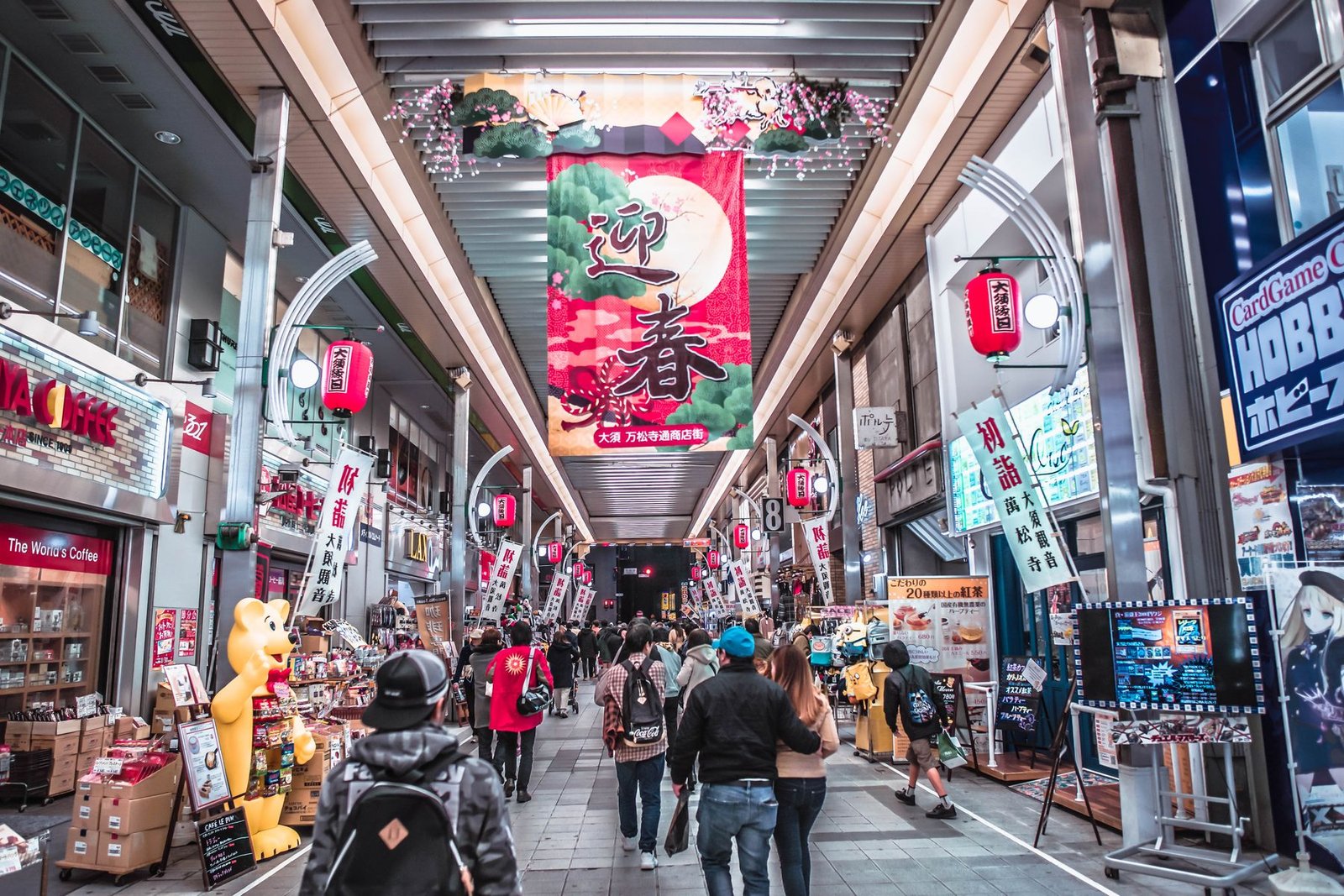
On the main day, things start early: an actor procession around 8:30 in the morning, followed by a sword-bearing procession, and then an opening dance called Okina Maneki just after nine. From there, the performances themselves move around the city over the course of the day — first at Nagahama Hachimangu Shrine itself, then along the Otemon-dori shopping arcade in the early afternoon, and finally at the Otabisho in the early evening, with a formal departure ceremony closing things out around eight at night. I spent my afternoon camped out along Otemon-dori, which turned out to be the right call — you get the floats, the crowds, the smell of festival food, and a straight shot at the next izakaya for a sit-down and a plate of yakisaba somen, Shiga’s slightly surprising specialty of grilled mackerel served over noodles, when your feet give out.
The whole thing was recognized by UNESCO in December 2016 as part of a larger group listing, “Yama, Hoko, Yatai, float festivals in Japan,” which covers more than thirty float traditions across the country. Standing on Otemon-dori with everyone pressed shoulder to shoulder watching an eight-year-old deliver lines with more composure than I have in most work meetings, that recognition made total sense to me.
If You Go
Nagahama is reached easily by train on the JR Hokuriku Line, and the festival sites — the shrine, the arcade, the Otabisho — are all walkable from JR Nagahama Station, making it a genuinely easy day trip from Kyoto, Nagoya, or Fukui. If you can’t make it on April 15 itself, don’t panic: the floats also perform shorter neighborhood kabuki on April 13, 14, and 16, so there’s more than one chance to catch something. Just know you won’t see all twelve floats in a single visit no matter what day you pick, since only four perform in any given year. Most of the kabuki viewing is standing room, so wear shoes you can stand in for a while, and if the forecast looks iffy, bring a proper raincoat rather than an umbrella — the crowds along Otemon-dori get tight enough that an open umbrella becomes everyone’s problem. Outside of festival season, you can still see a couple of the hikiyama floats up close at the Nagahama Hikiyama Museum, a short walk from the station, if your trip doesn’t line up with April.
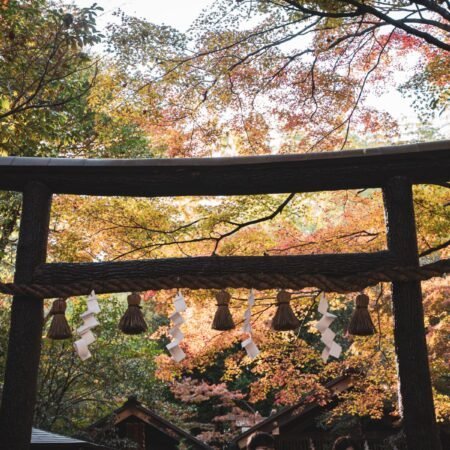
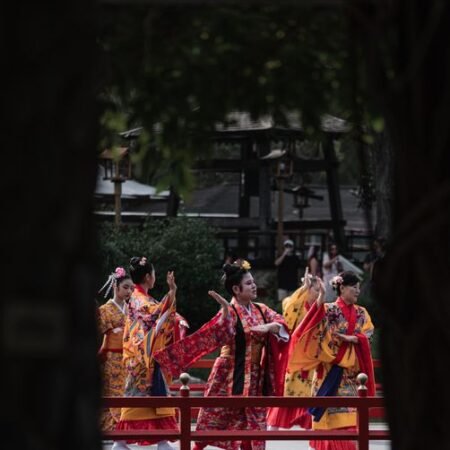
A quick note on photos: some of the images here are stock photos I’ve used to set the mood — they may not be the exact spot or moment I’m describing, just close in spirit.
コメント