





I almost didn’t go. A coworker at the English conversation school I used to teach at kept telling me, “Julia, you have to see Korankei before the leaves drop,” and I kept nodding and doing absolutely nothing about it, the way you do with the famous thing in your own backyard. Five years in Japan and I’d seen Kyoto’s temples turn gold on postcards a dozen times, but I’d never actually stood under a tunnel of four thousand maple trees. So one gray Saturday in November, I got on a train out of Nagoya with zero expectations and came home having to sit down for a minute before I could even text anyone about it.
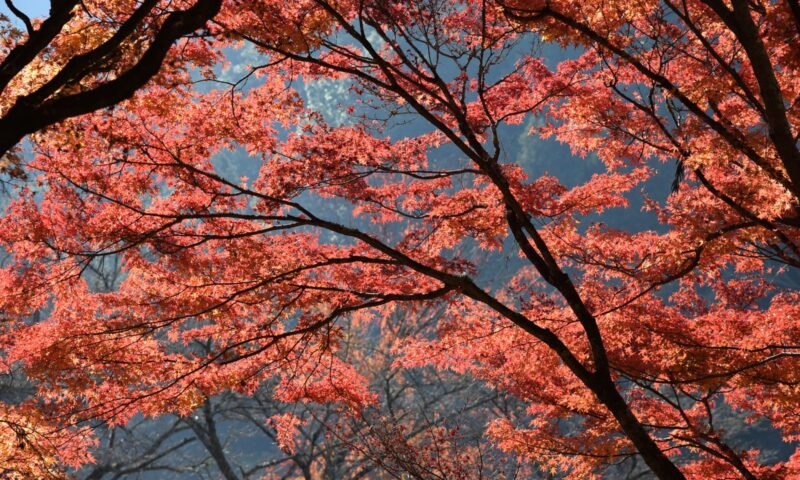
Korankei is a gorge along the Tomoe River in Asuke, an old mountain town that got folded into Toyota City years ago but still feels like its own world. For one month every November, the whole valley hosts the Korankei Momiji Matsuri, and the maples along the water don’t just turn red — they turn the kind of red that makes total strangers stop mid-sentence and just point.
A Monk, a War Correspondent, and Four Thousand Maples
The thing that got me, once I started asking around, was how deliberate all of this was. Nobody stumbled onto a pretty gorge and left it alone. Back in 1634, a monk named Sanei Honshu, attached to the old temple of Kojakuji at the top of the valley, planted maple and cedar seedlings along the approach to the temple while chanting sutras as he worked. Kojakuji itself goes back even further, to 1427, built on what had been the residence of the local Asuke clan. So the “wild” forest I was wandering through was, in a sense, nearly four hundred years of patient planting.
The gorge didn’t even have its current name until 1930, and the way it got one is such a specific, almost bureaucratic little story that I love it. The president of the Osaka Mainichi newspaper, a man named Motoyama, visited the valley and decided it needed a proper name worthy of the view. He pulled the character for “fragrance” (kou) from Kojakuji’s own name, and paired it with the character for “mountain storm” or cool rushing air (ran), for the breeze that comes down off the hills over the river. Korankei: fragrance and wind, all because one newspaper executive thought the place deserved better than whatever the locals had been calling it.
These days there are something like eleven different maple varieties growing along both banks, from the river up toward Mount Iimori — iroha-kaede, yama-momiji, oo-momiji — which is part of why the color doesn’t arrive all at once. You get this slow build through November of orange bleeding into scarlet bleeding into a deep almost-black red, depending on which tree and which week you catch it.
The Bridge Everyone Photographs
If Korankei has one single image that represents it, it’s Taigetsukyo, the bridge where the Tomoe River meets the smaller Asuke River. It only got its name in 1953, after the war, but it’s become the unofficial symbol of the whole gorge, and I understood why within about thirty seconds of reaching it. You stand on the bridge, or better, down on the riverbank looking back at it, and the maples frame it on both sides like the valley built itself around this one crossing point on purpose.
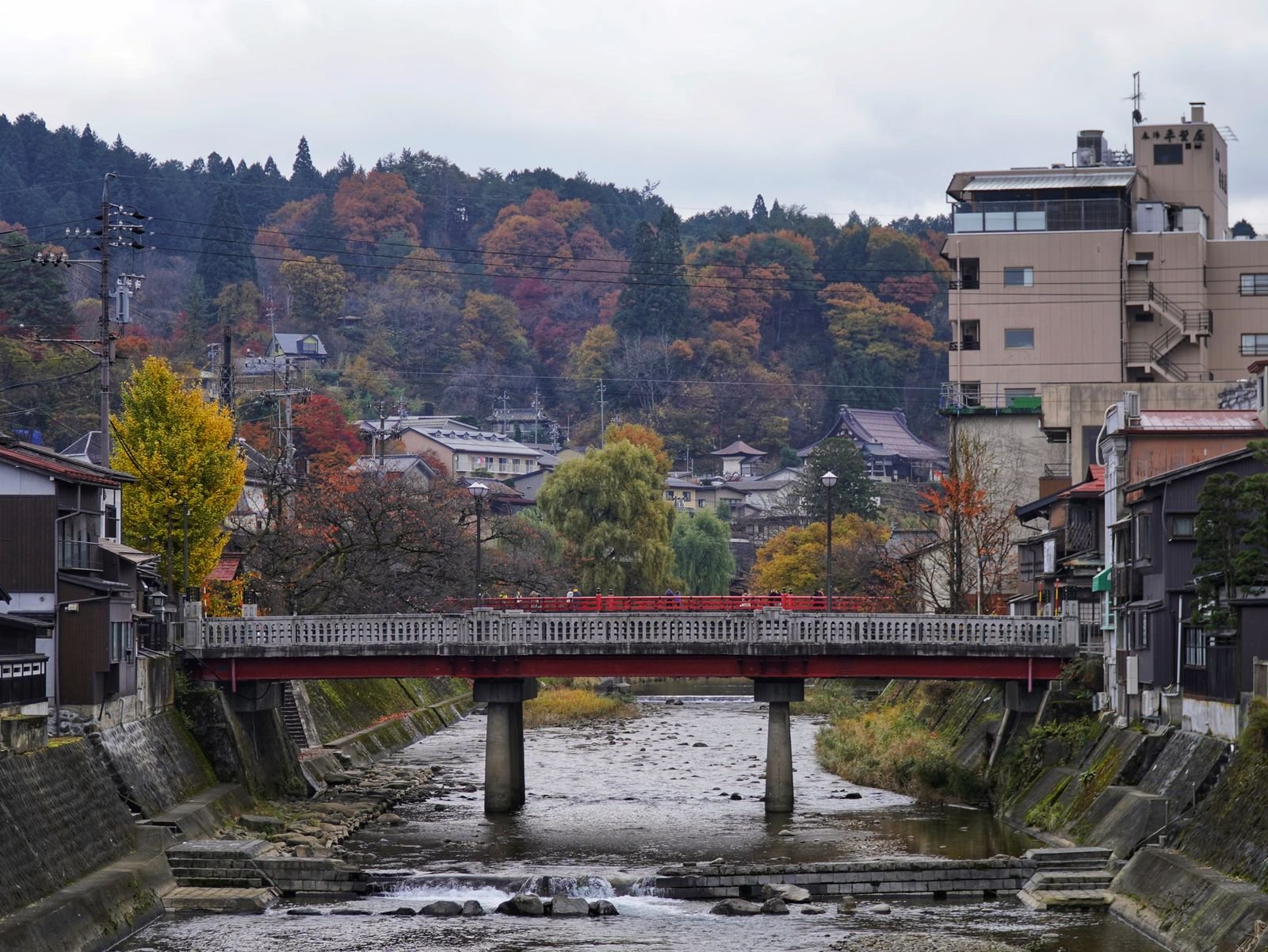
During the festival month, the whole stretch of forest along the river gets lit up every single night, from sunset until nine. I’d gone in the late afternoon not really planning to stay, and then just… didn’t leave, because watching the color shift from daylight-red to this glowing lantern-red as the light dropped was not something I was willing to walk away from. The path along the river has grown in so thick over the decades that you genuinely walk through a ceiling of maple branches for long stretches, and at night, lit from below, it stops looking like a forest and starts looking like something out of a painting somebody oversaturated on purpose.
Beyond the Leaves: Asuke’s Living History
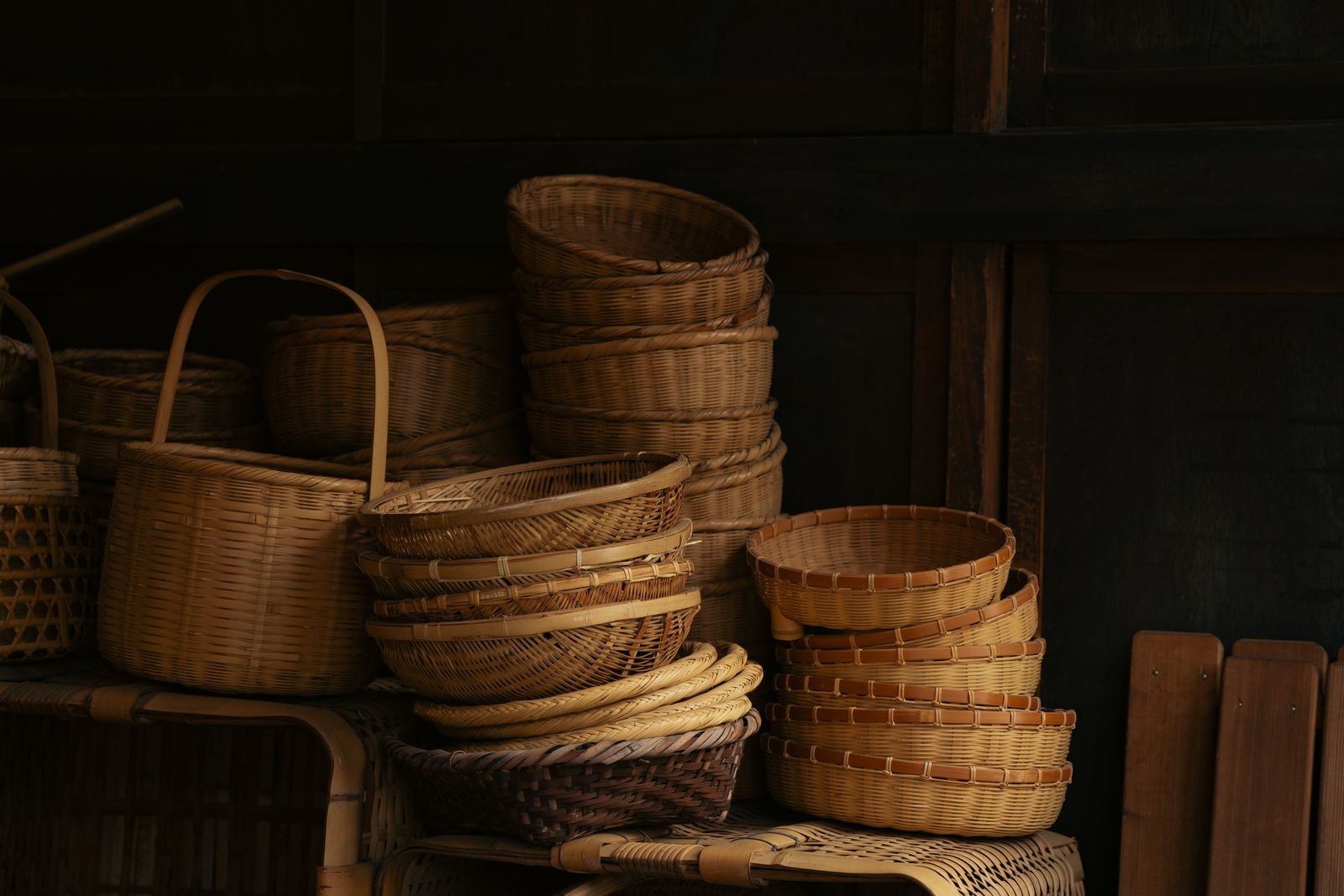
I’ll admit I went for the trees and almost skipped the rest, which would have been a mistake. A short walk from the gorge is Asuke Yashiki, a living history museum set up in 1980 inside what’s built to resemble a wealthy farming family’s old estate. The whole point of the place is keeping old mountain-village crafts alive, and when I visited there were artisans actually working, not just demonstrating for show: someone weaving at a loom, someone else bent over straw-rope work, a guy who makes traditional oiled-paper umbrellas by hand, a papermaker, a charcoal-maker, even a blacksmith with a little forge going. For three hundred yen to get in, I easily lost an hour there just watching people work with their hands in ways that have mostly disappeared everywhere else.
Asuke’s old town itself is protected as an important traditional townscape, so wandering back toward the station you pass merchant houses standing since well before Toyota the city — let alone Toyota the car company — existed. There’s also Asuke Castle on a hill to the east if you want a wider view of the valley, though I was too busy eating to make it that far — gohei mochi, grilled rice cakes brushed with a sweet-savory miso glaze, is a local specialty around Asuke and exactly what you want in your hand while walking around in the cold.
Getting There (and When)
From Nagoya Station, take the Higashiyama subway line to Fushimi, switch to the Tsurumai line heading toward Toyotashi (not Akaike — that train stops short), and get off at Josui Station. From there, hop on a Toyota Oiden bus heading toward Sanage or Asuke, which takes roughly an hour and drops you right at the Korankei bus stop. If you’re driving, it’s about fifteen minutes from Chikaraishi Interchange via the Sanage Green Road and Route 153, or about twenty minutes from the Toyota-Kanpachi Interchange on the Tokai-Kanjo Expressway, also via Route 153.
Walking into the gorge itself is free, which surprised me given how packed it gets, but parking is not — around five hundred yen normally, climbing to a thousand yen during the November crowds, across roughly 670 spaces. Go on a weekday or get there early if you can; by early afternoon on the Saturday I visited, the road into Asuke had slowed to the kind of crawl that makes you wish you’d taken the bus.
I came to Korankei expecting a nice walk and a few good photos, and left thinking about a monk planting cedar saplings four hundred years ago without any idea that strangers from the other side of the planet would eventually ride three different trains just to stand under what he grew. That’s sort of the whole thing about living here that still gets me, five years in — how much of what feels effortlessly beautiful turns out to have someone, centuries back, who planted it on purpose.
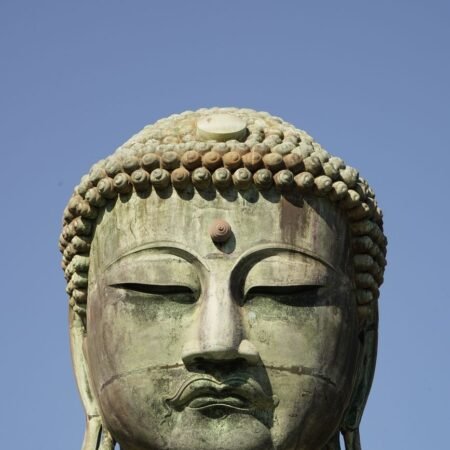
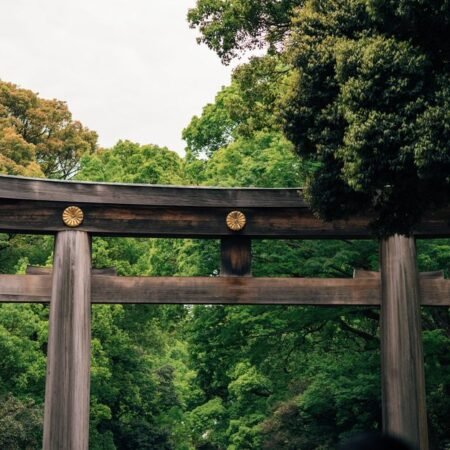
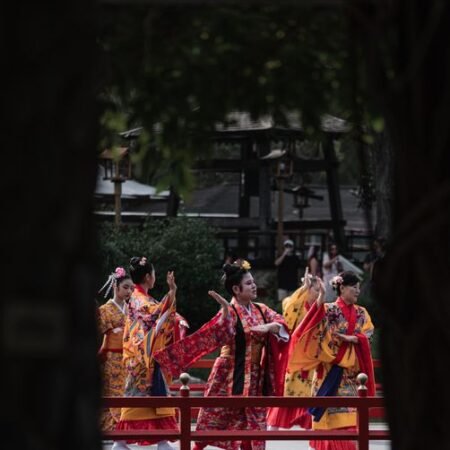
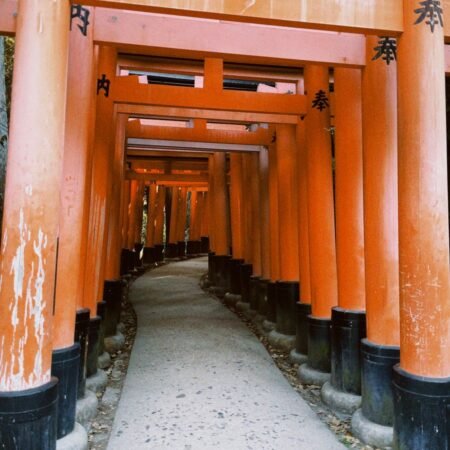
A quick note on photos: some of the images here are stock photos I’ve used to set the mood — they may not be the exact spot or moment I’m describing, just close in spirit.
コメント