





I almost didn’t make the last express bus out of Tokyo Station, and in hindsight that would have been fitting, because the whole reason I was going to Sawara in the first place was to watch a town that refuses to be rushed. I’d lived in Japan for five years at that point and somehow never made it out to this little corner of Chiba, tucked along a slow canal an hour or so past Narita. A friend who grew up near there kept telling me, “it’s like stepping into an Edo-period woodblock print, except the print is on fire with lanterns and there are six-meter wooden gods parading down the street.” I didn’t fully believe her until I was standing on the Ono River’s edge myself, autumn air sharp enough to need a jacket, watching the whole scene light up.
What I’d stumbled into was the Sawara Grand Festival, or Sawara no Taisai, one of the oldest and, locals will tell you proudly, one of the most important float festivals in the Kanto region. It happens twice a year — a summer festival centered on Yasaka Shrine in July, and the autumn one I caught, built around Suwa Shrine in October, as a thank-you to the harvest gods. Both halves trace back roughly three hundred years, and between them the town fields about two dozen floats, with somewhere around fourteen coming out for the autumn round alone. That’s a lot of history to cram into one quiet riverside town, and somehow Sawara makes room for all of it.
Little Edo, Still Standing
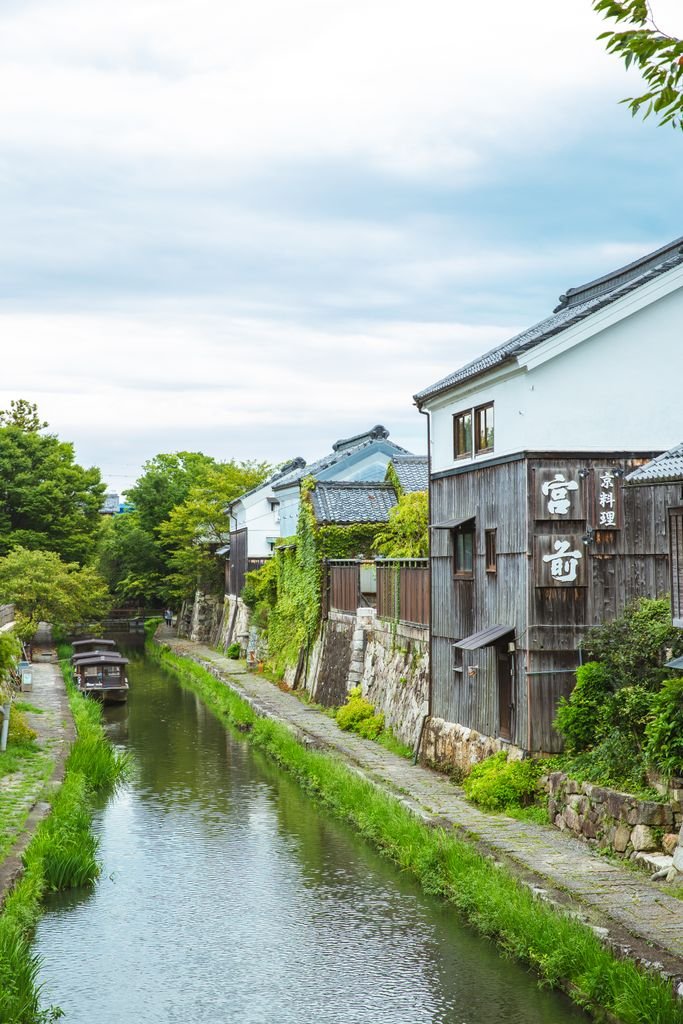
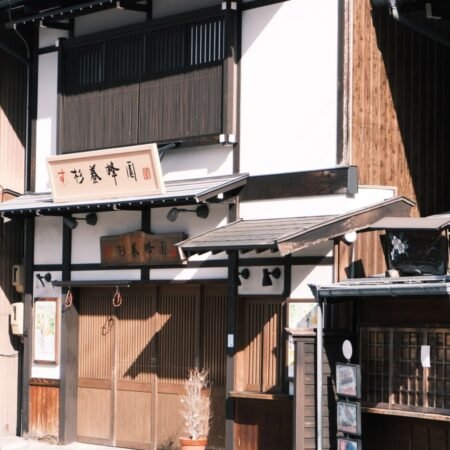
Before the floats even came out, I spent the afternoon just walking the old merchant quarter along the Ono River, which everyone here calls “Little Edo of Kanto” without a trace of irony. Sawara grew rich in the Edo period shipping rice and goods down the Tone River into the city, and the money shows in the buildings that are still standing: sake breweries and kimono shops with dark wooden facades, some of them in business since the early 1800s. One textile shop I wandered past had a sign dating it to 1804. It’s not a reconstructed theme-park version of old Japan — people actually live and work in these buildings, and the canal still runs right past their front doors the way it always has.
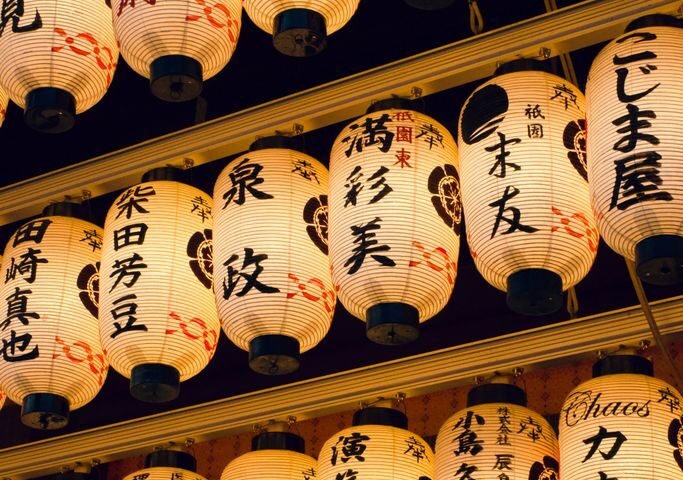
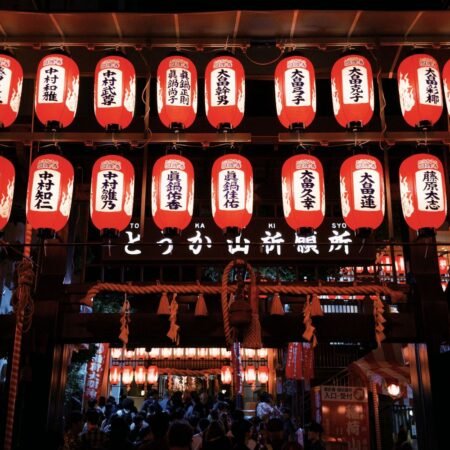
By early evening the whole character of the street changed. Shopkeepers who’d been quietly sweeping their storefronts an hour earlier were suddenly hanging lanterns, kids in yukata were weaving through the crowd with candy apples, and somewhere down the block I could already hear drums.
When the Wooden Giants Came Out
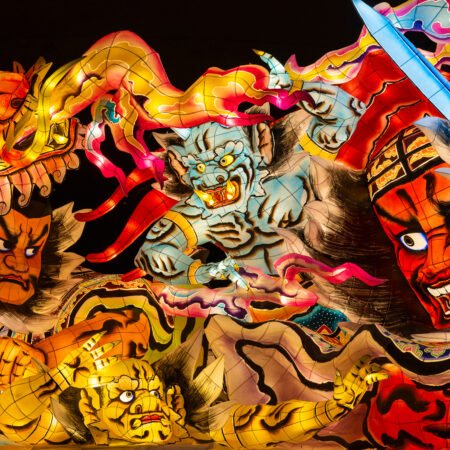
Nothing really prepares you for seeing the floats up close for the first time. Each one carries an enormous carved figure on top — some nearly five meters tall once you count the doll itself — depicting warriors, folk heroes, deities, dragons, hawks, whatever legend the neighborhood that built it chose generations ago. A lot of these figures were carved back in the Meiji, Taisho, and early Showa eras and are treated as genuine cultural treasures, which makes sense once you see the detail in the carving even by lantern light. The float I found myself following for most of the night had a fierce-looking historical general on top, lit from below so his expression shifted every time the float dipped under a low eave or took a corner.
The floats themselves are massive wooden platforms, hand-pulled through streets that were absolutely not designed with them in mind, which is part of the spectacle — you watch dozens of people straining together to ease a two-story structure around a tight bend without clipping a shop awning, and the crowd holds its breath every time.
The Music That Doesn’t Let Go
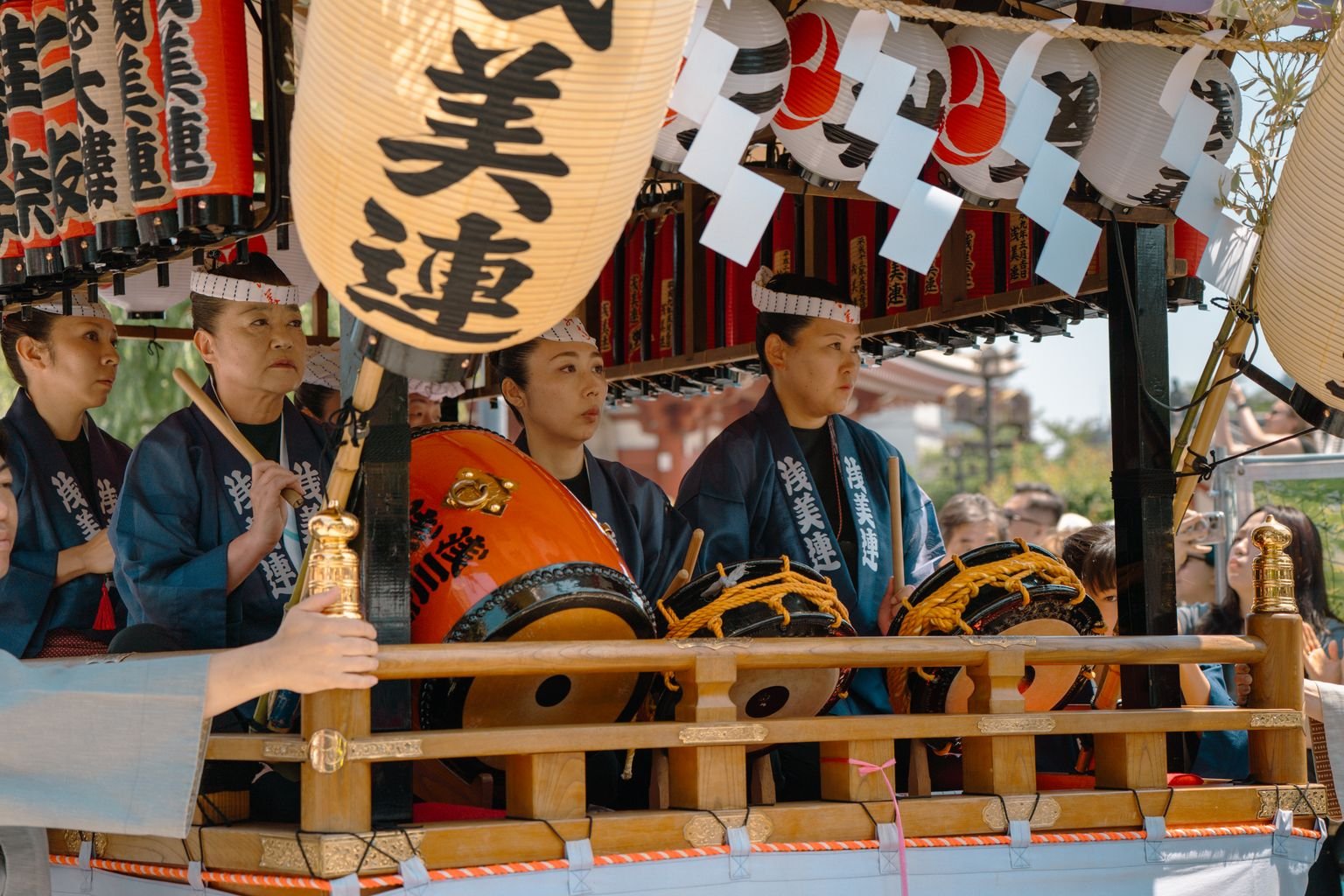
What actually stuck with me longest wasn’t the sight of the floats, though — it was the sound. Musicians ride right on board each float, playing what’s called Sawara-bayashi, a style locals rank among the most refined festival music traditions in the country. There are reportedly more than forty distinct songs in the repertoire, each matched to a particular moment: a slow, stately piece for easing through a crowded stretch, something sharper and more insistent for pulling the float up an incline. Flutes carried the melody, but it was the taiko drums that I could still feel in my chest walking back to my hotel. I ended up trailing one float for nearly twenty minutes for no reason other than I didn’t want the song to end.
The whole tradition — the floats, the dolls, the music — is recognized as an Important Intangible Folk Cultural Property nationally, and it’s also part of Japan’s “Yama, Hoko, Yatai Gyoji” entry on UNESCO’s Intangible Cultural Heritage list, alongside famous festivals like Kyoto’s Gion Matsuri and Chichibu’s night festival. Standing in that crowd, it didn’t feel like a museum piece at all. It felt like a town throwing itself a party it’s thrown, with minor variations, for three centuries running.
Practical Tips If You Want to Go
Sawara sits in Katori City, reachable on the JR Narita Line, so if you’re already anywhere near Narita it’s a short, easy add-on rather than a whole expedition. From central Tokyo, figure on something like ninety minutes by train with a change, or there’s a direct highway bus from Tokyo Station’s Yaesu side that takes roughly the same amount of time. I’d suggest arriving in the early afternoon so you can walk the Little Edo streets in daylight before the festival mood takes over — the contrast is part of the charm. The autumn festival generally lands around the second weekend of October, Friday through Sunday, though it’s always worth double-checking the exact dates for whichever year you’re planning around, since they can shift slightly. Bring cash for the food stalls, wear shoes you don’t mind standing in for hours, and if you can’t make it during festival season, the Suigo Sawara Float Museum near the station keeps two of the actual floats on rotating display year-round, so you can get a sense of the scale even outside the festival dates.
I came to Sawara expecting a quiet afternoon by a canal and left with my ears still ringing from drums and a genuine ache in my legs from standing on cobblestones for six hours straight. I wouldn’t trade either.
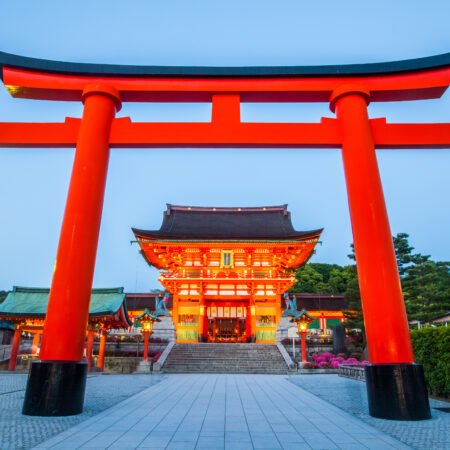
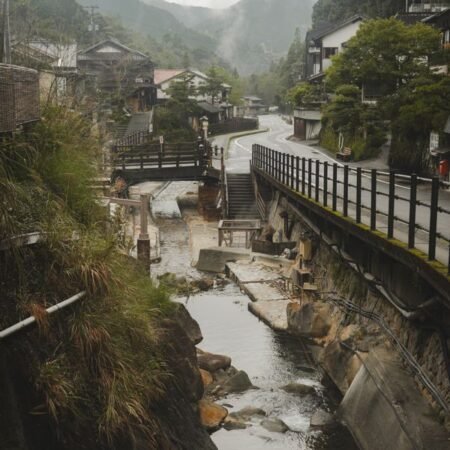
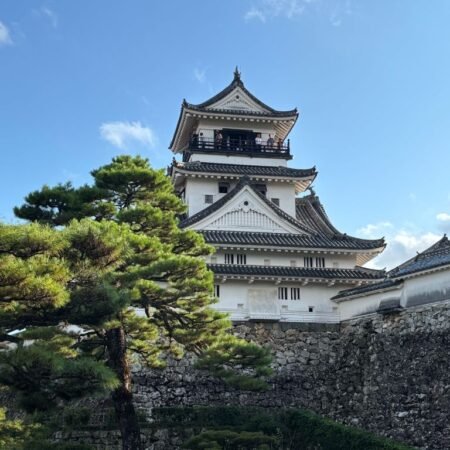
A quick note on photos: some of the images here are stock photos I’ve used to set the mood — they may not be the exact spot or moment I’m describing, just close in spirit.
コメント