






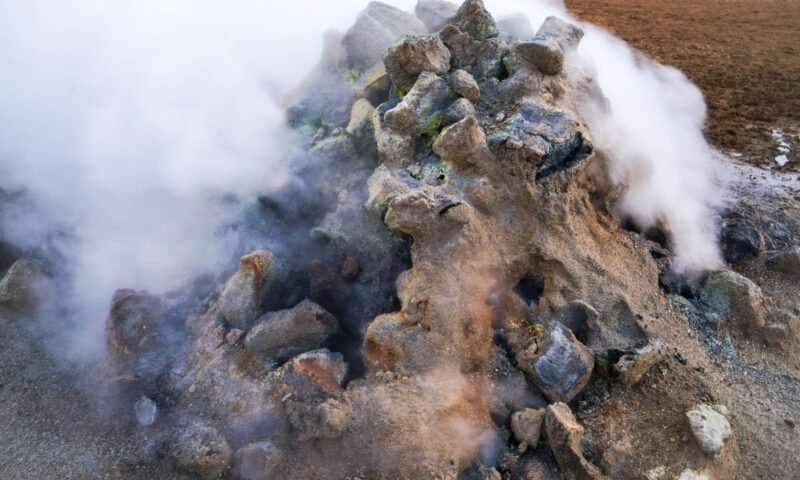
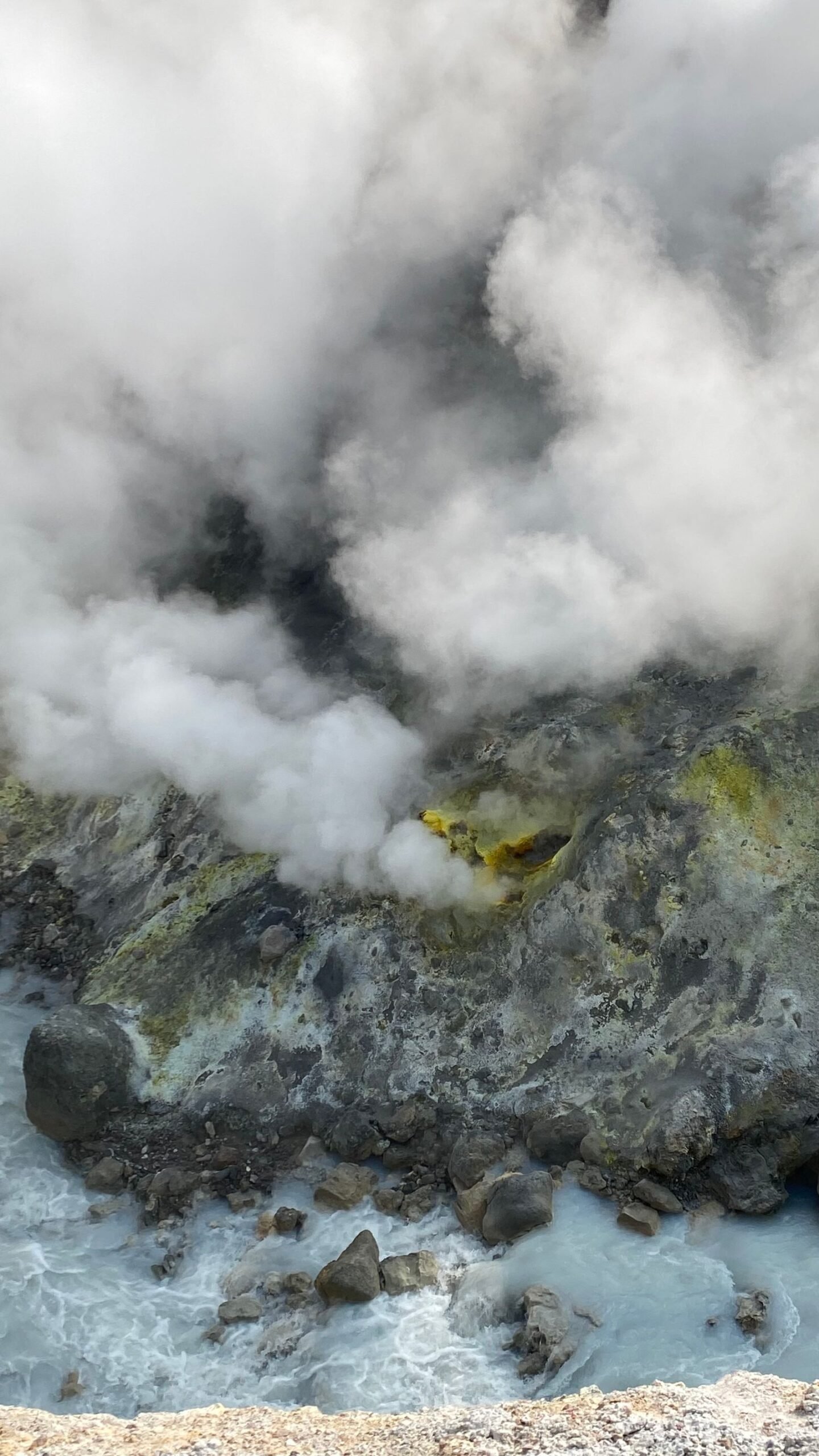
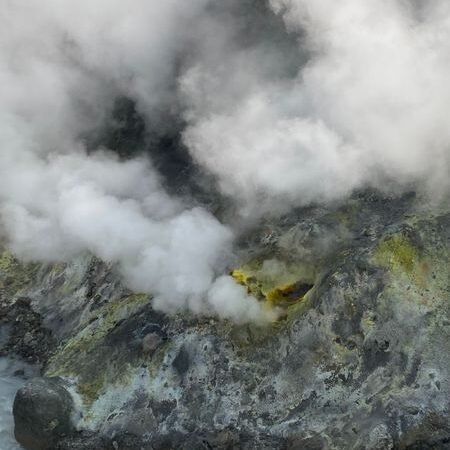
The smell reaches you before the boardwalk does. I got off the bus at Unzen Onsen expecting a quiet mountain spa town, and instead walked straight into a wall of sulfur, thick enough that I half expected my translator’s brain to start supplying the word for it in three languages at once. Then the path opened out, and there it was: a shallow bowl of bare, bleached earth in the hills above Shimabara, hissing and boiling in thirty-odd separate places, steam rising so fast off the pools that the whole valley seemed to be exhaling.
This is Unzen Jigoku — literally “Unzen Hell” — and it has earned the name twice over. Once from the geology: a field of volcanic vents and acid-bleached clay inside Unzen National Park, Japan’s first national park, designated in 1934. And once from the history: a 17th-century site of religious persecution that the valley has never quite let go of. Somewhere between those two hells sits a single named vent, no bigger than a garden pond, called Oito Jigoku. It is the reason I had come.
The Woman Who Cursed the Ground
According to local legend, the story goes back to the late 1800s, to a wealthy woman named Oito who lived near Shimabara Castle, not far from here. The story goes that she was accused of murdering her husband with the help of a secret lover, and that she was tried and sentenced to death for it. The legend doesn’t stop at her execution. It says that at the exact moment she died, a new vent came bubbling up out of the ground at Unzen — as if the earth itself were marking her fate in the afterlife, or perhaps taking on some small part of her restlessness.
It’s worth being honest about what this is and isn’t. I couldn’t find any record tying Oito to a documented criminal case, and the sign at the site itself introduces her plainly as “local legend.” Which is, if anything, more interesting than a verified fact would be. Somewhere along the way, this particular patch of boiling clay needed a story to explain why it, specifically, had opened up — and the one that stuck was about a woman condemned for a crime of the heart. Whether she existed exactly as described, I can’t tell you. What I can tell you is that her name is still the one printed on the sign, a century and a half later, while the water behind it goes on doing exactly what the legend says it has always done.
The History the Legend Shares a Vent With
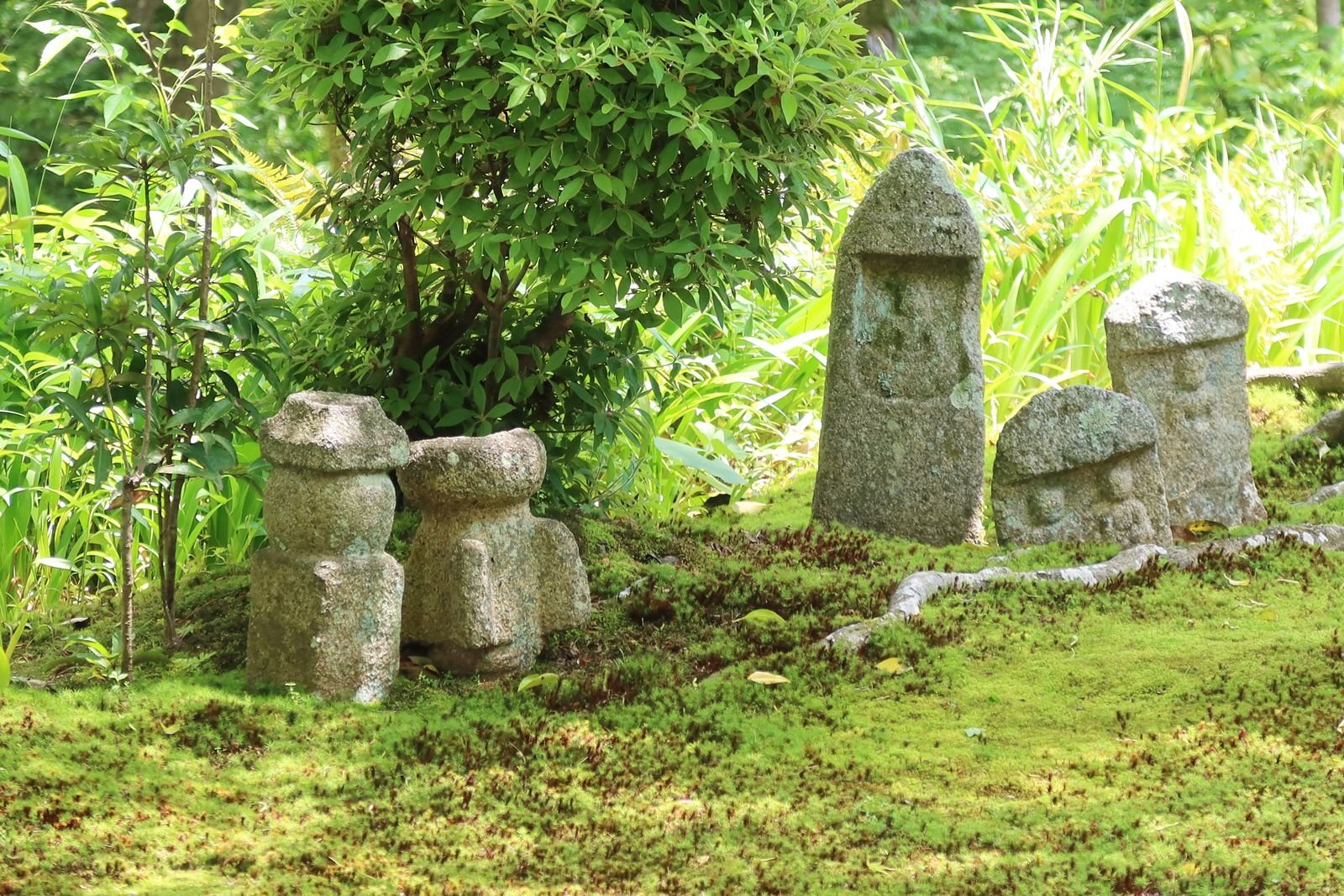
What makes Oito Jigoku more than a curiosity is what sits on the hill directly above it: a stone monument to Christian martyrs, erected during the Meiji era once Japan’s centuries-long ban on Christianity had finally been lifted.
The history here is sobering and, unlike Oito’s story, reasonably well corroborated across multiple sources, even if the exact numbers are given as approximate rather than precise. Christianity had taken root in Kyushu in the mid-1500s, and the lord of the Shimabara Peninsula, Arima Harunobu, converted in 1579. By the early 1600s the shogunate had reversed course entirely: missionaries were expelled, converts were ordered to recant, and the religion was banned outright. Beginning in 1627, local Christians were brought to Unzen from across the Shimabara Peninsula and lowered into these same scalding springs in an attempt to force them to renounce their faith. Sources put the death toll at approximately 33 people, over a period running into the early 1630s, though the exact end date varies between accounts. Many of those brought here did not recant. It is thought that their endurance is part of what moved the people of Unzen, once the ban was finally lifted generations later, to raise a monument in their memory rather than let the place be remembered only for its heat. This same history, filtered through decades, eventually reached Shūsaku Endō, whose 1966 novel Silence drew on it directly — and when Martin Scorsese adapted the novel for film in 2016, part of it was shot on location at this very jigoku field.
Standing Between the Two
What struck me most, standing on the boardwalk between Oito’s bubbling pool and the martyrs’ monument on the slope above, was how little separation there is between the two stories — a few dozen meters of volcanic clay, and about two and a half centuries. One is a folk tale about a woman and a crime nobody can now verify. The other is a documented persecution, memorialized in stone, still marked today with quiet memorial services. The valley doesn’t ask you to rank them. It just keeps steaming, the way it has since long before either story attached itself to the rock.
Unzen Onsen itself has been welcoming outsiders since the Meiji period, when it became a hot-spring retreat for Nagasaki’s foreign residents — a handful of Western-style buildings from that era are still standing nearby. The jigoku field today is a proper, well-marked tourist walk: a boardwalk winds between the vents, there’s a free footbath at the far end, and a small shop selling souvenirs and local snacks. It is, in other words, entirely unlike the abandoned, fenced-off ruins I usually find myself writing about. Nobody needs to trespass here. The hell is open to the public, every day, and it would rather you came and looked than stayed away.
Visiting With Care
If you go, keep to the marked boardwalk at all times — the ground beyond it is genuinely unstable, the water genuinely close to boiling, and the gas genuinely capable of causing problems for anyone with respiratory sensitivities, so don’t linger directly downwind of a vent longer than you need to. Treat the martyrs’ monument the way you would any memorial: no loud conversation nearby, no treating it as a backdrop for a joke. And give Oito’s small, unremarkable pool the same quiet respect you’d give any grave, real or legendary. Whatever actually happened to her, somebody chose to remember her by name. That’s worth honoring on its own terms.
Note: images accompanying this article are illustrative stock photos and do not necessarily show the specific site discussed.


コメント