




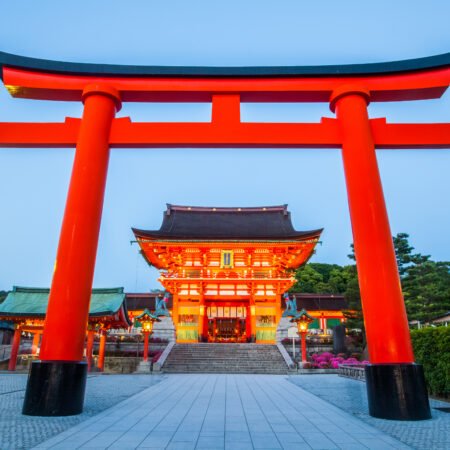

I didn’t expect the cable car to be the first clue. It’s a tiny thing, barely two carriages long, climbing the lower slope of Mount Kurama just north of Kyoto, and painted along its side is a name: Ushiwakamaru, the childhood name of Minamoto no Yoshitsune, one of the most celebrated warriors in Japanese history. The people running the Kurama-dera cable car clearly want every visitor to know, before they’ve set foot on the mountain proper, exactly whose legend they’re walking into.
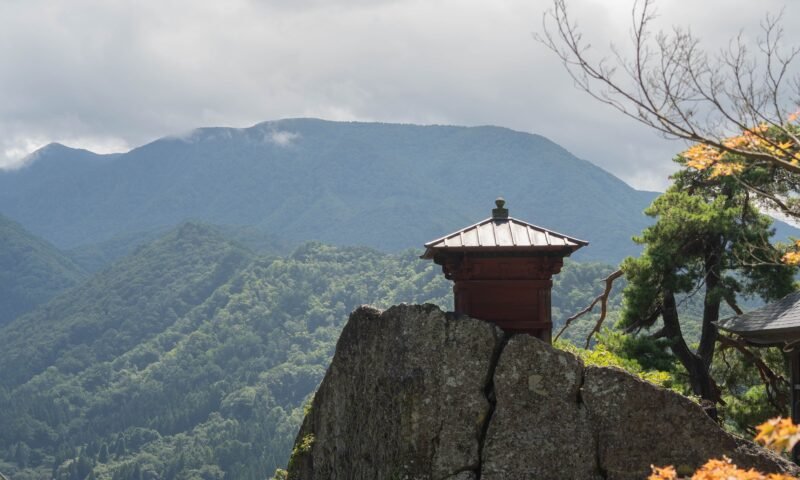
I’d come up from Kyoto on a grey morning in early autumn, more out of curiosity about a Buddhist temple with its own breakaway sect than any expectation of ghosts. What I found instead, climbing the root-choked path behind the temple toward Kibune, was something stranger and, in its own way, more interesting than a haunting: a mountain that Kyoto has spent well over a thousand years insisting is simply built for otherworldly things.
A Temple With Its Own Religion
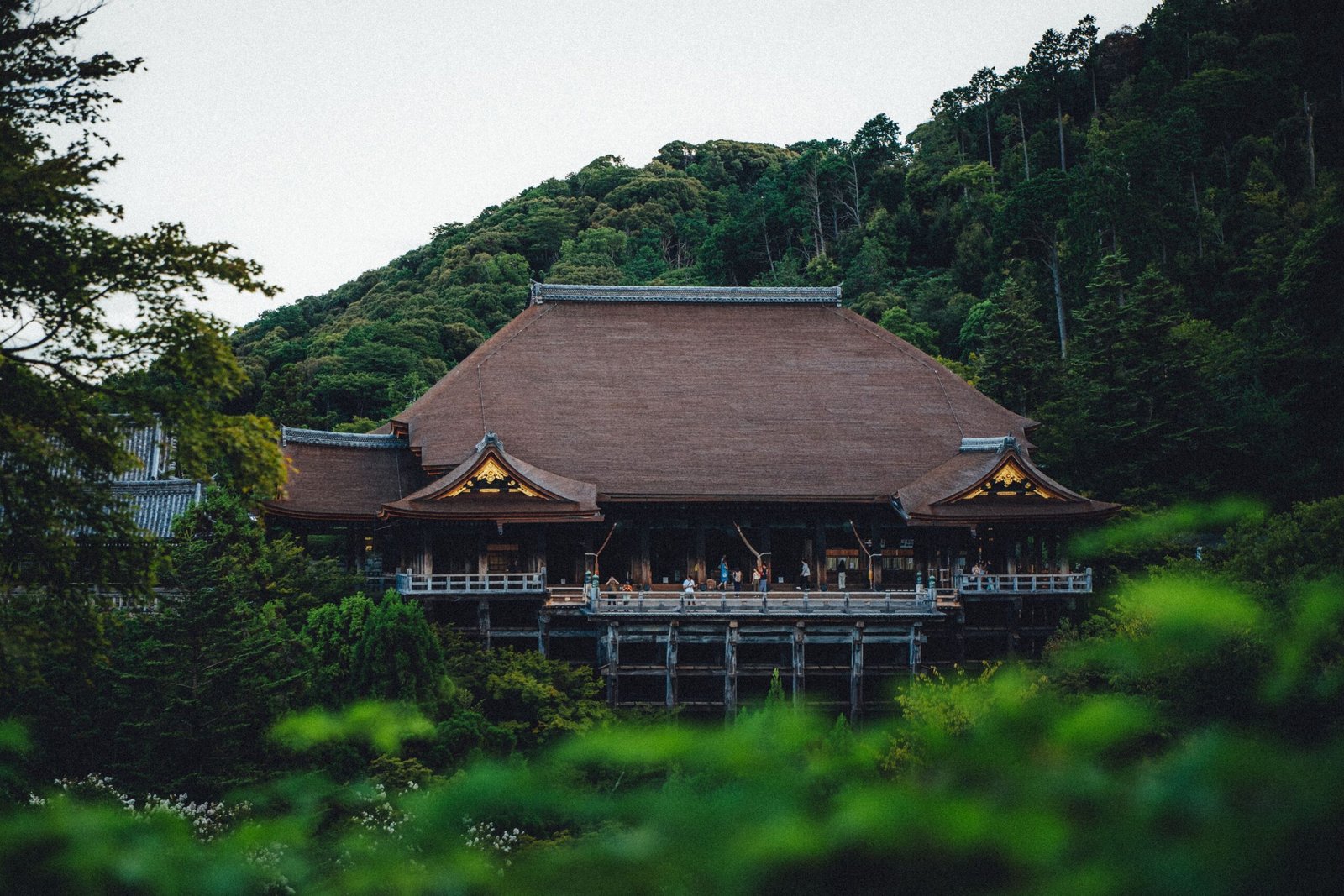
Kurama-dera’s own history, recorded in a document called the Anbagai-ji Engi, traces its founding back to the year 770, credited to a monk named Gancho. According to temple tradition, a court official named Fujiwara Issendo sponsored a proper temple complex here a couple of decades later, after a vision of the thousand-armed Kannon. For most of its history Kurama-dera belonged to the Tendai school, the same Buddhist tradition behind Mount Hiei on the far side of the city. Then, in 1949, it broke away entirely. An abbot named Shigaraki Koun had founded his own school of Buddhism, Kurama-kokyo, two years earlier, and the temple has run as an independent sect ever since, centered on a triad it calls Sonten: the bodhisattva Kannon, the guardian deity Bishamonten, and a being named Maoson, who temple tradition holds descended to Earth from Venus some six million years ago.
That’s roughly where I stopped thinking of the mountain as a historic temple complex with an unusual footnote, and started thinking of it as a place that takes its own mythology seriously. In front of the Main Hall there’s a six-pointed star set into the stone paving, called the Kongosho, where visitors line up to stand on the central triangle and, depending who you ask, feel a surge of energy. I stood on it, mostly feeling self-conscious in trainers that were already regretting the climb ahead. But I didn’t feel like laughing at anyone. The sincerity of the place is a large part of what makes it interesting.
The King of the Tengu
The real reason people have climbed this mountain with a certain wariness for the better part of a millennium, though, has less to do with a planet-born deity and more to do with a tengu.
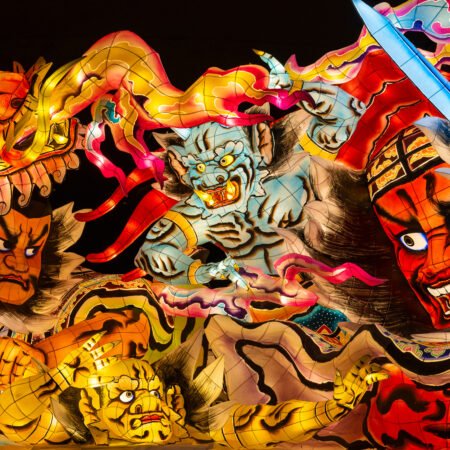
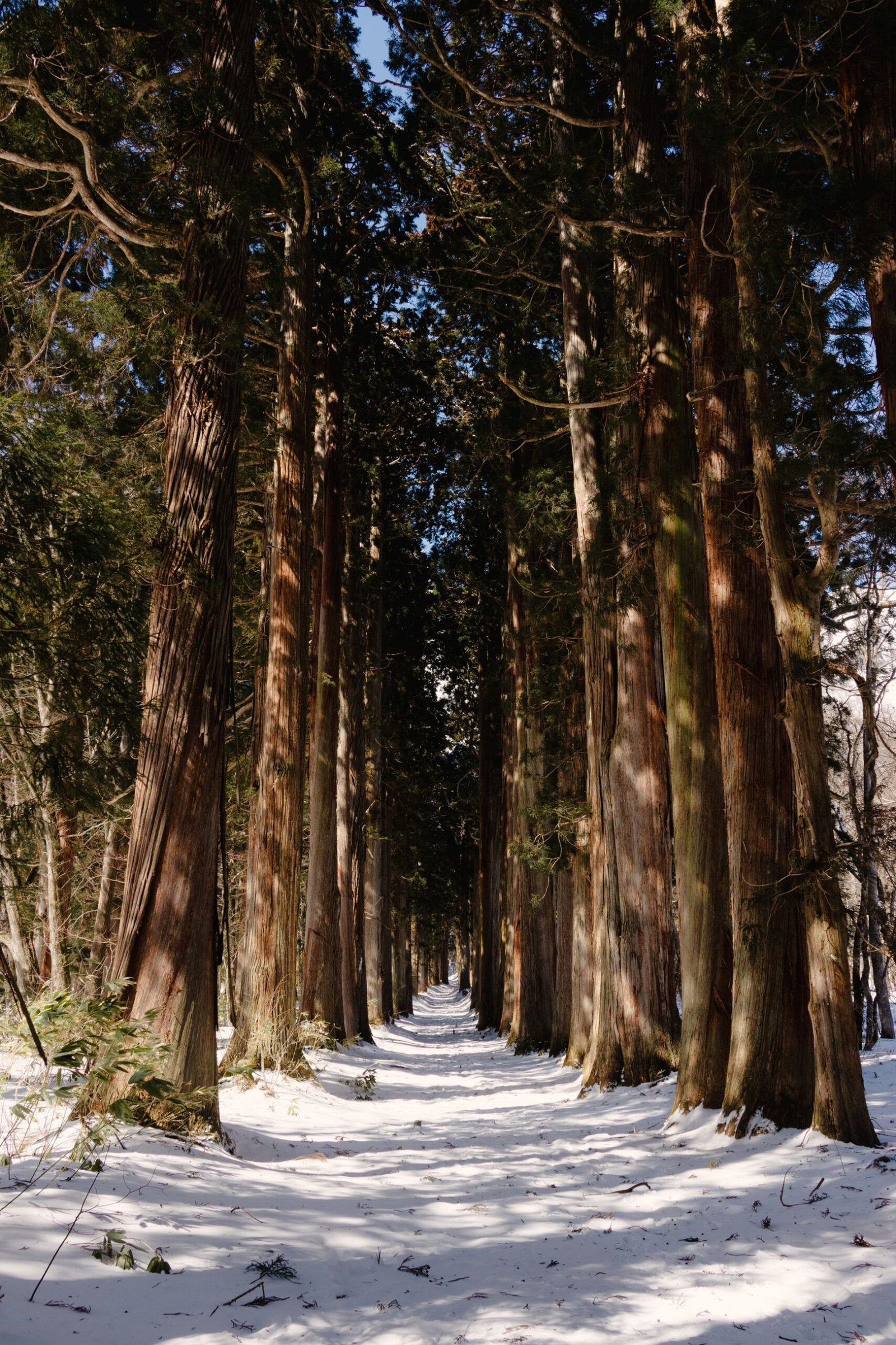
In Japanese folklore, tengu are mountain spirits usually pictured as sharp-clawed, red-faced figures with absurdly long noses, dressed as itinerant mountain ascetics, or yamabushi. Mount Kurama is said to be the home of their king, Sojobo — a daitengu credited with the strength of a thousand ordinary tengu, who rules over the other tengu of Japan from a specific fold of the mountain behind the temple known as Sojo-ga-tani, close to where the trail eventually drops down toward Kibune Shrine. The old accounts describe him with the long white hair and beard of an elderly yamabushi, and credit him with a particular specialty: teaching swordsmanship, tactics, and a few things that sound rather closer to magic, to the very small number of humans he decides are worth the trouble.
According to the legend, only one human was ever worth that trouble.
The Boy Who Trained With Monsters
After his father, Minamoto no Yoshitomo, was killed in battle by the rival Taira clan, his young son was sent to Kurama-dera to be raised quietly as a monk, under the name Shanao — safely out of the way, the Taira presumably hoped, of any future for the Minamoto line. The boy, so the story goes, had other ideas. According to the legend, later dramatized in the Noh play Kurama Tengu, he began slipping out at night into the forest behind the temple, where Sojobo took him on as a pupil and trained him in swordsmanship and military strategy — grooming him, in some versions of the tale, quite deliberately to one day avenge his father.
That boy grew up to be Minamoto no Yoshitsune, one of the most celebrated generals in Japanese history, central to the Genpei War that ended Taira dominance in 1185. Whatever actually happened on that mountain — and conventional history has far more ordinary explanations for how a monastery-raised boy became a formidable tactician — Kyoto has never been in a hurry to let the tengu version go. It’s the story the cable car is named after, and it’s still, as far as I can tell, what most people walking past Sojo-ga-tani on their way to Kibune are quietly thinking about.
A Mountain That Keeps Making History
What struck me most, honestly, wasn’t the eight-hundred-year-old legend. It was learning that Mount Kurama was still generating this kind of story within living memory. In 1922, a man named Mikao Usui is said to have spent twenty-one days meditating near the mountain’s summit, at a site called Osugi Gongen, which temple tradition holds to be a manifestation of Maoson himself. He came down from that retreat having developed the healing practice now known around the world as Reiki. Whatever you make of that claim, Mount Kurama has a fair case for being one of the very few places on earth where a feudal-era monster legend and a twentieth-century wellness movement both trace back to the same patch of forest.
The mountain also still hosts the Kurama Fire Festival, Kurama no Hi-matsuri, every October, when the steep approach to the temple fills with blazing torches carried by local residents — a tradition the town treats today with exactly the seriousness its origin story deserves.
Visiting Mount Kurama
None of this requires trespassing on anything. Kurama-dera is a fully open, actively run temple, reached by a short train ride from central Kyoto to Kurama Station, with a cable car available for the steepest stretch and a clearly marked hiking trail — thick with exposed cedar roots, so decent footwear matters more than it looks — continuing over the mountain to Kibune Shrine on the far side, a popular and very manageable half-day walk.
A little care goes a long way here. The trail is uneven and occasionally steep, so this isn’t the place for sandals, or, as I learned, for trainers with no grip left in them. Stick to the marked path rather than wandering off toward Sojo-ga-tani itself in search of tengu, both for your own footing on unstable forest ground and out of basic respect for what is still an active religious site. If you’re visiting during the Fire Festival, expect genuinely large crowds and plan around the official road closures rather than trying to push through them. And whether or not you feel anything standing on the Kongosho, it’s worth remembering that for the people who maintain this mountain, that stone and this story are not tourist set dressing. They’re still, quite sincerely, a matter of faith.
Note: images accompanying this article are illustrative stock photos and do not necessarily show the specific site discussed.
コメント