







I first heard about the hill above Nakagusuku from an Okinawan colleague who translates tourism brochures for a living. I’d mentioned, over lunch, that I was planning a weekend trip to see the castle ruins in Kitanakagusuku. She put down her chopsticks and said, quite matter-of-factly, “Just don’t go up to the old hotel next door.” I asked her why, expecting a joke about the terrain. She wasn’t joking.
That conversation is how most of my trips start these days — someone mentions a place almost in passing, then adds a warning I wasn’t expecting. Nakagusuku turned out to be two stories layered on top of one another: a genuinely important piece of Ryukyu Kingdom history that UNESCO has recognized as a World Heritage site, and, on the same ridge, a modern urban legend about a hotel that was never finished because, according to local memory, the spirits of the hill wouldn’t allow it.
A Fortress Built on Betrayal
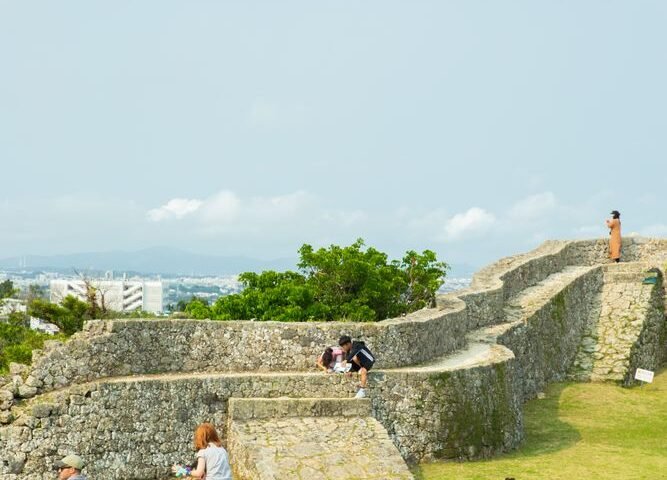
Nakagusuku Castle sits on a limestone ridge in Kitanakagusuku, overlooking both the Pacific side and the East China Sea side of central Okinawa — a position so commanding that Japanese archaeologist Tadashi Fujimori, who surveyed it after the war, reportedly called it one of the finest fortifications in Asia. The core of the castle was expanded around 1440 by Gosamaru, a lord who moved his base here from Zakimi Castle specifically to keep watch on a rival, Amawari, who ruled the neighboring Katsuren Castle.
The watchfulness didn’t save him. According to the standard historical account, Amawari convinced the Ryukyu king that Gosamaru was plotting rebellion, and in 1458 royal forces marched on Nakagusuku. Rather than be taken, Gosamaru is said to have died by his own hand inside the castle he had spent years reinforcing — a loyal retainer undone by court politics rather than by any failure of his walls. Those walls, built in the graceful curved “aikata-zumi” style without mortar, are still standing today, which is part of why Nakagusuku survived the 1945 Battle of Okinawa with comparatively little damage, unlike so much else on the island.
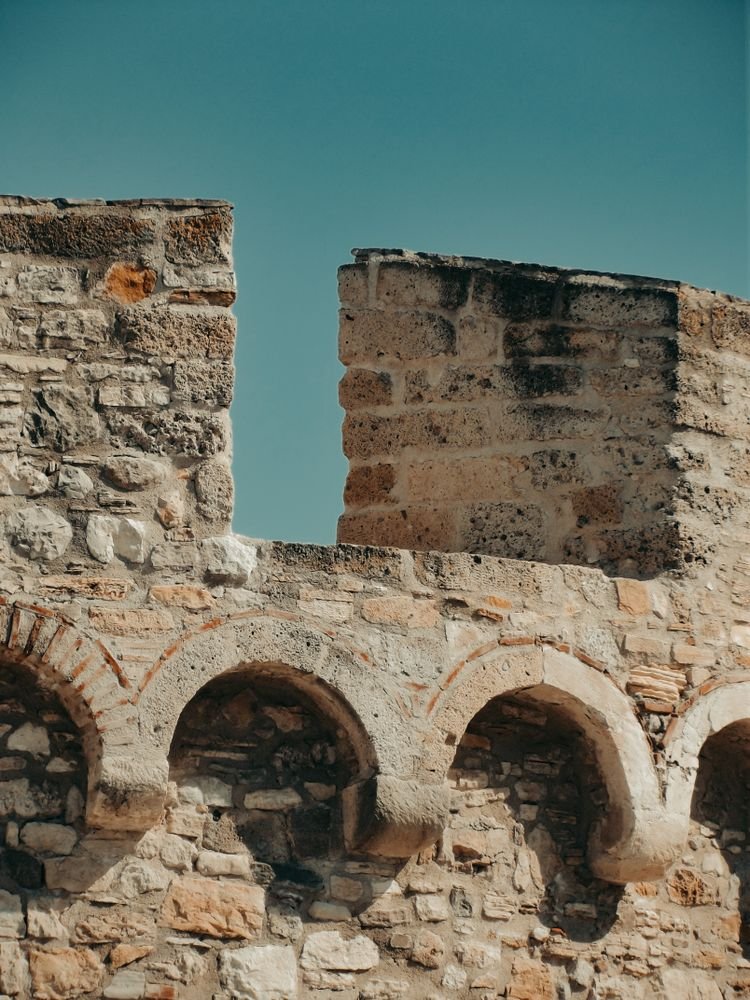
Walking the six interlocking courtyards on a quiet weekday morning, what struck me wasn’t fear so much as a kind of vertigo about time. You’re standing on six centuries of continuous use — as a fortress, then a prince’s residence, then a Satsuma-era guard post — and the sea wind moves through the gates exactly the way it must have for Gosamaru’s sentries.
The Hill That Refused to Become a Hotel
It’s the empty concrete shell next door that gives people pause, and it’s the reason my colleague brought her chopsticks down so firmly. In the mid-1970s, riding the wave of tourism development that followed the 1975 Okinawa Ocean Exposition, a developer began building a resort hotel on the ridge immediately beside the castle grounds. According to local accounts, Buddhist monks had cautioned against building there at all, warning that the hillside disturbed old graves and rested on ground considered sacred in Ryukyu spiritual tradition. The warnings, the story goes, were not heeded.
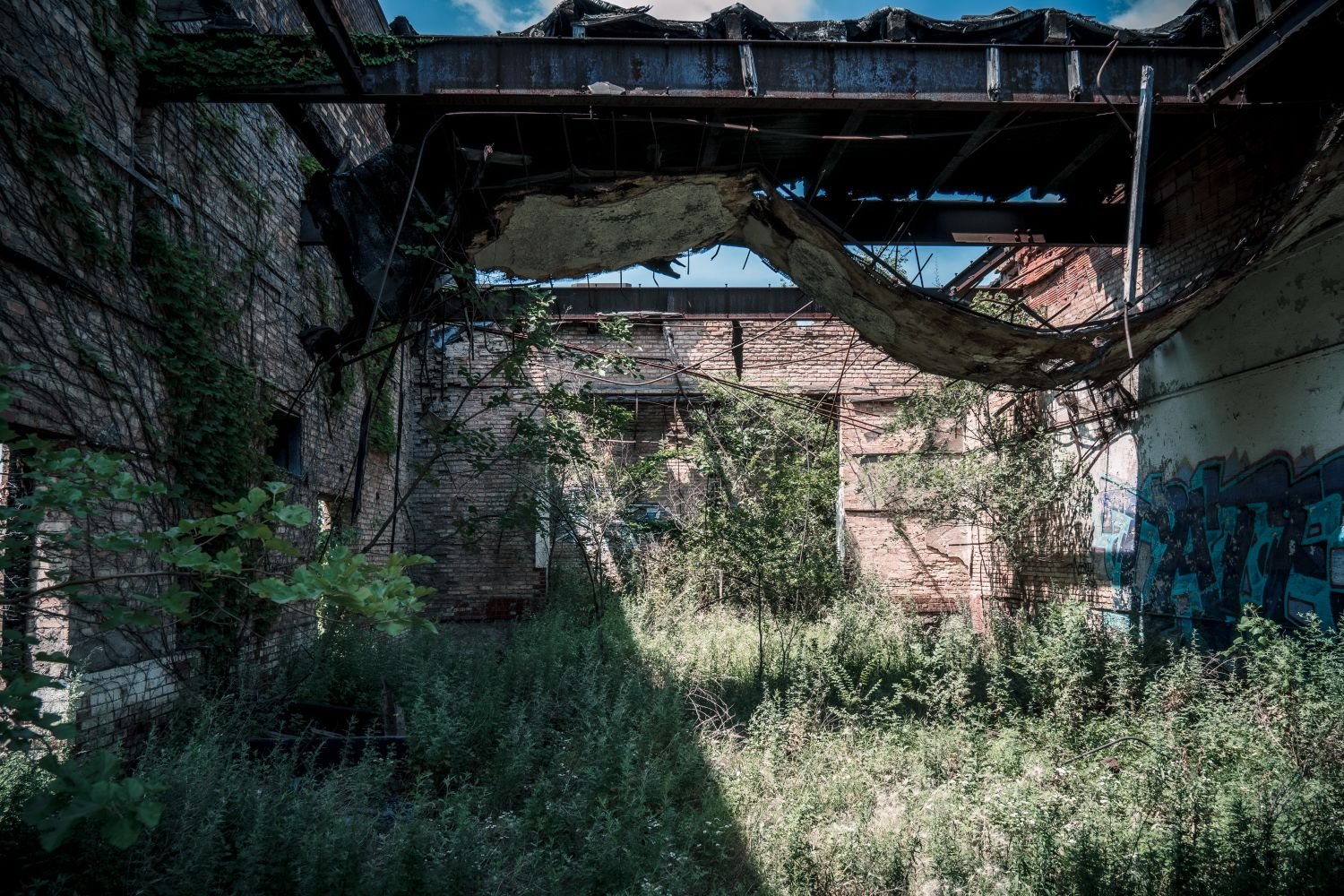
Construction reportedly stalled amid a string of accidents. The version of the story most often repeated on Okinawa is that the developer himself decided to spend a night in the unfinished building to prove there was nothing to it — and that he was never quite the same afterward. I want to be careful here: I have not been able to verify the identity of this person or confirm the details of what happened to him, and neither can most of the people who repeat the tale. It belongs, as far as I can tell, firmly in the category of denshō — local legend passed mouth to mouth — rather than documented fact. What is verifiable is that the hotel was never completed, that the shell has stood empty and decaying for decades, and that it is today fenced off, marked with “keep out” warnings, and reportedly home to venomous habu snakes in the overgrowth. I did not go up to it, and I’d urge readers not to either — it’s private property, structurally unsound, and there is nothing responsible about treating a hazardous, off-limits ruin as a photo opportunity.
Sacred Ground and Spirits That Predate the Story
What I find more interesting than the hotel itself is what it reveals about how seriously utaki — sacred groves and sites tied to ancestral and nature worship — are still taken in Okinawan culture, distinct in many ways from mainland Shinto practice. Ryukyuan religious tradition holds that certain hills, springs, and stands of trees are dwelling places for spirits and ancestors, and that disturbing them carelessly invites consequences. Whether or not you believe a hotel project failed because of angry spirits, the fact that the story took root at all, and has been repeated for fifty years, says something real about the respect this landscape commands locally. The castle itself contains its own utaki-like sacred spaces, including a small shrine within the grounds where visitors today still leave offerings.
Visiting Respectfully
Nakagusuku Castle is open to the public year-round and is one of the most rewarding gusuku sites on Okinawa to actually walk through, with far fewer crowds than Shuri Castle. Wear proper shoes — the stone paths are uneven and can be slick after rain — and stay on the designated walkways, both for your own safety and out of respect for a fragile UNESCO-listed structure. If you come across small offerings near the shrine areas within the grounds, leave them undisturbed. And whatever curiosity the neighboring ruin stirs up, treat it as a boundary rather than an invitation: the fences and warning signs around the old hotel are there for real safety reasons, not for atmosphere, and no photograph is worth an injury on an unstable floor or an encounter with a habu in the undergrowth. The better way to sit with this hill’s layered, sometimes uneasy history is from within the castle’s own walls, at sunset, listening to the same wind Gosamaru’s sentries once did.
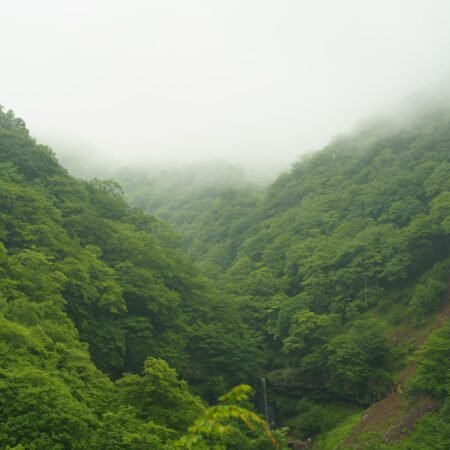
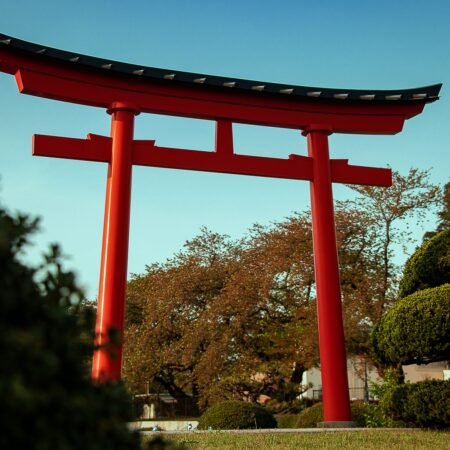
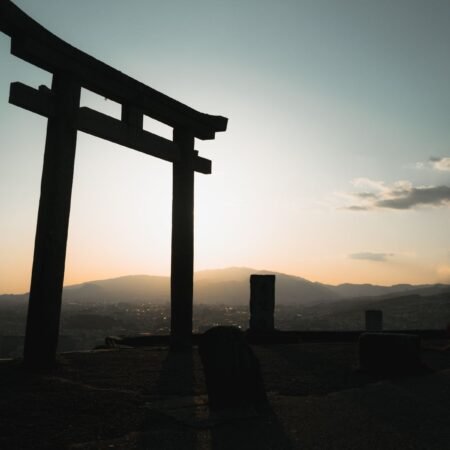
Note: images accompanying this article are illustrative stock photos and do not necessarily show the specific site discussed.

コメント