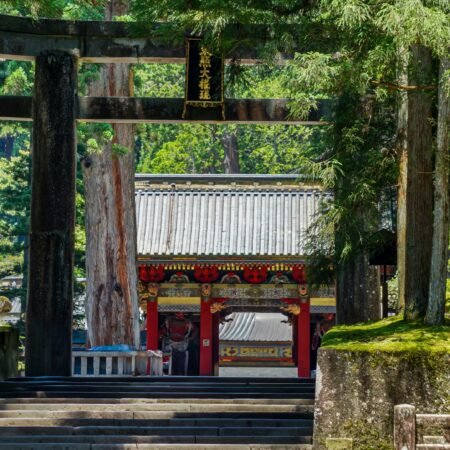






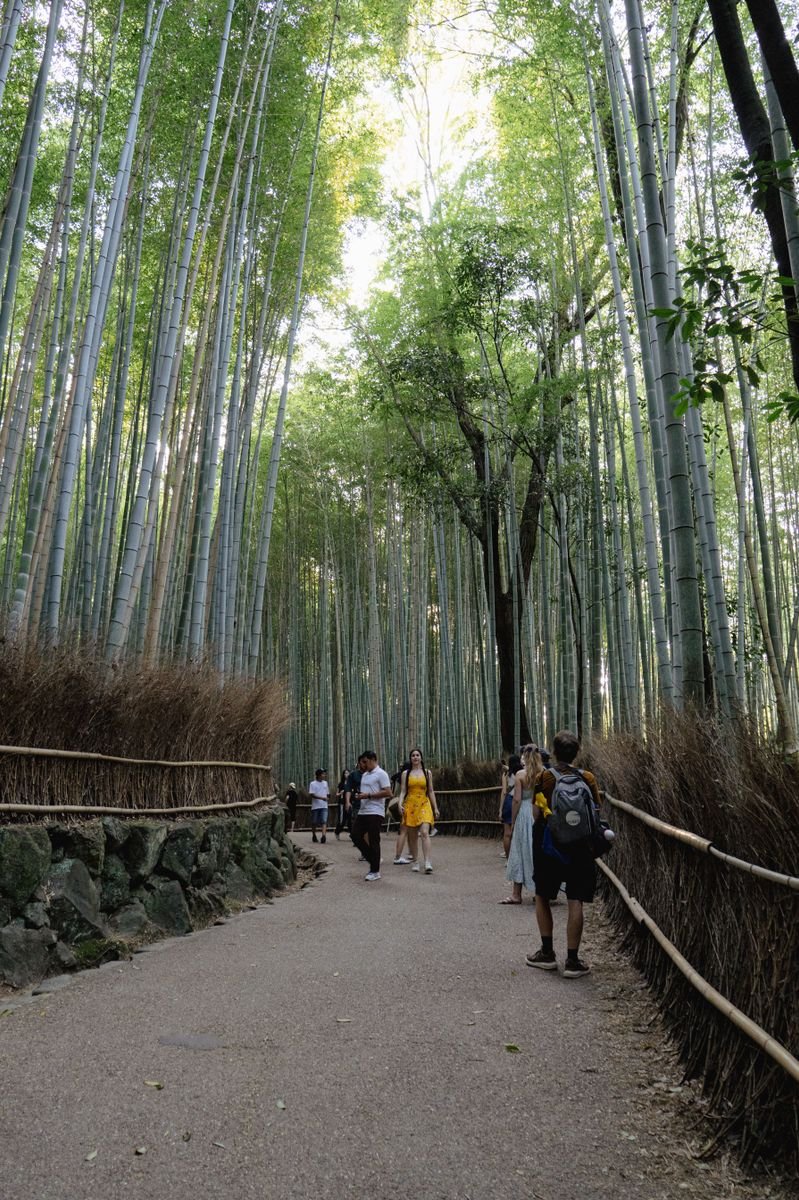
The bus from Arashiyama thins out west of the bamboo grove. By the time it reaches the Toriimoto stop, at the far edge of Sagano, most of the tourists have already gotten off somewhere more photogenic. I stepped down onto a quiet street of thatched and tile-roofed houses, the kind of preserved lane that looks like it hasn’t updated its opinion of the twentieth century, let alone the twenty-first. A five-minute walk uphill, past a torii gate that gives the stop its name, brought me to a low temple gate with a sign that asked, politely but firmly, for silence beyond it.
I’d come to Adashino Nenbutsuji because a Kyoto friend had described it, a little uneasily, as “the temple full of the dead nobody claimed.” That’s not really fair to the place — it’s a working temple, not a curiosity — but I understood what she meant within about thirty seconds of walking past the gate.
A Burial Ground the Living Forgot
To understand Adashino, it helps to know what Kyoto did with its dead during the Heian period (794–1185). The wealthy and well-connected were cremated or interred at Toribeno, in the hills of eastern Kyoto near what is now Kiyomizu-dera — a burial ground with rites, markers, and mourners. Adashino, on the western edge of the old capital, was where the poor and the unclaimed ended up instead. According to local tradition, bodies here were simply left exposed to the elements rather than formally buried, a practice grim enough that the area’s name — written 化野, and read “Adashino” — has long been associated with words for impermanence and emptiness. It’s a place-name that is itself a kind of memento mori.
The temple’s own founding is wrapped in the layered way these things usually are in Japan: tradition credits the monk Kūkai (Kōbō Daishi) with establishing a temple on the site in 811 to pray for the souls left there, and centuries later, in the Kamakura period, Hōnen — founder of the Jōdo (Pure Land) sect — reorganized it into the nenbutsu-chanting temple that stands today. Whether every detail of that lineage would survive a modern historian’s cross-examination is, as with most temple founding stories, beside the point. What matters is that for over a thousand years, this patch of hillside has been treated as a place that owed something to its dead.
Eight Thousand Faces in the Grass
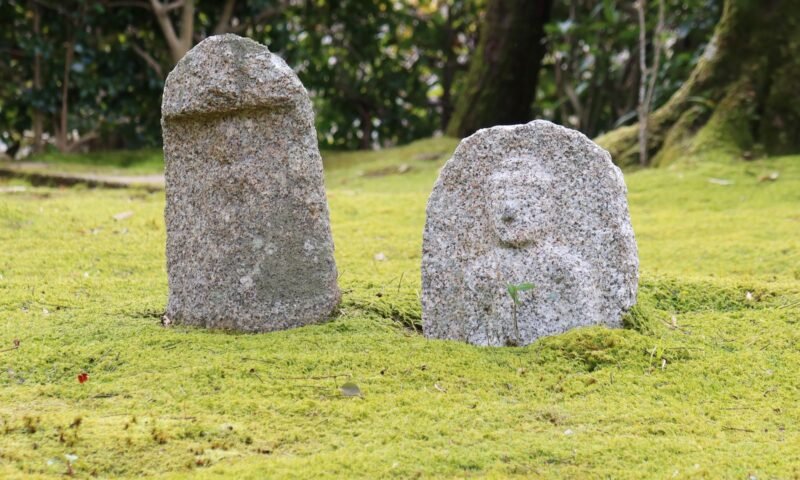
The temple’s best-known feature is Sai-no-Kawara, an enclosed garden where roughly eight thousand small stone Buddhist statues — jizō and other figures, worn soft by centuries of rain — are arranged in close, uneven rows across the slope. They weren’t always gathered here. As the story is told locally, these were the very markers and memorial stones that had been scattered across the wider Adashino area for the historically unclaimed dead I mentioned above, left to sink into the undergrowth over the generations. It was only around 1903 that they were collected from the surrounding hillsides and brought together at the temple, arranged as a single memorial ground rather than left as isolated, forgotten stones.
Standing among them is a strange experience, and one I’d struggle to call frightening exactly — it’s closer to the feeling of walking through a very old, very crowded cemetery where none of the names are legible anymore. Some faces are still sharp-featured; others have weathered down to a suggestion of eyes and a mouth. Photography is not permitted inside Sai-no-Kawara itself, which the temple asks visitors to respect, and which I think does the place a favor: it keeps the statues as something you experience rather than something you collect on your phone.
The Night of a Thousand Candles
Once a year, on the evenings of August 23rd and 24th, the temple holds a memorial rite called Sentō Kuyō — literally something like “a thousand lanterns’ memorial service.” Visitors are given candles to light and place among the statues, and as dusk settles over Sagano the entire stone garden fills, statue by statue, with small flames. It’s held, according to the temple, specifically to comfort the muen-botoke — the spirits without living descendants to tend to them, a category of the dead that looms fairly large in Japanese Buddhist practice generally, and which this entire hillside was arguably built to address in the first place.
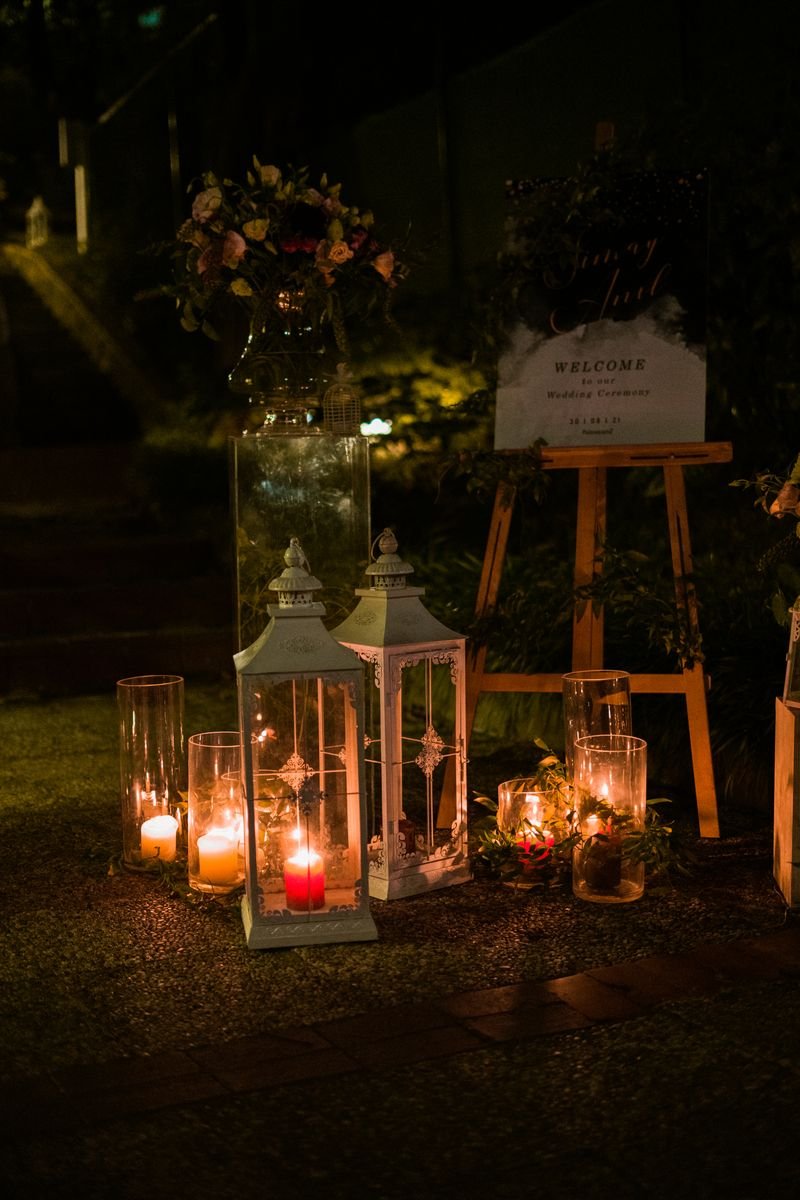
I haven’t been lucky enough to attend it myself — my visit was an ordinary weekday afternoon — but locals I spoke to afterward described it less as an eerie event than a tender one: less “ghost festival,” more candlelit vigil for people whose names time already took. I’d be cautious about anyone who frames Sentō Kuyō purely as a spooky photo opportunity; the people who attend mostly seem to be there for the same reason the temple exists, which is remembrance rather than a fright.
A Quiet Reputation, Not a Ghost Story
I want to be careful here, because Adashino doesn’t come with a single, tidy kaidan attached to it the way some of the places I’ve written about do — there’s no specific spectre with a name, no particular incident people point to. What it has instead is a diffuse, long-standing reputation as a solemn, slightly uncanny place, built entirely out of its actual history: a thousand years of being the spot where Kyoto’s forgotten dead were left, then gathered, then quietly tended by monks who never stopped chanting for them. If it feels heavier than an ordinary temple garden, I’d say that’s less a haunting and more an unusually honest kind of memorial — one that doesn’t dress up what this hillside was for.
Visiting Manners and Safety
Adashino Nenbutsuji is open daily, roughly 9:00 to 16:30 (closing slightly earlier, around 15:30, from December through February), with a modest admission fee. It sits at the quiet, far end of the Sagano-Toriimoto preserved street, well past where most Arashiyama day-trippers turn back, so it rewards an unhurried visit rather than a rushed one.
A few things are worth keeping in mind. Photography is prohibited inside Sai-no-Kawara — please leave the camera in your bag there, not just lowered. The stone paths through the statue garden are uneven and can be slippery after rain, so sensible footwear matters more than it looks like it would. This is an active memorial site, not a photo backdrop or a curiosity to be poked at: don’t touch, move, or restack any of the stones, and keep voices low, particularly if a service is underway. The surrounding Toriimoto neighborhood is a residential conservation area as well as a tourist route, so the same quiet applies on the street outside the gate. If you’re able to time a visit for the Sentō Kuyō evenings in late August, treat it as the memorial service it is rather than a spectacle — and be prepared for crowds and limited last-bus timing back into central Kyoto.
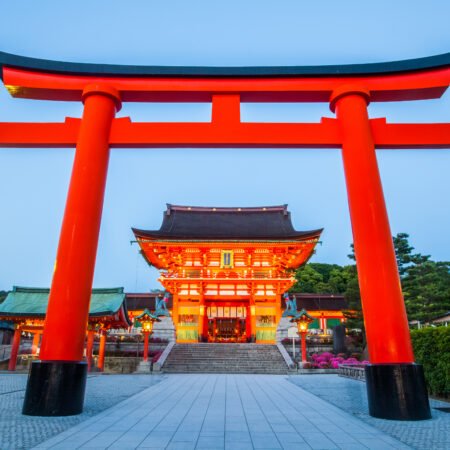
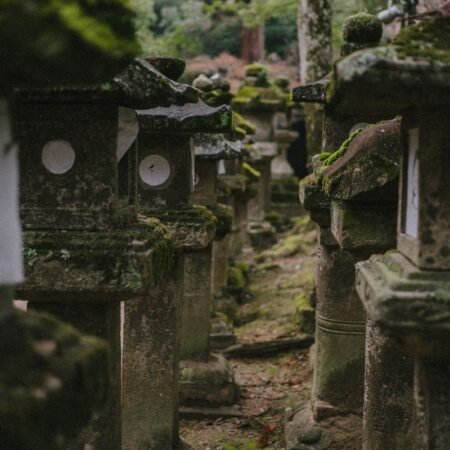
Note: images accompanying this article are illustrative stock photos and do not necessarily show the specific site discussed.

コメント