






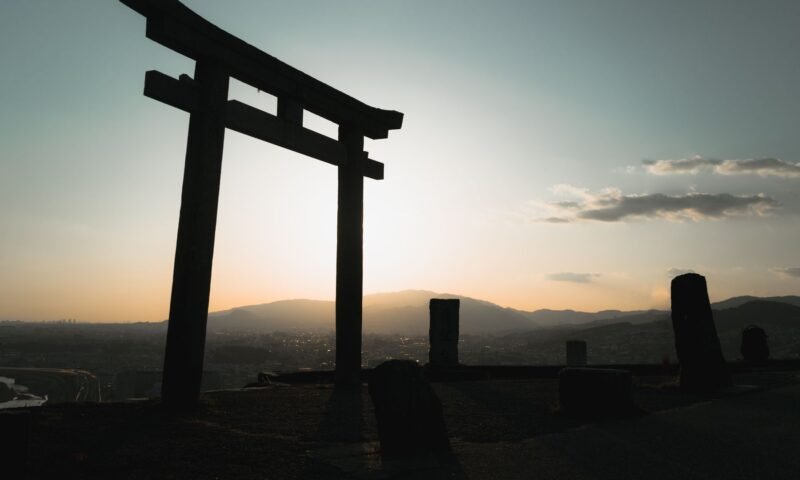
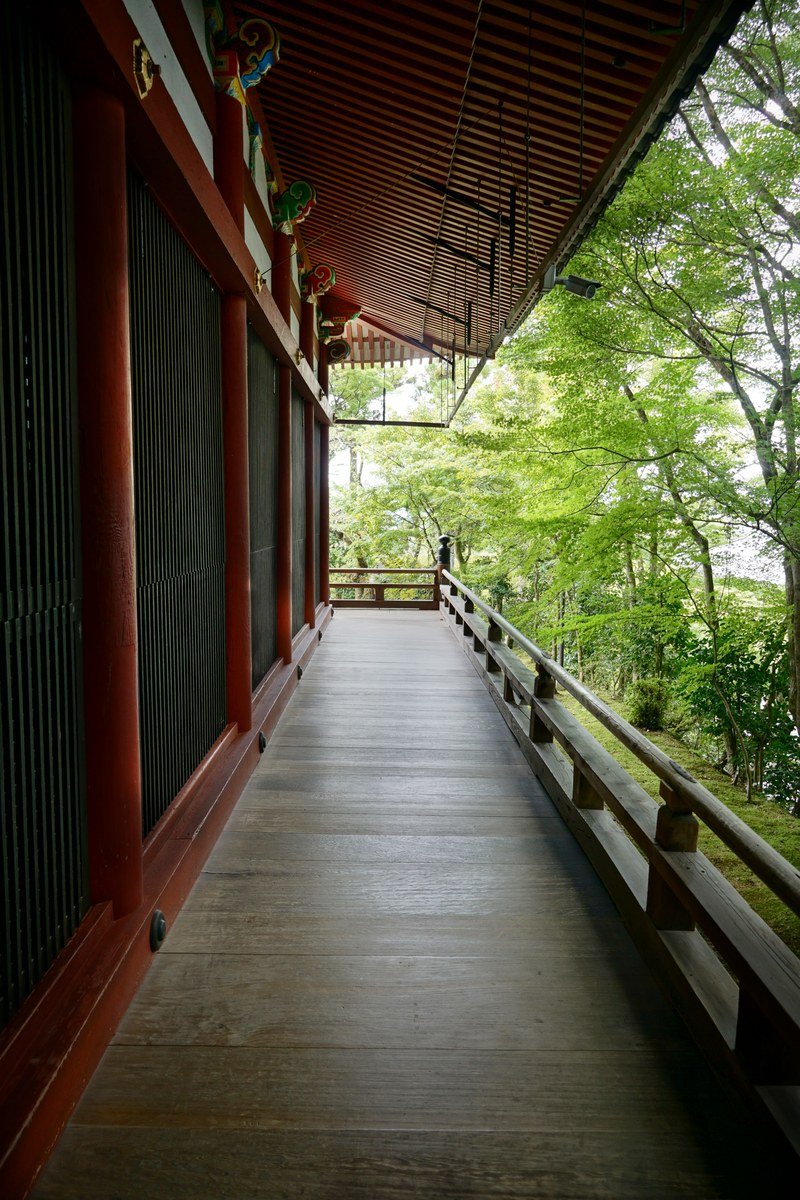
I got to Kibitsu Shrine early enough that the gravel car park was still empty, which is exactly how I like arriving at a place with a reputation. The 398-metre covered corridor that connects the halls was doing that thing old wooden buildings do at seven in the morning — creaking gently as the temperature climbed, as if the whole structure were clearing its throat. I hadn’t come for the architecture, though the architecture is genuinely worth the trip. I’d come because a friend in Okayama had told me, half-joking, that there’s a kitchen here where you can still hear a dead demon complain.
That’s not really fair to the shrine, and I’ll say up front that nobody at Kibitsu-jinja frames it that way. But the story behind the building called the Okama-den — the “kettle hall” — is one of the stranger, gentler pieces of local folklore I’ve come across in seven years of doing this, and it’s tangled up with one of Japan’s most famous children’s stories in a way that most readers, I’d guess, have never heard.
A Shrine Older Than Most of Its Own Stories
Kibitsu Shrine sits at the northwestern edge of Okayama City, a short walk from Kibitsu Station on the aptly named Momotaro Line. Written records mention it as early as 847 CE, in the Shoku Nihon Kōki, though the shrine’s own tradition holds that it began even earlier, on the site of the residence of Kibitsuhiko-no-Mikoto, a prince said to be the son of Emperor Kōrei and the figure credited with bringing the old province of Kibi under imperial control.
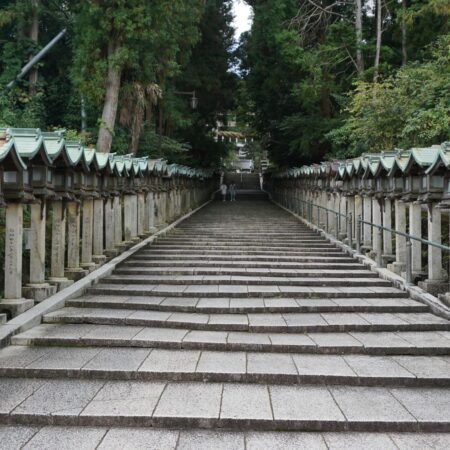
The main hall, rebuilt in 1425, is a National Treasure and a rare example of what’s called kibitsu-zukuri — a style found, as far as I know, nowhere else, with two gabled roofs set one behind the other so the building reads almost like two shrines fused into one. From there, a long covered corridor built during the Sengoku period runs downhill past a small pond, through gates, and eventually to the Okama-den itself. Walking it slowly, the way it’s meant to be walked, takes a good fifteen minutes — plenty of time to notice how quiet the whole complex is compared to Okayama’s better-known tourist stops.
The Demon of Kinojo
According to the legend passed down around the shrine, the province of Kibi was once terrorised by a figure named Ura — described in different tellings as a giant, a fallen prince, or an invader who had made his stronghold in a mountaintop fortress called Kinojo, the “Demon’s Castle,” whose stone ramparts can still be seen on a ridge not far from the shrine today. The imperial court, the story goes, sent Kibitsuhiko-no-Mikoto to put an end to Ura’s raids. What followed, according to local tradition, was less a single battle than a long, almost folkloric contest — arrows loosed and caught mid-air, Ura and his pursuer said to have each taken the shape of animals and fish across a river, until Ura was finally captured and beheaded.
Here’s where the story stops being a straightforward monster tale. The legend says that even after Ura’s death, his severed head kept growling from where it had been placed — for years, according to some versions — refusing to go quiet. Eventually, so the tradition holds, it was buried deep beneath the floor of a kitchen building on the shrine grounds. Ura is said to have then appeared in a dream and given instructions: let Azohime, a woman connected to him, cook the shrine’s ceremonial rice over that spot, and he would answer the concerns of anyone who came asking — a soft sound if the news was good, a rough one if it wasn’t.
I want to be careful here, because it’s easy to flatten a story like this into either “spooky ghost legend” or “cute mascot origin,” when it’s really neither. It’s a denshō — a transmitted local tradition — layered onto real geography, a real fortress ruin, and a real, still-practised ritual. Nobody at the shrine claims it as verified history, and I’m not going to either.
The Cauldron That Still Growls
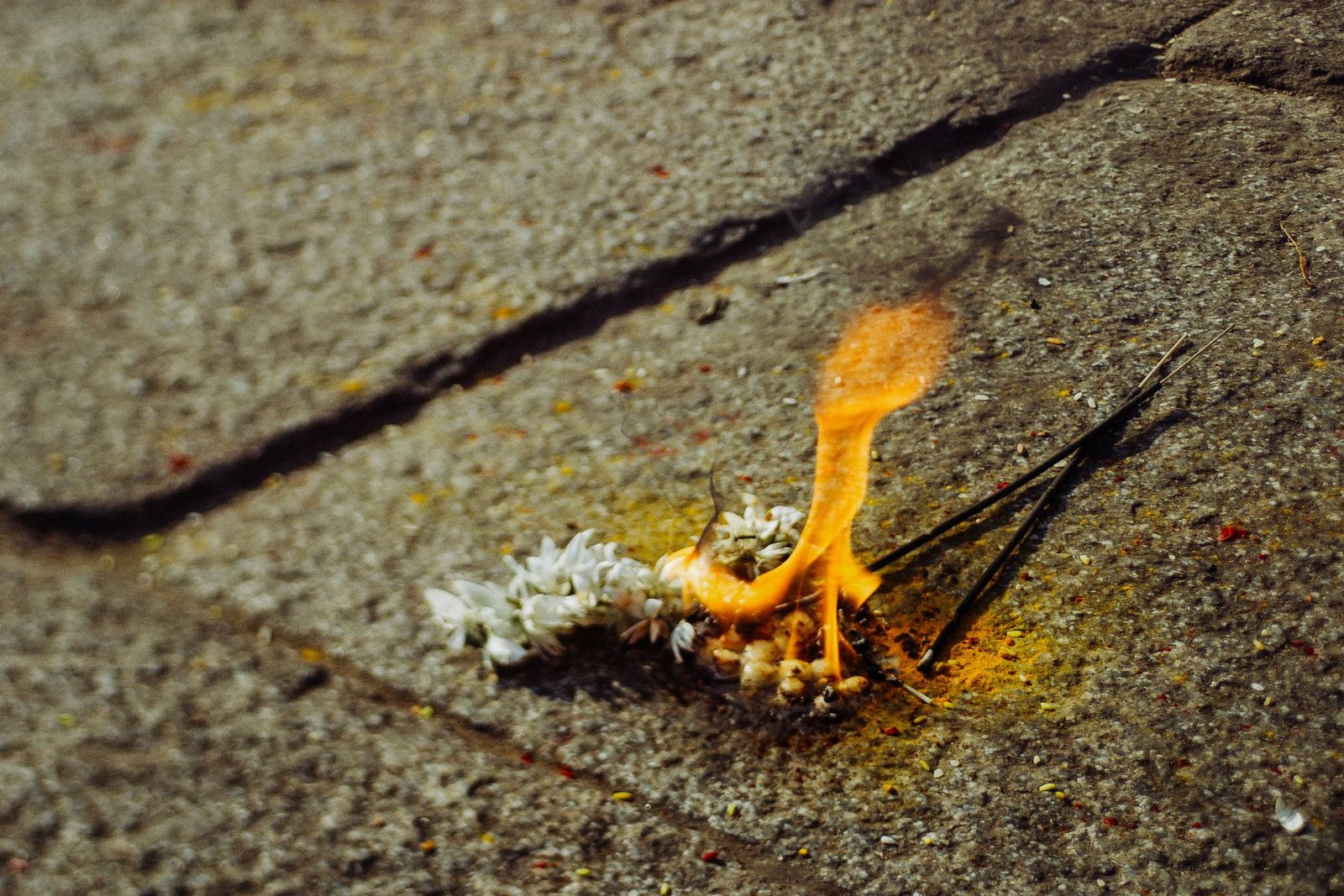
That ritual is called Narukama Shinji, the “singing cauldron rite,” and it’s still performed today inside the Okama-den, largely as described in shrine tradition for centuries. A Shinto priest and a woman serving in the role historically called Azome — carrying on Azohime’s part in the story — conduct it together. Water is poured into the iron cauldron and brought to a boil; the priest recites a norito prayer over a petitioner’s written request while the Azome shakes unhulled rice in a woven steamer basket above the water. As the steam rises, the cauldron produces a low, resonant sound that practitioners describe as something between a hum and a growl — and it’s the length, pitch, and strength of that sound that’s traditionally read as an omen for the person who asked.
The rite isn’t performed on Fridays, and petitions are generally accepted only until early afternoon, so it’s worth checking ahead if that’s specifically why you’re visiting. I didn’t request a reading myself — that felt like it belonged to people with an actual question in mind, not a writer collecting material — but I stood outside the hall long enough to hear it happen for someone else, and I won’t pretend the sound didn’t raise the hair on my arms a little.
Momotaro’s Quiet Shrine
Local historians and shrine literature both point to the Ura legend as one of the likely sources for Momotaro, the Peach Boy — Japan’s most famous folk hero, who travels to a demon’s island with a dog, a monkey, and a pheasant to defeat an ogre and bring home its treasure. Okayama has leaned into the connection wholeheartedly; the train line here is named for Momotaro, and the shrine is sometimes billed as “Momotaro’s Shrine” in tourism material. Whether the resemblance is the folktale’s true origin or a later overlay, it’s telling that a story about a monstrous outsider defeated by a local hero, and then folded gently back into the community’s rituals, could end up as source material for a children’s story about kindness triumphing over violence.
Before you go: Kibitsu Shrine is open to the public daily, free to enter, and the Okama-den sits within the ordinary visitor route — there’s no need, and no way, to go looking for anything hidden. If a Narukama Shinji reading is underway, stand back respectfully and keep quiet rather than crowding the hall for a look. The long corridor and the grounds are beautiful for an unhurried walk, especially early or late in the day when the crowds thin out, but do mind your footing on the older wooden sections, and treat the shrine as what it still is for a great many visitors — a working place of prayer, not a stage set.
Note: images accompanying this article are illustrative stock photos and do not necessarily show the specific site discussed.
コメント