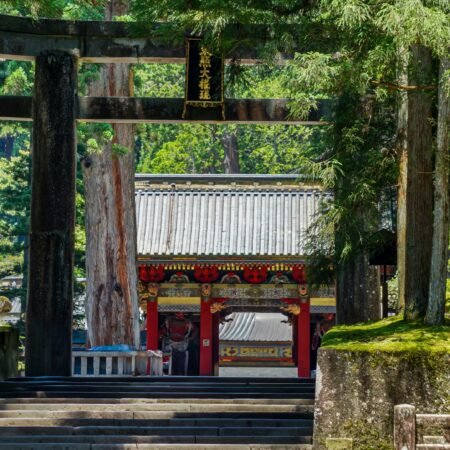






I’d already spent the morning working my way along Nikko’s main shrine circuit — Toshogu’s gold leaf, the crowds photographing the “hear no evil” monkeys, the smell of incense drifting out of Rinno-ji. By early afternoon I wanted somewhere quieter, so I followed a narrow road down toward the Daiya River instead of back to the station. That’s how I ended up at Kanmangafuchi Abyss, a short gorge carved from old lava rock, with a footpath running along one bank. I wasn’t more than a few minutes in before I saw them: a long, uneven row of small stone figures, draped in faded red bibs, standing shoulder to shoulder in the shade of the cedars. Some had lost their heads to time or weather. A few had fresh knitted caps, clearly replaced by someone recently. I stopped counting almost immediately — not because I got bored, but because I’d read, before I ever set foot in Nikko, that counting them properly is supposed to be impossible.
A Gorge Shaped by Fire, Lined with Stone
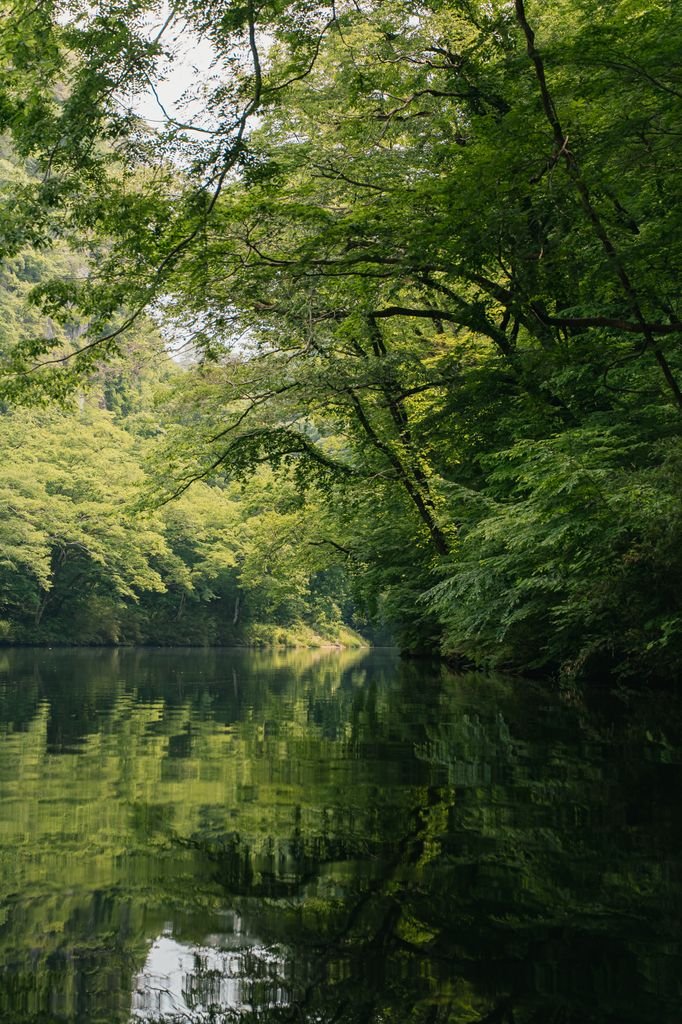
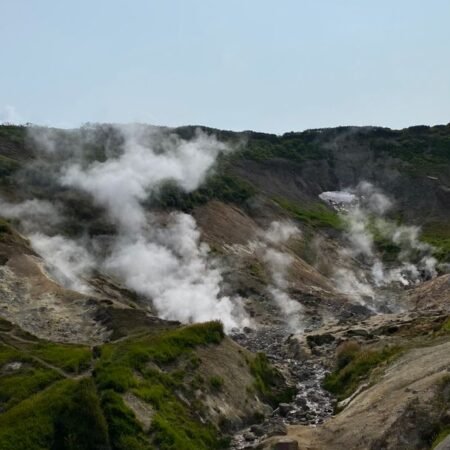
Kanmangafuchi itself is a geological accident before it’s anything ghostly. The abyss was formed by a lava flow from Mount Nantai, the volcano that looms over nearby Lake Chuzenji, and the Daiya River has spent centuries cutting through the cooled rock to leave the narrow, tree-shaded gorge visitors walk today. It sits a short walk from the main Nikko shrine and temple complex — the one that carries UNESCO World Heritage status — but Kanmangafuchi is its own, separate spot, and a much quieter one. On the day I visited, I passed maybe four other people in half an hour, which is not something you can say about the approach to Toshogu.
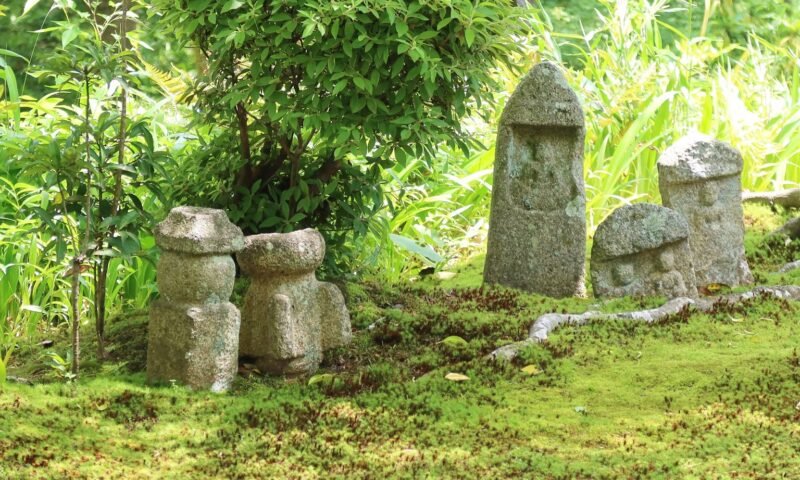
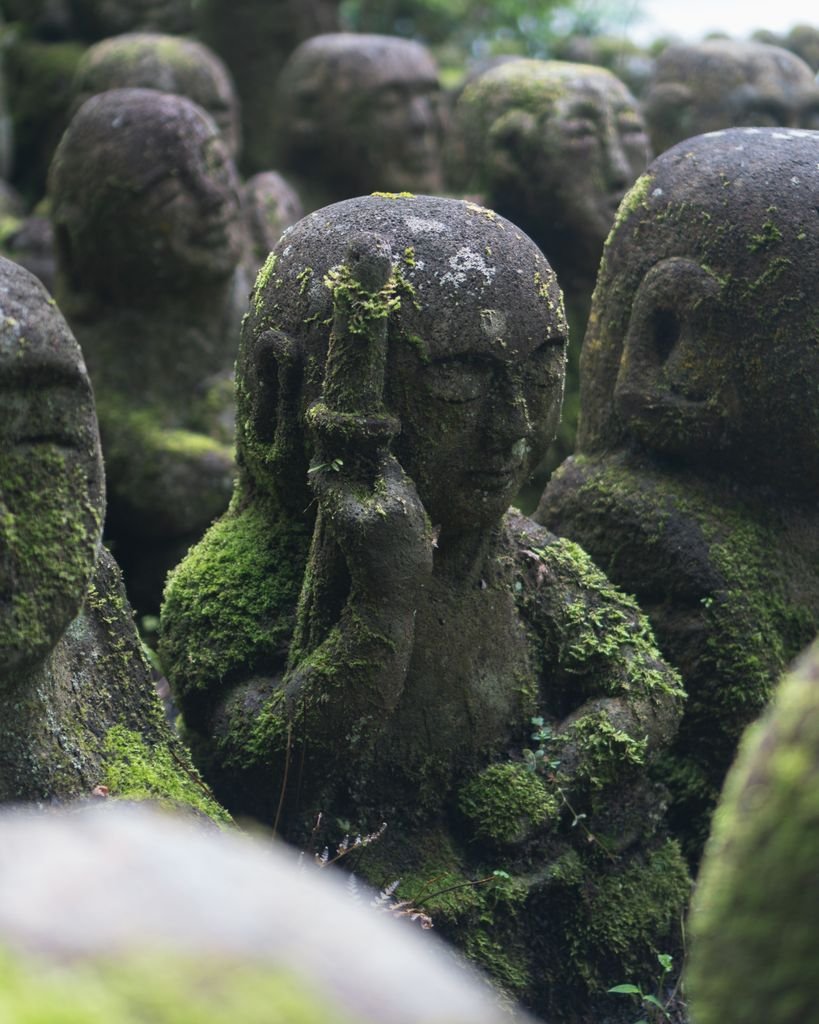
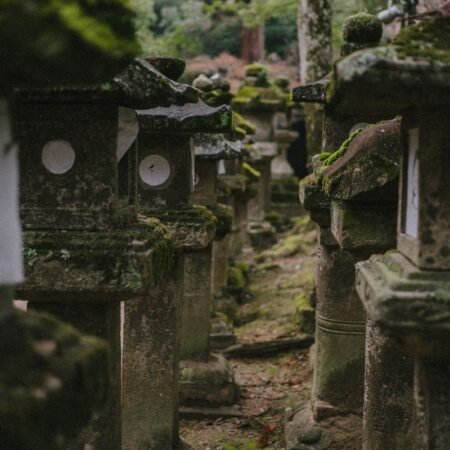
The stone figures lining the riverside path are Jizo, the bodhisattva regarded in Japanese Buddhism as a guardian of travelers, children, and the souls of the dead. Rows of Jizo like this exist all over the country, but the Kanmangafuchi group has a specific history: according to the temple records associated with the site, the statues were carved in the early 17th century under the direction of a Tendai Buddhist priest named Koshoin, along with his disciples, at Jiun-ji temple nearby. Local accounts put the original number at around a hundred, which is why the group is formally known as the Narabi Jizo, or “lined-up Jizo.” Everyone who actually visits, though, tends to use the other name people gave them: Bake Jizo.
The Jizo You Can Never Count the Same Way Twice
“Bake” here doesn’t mean anything as strong as “haunted” in the Hollywood sense — it’s closer to “bewitching” or “shape-shifting,” the same root used for stories about foxes and raccoon dogs that alter their appearance. The story attached to this particular row of statues is simple and, I’ll admit, the kind of thing I find more charming than frightening: according to local legend, if you count the Jizo on your way down the path and then count them again on your way back, you will never arrive at the same number twice. Some versions of the tale say the discrepancy is the statues’ own doing, a small trick played on curious visitors. Others treat it more as a gentle reminder that these figures, worn by weather and time, resist being reduced to a tidy inventory in the first place.
I tried it myself, half seriously, counting on the way out and again on the way back to the car park. I got two different totals, though I’ll say plainly that my inconsistency probably had more to do with overlapping tree roots, uneven footing, and a couple of statues tucked behind others than with anything supernatural. That’s part of what I like about this particular legend: it doesn’t ask you to believe in a vengeful spirit or a violent death. It just asks you to try counting a hundred nearly identical, centuries-old stone figures along a shaded, uneven path, and see how you do.
What the 1902 Flood Took
The uncertainty over the exact number is not only folklore. In September 1902, a major typhoon caused catastrophic flooding along the Daiya River, and the surge is recorded locally as having swept away a bridge near Kanmangafuchi along with an unknown number of the Jizo statues themselves. That single historical event is likely the more grounded explanation for why nobody today can say with confidence how many there originally were, or exactly how many currently remain along the path — estimates in guidebooks and local materials vary, generally landing somewhere between about seventy and just over a hundred. Whatever the precise figure, the gaps in the row, and the mismatched styles of some replacement statues added over the decades, are a quiet record of that flood as much as they are the setting for a ghost story.
Standing there, it’s easy to let the two explanations blur into one another. A folk tale about statues that can’t be counted twice is a much easier story to carry home and repeat than “a typhoon washed part of a Jizo row into the river in 1902.” But I don’t think the legend erases the history so much as it sits on top of it, the way moss sits on the stone — softening the edges of something that was, originally, a real and fairly violent loss.
Visiting Kanmangafuchi: Manners and Safety
Kanmangafuchi Abyss is open to the public, free to visit, and an easy addition to a day trip built around Nikko’s main shrine and temple area — it’s roughly a fifteen to twenty minute walk from Shinkyo Bridge, mostly downhill on the way there. A few practical notes if you’re planning a visit of your own. The riverside path is unpaved, narrow in places, and can be genuinely slippery after rain or in icy winter conditions, so proper footwear matters more here than it does on the paved approaches to the main shrines. The gorge and the river below are unfenced in places, so it’s worth keeping a sensible distance from the edge, especially with children.
As for the Jizo themselves: these are active religious objects, not photo props, and many of the bibs and knitted caps you’ll see have been placed there recently by local worshippers as offerings. Treat them the way you would any other votive site in Japan — look, photograph respectfully if you’d like, but don’t move, sit on, or rearrange the statues or their clothing. The site sees relatively few visitors compared to central Nikko, so it also tends to be quiet, and that quiet is worth preserving rather than filling with noise.
Whatever you make of the legend, Kanmangafuchi is one of those places that rewards slowing down. I’d come to Nikko for the gold and the crowds, and I left remembering a quiet row of weathered stone faces instead.
Note: images accompanying this article are illustrative stock photos and do not necessarily show the specific site discussed.

コメント