






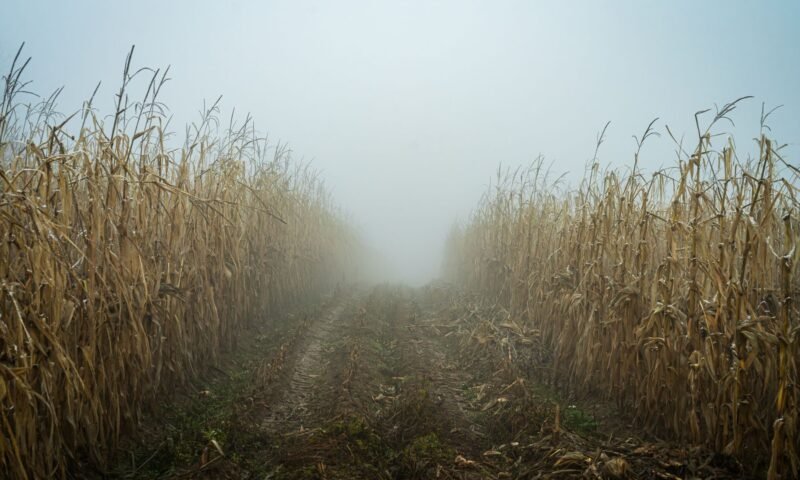
There is a particular kind of fog that settles over the Tōhoku plains in late autumn — thick enough to swallow a telephone pole at thirty metres, cold enough to make you walk faster than you meant to. I was driving back from a translation job in Fukushima City when I saw the brown road sign for “Kurozuka” and, on a whim I still can’t fully explain, pulled off the prefectural road and into the car park of a small temple I had never heard of. I had no idea, at the time, that I was about to meet Japan’s most famous demon.
The Plain Where Bashō Paused
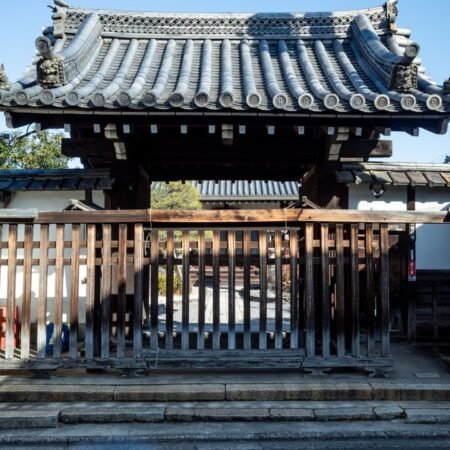
The temple is called Kanze-ji, and it sits on the edge of what used to be known as Adachigahara (安達ヶ原) — the “Adachi Plain” — just outside the city of Nihonmatsu. It doesn’t look like much from the road: a modest gate, a parking lot, a gift shop selling pickles and amulets. But Adachigahara has been a byword for loneliness and dread in Japanese poetry for over a thousand years, and when Matsuo Bashō passed through this region in 1689 on the journey that became Oku no Hosomichi (The Narrow Road to the Deep North), he knew exactly what kind of reputation the plain already carried. Poets had been using “Adachigahara” as shorthand for a desolate, haunted wilderness since at least the Heian period, centuries before Bashō ever set foot here.
What gave the plain that reputation, according to the story still told at Kanze-ji today, is a single, solitary house that is said to have stood here, and the woman who lived alone inside it.
The Nursemaid Who Became a Demon
The legend — and I want to be clear from the outset that this is legend, not history, with no court record or named victim behind it — goes roughly like this. A woman once served as a wet-nurse to a noble family in Kyoto. When the family’s young daughter fell gravely ill, a physician declared that the only cure was the fresh liver of an unborn child. Desperate to save the girl she had raised, the nursemaid travelled north to the remote Adachigahara plain and took up residence in a small hut beside the road, waiting for a traveller who might fit the cruel prescription.
One night, the story goes, a young pregnant woman sought shelter from a storm in that very hut. The nursemaid, after a long inner struggle, killed her and took the liver she needed — only to discover, from a keepsake amulet left on the body, that she had murdered her own long-lost daughter, sent out years before to be raised elsewhere. Unable to bear what she had done, she lost her mind entirely, and from that day on the hut on Adachigahara became the den of a demon (oni) who preyed on any traveller unlucky enough to ask for shelter after dark.
The tale was eventually discovered, according to the temple’s version, by a wandering Buddhist priest who stopped at the hut for the night and glimpsed a back room stacked with the bones of previous victims. He fled into the darkness; the woman, transformed fully into her demon shape, pursued him across the plain. Cornered, she was finally subdued — versions differ on whether by the priest’s prayers alone or with the aid of a guardian Kannon statue he carried – and her restless spirit was sealed beneath a mound of earth and stone so that it could never again walk the plain.
What’s Actually Still There
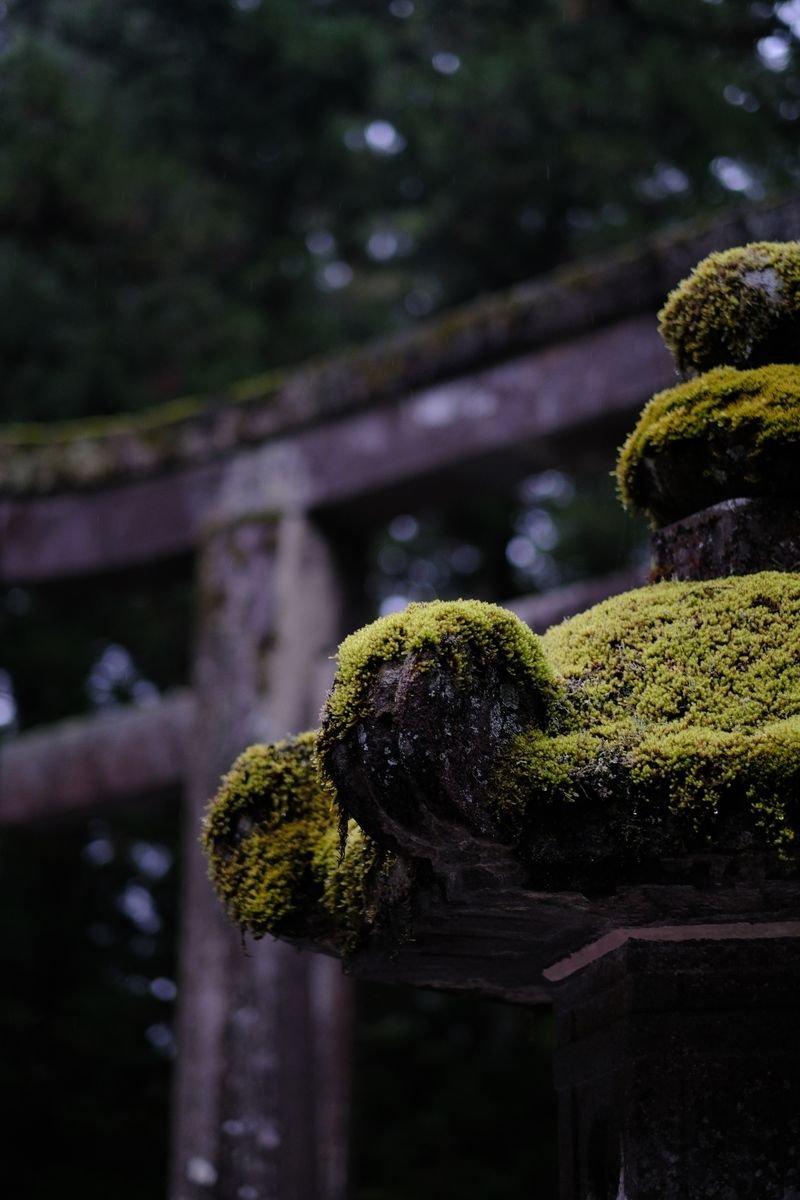
That mound is the reason Kanze-ji exists where it does, and it is the reason I’d pulled over. The temple grounds hold what is presented as the Kurozuka itself — the “black mound” — along with a scattering of other relics tied to the story: a blackened stone said to bear the stains of the demon’s victims, and a weathered robe displayed behind glass that is said to be the one she wore. None of these can be independently verified as what they claim to be, and the temple itself frames them as sacred objects of faith and storytelling rather than forensic evidence, which is the right way to receive them.
What struck me more than any single relic was the grove itself: old cedars, a thin curtain of mist that never quite lifted while I was there, and a stillness that had nothing supernatural about it and didn’t need to. Walking the short loop around the mound on a grey November afternoon, with nobody else in sight, I understood immediately why poets reached for this place whenever they needed a shorthand for isolation.
From Terror to Theatre
What happened to the Adachigahara legend after that is, to me, the more interesting story. Rather than fading into a simple campfire tale, it was absorbed into high art. The Noh play Kurozuka (also performed under the title Adachigahara) turned the demon-hut story into a meditation on grief, isolation, and the thin line between a devoted caretaker and a monster, and it remains part of the standard Noh repertoire today, performed on stages across the country. The image of the lone woman spinning thread in her hut by lamplight, her true nature hidden until the second half of the play reveals her demon mask, is one of the most recognisable scenes in the entire Noh tradition.
The legend’s staying power says something about why these stories exist at all. A woman driven to an unforgivable act by desperation and loyalty, then punished and finally pacified through ritual, is a story about guilt and redemption as much as it is about fright. Kanze-ji’s quiet insistence on treating the mound as a place to pray for the woman’s spirit, rather than a tourist-trap jump-scare, reflects that older, more forgiving reading of the tale.
Visiting With Care
Kanze-ji is a small, working temple, not a theme park, and it’s worth treating it that way. The grounds are open to the public and there is a modest admission fee to see the mound and relics up close; photography rules are posted at the entrance and should be followed, particularly around the robe and stone, which the temple treats as devotional objects rather than props. There is nothing here that calls for scrambling off the marked paths or poking around after closing time — the whole point of the place, in both the legend and the modern temple’s own framing, is a restless spirit that was finally given peace, and a visit in that spirit (quiet, respectful, during opening hours) is the only kind worth making. If you go in autumn, as I did, bring a coat: the fog off the plain has a way of finding the gaps in anything lighter.
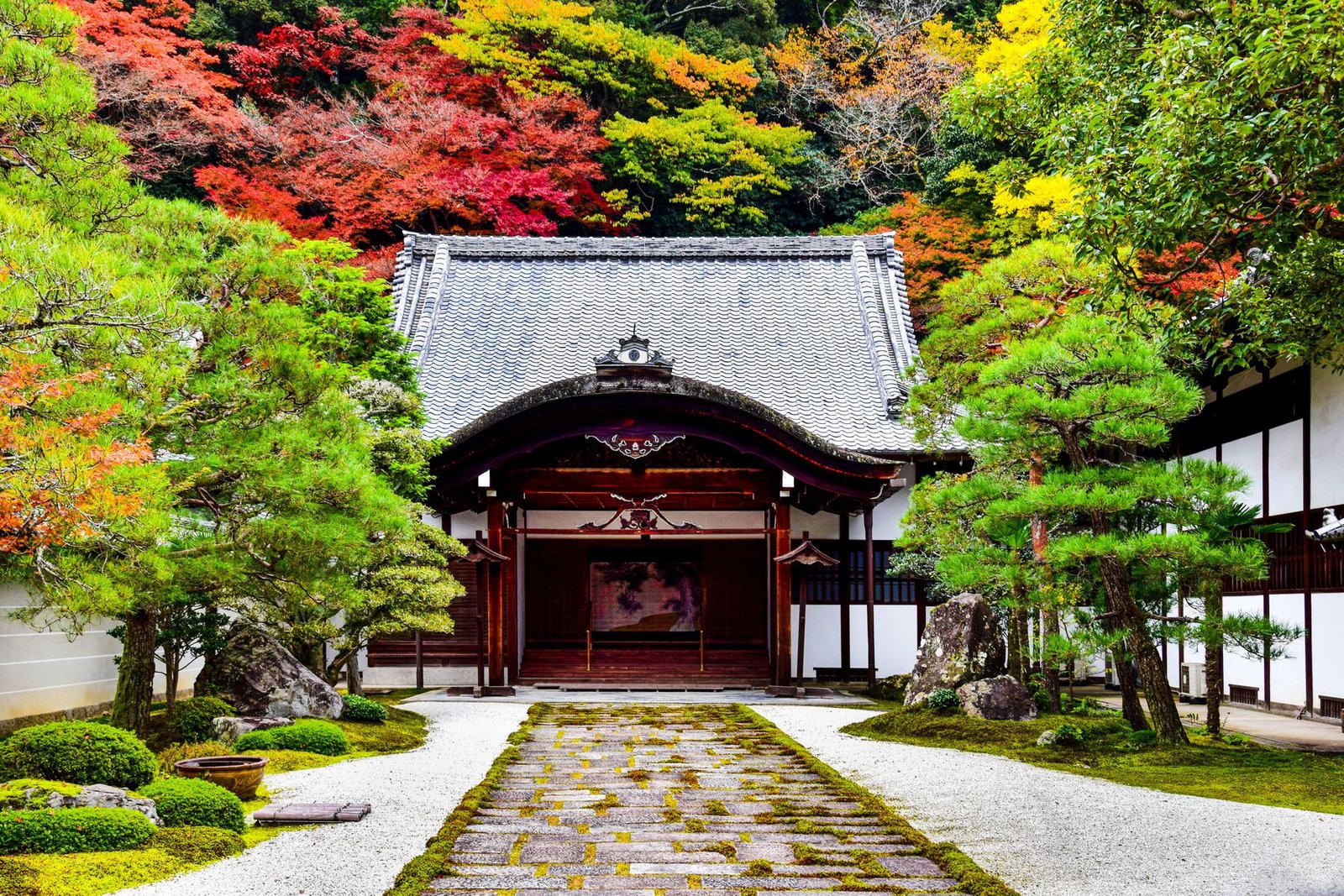
Note: images accompanying this article are illustrative stock photos and do not necessarily show the specific site discussed.
コメント