





I nearly walked straight into a samurai’s kneecap.
That’s not an exaggeration. I’d turned a corner onto a narrow street in Mikuni, a fishing port in Fukui Prefecture’s Sakai City, expecting a “float” in the sense I know from back home — something flat, decorated, maybe a person waving from the top. Instead there was a six-meter-tall warrior made of wood, paper, and paint, glaring down at me from somewhere around the second-story window line, being muscled around a tight corner by a crew of men in matching happi coats who were clearly more worried about power lines than about the tourist standing in their way. I jumped back onto the sidewalk so fast I nearly knocked over the obasan next to me, who just laughed and handed me a cup of amazake like this happened every ten minutes. Which, as it turns out, it does — for three days every May.
I’d lived in Japan for almost five years at that point and had never made it to Fukui, which I think a lot of people skip on their way between Kanazawa and Kyoto. That’s a mistake, and the Mikuni Festival is a good reason to fix it.
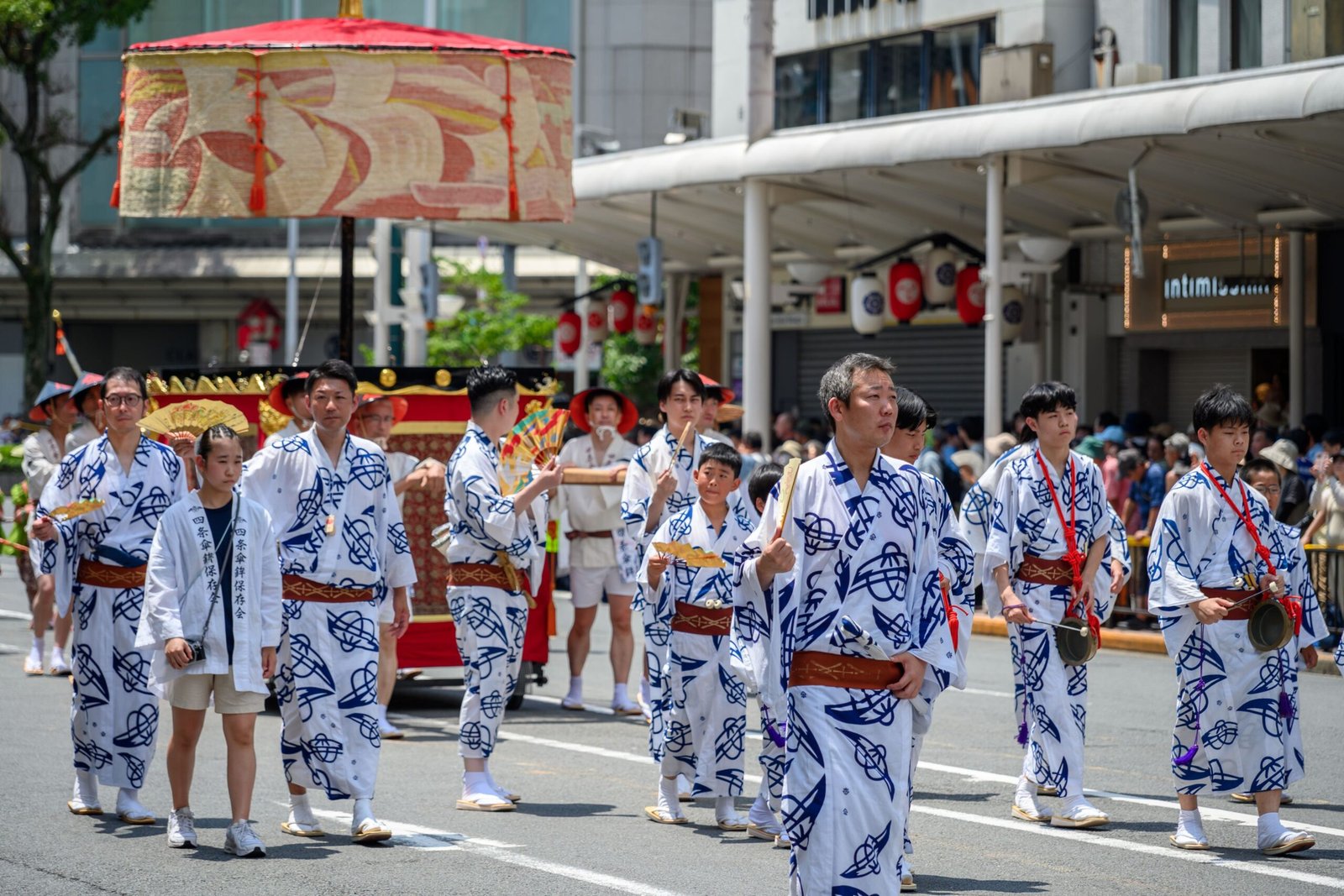
Six Meters of Samurai, Rebuilt From Scratch Every Year
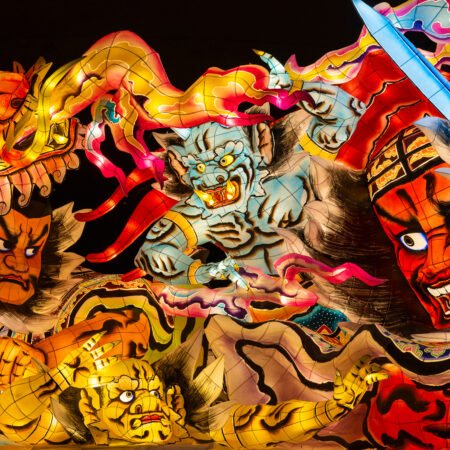
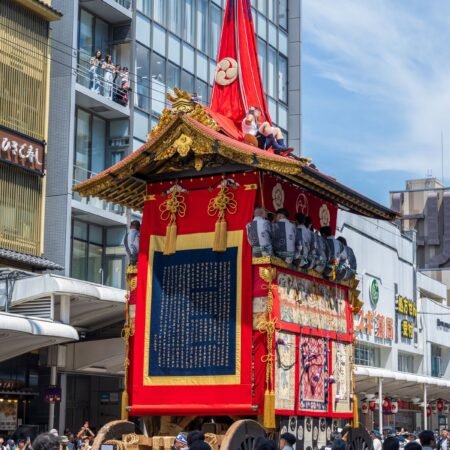
The thing that still gets me about the Mikuni Festival is that nothing survives it. Each of the six towering dolls — called yama — is built fresh for that year and then taken apart or destroyed once the festival ends, which means every single one I saw was, in a very literal sense, going to exist for only a few days before vanishing. Local crews spend months on them, and the figures aren’t generic “samurai” — they’re specific historical and legendary characters. The year I went, the lineup included Minamoto no Yoshitsune, the tragic 12th-century general everyone in Japan grows up hearing stories about; Taira no Tomomori, his doomed rival from the Genpei War; the Edo-period magistrate Toyama Kinshiro; the warlord Maeda Keiji, who has a cult following of his own in this part of the country; and a kabuki hero straight out of the play “Shibaraku,” frozen mid-dramatic-pose with his sleeves flared out like wings.
The festival itself traces back to the mid-Edo period, and locals will tell you it’s roughly 300 years old, though the floats you actually see today are nothing like the modest versions from back then. There was apparently a stretch in the Meiji era when builders got competitive and pushed the figures past 10 meters tall, before everyone collectively agreed that was impractical given, you know, utility poles and roof eaves. The current height — around six to six and a half meters — is a compromise, and it’s still enough to make you crane your neck.
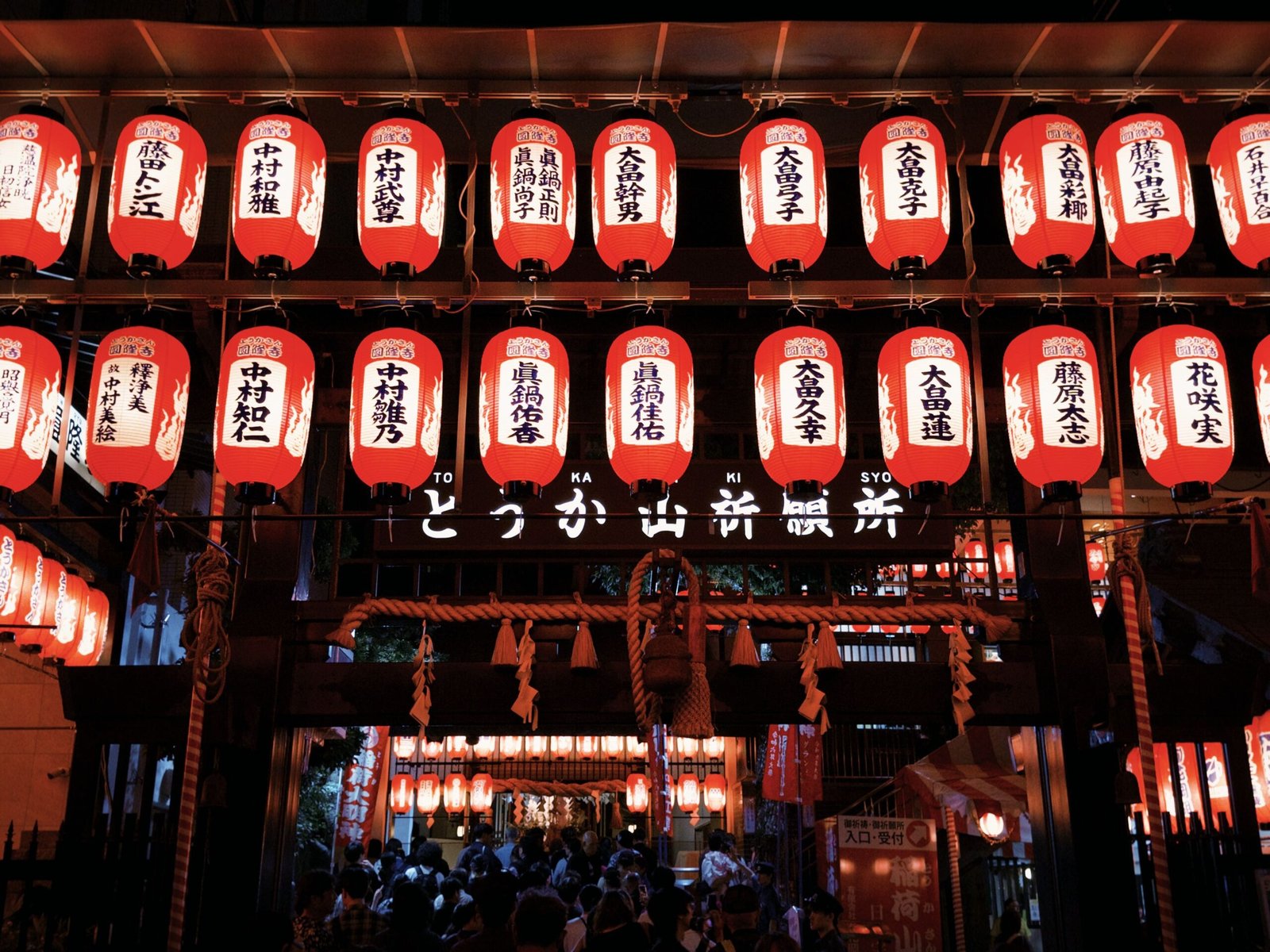
One of Hokuriku’s “Big Three”
Ask anyone in Fukui about the Mikuni Festival and they’ll eventually mention, with a little pride, that it’s considered one of the “Big Three” float festivals of the Hokuriku region, alongside the Mikurumayama Festival in Takaoka (Toyama Prefecture) and the Seihakusai Festival in Nanao (Ishikawa Prefecture). Having only been to Mikuni’s so far, I can’t personally rank them, but I understand the bragging rights — this is clearly not a small-town curiosity. Each of the floats belongs to a different neighborhood association, and the rivalry between districts over whose yama looks best is very real, even if everyone’s too polite to say so directly. You can feel it in how carefully the crews handle their float compared to how they jostle good-naturedly with crews from other streets when the parade routes cross.
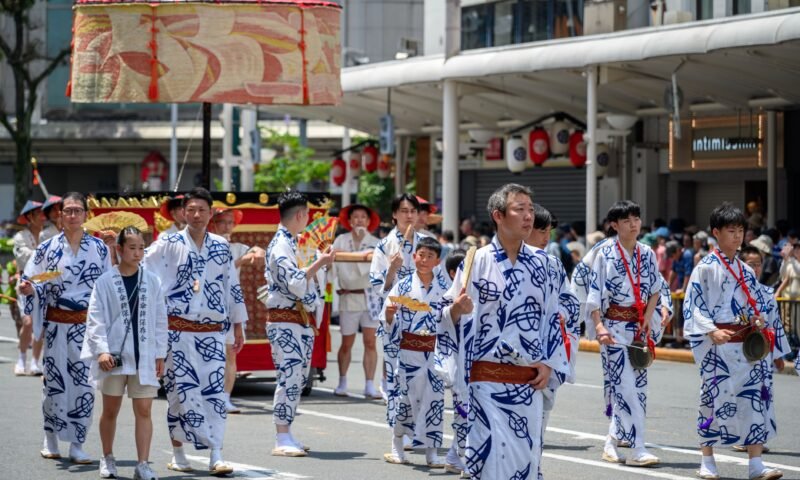
The main event falls on the middle day of the three, when all six floats parade together, starting from near Mikuni Shrine in the early afternoon and working through the town’s districts over several hours. The evening before, at least one float is displayed and lit up near the shrine, which is a quieter, more atmospheric way to see the craftsmanship up close before the chaos of parade day.
Following the Floats Through Mikuni’s Narrow Streets
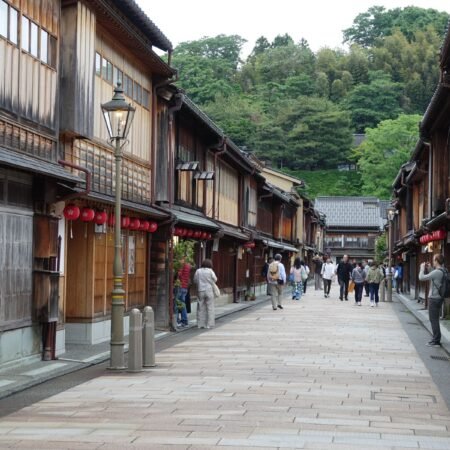
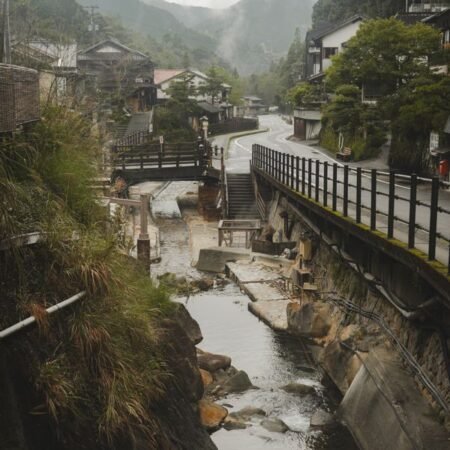
What I wasn’t prepared for was how narrow Mikuni’s streets actually are, and how that completely changes the experience of a float festival. This isn’t a wide boulevard built for parades — it’s an old port town with streets sized for foot traffic and the occasional cart, which means a six-meter doll squeezing around a corner becomes a genuine spectator event in itself. Crews call out instructions, people lean out of second-floor windows to watch the tops of the floats pass eye-level with them, and food stalls selling grilled squid, yakisoba, and the local specialty sasazuke (fish pickled in bamboo leaves) line whatever stretch of road has enough width to fit them.
There’s a paid seating area set up in the plaza near Mikuni Station for people who want a guaranteed clear view of the floats gathering, which I’d recommend if you’re not up for elbowing through a crowd — Mikuni isn’t a huge town, but the festival draws a serious crowd for its size. Otherwise, just wander. Half the fun is stumbling onto a float mid-turn, the way I did.
Getting There (and What Else to See While You’re in Fukui)
Since the Hokuriku Shinkansen extended service to Fukui Station, getting here from Tokyo is far more painless than it used to be — a shinkansen most of the way, then a transfer onto the Echizen Railway’s Mikuni Line out to Mikuni Station or Mikuni-jinja Station, both within easy walking distance of the festival action. If you’re coming from Kanazawa or Kyoto, it’s an easy detour rather than a special trip.
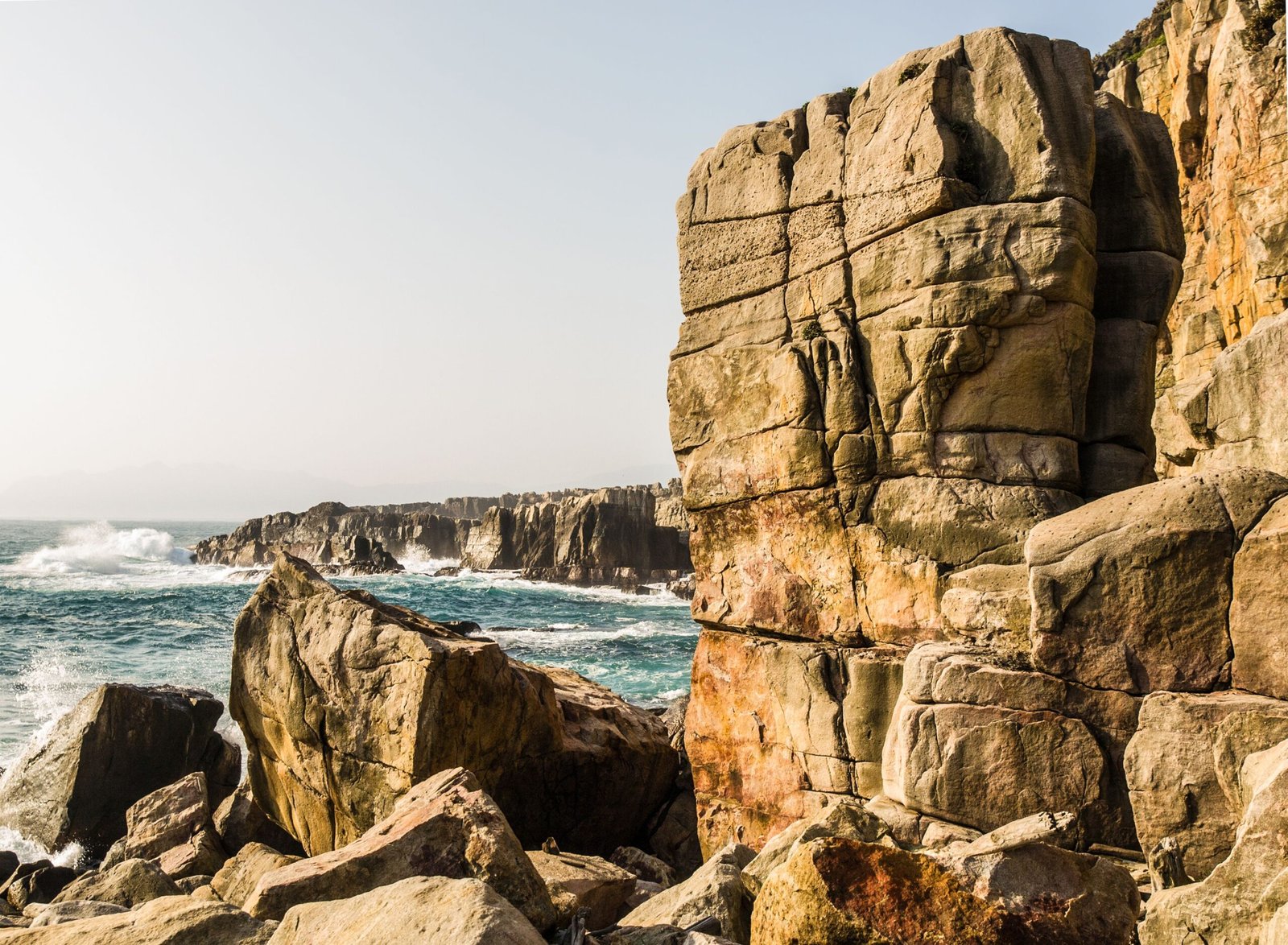
And honestly, build in extra time, because Mikuni isn’t just a festival stop. The dramatic basalt cliffs at Tojinbo are a short bus or taxi ride away, and they’re worth seeing regardless of the time of year. I went straight from the festival crowds to the cliffs the next morning and the contrast — frantic drums and narrow streets one day, wind and open ocean the next — made the whole trip feel like two completely different vacations packed into one.
If you only know Fukui as the place you pass through on the shinkansen, the Mikuni Festival is a good excuse to actually get off the train.
A quick note on photos: some of the images here are stock photos I’ve used to set the mood — they may not be the exact spot or moment I’m describing, just close in spirit.
コメント