





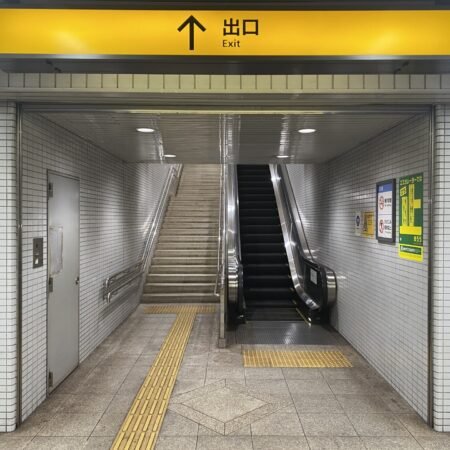

There is a particular kind of disappointment that comes with standing in front of something mythic and finding, instead of thunder and fire, a quiet hillside grove with a few large rocks and a stone marker nobody seems to be in a hurry to photograph. I felt that disappointment outside Iya Station in Matsue, Shimane, on a grey Sunday morning last month. Then it passed, and something closer to vertigo set in. Because according to Japan’s oldest written chronicle, the ground under my boots is the exact spot where a god sealed the door between the world of the living and the world of the dead.
The place is called Yomotsu Hirasaka (黄泉比良坂). I had read about it for years in footnotes to the Izanagi and Izanami myth, always as a half-sentence aside: “a slope in Izumo, traditionally identified with a site near present-day Matsue.” I wanted to see what “traditionally identified” actually looks like on the ground. It looks, mostly, like a quiet patch of woods that happens to carry the weight of the entire Shinto creation story on its shoulders.
The Myth: Where Death Entered the World
The story, as the eighth-century Kojiki tells it, begins with grief. The god Izanagi and the goddess Izanami had created the islands of Japan together, but Izanami died giving birth to the god of fire, and passed into Yomi, the land of the dead. Izanagi followed her there, determined to bring her back. Izanami agreed to try, on one condition: that he not look at her until she was ready.
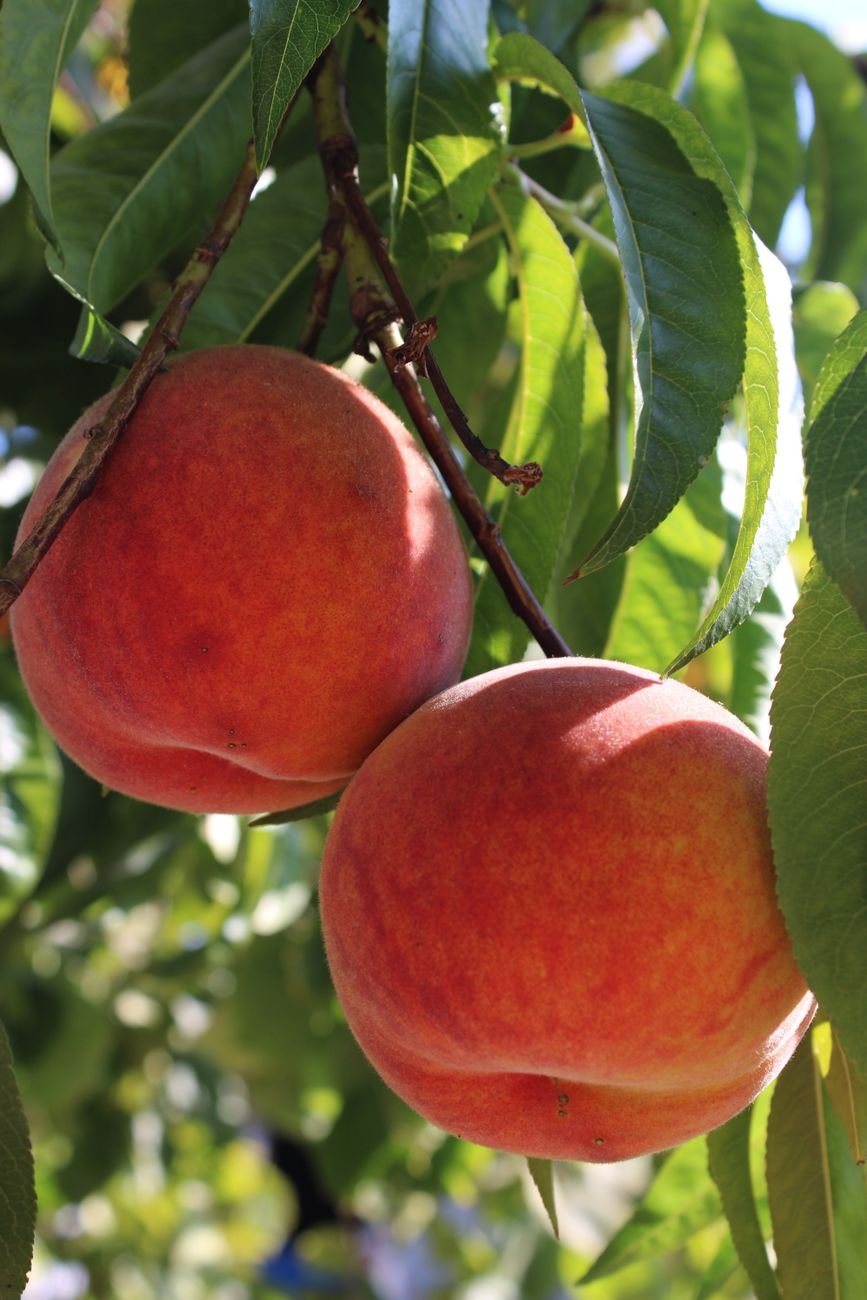
He looked anyway. What he saw, the text says plainly, was a body in decay, crawling with maggots and attended by fearsome deities born of her own decomposition. Horrified, Izanagi fled. Izanami, humiliated and furious, sent the yomotsu-shikome, the hag-spirits of the underworld, after him. The Kojiki describes Izanagi buying himself time with small sacrifices along the way: he threw down his hair ornament, which became wild grapes the shikome stopped to eat, then his comb, which sprouted into bamboo shoots. When his wife’s underworld attendants kept coming, the story holds that he finally reached this pass and found a peach tree growing there, and threw its fruit at his pursuers, which is said to have driven them back for good. It’s a detail I find oddly tender inside such a grim scene: the fruit that saves him isn’t a weapon, just something that happened to be growing by the road. I should note that a few local Matsue traditions tell a related peach episode at a different hillside nearby, Komakaerizaka, involving a thunder god rather than the shikome — a reminder that this mythology was never pinned down to a single, tidy version even in its own region.
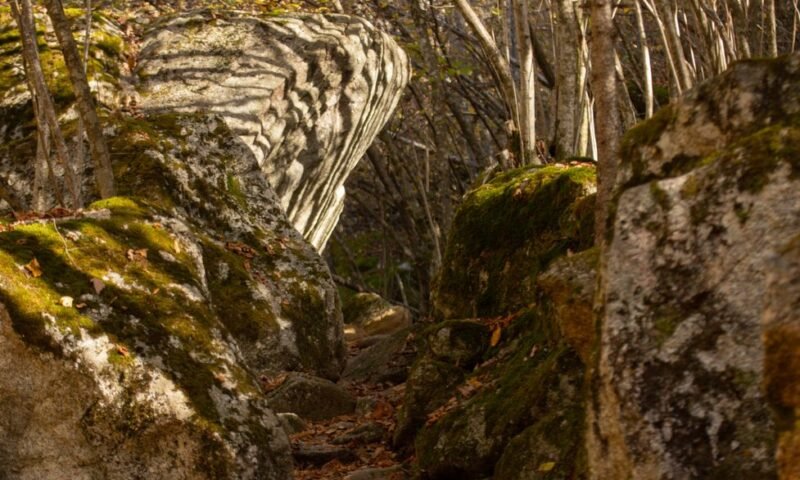
At the pass itself, Izanagi finally blocked the way with an enormous boulder, remembered as the Chigaeshi-no-Ookami, something like “the rock that turns back a thousand.” Izanami arrived on the other side too late. What followed, according to the text, was less a ghost story than the founding argument of mortality itself: Izanami, speaking from the land of the dead, swore she would take a thousand lives a day, and Izanagi answered that he would therefore cause fifteen hundred births a day. The myth doesn’t ask you to believe this happened at a GPS coordinate. It asks you to accept that somewhere, a line got drawn between the living and the dead, and this hillside in Izumo is where local tradition has always chosen to put it.
What’s Actually There
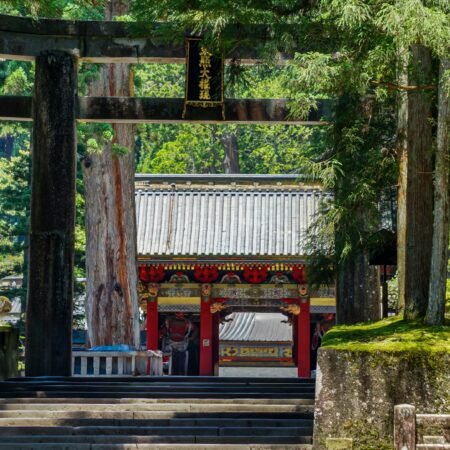
The physical site sits in the Higashi-Izumo district of Matsue, a short walk of around twenty-five minutes from Iya Station, or a quicker ride on one of the rental bicycles kept at the small tourist counter inside the station building. The approach follows a gentle rise just off National Route 9 before narrowing into a quiet lane shaded by trees. There is a stone monument, erected jointly by the prefecture and the former Higashi-Izumo town government in 1940, and behind it a cluster of large natural rocks that local tradition associates with the boulder from the myth — though, as with most sites like this, no one claims to have excavated a thousand-year-old god’s doorstop and confirmed it by carbon dating. A short distance away stands Iya Shrine (揖夜神社), dedicated to Izanami herself, which predates the modern monument by centuries and gives the area a continuity of reverence that has nothing to do with tourism.
Standing at the Border
What struck me most, once the initial deflation wore off, was how unperformed the place is. There’s no gift shop selling plastic peaches, no illuminated signage explaining the plot beat by beat. A few modest offerings sat near the rocks when I visited: nothing dramatic, just the kind of quiet gesture you’d leave at any shrine. I sat on a low stone for a while and found myself thinking less about demons and more about the strange comfort in a myth that locates death’s entrance somewhere specific and ordinary, a slope you could miss if you weren’t looking for it, rather than somewhere abstract and unreachable. That, more than any jump-scare atmosphere, is what I’ve come to associate with the oldest Japanese ghost stories: they tend to domesticate the unbearable by giving it an address.
Whether you come away moved or simply mildly spooked probably depends on how much Shinto cosmology you’re carrying in your head when you arrive. I’d suggest reading the Izanagi and Izanami story before you go. Standing at a pretty but unremarkable hillside is one experience; standing at the hillside where a god is said to have ended the possibility of bringing back the dead is a different one entirely, and the second requires you to bring the myth with you.
Visiting Manners and Safety
The site and the approach to it are on quiet public roads and an open shrine precinct, not fenced-off or restricted land, so there’s no access issue to navigate here. That said, treat it as you would any shrine: keep your voice down, don’t climb on or move the rocks associated with the legend, and be mindful that Iya Shrine nearby is an active place of worship, not a backdrop. The lane in and the area around it pass through a residential part of Higashi-Izumo, so be considerate of neighbours, especially regarding noise and parking. There’s no lighting along the approach, so I’d recommend visiting in daylight rather than chasing a more atmospheric evening visit. And if you do leave an offering of your own, something modest is entirely in keeping with how the place presents itself.
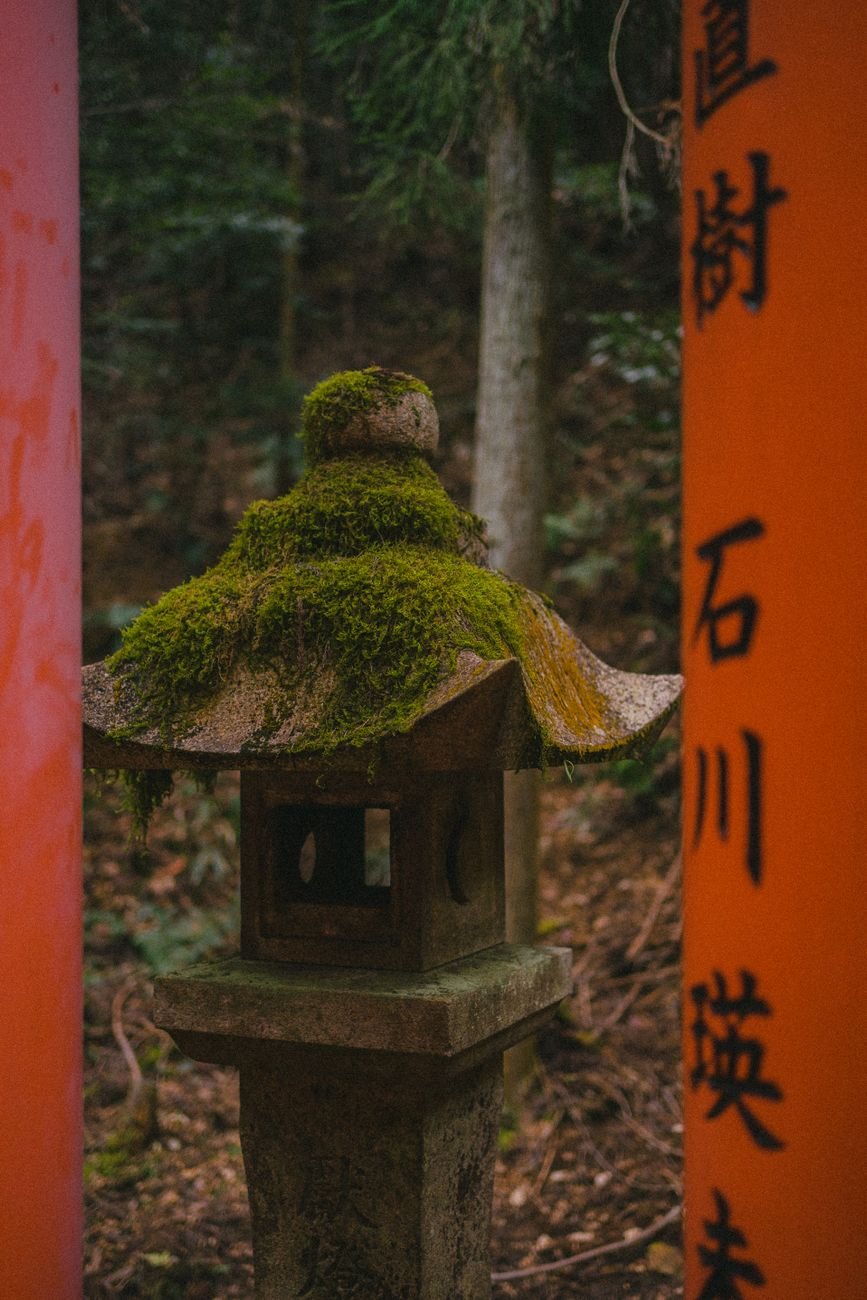
Note: images accompanying this article are illustrative stock photos and do not necessarily show the specific site discussed.
コメント