






I first heard about Hanako-san the way most people in Japan do: secondhand, half-remembered, and from someone who swore a friend of a friend had actually tried it. I was helping a junior high student in Saitama with an English essay a few years back, and when I asked her to write about “a tradition from your childhood,” she wrote three sentences about knocking on a toilet stall door and then looked genuinely unsettled that I’d never heard of it. That struck me as odd, for someone who spends his weekends tracking down haunted shrines and abandoned tunnels. Most of the spots I write about have an address. Hanako-san doesn’t. She is said to live in a stall in a girls’ bathroom on the third floor, in practically any elementary school in the country, which is either the least impressive haunting in Japan or, depending on how you look at it, the most widespread one.
Knock Three Times
The ritual, as it’s told from Hokkaido to Okinawa with only minor local variation, goes something like this: you go to the girls’ toilet, usually on the third floor of the school building, and find the third stall. You knock three times and ask, “Hanako-san, are you there?” According to the story, a small voice answers from inside: “Yes, I’m here.” What happens next depends entirely on who is telling the tale. In some versions, the door creaks open on its own to reveal nothing at all. In others, a pale hand reaches out from inside, or from the toilet bowl itself, and tries to pull the asker in. A handful of regional tellings add a bloodied hand, a three-headed lizard, or a girl in a red skirt with a neat, old-fashioned bob haircut who simply stares back. None of this is treated as settled fact even by the children telling it; it’s understood, the way campfire stories are understood everywhere, as something passed along rather than something witnessed.
What I find more interesting than the jump-scare mechanics is how structurally similar this is to older Japanese folklore about things reaching out of water. Stories of a kappa’s arm grabbing an ankle from a river, or a hand emerging from a well, go back centuries. Hanako-san, dressed up in a school uniform and a plumbing fixture, looks very much like that same old fear wearing modern clothes.
A Name With No Single Grave
Ask how Hanako-san died and you’ll get at least three different answers, none of which the people telling it treat as more than “that’s the version I heard.” One account has her killed in an air raid during the Second World War while playing hide-and-seek and hiding in the school toilets, a detail that, whether or not it’s historically accurate for any specific school, clearly borrows from a very real and very painful chapter of the country’s history. Another version has her murdered by a stranger, or sometimes an abusive parent, inside the bathroom. A third, grimmer telling says she took her own life after being bullied by classmates. I’d rather not dwell on that last one beyond noting that it exists, because it says something uncomfortable about how children process real anxieties about school by folding them into ghost stories, and that’s worth taking seriously rather than treating as mere decoration for a scare.
What’s genuinely interesting, from a folklore-collector’s point of view, is that this isn’t a story with one clean point of origin. One of the oldest documented references researchers have traced is a rumour recorded around 1948 at an elementary school in what was then Kurosawajiri, a town in Iwate Prefecture now absorbed into the city of Kitakami. In that early version, she was already called “the third Hanako-san,” already found in the third stall, this time of a school gymnasium’s toilet, and a white hand was already said to reach out of the bowl when someone entered. The core imagery, in other words, is older and more stable than the specific backstory draped over it. Children across the decades have kept the knock, the stall, and the hand, and swapped out the explanation for why she’s there to suit whatever they were most afraid of at the time.

From Playground Whisper to National Icon
Hanako-san stayed a largely oral tradition, the kind of thing passed between ten-year-olds at recess and rarely written down, until the Japanese folklorist Tsunemitsu Toru published a 1990 book simply titled “Gakko no Kaidan,” School Ghost Stories, collecting precisely this sort of schoolyard lore from children around the country. The book landed in the middle of what’s sometimes called Japan’s second occult boom and set off a small publishing and media cottage industry built on the same premise. A string of “Gakko no Kaidan” films followed through the 1990s, along with an anime series, each drawing on the same pool of bathroom ghosts, mirror spirits, and talking statues that children had apparently been swapping for generations.
Hanako-san herself got two notable film treatments in that wave: a 1995 version that reimagined her as a gentle, sympathetic spirit rather than a threat, and a 1998 sequel that went the other way entirely, casting her as something genuinely vengeful haunting her old school. She has kept resurfacing ever since, including in a long-running manga and anime called “Toilet-Bound Hanako-kun,” which playfully flips the legend by making its ghost a boy, and in more recent manga that treat the whole canon of school urban legends, Hanako-san included, as a shared cultural toolkit rather than a single fixed story. I’d argue that’s really the point of her longevity: she was never pinned to one haunted building the way Oiwa or Okiku were. She’s less a ghost with a biography than a shape every generation of schoolchildren refits to its own worries, which might be why, unlike most of the places I visit for this column, there’s nowhere you can actually go to find her.
A Note on Respect, Not Trespass
Because Hanako-san has no single haunted address, the usual advice I give about visiting a real site doesn’t quite apply here, and that’s worth being honest about rather than inventing a pilgrimage that doesn’t exist. Japanese elementary and junior high schools are working institutions with their own students, staff, and, these days, fairly serious security around who can walk onto campus. They are not tourist attractions, and turning up at one hoping to find “the” third stall would be both pointless and unwelcome. If this story has a lesson for how to engage with it respectfully, it’s a simpler one: treat it as what it is, a piece of living children’s folklore that says a great deal about how kids metabolise fear and school anxiety into something they can control by telling it to each other, and leave actual schools and actual children out of any attempt to recreate it for a thrill.
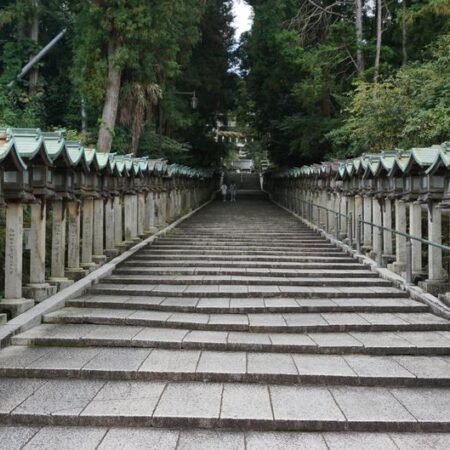
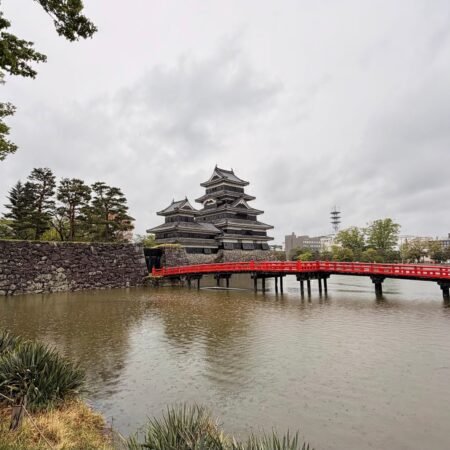
Note: images accompanying this article are illustrative stock photos and do not necessarily show the specific site discussed.


コメント